
Quick Answer: Matching Paper Quality to Your Pen
Finding the ideal paper for your writing instrument is not about finding a single, universally superior brand. Instead, the performance of note books pads depends entirely on how the paper’s physical properties interact with the specific ink delivery system of your pen. A notebook that feels luxurious with a dry ballpoint may feather aggressively when paired with a wet fountain pen, while a highly coated paper designed for calligraphy can cause standard gel inks to smudge indefinitely.
Fountain pens require smoother, surface-sized paper to prevent liquid ink from spreading or soaking through the sheet. Gel and rollerball pens, which deploy water-based or gelled inks, require a balanced, fast-absorbing surface to prevent smudging, particularly in humid environments. Ballpoint pens, utilizing thick, oil-based inks, are highly versatile and perform reliably on almost any standard woodfree or recycled paper without bleeding.
To make an informed choice, look for key indicators on notebook packaging. Grams per square meter (GSM) indicates paper weight and density, while surface sizing and finish dictate how the paper handles liquid penetration. Understanding these elements allows you to match your writing style with the correct pad.
Products mentioned in this guide
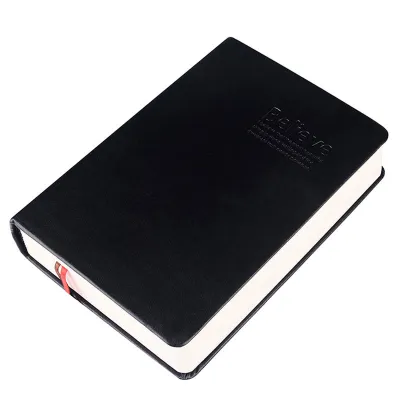
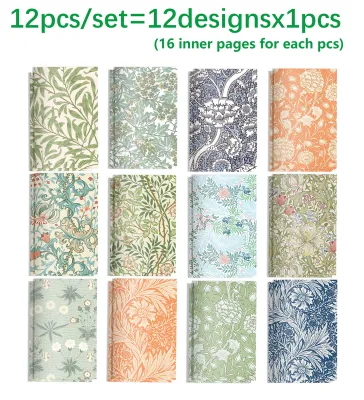
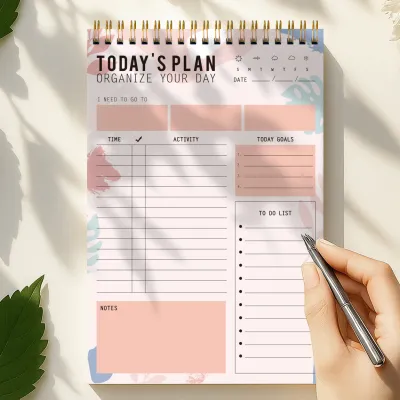
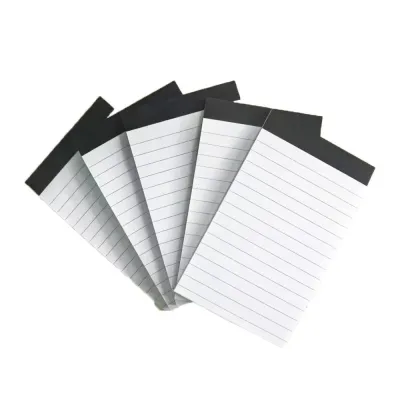
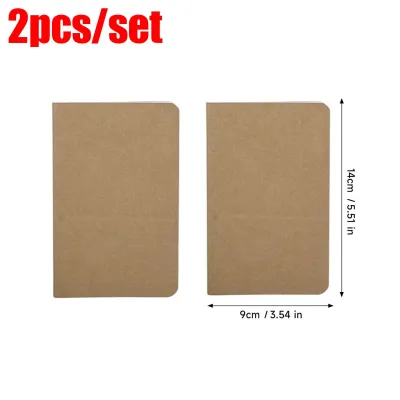
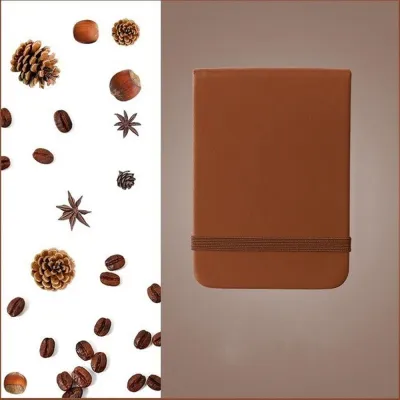
Prices are valid at publication and may change. Please refer to the product page for the latest price.
Key Dimensions for Comparing Note Books Pads and Paper Quality
Smoothness and Tooth
Smoothness refers to the texture of the paper surface, often described by stationery enthusiasts as the amount of “tooth” the paper possesses. High-tooth paper has a distinct, microscopic roughness that provides tactile feedback as the pen tip moves across the page. This texture is highly desirable for pencil users and those who prefer a controlled, deliberate writing experience with ballpoints.

Conversely, low-tooth paper is exceptionally smooth, allowing pen nibs to glide effortlessly with minimal friction. While this prevents wear on delicate fountain pen nibs and felt-tip pens, excessively smooth paper can cause “hard starts” with certain fountain pens, where the ink fails to flow because the nib cannot grip the surface. Balancing tooth and smoothness is essential for achieving your preferred tactile feedback.
Ink Absorption and Drying Time
Ink absorption determines how quickly liquid carriers penetrate the paper fibers or evaporate from the surface. For gel and rollerball pens, rapid absorption is critical to prevent smudging as your hand moves across the page. Left-handed writers must pay particularly close attention to this dimension to avoid dragging their palm through wet ink.
In tropical climates like Singapore, where relative humidity levels regularly exceed 80%, ambient moisture slows down ink evaporation significantly. Paper that relies heavily on surface coatings rather than absorption can leave liquid inks wet on the page for 30 seconds or longer. Choosing a paper with a slightly more porous structure can mitigate this issue, though it requires a trade-off in line crispness.
Bleed-Through vs. Feathering
Bleed-Through occurs when ink fully penetrates the paper sheet, showing through on the reverse side or even staining the subsequent page. This phenomenon makes it impossible to use both sides of a sheet, effectively halving the usable capacity of your notebook. Ghosting, or “shadowing,” is a milder variation where the writing is visible through the page but the ink has not actually broken through the paper fibers.
Feathering occurs when ink spreads horizontally along the paper fibers, creating fuzzy, spiderweb-like edges instead of a clean, sharp line. This is a common issue with wet inks on highly absorbent, low-quality papers. It distorts the true line width of your pen tip, turning a fine nib into a medium or broad line and reducing overall legibility.
GSM and Surface Sizing
Paper weight is measured in GSM (grams per square meter), representing the density and thickness of the sheet. While a higher GSM (such as 100 GSM to 120 GSM) generally provides a thicker physical barrier that reduces physical bleed-through, weight alone does not guarantee fountain pen compatibility. Thin papers can perform exceptionally well if they have undergone proper surface treatment.
Surface sizing is the application of starch, gelatin, or synthetic polymers to the paper during manufacturing to regulate its absorbency. Sizing acts as a protective barrier, keeping liquid ink sitting on top of the page rather than soaking into the core fibers. A well-sized 80 GSM paper will resist feathering and bleed-through far better than an unsized, highly absorbent 120 GSM paper.
How Common Notebook Paper Types Handle Different Pens
Standard Woodfree Paper (Typical 70-80 GSM Pads)
Standard woodfree paper is the most common material used in everyday office and school notebooks. The term “woodfree” refers to the chemical pulping process used to remove lignin, which prevents the paper from yellowing over time when exposed to light. These pads are highly accessible and typically fall into the entry-level price bracket, costing under S$3 to S$5 per pad.
This paper type performs excellently with ballpoint pens, pencils, and dry highlighters. Because ballpoint ink is oil-based and highly viscous, it sits cleanly on the woodfree fibers without spreading. Pencils also benefit from the mild tooth of standard woodfree sheets, which helps shave off graphite to leave a dark, legible mark.
However, standard woodfree paper behaves poorly when subjected to wet writing instruments. If you write with a medium-nib fountain pen, a liquid rollerball, or a heavy gel pen, the paper acts like a sponge. The ink quickly saturates the fibers, resulting in severe feathering and immediate bleed-through to the back of the page, making double-sided writing impossible.
Premium Coated or Sized Paper (Typical 80-90 GSM Fountain Pen Pads)
Premium coated or heavily sized papers are engineered specifically to accommodate liquid inks. These papers undergo intensive surface treatment, often resulting in a smooth, satin-like finish that feels cool to the touch. Notebooks utilizing this paper are priced in the premium tier, typically ranging from S$12 to S$30 depending on binding and page count.
When used with fountain pens, liquid rollerballs, and fine-liner pens, this paper shines. It keeps the ink pooled on the surface, allowing the true color, shading, and metallic sheening properties of specialized inks to develop fully. Lines remain incredibly sharp with zero feathering, and even very wet nibs will not bleed through to the other side.
This surface barrier introduces a notable trade-off: significantly increased drying times. Because the ink cannot easily penetrate the sized surface, it must dry via evaporation. In humid environments, gel pens and wet rollerballs can remain wet for an inconveniently long time, leading to accidental smudges if the notebook is closed too quickly.
Thin, High-Density Paper (Typical 52-68 GSM Lightweight Pads)
Thin, high-density paper represents an impressive feat of stationery engineering. By using highly refined, long-fiber wood pulp and pressing it under immense pressure, manufacturers produce incredibly thin sheets that remain highly resistant to ink penetration. These papers are popular in high-end planners and lightweight, high-page-count travel journals, often priced between S$20 and S$45.
Despite being almost translucent, this paper handles wet fountain pen inks with virtually zero bleed-through. It allows for highly compact notebooks that can contain hundreds of pages without becoming bulky. Fountain pen users favor this paper because it highlights ink shading and sheening properties beautifully.
However, the extreme thinness results in significant ghosting. While the ink does not physically bleed through to the other side, you can clearly see the outline of your writing from the reverse side, which some users find distracting. Additionally, drying times are among the longest of any paper category, requiring the use of blotting paper if you need to close the notebook immediately.
Recycled or Uncoated Kraft Paper
Recycled and uncoated kraft papers are characterized by their rustic, textured appearance and natural brown or off-white color. These pads are popular for creative sketching, casual journaling, and quick drafting, offering an eco-friendly aesthetic. They are generally priced in the mid-range, from S$5 to S$12.
This paper category features high tooth and high absorbency, making it a joy to use with graphite pencils, colored pencils, charcoal, and dry ballpoint pens. The rough texture grabs dry media effectively, allowing for rich tonal variation. The fibers are also highly forgiving of heavy pressure from ballpoint tips.
Liquid inks, however, perform poorly on uncoated recycled paper. The lack of surface sizing allows water-based inks to wick rapidly through the loose fiber network. A standard gel pen or fountain pen will feather aggressively, creating bloated lines and severe bleed-through that can ruin multiple sheets underneath.
Decision Framework: Which Writing Pad Should You Choose?
Selecting the right writing pad requires analyzing your primary writing instrument, your writing speed, and your environmental conditions. Use the following guidelines to match your specific needs to the correct paper type:
- Choose Premium Coated/Sized Pads if: You write primarily with fountain pens, liquid rollerballs, or broad-tip pens and demand crisp, clean lines with zero feathering. This option is ideal if you want to use both sides of each page and appreciate a smooth, low-friction writing feel. Ensure you have the patience for slightly longer drying times, particularly in humid climates.
- Choose Standard Woodfree Pads if: Your daily carry consists of standard ballpoint pens, mechanical pencils, or dry highlighters. These pads offer the most cost-effective solution for rapid note-taking, lecture drafting, and general office use where high-speed ink drying is preferred over premium paper aesthetics.
- Choose Thin, High-Density Pads if: Portability is your highest priority and you want a high-page-count notebook that remains slim and lightweight. This is the premier choice for fountain pen hobbyists who enjoy ink shading and sheening, provided they do not mind high levels of ghosting (shadowing) on the reverse side of the page.
- Choose Quick-Drying or Uncoated Pads if: You are left-handed, use heavy gel pens, or need to take rapid, continuous notes without smudging. The higher absorbency of these papers ensures ink sets almost instantly, though you must accept that you may only be able to write on one side of the page due to bleed-through.
- Verify First if: You plan to use specialized inks such as iron gall, heavily saturated shimmer inks, or permanent waterproof pigment inks. Shimmer inks require a tiny amount of paper texture to hold the metallic particles in place, while iron gall inks are highly acidic and can degrade poor-quality woodfree papers over several decades.
How to Test and Verify Paper Quality Before Committing
Check the Packaging Specifications
Before purchasing a notebook, examine the back cover or wrapper for technical specifications. Look for explicit mentions of “acid-free” paper, which ensures the sheets will not yellow or become brittle over time. Check the GSM rating; for general multi-pen use, a range of 80 GSM to 100 GSM offers a safe baseline for durability.
Verify if the packaging explicitly states “fountain pen friendly” or mentions surface sizing. If you are buying refills for a modular binder system, double-check the physical dimensions (such as A5, B5, or standard letter size) and the hole spacing to ensure compatibility with your existing binder rings.
Perform a Swatch Test
If you have already purchased a notebook or have access to a store tester, perform a swatch test on the very last page or the inside back cover. Draw a series of straight lines, tight loops, and a solid block of ink using your wettest pen. This concentrated application of ink will quickly reveal the paper’s limits.
Let the ink dry completely, then flip the page to inspect the reverse side. Check for ghosting (where you can see the shape of the writing) and physical bleed-through (where ink dots have broken through the surface). If the ink has bled through, avoid using that specific pen-and-paper combination for double-sided writing.
Conduct a Swipe Test for Drying Time
To evaluate how the paper handles smudging in your local environment, write a series of words using your preferred gel or rollerball pen. Using a stopwatch or counting in your head, swipe a clean, dry finger across the written lines at intervals of 5, 10, and 15 seconds.
Note when the ink stops smearing. If the ink smudges after 10 seconds, the paper has low absorbency, which may require you to adjust your writing speed or switch to a faster-drying ink formula. This test is highly recommended if you write in non-air-conditioned spaces where humidity slows evaporation.
Evaluate the Surface Tooth
Write several continuous cursive loops or figure-eights across the page without lifting your pen. Pay close attention to the physical feedback traveling up the pen barrel. If the pen catches, squeaks, or drags, the paper has too much tooth for your writing instrument.
If the pen slips uncontrollably or fails to lay down ink consistently, the paper is too slick. The ideal paper should provide a comfortable level of resistance that matches your natural writing pressure, ensuring clean pen control without causing hand fatigue during long writing sessions.
Frequently Asked Questions (FAQ)
Does a higher GSM always mean better paper for fountain pens?
No, a higher GSM does not automatically guarantee that paper will perform well with fountain pens. While a thicker sheet (such as 120 GSM or 160 GSM) provides a larger physical barrier that helps prevent ink from soaking through to the next page, it can still suffer from severe feathering if the paper fibers are loose and untreated.
Surface sizing is the critical factor that determines fountain pen compatibility. A highly compressed, heavily sized 80 GSM paper will keep wet ink sitting on the surface, preventing both feathering and bleed-through. Conversely, an unsized 120 GSM sketchbook paper will act like a blotter, absorbing the ink rapidly and causing fuzzy lines despite its thickness.
Why does my gel pen smudge on premium notebook paper?
Premium notebook papers designed for fountain pens often feature specialized clay coatings or heavy surface sizing. These treatments are engineered to keep liquid ink on top of the page to prevent bleeding and feathering. However, because gel pen ink consists of pigments suspended in a water-soluble gel, it requires a certain degree of paper porosity to dry quickly.
When you write with a gel pen on highly sized premium paper, the ink cannot penetrate the surface barrier and must rely entirely on evaporation to dry. In humid climates, this evaporation process is slow, leaving the wet gel ink exposed on the surface where it is easily smudged by your hand or when closing the notebook.
Can I use both sides of a notebook page if I use a fountain pen?
Whether you can use both sides of a page with a fountain pen depends on three variables: the paper’s surface sizing, the wetness of your pen’s ink flow, and the size of your pen nib. If you use a fine or extra-fine nib paired with a dry-flowing ink on premium sized paper, you can easily write on both sides of the page with zero issues.
If you prefer broad, wet nibs or heavily saturated inks, you will need to select high-density, premium coated papers specifically rated for heavy ink loads. Even with premium paper, some thin variations (like 52 GSM sheets) will exhibit high ghosting, which may make reading the reverse side difficult under direct light. Always perform a quick swatch test on a back page to evaluate your specific setup.
Community discussion
Share your experience or ask a question. Comments are reviewed before publication.