
Navigating Singapore’s public transport and retail landscape requires a reliable, cashless payment method. While contactless credit cards and mobile wallets have grown in popularity, physical reloadable stored-value cards remain a staple for many commuters, motorists, and students. The two most prominent players in this space are the NETS FlashPay card and the EZ-Link card. Choosing between them depends on your daily commuting habits, your driving status, and how you prefer to pay at local hawker centers and retail outlets.
Singapore’s smart nation initiatives have transformed these cards from simple transit passes into multi-functional payment tools. However, the ongoing transition toward account-based ticketing systems has introduced new technical differences that affect how you manage your card balances. Understanding these mechanical shifts is essential for making an informed purchase.
Choose EZ-Link if:
Products mentioned in this guide
Prices are valid at publication and may change. Please refer to the product page for the latest price.
- Your primary daily focus is public transit on the MRT, LRT, and public buses.
- You or your family members require specific concession passes, such as those for students, senior citizens, or persons with disabilities.
- You frequently shop at major retail partners and supermarkets that display explicit EZ-Link acceptance decals.
Choose NETS FlashPay if:
- You heavily rely on the broader national NETS ecosystem for retail payments, particularly at local food courts and hawker centers.
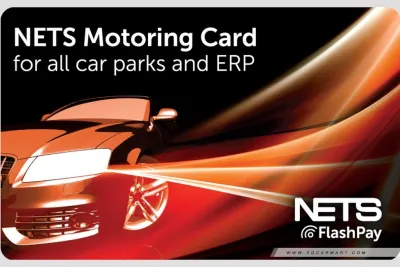
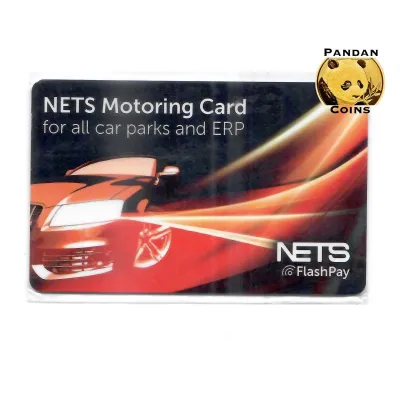
- You are a motorist who needs a dedicated physical card for Electronic Road Pricing (ERP) and car park payments via an In-Vehicle Unit (IU) or On-Board Unit (OBU).
- You prefer a single, versatile card that bridges transit and widespread retail tapping without managing multiple specialized transit accounts.
Verify first if:
- You qualify for government-subsidized concession schemes, which are restricted to designated card types.
- You need to confirm whether physical stored-value cards are still being issued at your preferred ticketing counter, as digital and account-based alternatives continue to expand.
Transit and Commuting: Navigating MRT and Bus Payments
Historically, both NETS FlashPay and EZ-Link cards have served as the baseline standard for public transport in Singapore. You can tap either card at MRT and LRT gantries, as well as on public buses across the island. The fundamental transit fare structure remains identical regardless of which card you choose, as fares are regulated by the Public Transport Council. However, the underlying technology used to process these fares has evolved significantly.
The transition to account-based ticketing, commercially known as SimplyGo, has changed how physical stored-value cards function. Under the traditional Card-Based Ticketing (CBT) system, your card’s monetary balance is stored directly on the physical chip embedded in the card. When you tap in or out at a transit gantry, the reader instantly reads and deducts the fare from the chip, displaying your remaining balance on the screen.
Under the SimplyGo account-based system, the monetary balance is stored on a back-end cloud server linked to your card’s identification number. When you tap your card, the gantry registers the transaction and processes the deduction on the backend. This means the gantry screen may display “SimplyGo” or “Under Processing” instead of showing your remaining balance in real time. To view your balance and transaction history, you must use the official SimplyGo mobile application or check at a physical ticketing machine.
While the Land Transport Authority (LTA) initially planned to phase out classic card-based ticketing entirely, public feedback led to a policy extension. Currently, both card-based ticketing and account-based SimplyGo systems operate concurrently. Commuters should verify the current status of their physical cards and check the latest LTA announcements to understand whether their card operates on the classic stored-value system or the SimplyGo platform.
Concession passes introduce another critical distinction. Subsidized travel schemes for students, senior citizens, workfare transport concession holders, and persons with disabilities are managed exclusively through specialized EZ-Link concession cards. These personalized cards require formal application and verification of eligibility. NETS FlashPay does not support these government-subsidized concession schemes, meaning anyone eligible for concessionary fares must use an EZ-Link concession card to receive discounted rates.
Retail Payments: Where Can You Tap and Pay?
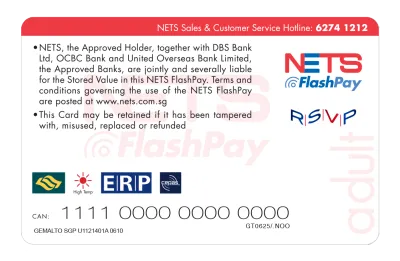
The retail utility of your reloadable card depends heavily on the payment infrastructure of the merchants you visit. NETS FlashPay is deeply integrated with the national NETS payment network, which is one of the most widely adopted cashless transaction systems in Singapore. Because it runs on this infrastructure, NETS FlashPay is accepted at thousands of retail outlets, convenience stores, supermarkets, and dining establishments that display the classic NETS logo.

This deep integration gives NETS FlashPay a distinct advantage in local food environments. Many hawker centers, coffee shops, and food courts operate on unified payment terminals that accept NETS payments. Tapping a NETS FlashPay card at these terminals is often faster and more widely supported than other stored-value alternatives, making it highly convenient for those who buy their daily meals at local hawker stalls.
EZ-Link has established its own proprietary retail merchant network over the years. While it may not have the same blanket coverage as the national NETS network in smaller hawker stalls, EZ-Link is widely accepted at major supermarket chains, convenience stores like 7-Eleven and Cheers, fast-food outlets, and public vending machines. For everyday grocery shopping and quick convenience store runs, an EZ-Link card is highly reliable.
Before committing to a single card for retail use, observe the payment decals displayed at your most frequently visited merchants, cafes, and hawker stalls. Many merchants display unified SGQR labels or terminal decals indicating exactly which cards are accepted. If your daily routine revolves around major retail brands, either card will serve you well. However, if you frequently patronize independent hawker stalls, the NETS FlashPay card often provides broader coverage.
Top-Ups and Card Management: Keeping Your Balance Ready
Maintaining a sufficient balance on your card is crucial to avoid being turned away at transit gantries or retail counters. Both card issuers provide multiple physical and digital funding channels, but the associated fees and convenience levels vary.
You can top up both NETS FlashPay and EZ-Link cards at physical terminals across Singapore, including SimplyGo Kiosks (formerly known as General Ticketing Machines) located at MRT stations and bus interchanges. Physical top-ups can also be completed at AXS stations, passenger service centres, and selected retail outlets.
When topping up at retail counters, such as convenience stores, be sure to verify potential administrative fees. Some convenience store chains charge a small service fee (typically around S$0.50 per transaction) for manual top-ups. To avoid these extra costs, you can use the official mobile apps to top up your card directly. By using an NFC-enabled smartphone, you can scan your physical card, select your preferred payment method, and transfer funds instantly without paying a convenience fee.
Monitoring your remaining balance also differs depending on the card type and its underlying system. For EZ-Link cards registered under the SimplyGo system, you can track your balance, view detailed trip histories, and set up automatic low-balance alerts via the SimplyGo mobile app. For NETS FlashPay, the official NETS App allows you to check your balance instantly by holding the physical card against your phone’s NFC reader.
Stored-value cards have a limited physical lifespan, typically lasting between 5 to 7 years from the date of manufacture. Once a card reaches its expiry date, the chip will deactivate, and you will no longer be able to use it for transit or retail transactions. You can check your card’s expiry date at any transit ticketing machine or via the respective mobile apps. If your card expires or becomes physically damaged, you can apply for a refund of the remaining balance through official customer service channels, such as SimplyGo Ticket Offices or online refund portals.
Beyond Commuting: ERP Parking, Libraries, and Extra Perks
Beyond public transit and retail shopping, reloadable cards offer specialized utilities that can influence your decision. For motorists in Singapore, the choice often leans heavily toward NETS FlashPay due to its integration with the motoring ecosystem.
NETS FlashPay is natively compatible with dual-mode In-Vehicle Units (IUs) and the newer On-Board Units (OBUs) used in Singapore’s Electronic Road Pricing (ERP) system and Electronic Parking System (EPS) car parks. Drivers can simply slot their physical NETS FlashPay card into their vehicle’s unit to pay for road tolls and parking fees automatically. While EZ-Link offers specialized motoring cards and account-based motoring payment services (such as EZ-Pay, which links your license plate directly to a credit card), the standard physical EZ-Link transit card is less commonly used in traditional dual-mode IUs. Motorists should check their specific vehicle unit requirements to determine which setup is more convenient.
For public services, both cards can be used at National Library Board (NLB) facilities. If you need to pay for printing, photocopying, or administrative fees at a public library, the payment kiosks are generally equipped to accept both NETS FlashPay and EZ-Link. Always follow the on-screen instructions at the library terminal to complete your transaction.
Reward programs provide another point of comparison. EZ-Link features a structured loyalty program integrated into its official mobile app. By registering your EZ-Link card in the app, you earn reward points for every transit and retail transaction. These points can be accumulated and redeemed for retail vouchers, dining discounts, or partner promotions. NETS FlashPay occasionally runs promotional campaigns and merchant partnerships, but it does not offer a permanent, points-based loyalty program in the same manner as EZ-Link.
Final Decision Framework: Which Card Should You Get?
To determine the best card for your daily routine, consider how your needs align with the unique strengths of each system. This structured checklist can help guide your choice:
- Choose NETS FlashPay if:
- You drive a vehicle and need a reliable card to slot into your dual-mode IU or OBU for ERP tolls and car park fees.
- You frequently buy meals at local hawker centers and food courts that utilize the national NETS payment network.
- You prefer a straightforward, card-based stored-value experience for both transit and retail without managing separate digital accounts.
- Choose EZ-Link if:
- Your daily routine is primarily focused on public transit via MRT trains and public buses.
- You or your children qualify for subsidized concession fares, which require a dedicated physical concession card.
- You want to accumulate loyalty points on your daily transit spend and redeem them for shopping and dining rewards.
- Neither option may fit if:
- You prefer to streamline your wallet by using direct contactless credit cards, debit cards, or mobile payment systems (such as Apple Pay or Google Pay) via SimplyGo. This approach eliminates the need to monitor, manage, and top up a separate physical stored-value card entirely.
Before purchasing a new physical card, verify the latest official announcements from Singapore’s transit and payment authorities. The digital payment landscape continues to evolve, and staying informed ensures that your chosen payment medium remains fully compatible with your lifestyle.
Frequently Asked Questions (FAQ)
Can I use my NETS FlashPay or EZ-Link card outside of Singapore?
Standard NETS FlashPay and EZ-Link cards are designed exclusively for domestic use within Singapore’s transit and retail networks. They cannot be used for transit or retail payments in other countries. However, specialized co-branded cards, such as the EZ-Link x Touch ‘n Go card, have been developed for cross-border travel between Singapore and Malaysia. This specific card contains two separate electronic purses: an EZ-Link purse denominated in Singapore Dollars (SGD) and a Touch ‘n Go purse denominated in Malaysian Ringgit (MYR). If you plan to travel across the border, verify current cross-border payment agreements and purchase the appropriate co-branded card before your trip.
What happens to my balance if I lose my physical card?
If you lose an unregistered physical stored-value card, the remaining balance cannot be recovered, as anyone who finds the card can use the stored funds. To protect your balance, you should register your card through the official mobile apps. If you lose a registered SimplyGo EZ-Link card or a personalized concession card, you can report the loss immediately via the SimplyGo app or customer service hotline. Once reported, the card will be blocked within a specified timeframe, preventing further unauthorized transactions. Any remaining balance can then be refunded or transferred to a new card, subject to the issuer’s terms and conditions. Always check the specific lost-card policies on the issuer’s official portal to ensure your funds are protected.
Community discussion
Share your experience or ask a question. Comments are reviewed before publication.