
Quick Answer: Which Brand Fits Your Note-Taking Style?
Selecting the right campus notebook can significantly impact your academic performance, writing comfort, and organization throughout a demanding university semester. The ideal choice depends on your preferred writing instruments, academic discipline, budget constraints, and organizational habits.
Before committing to a stack of notebooks for the upcoming academic year, consider this conditional decision framework to identify which brand aligns with your daily study routine:
- Choose Kokuyo (Campus series) if you need reliable, highly structured, and affordable paper optimized for gel pens and ballpoints. It is the premier choice for STEM students, mathematics lectures, and structured note-taking methods like the Cornell system.
- Choose Muji if you prefer a clean, minimalist aesthetic, write with standard gel pens or pencils, and want highly budget-friendly options. It is ideal for general humanities lectures, personal journaling, and students who prefer flexible, understated layouts.
- Choose Rhodia if you primarily write with fountain pens, require ultra-smooth paper to prevent ink feathering, and prefer top-bound or side-bound pads for quick, clean page removal. This is a premium option best suited for dedicated handwriting enthusiasts, laboratory reports, or design brainstorming.
The ultimate notebook is not defined by brand prestige alone, but by how harmoniously the paper fibers interact with your daily writing tools and the physical demands of your academic schedule.
Products mentioned in this guide
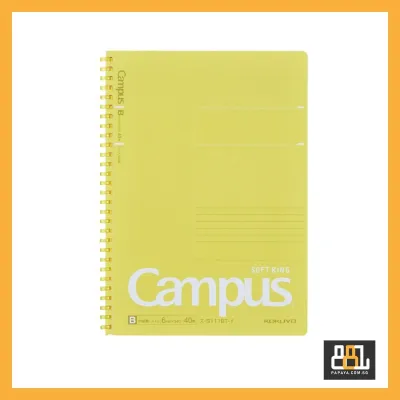
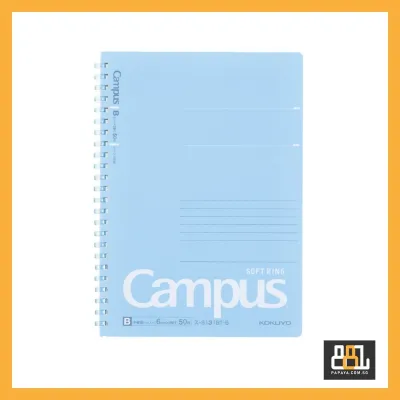
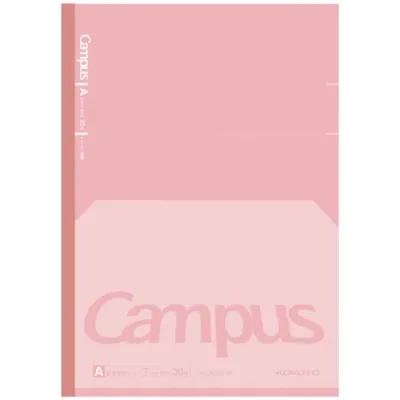
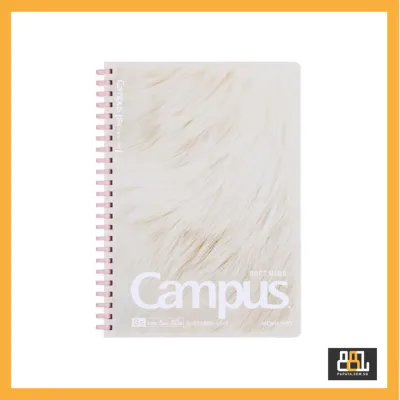
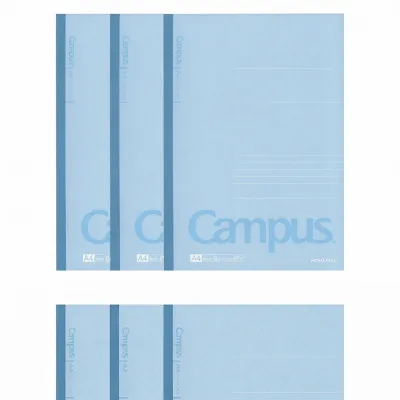
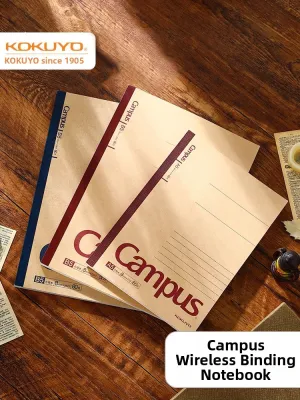
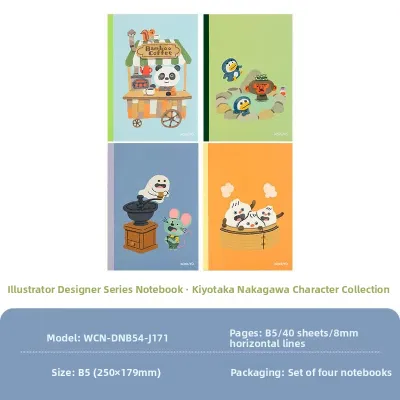
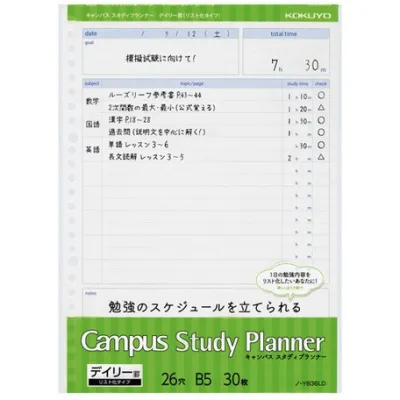
Prices are valid at publication and may change. Please refer to the product page for the latest price.
Paper Quality and Pen Compatibility for Daily Lectures
Paper quality is the foundation of any note-taking experience. It dictates how smoothly your pen glides across the page, how quickly the ink dries, and whether your notes remain legible on both sides of the sheet. When evaluating Kokuyo, Muji, and Rhodia, the paper weight, texture, and manufacturing processes create distinct writing experiences.

Kokuyo
Kokuyo is celebrated for its proprietary paper formulations, most notably its “Sarasara” (smooth) and “Shikkari” (firm) lines. The Sarasara paper is engineered to minimize friction, allowing gel pens and rollerballs to glide effortlessly with minimal hand fatigue during rapid-fire lectures. The paper weight is typically around 70 to 75 GSM (grams per square meter), yet it performs exceptionally well due to specialized sizing agents applied during manufacturing. This treatment prevents ink from spreading, making it highly compatible with popular Japanese gel pens, standard ballpoints, and mild highlighters without causing excessive bleed-through.
Muji
Muji offers a more varied selection, ranging from standard plantation paper to recycled paper options. Because Muji sources its paper from different factories depending on the product line, the writing experience can vary. Their standard high-quality notebooks feature smooth, forest-certified paper that handles gel pens beautifully. However, their recycled paper options tend to have more “tooth” or texture, which provides pleasant feedback for pencil users but can cause wet ink from fountain pens or heavy highlighters to feather or bleed. If you use wet ink, it is crucial to check the product label for higher-GSM options.
Rhodia
Rhodia notebooks utilize premium 80 GSM or 90 GSM Clairefontaine vellum paper, manufactured in France. This paper is exceptionally smooth, satin-finished, and virtually acid-free. It is widely considered the gold standard for fountain pen users because the coated surface keeps ink on top of the paper rather than absorbing it deeply. This prevents feathering (where ink spreads sideways along paper fibers) and bleed-through (where ink penetrates to the back of the page). The trade-off is a slightly longer ink drying time, which left-handed writers or fast-paced note-takers should test to avoid accidental smudging.
Actionable Verification Advice
To ensure your preferred pen matches your notebook choice, always verify the paper specifications on the packaging. Do not rely solely on brand reputation, as paper batches and formulations can change. Before writing your first set of lecture notes, perform a simple ink test on the very last page of the notebook. Apply your heaviest highlighters, gel pens, and fountain pens in small swatches, then check the reverse side for ghosting (shadowing) or direct bleed-through. This quick check prevents you from ruining valuable study sheets later.
Binding, Durability, and Lay-Flat Comfort
A notebook must survive the physical rigors of university life, which involves being stuffed into crowded backpacks, carried across campus, and balanced on tiny lecture hall desks. The binding style directly affects both the longevity of the notebook and how comfortably you can write near the margins.
Kokuyo
Kokuyo Campus notebooks are famous for their wireless glue binding. This advanced binding method allows the notebook to lie completely flat when opened, providing an uninterrupted writing surface across two-page spreads. This flat-lay capability is incredibly helpful when scanning notes with mobile document apps or when writing long mathematical equations. Additionally, Kokuyo offers “Soft Ring” notebooks, which replace traditional rigid metal spirals with soft, flexible olefin rings. This design prevents the painful indentation on your hand when writing on the left side of a page.
Muji
Muji utilizes thread-stitched, staple-bound, and traditional wire-o spiral bindings. Their thread-stitched notebooks offer excellent lay-flat performance and are highly durable, as the pages are sewn in sections rather than simply glued. Muji’s minimalist covers, often made of sturdy kraft paper or flexible polypropylene (PP), provide excellent protection against moisture and bending. The PP covers are particularly advantageous in humid climates, preventing the edges of your pages from curling when exposed to atmospheric moisture or accidental spills inside your bag.
Rhodia
Rhodia is synonymous with staple-bound and glue-bound notepad formats, though they also produce traditional wirebound notebooks. Their classic top-bound pads feature a highly durable, water-resistant cardstock cover that is scored to fold back neatly over the top of the pad, staying completely out of your way while you write. Rhodia pages are micro-perforated at the top, allowing you to tear out sheets cleanly and effortlessly. This makes them perfect for submitting physical homework assignments, sharing notes with classmates, or scanning individual sheets without leaving messy, jagged edges.
Practical Choice Guidance
When choosing a binding, evaluate your daily writing environment. If you frequently study on public transport or use small, fold-down lecture theatre desks, a spiral-bound notebook or a top-bound Rhodia pad is highly practical because you can fold the cover completely back to halve the physical footprint of the notebook. If you prefer writing continuous, structured outlines across wide spreads at a library desk, a thread-bound Muji or wireless-bound Kokuyo notebook will serve you better.
Ruling Formats and Sizes for University Subjects
Different academic subjects demand different page layouts. A layout that works perfectly for a literature essay may be completely frustrating for a physics derivation or an organic chemistry structure.
Sizes
- B5 (176mm x 250mm): This is the signature size for Kokuyo Campus notebooks and is highly popular among university students. It sits comfortably between the larger A4 size and the compact A5 size, offering ample writing space while fitting perfectly on cramped lecture desks.
- A5 (148mm x 210mm): Muji and Rhodia offer extensive selections in this highly portable size. It is excellent for humanities classes, quick journaling, or carrying light in a small bag.
- A4 (210mm x 297mm): Preferred for highly detailed diagrams, engineering sketches, or extensive lab notes. Rhodia and Muji provide excellent A4 options, though they require more desk space.
Ruling Formats
- Dotted Ruled (Kokuyo Speciality): Kokuyo pioneered the dotted-line ruling, featuring subtle dots spaced evenly along horizontal ruled lines. This format allows you to align vertical text, draw neat diagrams, create clean columns, and sketch graphs without the visual clutter of a full grid.
- Grids (5mm): Available across all three brands. Grids are indispensable for mathematics, computer science, and engineering, as they assist with alignment, scaling, and drawing precise geometric shapes.
- Dotted and Blank: Muji and Rhodia excel in offering clean dotted and completely blank pages. Dotted pages provide a subtle guide for creative mind-mapping and design, while blank pages offer absolute freedom for sketching and free-form brainstorming.
Matching Formats to Academic Disciplines
For STEM and engineering courses, prioritize Kokuyo’s dotted-ruled or grid B5 notebooks, which facilitate structured calculations and quick technical drawings. For humanities, business, or law courses where heavy text-based outlines are the norm, standard ruled lines in A5 or B5 sizes from Muji or Kokuyo provide a familiar, organized flow. For design, architecture, or creative writing, the blank or dotted formats from Muji or Rhodia offer the open canvas required for visual thinking.
Price, Value, and Where to Buy in Singapore
University budgets require balancing quality against overall cost. Calculating the true value of a notebook involves looking beyond the initial shelf price and considering the cost-per-page alongside the usability of the paper.
Relative Pricing and Value Calculation
Kokuyo and Muji are highly accessible, budget-friendly options. In Singapore, a single Kokuyo Campus notebook or a Muji thread-bound notebook typically costs between S$1.50 and S$4.00, depending on the size and sheet count. Buying Kokuyo notebooks in multi-packs (such as the popular 5-packs) further reduces the unit cost, making them incredibly economical for a full semester of courses.
Rhodia is positioned as a premium stationery brand, with individual pads or notebooks generally ranging from S$6.00 to S$15.00. While the upfront cost is higher, the value of Rhodia lies in its superior paper weight and coating. Because the paper completely resists ink bleed-through, you can comfortably write on both sides of every sheet. This effectively doubles the usable surface area compared to cheaper, lower-grade notebooks where ink bleeds through, forcing you to leave every second page blank.
Where to Buy in Singapore
Finding these brands in Singapore is highly convenient, thanks to a mix of physical retail stores and online marketplaces:
- Muji: Visit any of the physical Muji flagship or neighborhood stores across Singapore (such as Plaza Singapura, Jewel Changi, or Ion Orchard) to browse their complete paper and stationery collection in person.
- Kokuyo: Widely available at major stationery retailers and bookstores across the island, including Hands (formerly Tokyu Hands), Kinokuniya, Popular Bookstore, and specialized stationery shops like NBC Stationery & Gifts.
- Rhodia: Best sourced at premium bookstores like Kinokuniya, art supply stores, and specialized local stationery boutiques.
- Online Marketplaces: Local e-commerce platforms host official brand stores and authorized distributors. Buying online is particularly advantageous for purchasing Kokuyo Campus multi-packs or bulk Muji bundles.
Verification Warning for Online Shoppers
When purchasing notebooks online, always verify the seller’s authenticity and check recent customer reviews to ensure you are receiving genuine products. Look out for batch consistency comments, as counterfeit or older, poorly stored stationery batches can suffer from degraded paper quality due to improper humidity control in warehouses. Additionally, confirm the exact dimensions and page counts in the product descriptions before checking out, as product photos can sometimes make smaller A6 or A5 notebooks look like standard B5 or A4 sizes.
Quick Comparison Matrix
To help you compare these three popular brands at a glance, the table below summarizes their key specifications, strengths, and relative price tiers:
| Brand | Best For | Standard Paper Type | Common Campus Sizes | Binding Styles | Relative Price Tier |
|---|---|---|---|---|---|
| Kokuyo | STEM subjects, gel pens, and structured layouts | 70–75 GSM (Sarasara / Shikkari) | B5, A5 | Wireless glue, Soft Ring, staple | Budget-friendly to Mid-range |
| Muji | Minimalist design, pencil/gel pen use, and general notes | Varying GSM (plantation & recycled) | A4, A5, B5 | Thread-stitched, spiral, staple | Budget-friendly |
| Rhodia | Fountain pens, quick tear-off notes, and premium writing | 80–90 GSM Clairefontaine vellum | A4, A5 | Staple-bound (top), wirebound | Premium |
Frequently Asked Questions (FAQ)
Can I use fountain pens and heavy highlighters in Muji and Kokuyo notebooks?
Whether you can use fountain pens and heavy highlighters without bleed-through depends heavily on the specific paper line and ink wetness. Standard thin pages in basic Muji or Kokuyo notebooks may experience mild ghosting or feathering with very wet fountain pen inks or heavy, multi-layered highlighter strokes.
If you plan to use these writing tools, look specifically for Kokuyo’s high-grade paper series or Muji’s thicker, high-quality forest-certified paper options. Always perform a quick ink test on the very last page of your notebook before starting your main notes to verify how your specific pen and ink combination behaves.
Are Rhodia pads practical for carrying around campus every day?
Rhodia pads are highly durable due to their thick, water-resistant cardstock covers and rigid backboards, but they require some care when carried in a busy student backpack. Because they are designed with a top-stapled fold-over cover, the edges of the pages can occasionally catch or bend if the pad is tossed loosely into a cluttered bag alongside heavy textbooks and laptops.
To keep your Rhodia pad in pristine condition during your daily campus commute, store it inside a dedicated laptop sleeve, a rigid folder, or a structured compartment within your backpack. Alternatively, you can invest in a reusable notebook cover to protect the pad’s edges from wear and tear.
Community discussion
Share your experience or ask a question. Comments are reviewed before publication.