
Selecting a daily planner in Singapore involves balancing aesthetic preferences with functional paper performance. When comparing a MUJI planner to Kokuyo and Midori notebooks, the decision often comes down to how the paper interacts with your preferred writing instruments and how the binding fits your daily routine. Rather than declaring a single universal winner, finding the right notebook requires evaluating key criteria: paper weight, ink handling, binding durability, and overall cost-to-value ratio. Because paper formulations can change and batch variations occur, users should check physical product labels for specific paper weights or conduct a personal swatch test before committing to a full year of planning.
In Singapore’s humid climate, paper behavior can change significantly. High humidity can cause paper fibers to expand slightly and absorb moisture from the air, which directly impacts ink drying times and feathering. Therefore, understanding the physical characteristics of your notebook paper is essential for maintaining clean, legible entries throughout the year.
Paper Weight, Thickness, and Opacity
Paper weight is typically measured in grams per square meter (GSM). When browsing planners at local retail outlets, you should look for this specification on the product packaging or the manufacturer’s official website. A higher GSM generally indicates a thicker, heavier sheet, which often provides better resistance to ink show-through, also known as ghosting. However, GSM alone does not determine opacity; the manufacturing process, fiber density, and fillers used in the paper also play critical roles.
Products mentioned in this guide
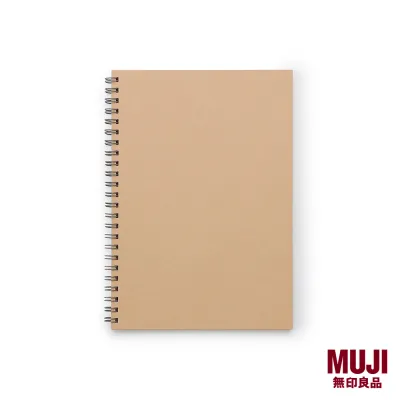
Prices are valid at publication and may change. Please refer to the product page for the latest price.
To verify how a notebook handles show-through before committing to a purchase, you can perform a simple opacity check if a sample notebook is available in-store. Place a heavily printed text block, such as a page from a book or a dark card, directly beneath a single sheet of the planner paper. Observe how clearly the text or shapes shine through the page under standard overhead lighting. If the underlying text is highly visible, you can expect significant ghosting when using dark gel pens or liquid inks.
It is also important to note that perceived thickness can be deceptive. Some papers undergo heavy calendering—a process where paper is pressed between rollers to make it smoother and thinner. This means a highly compressed paper might feel thin to the touch but still possess a high GSM and excellent opacity. Conversely, uncalendered papers may feel thick and textured but have a lower density, leading to unexpected ink bleed. Relying on physical touch, light tests, and label verification is always more reliable than assuming performance based on brand reputation alone.
Writing Experience and Ink Compatibility
Because stationery users employ a wide variety of writing instruments—ranging from fine-point gel pens to wet fountain pens and water-based highlighters—conducting a personalized swatch test is the most reliable way to evaluate paper compatibility. To do this, dedicate the very last page of your notebook to a systematic test grid. Draw a series of solid blocks, fine lines, and quick scribbles using each of your daily writing tools, then observe the results closely.

When evaluating your swatch test, look for three primary physical phenomena:
- Feathering: This occurs when ink spreads sideways along the paper fibers, creating fuzzy, distorted lines instead of sharp edges.
- Bleed-through: This happens when ink penetrates entirely through the sheet, appearing as wet spots or stains on the reverse side of the page.
- Drying Time: Write a quick line of text and run a clean finger across it at intervals of two, five, and ten seconds to determine how long the ink takes to set completely.
Smooth, coated papers often slow down ink absorption, which can result in exceptionally sharp lines and vibrant ink colors, but this comes at the cost of longer drying times. In Singapore’s humid environment, slow-drying ink is highly susceptible to smudging when you close your planner quickly. On the other hand, more textured, absorbent papers draw ink in rapidly, leading to near-instant drying times but increasing the risk of feathering and line spreading. Your choice should align with your primary writing tool; a fast-drying gel pen pairs well with smooth surfaces, while a wet fountain pen requires a paper specifically engineered to resist deep ink penetration.
Binding, Layout, and Planner Usability
Beyond the paper itself, the physical construction of a planner dictates how comfortably you can write in it daily. Standard planners generally utilize one of three binding methods: ring-bound, perfect-bound (adhesive), or thread-stitched. Ring-bound and wire-o systems allow the planner to fold completely back on itself, saving desk space, but the central rings can obstruct your hand when writing near the margins.
Thread-stitched binding is highly favored for planners because it allows the book to lie completely flat when opened on a desk. This flat-lay capability ensures that you can write comfortably across the entire width of the page, including the inner margins, without having to constantly hold the pages down. When evaluating a notebook in a store, open it to the middle section and place it on a flat surface; if the pages spring upward or require heavy pressure to stay open, the binding may cause frustration during long writing sessions.
Layout options also vary widely across these brands. You will encounter minimalist blank pages, traditional horizontal lined formats, dot grids, and structured weekly or monthly calendars. Before purchasing, check the specific grid or line spacing, which typically ranges from 3mm to 7mm. A smaller grid size suits compact, detailed print, while wider spacing is better for bold, cursive handwriting. Additionally, verify if the planner includes specialized pages like habit trackers, project columns, or perforated memo sheets that align with your specific organizational style.
Evaluating Price and Value in Singapore
To determine the true value of a planner, look beyond the initial retail price tag and calculate the cost per usable page. You can find this by dividing the retail price in Singapore Dollars (S$) by the total number of pages available for actual writing. Keep in mind that some planners dedicate a significant portion of their volume to non-writing pages, such as regional transit maps, unit conversion tables, or multi-year calendars, which may reduce the space available for your daily journaling.
Retail prices and stock availability can fluctuate, so it is wise to verify current pricing across multiple channels. You can check official brand boutiques located in major shopping districts along Orchard Road, specialized stationery retailers in the Bras Basah area, or general online marketplaces. Some brands import specialized editions that are only available during the year-end planning season, while others maintain a consistent year-round inventory of standard refills.
Ultimately, the most cost-effective option is the one that matches your writing habits. A budget-friendly notebook offers poor value if its paper causes your daily gel pen to smear or bleed through, forcing you to leave every alternate page blank. Conversely, a premium, higher-priced notebook is an unnecessary expense if you only write brief notes with a standard ballpoint pen that performs adequately on almost any paper grade.
Decision Framework: Choosing the Right Notebook
To simplify your selection process, use this conditional framework based on your primary writing priorities and daily routines:
- Choose a minimalist, modular system if you prefer a highly customizable layout, frequently swap out different sections, or primarily write with standard ballpoint and fine gel pens. These systems allow you to carry only the pages you need, keeping your daily carry light and adaptable.
- Choose a highly structured, smooth-paper notebook if you require precise grid layouts, write with fine-point pens, and value clean, compact organization. This option is ideal for detailed bullet journaling where page numbers and index layouts are highly utilized.
- Choose a premium, thread-stitched notebook if you write with wet fountain pens, enjoy a tactile, slightly textured paper surface, and require a book that lies perfectly flat on your desk. This style is best suited for long-form journaling and creative planning where paper texture is part of the sensory experience.
Before committing to a full-year planner or purchasing notebooks in bulk, it is highly recommended to buy a single pocket-sized notebook or a small sample pack from your brand of choice. This allows you to conduct a physical trial at home with your own pens and inks, ensuring the paper performs to your expectations under your local writing conditions.
Frequently Asked Questions (FAQ)
Can I use fountain pens on standard MUJI planner paper?
Fountain pen compatibility on standard MUJI planner paper depends heavily on the specific ink formulation and nib size you use. Finer nibs that lay down less ink generally perform well, whereas broad nibs or highly saturated, wet inks may result in observable feathering or ghosting. To prevent ruining your main planner pages, always perform a quick swatch test in an inconspicuous corner or on the very last page of the notebook to verify how your specific pen-and-ink combination behaves.
Are Kokuyo and Midori notebooks widely available in Singapore retail stores?
Yes, both Kokuyo and Midori notebooks are widely available across Singapore, though stock levels and specific product lines vary by location. You can find a broad selection of these Japanese stationery brands at major local bookstore chains, dedicated stationery specialty shops in central districts, and official brand boutiques. For specific layouts or limited-edition planners, checking the online marketplaces of authorized local distributors is often the most efficient way to confirm real-time stock availability.

Community discussion
Share your experience or ask a question. Comments are reviewed before publication.