
When choosing a planner in Singapore, the MUJI planner stands out as a highly accessible, minimalist option that balances cost and performance. MUJI planner paper is generally characterized by its signature smoothness, light-to-moderate weight, and excellent compatibility with standard gel pens and ballpoint pens. It is an ideal fit for budget-conscious planners, minimalists, and those who rely on daily gel pen writing.
However, it is not a one-size-fits-all solution. Those using heavy fountain pens, wet ink markers, or multi-layered watercolor washes may find MUJI’s standard paper prone to ghosting and feathering. The paper performance also varies between MUJI’s recycled lines and their high-quality plantation paper lines, which users must verify before purchasing. Understanding these subtle material differences is key to selecting the right planner system for your daily routine.
Key Criteria for Comparing Planner Paper Quality
Evaluating planner paper requires looking past aesthetic appeal to understand the physical and chemical properties that dictate how paper behaves under a pen tip. By focusing on objective metrics, you can accurately predict how a notebook will handle your preferred writing instruments.
Products mentioned in this guide
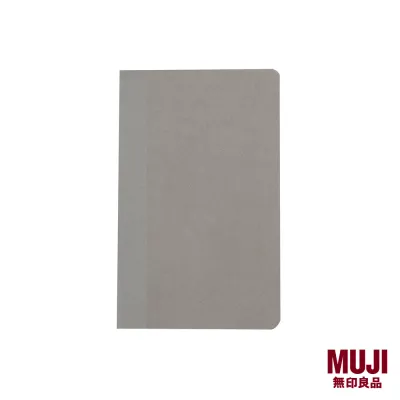
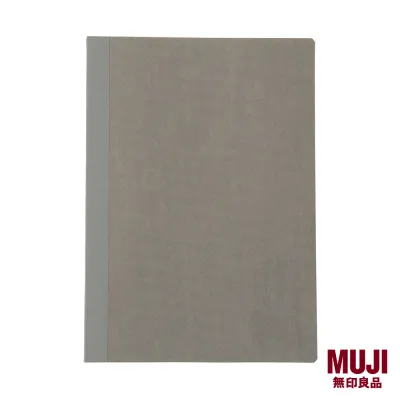
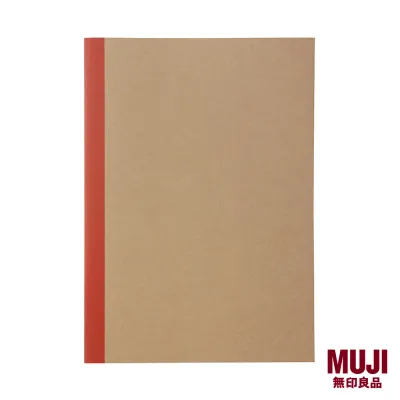
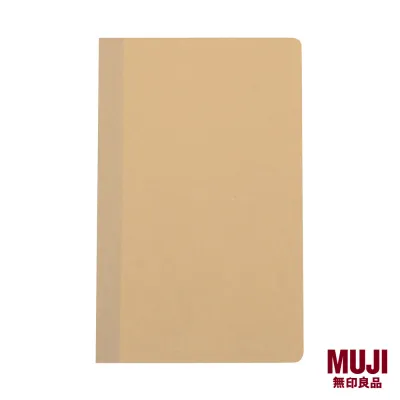
![[Bundle of 5] MUJI Notebook Type Loose Leaf (Line / A5)](https://img.lazcdn.com/g/p/9e1be58f7df57aa5937221b1383163d4.jpg_400x400q80.jpg_.webp)
![[Bundle of 5] MUJI Craft Notebook (Beige/Ruled/A4)](https://img.lazcdn.com/g/p/e1b52a0f6540b819cc6b05cf49754244.jpg_400x400q80.jpg_.webp)
Prices are valid at publication and may change. Please refer to the product page for the latest price.
Paper Weight (GSM) and Opacity
Paper weight is measured in GSM, or grams per square meter, which indicates the density and thickness of the sheet. A higher GSM, typically ranging from 80 to 120 GSM in standard planners, provides a thicker barrier that increases opacity, preventing ink from showing through to the other side. Lower GSM papers, such as 50 to 70 GSM, allow for a thinner, lighter, and more portable planner, but they are highly susceptible to “ghosting”—where writing is visible as a shadow on the reverse side of the page—and “bleeding,” where ink physically penetrates the fibers to the next sheet. When shopping, always check the packaging label or product specifications for the exact GSM rather than relying on visual guesses.
Texture and Sizing
Sizing is a chemical treatment applied during paper manufacturing to regulate how much liquid the paper absorbs. Highly sized paper has a protective barrier that resists moisture, keeping ink on the surface to prevent “feathering”—the spiderweb-like spreading of ink along paper fibers. This keeps your lines sharp, though it can extend drying times. Texture, often referred to as the paper’s “tooth,” describes its physical roughness. Toothy paper provides tactile feedback and grip, which is excellent for pencil users and helps control fountain pen ink flow. In contrast, ultra-smooth paper allows gel and ballpoint pens to glide effortlessly across the page, though it requires quick-drying inks to prevent smudges.
Binding and Lay-Flat Ability
The utility of a planner depends heavily on its binding structure. A true 180-degree lay-flat binding, often achieved through thread sewing (Smyth sewn) or specialized lay-flat glue bindings, is essential for planners. It allows you to write comfortably across the entire page, including the central gutter, without having to hold the notebook down with your off-hand. Poorly bound notebooks use stiff adhesive “perfect binding” that forces the book to snap shut or causes ink to pool in the deep crease of the spine, disrupting your planning flow and potentially cracking the spine over time.
Ink Compatibility
Planner papers react differently depending on the ink’s chemical composition. Gel pens use water-based gel suspensions that require a moderately absorbent surface to dry quickly without feathering. Oil-based ballpoint inks glide easily on almost any smooth surface without bleeding. Water-based fountain pen inks, fineliners, and alcohol-based markers are highly liquid and demand high-quality sizing or dense, high-GSM paper to prevent the ink from soaking through the sheet.
The MUJI Writing Experience: Texture, Opacity, and Ink Handling
MUJI has built a global reputation on functional, unbranded simplicity, and their planner paper reflects this design philosophy. The paper is engineered for high-volume, everyday utility rather than specialized artistic media.

Visual and Tactile Feel
MUJI planner paper is highly regarded for its off-white or soft cream coloration. This gentle tone is intentionally selected to reduce eye strain under the bright, harsh fluorescent lighting common in Singapore’s libraries, classrooms, and offices. Tactilely, the paper feels remarkably smooth and silky to the touch. It offers very little friction, allowing fine-tip pens to glide effortlessly.
Everyday Writing Performance
For the average Singaporean user who pairs their planner with standard gel pens (such as MUJI’s iconic gel ink cap pens in 0.38mm or 0.5mm sizes) or fine rollerballs, the paper performs exceptionally well. The ink lays down in clean, sharp lines with virtually zero feathering. However, because the paper surface is quite smooth and moderately sized, drying times can be slightly longer than on rougher, more porous papers. Left-handed writers, in particular, should be mindful of this, as dragging a hand across freshly written text can lead to smudging.
Limitations with Wet Inks
The primary trade-off for MUJI’s smooth, lightweight paper is its performance with wet writing instruments. If you enjoy using medium or broad nib fountain pens, wet rollerballs, or heavy water-based highlighters, you will likely encounter “ghosting.” While the ink rarely bleeds entirely through to ruin the next page, the shadow of your writing will be highly visible on the backside. This can make writing on both sides of a page distracting for some users. This limitation is a direct result of keeping the planner compact and lightweight.
Local Value Proposition
In Singapore, the accessibility of MUJI stationery is unmatched. With numerous physical retail outlets situated in major shopping centers across the island—from Orchard Road to Jewel Changi, Plaza Singapura, and Bugis Junction—as well as official online storefronts, purchasing a planner or sourcing refills is incredibly convenient. MUJI planners are moderately priced, typically ranging from S$3 to S$15 depending on the size (standard A5, B6, or A6) and binding style. This makes them a highly attractive “sweet spot” for consumers who want reliable, high-quality paper without the steep import markup of specialty European or premium Japanese brands.
MUJI vs. Other Popular Notebook Categories in Singapore
To understand where MUJI fits in your stationery lineup, it helps to compare its paper characteristics against other major notebook categories available in the local market.
Japanese Premium Paper Alternatives
When compared to high-end Japanese stationery brands like Midori MD, Hobonichi (which features Tomoe River paper), or Kokuyo Campus, MUJI’s standard paper occupies a different tier. Specialized premium papers are engineered specifically for fountain pen users. Tomoe River paper, for instance, is incredibly thin (often 52 GSM) yet features a proprietary surface treatment that completely prevents bleeding and feathering, allowing complex fountain pen inks to display their unique shading, sheen, and shimmer. Midori MD paper is slightly thicker and offers a distinct “toothy” feedback that some writers prefer for better pen control.
However, these premium planners come with a significant price jump, often retailing between S$20 and S$60+ in Singapore specialty stationery shops. If you are a dedicated fountain pen enthusiast or an ink collector, upgrading to these premium Japanese options is highly recommended to fully appreciate your writing instruments.
European Hardbound Notebooks
European brands like Leuchtturm1917, Rhodia, and Moleskine offer a starkly different philosophy compared to MUJI. These notebooks typically feature heavier paper weights, often ranging from 80 to 120 GSM, resulting in much higher opacity. This makes them significantly more suitable for bullet journalists who use a variety of media, including mild markers, stamps, and heavy fineliners, with minimal ghosting. They also favor structured layouts, such as precise dot grids, and come bound in durable hardcovers with elastic closures and page marker ribbons.
The trade-off here is portability and price. These European notebooks are bulkier, heavier to carry in a daily commute on the MRT, and generally cost between S$25 and S$45. MUJI’s minimalist, softcover, or simple staple-bound designs are far lighter and more pocket-friendly, though they lack the rugged protection of a hardcover.
Budget and Mass-Market Brands
On the other end of the spectrum are the budget, mass-market notebooks commonly found in local neighborhood bookstores, supermarkets, or value shops. These ultra-budget options are highly economical but come with significant trade-offs. They often use low-grade, highly acidic wood pulp paper that yellows and degrades over time. Because these papers lack proper sizing, they act like paper towels—absorbing ink rapidly, causing severe feathering, and allowing standard gel pens to bleed through multiple pages. Furthermore, their bindings are often poorly constructed, leading to loose pages after only a few weeks of use.
MUJI serves as a reliable upgrade from these budget options. By offering acid-free, smooth plantation paper and durable bindings at a price point only slightly higher than mass-market brands, MUJI provides the ideal balance of affordability and performance.
Final Verdict: Which Planner Paper Should You Choose?
Your choice of planner paper ultimately depends on your writing tools, planning style, and budget. Use the following guidelines to make your decision:
- Choose MUJI if: You appreciate minimalist aesthetics, prefer lightweight and portable planners, primarily write with standard gel pens or ballpoints, and want a highly accessible, budget-friendly option that you can easily replace at local Singapore retail outlets.
- Choose Japanese Premium if: Your daily planning involves fountain pens, you enjoy seeing complex ink properties like sheen and shading, you prefer ultra-thin yet highly bleed-resistant paper, and you have a higher budget to invest in specialized stationery.
- Choose European Hardbound if: You run a detailed bullet journal system, use heavy markers or stamps, prefer structured dot grids, and need a highly durable, structured notebook with a hardcover that can withstand daily commuting.
Before making your final decision, keep in mind that MUJI offers several paper varieties. Their recycled paper lines have a slightly rougher texture and lower bleed resistance, whereas their high-quality plantation paper lines are much smoother and handle ink better. We highly recommend visiting a local MUJI branch to physically touch the paper and, if possible, perform a quick test with your favorite pens on a single notebook before committing to a full-year planner system.
Frequently Asked Questions (FAQ)
Does MUJI paper work well with fountain pens?
While MUJI paper is exceptionally smooth and comfortable to write on, standard MUJI planner paper is not fully optimized for wet fountain pens. If you use wet inks or broad nibs, you will likely experience visible ghosting on the reverse side of the page, along with occasional feathering. If you wish to use a fountain pen in a MUJI planner, we recommend pairing it with a fine or extra-fine nib and using drier, well-behaved inks. For a dedicated fountain pen experience, specialized Japanese premium brands remain the superior choice.
How can I prevent ink smudging on smooth planner paper?
Because smooth, sized paper keeps ink on the surface rather than absorbing it instantly, drying times can be slightly longer, especially in Singapore’s humid tropical climate. To prevent smudging, consider using quick-dry gel pens or fine-tip ballpoint pens. Additionally, you can place a clean sheet of scrap paper or a dedicated blotting card under your hand as you write to prevent skin oils from transferring to the page and to catch any wet ink. Left-handed writers may also benefit from using fast-drying pigment inks.
Are MUJI planners refillable or strictly bound?
MUJI offers both bound and customizable options in the Singapore market. You can find traditional thread-bound yearly planners and minimalist notebooks that are strictly bound. However, MUJI also provides customizable binder systems, such as their popular 20-ring (A5) and 26-ring (B5) binders, which allow you to purchase loose-leaf planner inserts and refills separately. This modular system lets you swap out pages, mix grid styles, and reuse the outer cover year after year. Always check your local store’s inventory or official online storefronts to verify the current availability of specific refillable inserts and compatible binder covers.
Community discussion
Share your experience or ask a question. Comments are reviewed before publication.