
Choosing the right stationery in Singapore often comes down to balancing aesthetic appeal with daily functional performance. While MUJI has built a dedicated following for its clean, minimalist design, brands like Kokuyo, Lihit Lab, and various local favorites offer specialized features that may better suit your specific tasks.
The ideal choice depends on your primary activities: if you prioritize a cohesive, understated desk setup, MUJI’s unified design language is highly compelling. However, if your work demands highly specialized ink formulations, heavy-duty cutting edges, or wrinkle-free paper bonding, alternative brands frequently provide targeted solutions that outperform a generalist minimalist approach.
Evaluating Pens: Ink Types, Nib Sizes, and Writing Comfort
When evaluating pens, the ink formulation dictates how the pen behaves on different paper weights. Gel pens, popular for their vibrant lines, require checking the manufacturer’s label for drying speed and smudge resistance, especially if you are left-handed. Ballpoint pens typically offer longer-lasting ink reservoirs and faster drying times, making them reliable for rapid note-taking on standard copy paper. Rollerball pens use water-based inks that flow effortlessly but may require a heavier paper stock to prevent feathering.
Products mentioned in this guide
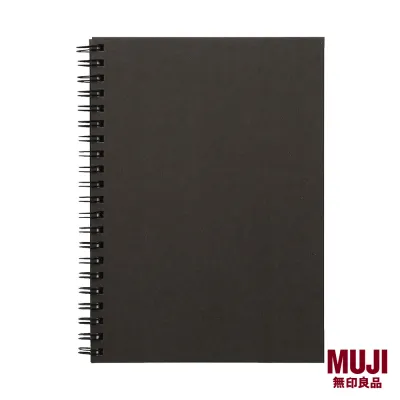
Prices are valid at publication and may change. Please refer to the product page for the latest price.
To evaluate nib sizes and line consistency, perform a simple trial on your preferred notebook or planner. Standard nib sizes like 0.38mm, 0.5mm, and 0.7mm produce varying line widths that interact differently with paper fibers. A finer nib (such as 0.38mm) is excellent for compact planners but can feel scratchy on textured paper, whereas a 0.7mm nib offers a smoother glide but increases the risk of ink bleeding through thin sheets. Testing the pen on-site or on a sample page helps you observe how the ink settles without relying solely on packaging claims.
Grip ergonomics and barrel weight play a significant role in long-term writing comfort. MUJI’s classic gel pens feature a smooth, round, clip-free or minimally clipped barrel with a matte finish, which appeals to those who prefer a clean aesthetic. However, writers who experience hand fatigue during long sessions may find that pens with dedicated rubberized grips, contoured barrels, or weighted brass cores—often found in specialized ergonomic lines from competing brands—provide better physical support and reduce finger strain.
Before committing to a specific pen line, verify the long-term availability and cost of refills. Some brands use proprietary cartridge dimensions and unique tip designs that restrict you to their official refills, which can be inconvenient if local stock runs low. Other pens conform to standard international gel refill sizes, allowing you to swap in third-party refills. Check the manufacturer’s specification sheets or measure your existing empty cartridges to confirm cross-compatibility before purchasing.
Comparing Rulers: Materials, Markings, and Edge Design
Rulers are more than simple straightedges; their material composition directly affects their durability and suitability for different tasks. Clear acrylic rulers are lightweight and allow you to see the underlying text or grid lines, making them ideal for general layout work and reading. However, acrylic can chip or scratch easily if stored loosely in a pencil case with metal tools. Aluminum and stainless steel rulers offer superior durability and a satisfying weight, though they lack transparency. Flexible plastic rulers are highly resilient against bending and dropping, making them a practical choice for school bags.

The longevity of a ruler’s markings depends heavily on the manufacturing process. Surface-printed scales can wear off over time due to friction from fingers, pencil graphite, and contact with other stationery items. For long-term readability, look for rulers with engraved or etched markings, where the ink is recessed into the material. This design ensures that even if the surface suffers minor abrasions, the measurement increments remain perfectly legible.
Edge design is critical if you use your ruler for craft projects. If you frequently use utility knives or craft blades, a standard plastic or acrylic ruler can easily be shaved or nicked, ruining the straightedge and presenting a safety hazard. Look for rulers featuring a metal cutting edge or a raised protective lip that keeps the blade safely aligned away from your fingers. Additionally, drafting rulers with non-slip backing—such as thin rubber strips or textured foam—prevent the ruler from sliding mid-line, ensuring precise geometric work.
Consider how the ruler handles light and glare in your workspace. Highly polished clear acrylic rulers can reflect overhead fluorescent office lights, causing glare that obscures the scale. Some brands offer matte-finished or tinted acrylic options that reduce reflection, making it easier to read measurements under bright lights. Evaluating these physical properties under your typical working conditions will help you select a tool that minimizes eye strain.
Glue and Adhesives: Bonding Types and Paper Compatibility
Selecting the right adhesive prevents ruined projects and warped paper. Liquid glues provide a strong, permanent bond and allow for minor adjustments before setting, but their high water content can cause thin paper to wrinkle or buckle. Glue sticks offer a drier application that keeps paper flat, making them excellent for light office tasks and school collages, though their bonding strength may degrade over time. Dot rollers (or glue tapes) provide instant, dry adhesion with high precision, eliminating drying time entirely, though they are generally more expensive per millimeter.
For archival work, scrapbooking, or preserving photographs, always check product labels for specific certifications. Look for terms like “acid-free,” “photo-safe,” or “archival-safe” to ensure the adhesive will not yellow, degrade, or chemically react with your documents over time. Standard school glues may contain acidic compounds that gradually discolor paper and fade photographic prints, so verifying these label details is essential for long-term preservation.
Bonding strength and repositionability are key functional criteria. Some dot rollers and glue sticks are formulated for temporary bonding, allowing you to reposition paper elements multiple times without tearing the fibers. Others are designed for immediate, permanent adhesion. If your tasks involve a mix of drafting layouts and final assemblies, keeping both a temporary repositionable adhesive and a high-strength permanent glue on hand is often the most efficient approach.
The physical design of the adhesive container affects its usability and shelf life. For liquid glues, dual-nozzle designs (featuring a fine tip for precision and a broad silicone spreader for large areas) offer excellent versatility. For dot rollers, a smooth gear mechanism prevents the tape from tangling or snapping during rapid application. Additionally, ensure the cap or protective seal fits tightly; a loose cap allows air to enter, drying out glue sticks and clogging liquid nozzles between uses.
Building Your Stationery Shortlist: A Decision Framework
To build a functional and cost-effective stationery collection, it helps to categorize your choices based on your primary working style. Choose MUJI if your priority is a cohesive, minimalist aesthetic, and you prefer a clean desk environment with matching, understated tools. MUJI’s unified design ensures that your pens, rulers, and adhesive dispensers blend seamlessly together, which can reduce visual clutter and create a calming workspace.
Choose specialized brands like Kokuyo or Lihit Lab if your work demands high-performance functionality and ergonomic variety. For instance, if you write for hours at a time, Kokuyo’s ergonomic pen grips and specialized paper types offer superior physical comfort. If you require advanced organization, Lihit Lab’s highly durable pencil cases and modular desk accessories provide robust storage solutions that outperform generalist minimalist designs. These brands focus heavily on engineering specific pain points out of daily stationery use.
Choose local alternatives or budget-friendly house brands if you need high-volume, everyday utility items where aesthetic consistency is secondary. For standard office environments or classrooms where items are frequently shared, misplaced, or consumed rapidly, basic functional items offer excellent utility at a lower price point. This approach allows you to allocate your budget toward high-touch items like your primary writing pen while keeping utility costs low.
Evaluate the total cost of ownership by looking beyond the initial purchase price. A cheaper pen that lacks refill options or uses a fragile barrel may end up costing more over a year than a slightly more expensive pen with widely available, low-cost refills. Similarly, high-quality metal rulers and refillable dot rollers reduce waste and save money over time compared to disposable alternatives. Balancing initial costs with long-term consumable availability ensures a sustainable and efficient stationery setup.
Frequently Asked Questions (FAQ)
Are MUJI pen refills universally compatible with other brands?
While some MUJI pen refills share similar physical dimensions with standard gel ink cartridges from other Japanese brands, they are not universally compatible. Minor variations in tip diameter, spring placement, and overall cartridge length can prevent a third-party refill from fitting securely or retracting properly. To verify compatibility, measure your empty refill against the manufacturer’s technical specifications or bring your pen barrel to a stationery store to test the fit before purchasing.
How can I prevent clear plastic rulers from yellowing over time?
Clear plastic and acrylic rulers yellow primarily due to prolonged exposure to ultraviolet (UV) light and ambient heat, which degrade the polymer chains. To maintain their clarity, store your rulers in opaque pencil cases, desk drawers, or organizers away from direct sunlight. Additionally, avoid cleaning them with harsh chemical solvents like acetone or high-strength alcohol, which can micro-fracture the plastic surface and accelerate discoloration; instead, use a soft cloth dampened with mild soapy water.
What is the best way to remove dried glue residue from paper?
Removing dried glue residue without tearing paper fibers requires gentle, dry mechanical action. A soft rubber eraser or a specialized adhesive eraser can roll up dried residue safely when applied with light, circular pressure. Avoid using liquid solvents, water, or wet wipes, as moisture weakens the paper’s cellulose bonds, causing warping, tearing, and potential ink bleeding. For stubborn spots, a blunt plastic scraper or a fingernail can carefully lift the edge of the residue.
Community discussion
Share your experience or ask a question. Comments are reviewed before publication.