
Selecting the right moving boxes is the single most critical factor in ensuring your belongings survive a relocation intact. To pack efficiently and prevent structural failures during transit, you must match the density and fragility of your items to the specific dimensions and material strengths of your cartons. Using the wrong box size not only risks damaging your possessions but also increases the physical strain of lifting and stacking.
In humid climates like Singapore, cardboard can absorb ambient moisture over time, reducing its structural integrity. This makes understanding box specifications, fluting, and proper sealing techniques even more vital to prevent bottom blowouts and collapsed stacks in the moving truck. By categorizing your belongings and choosing the correct carton sizes, you can streamline the loading process and protect your investments.
Decoding Carton Specifications: Dimensions, Fluting, and Weight Limits
Before purchasing packing materials, you must understand that not all cardboard boxes are manufactured equally. A box’s capacity is determined by a combination of its physical measurements and its structural reinforcement, both of which dictate how much weight it can safely support.
Products mentioned in this guide
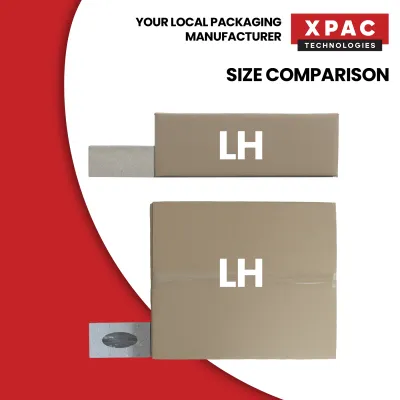
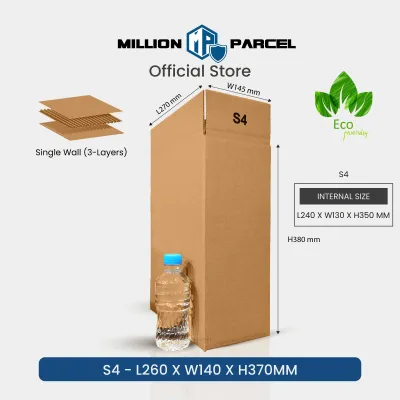
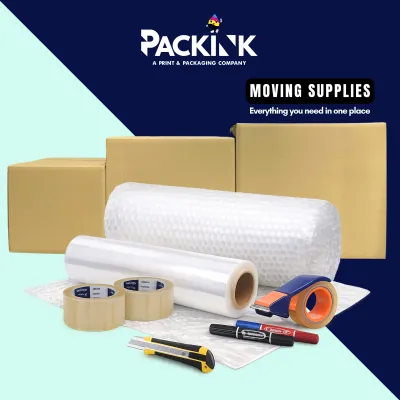
Prices are valid at publication and may change. Please refer to the product page for the latest price.
Reading Dimensions and Volume
When reviewing moving box specifications, manufacturers typically print dimensions in a Length × Width × Height format. It is crucial to distinguish between internal and external dimensions. Internal dimensions dictate the actual packing capacity and whether specific items, like a stereo receiver or a stack of dinner plates, will fit inside. External dimensions are slightly larger and are critical for planning how the boxes will stack and fit together inside a moving vehicle or a self-storage unit.
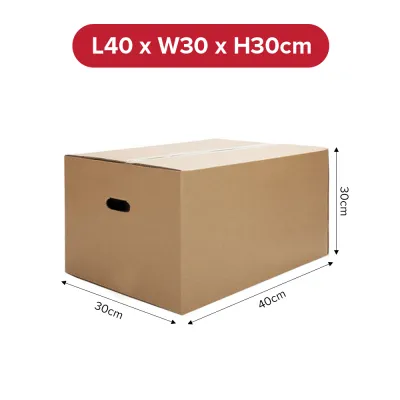
To gauge how much a box can hold, you can calculate its volume. For example, a standard carton measuring 40 × 30 × 30 centimeters has a volume of approximately 36 liters (or 1.27 cubic feet), while a larger 60 × 50 × 60-centimeter carton holds 180 liters (or 6.35 cubic feet). However, volume and weight capacity are entirely independent specifications. A larger volume does not mean a higher weight limit; in fact, larger boxes often have lower weight thresholds relative to their size to prevent them from becoming too heavy for safe handling.
Corrugated Fluting and Wall Thickness
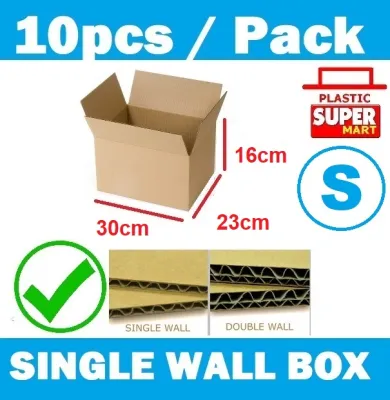
The strength of a moving box comes from its corrugated construction, which consists of a wavy inner layer (the fluting) sandwiched between flat outer layers (the liners). Single-wall cardboard, featuring one layer of fluting, is the standard for most household moves and is suitable for light to medium-weight items. Double-wall cardboard adds a second layer of fluting and an extra liner, providing superior puncture resistance and vertical stacking strength.
The fluting profile also affects performance. Common profiles include C-flute (approximately 4 mm thick, offering excellent crush resistance for general shipping) and B-flute (approximately 3 mm thick, providing great puncture resistance for smaller boxes). Heavy-duty cartons often combine these, such as a BC-double-wall structure, to maximize protection. Rather than guessing a box’s strength by its thickness, look for the Box Manufacturer’s Certificate (BMC) printed on the bottom flap. This stamp displays the Edge Crush Test (ECT) rating; a standard moving box typically has an ECT of 32, while heavy-duty boxes should have an ECT of 44 or higher to withstand stacking pressure.
Small Boxes (1.5–2.0 Cubic Feet): The Safe Choice for Heavy, Dense Items
Small moving boxes, typically measuring around 40 × 30 × 30 centimeters (16 × 12 × 12 inches), are the unsung heroes of a successful move. These compact cartons are designed specifically to handle your heaviest and densest belongings, keeping individual loads manageable.

The primary items suited for small boxes include:
- Books and documents: A large volume of paper is incredibly heavy and will quickly compromise larger containers.
- Vinyl records and media: These require tight, upright packing to prevent warping and cracking.
- Canned goods and pantry items: Heavy jars and cans must be packed compactly to prevent shifting.
- Tools and hardware: Metal hand tools and power tools are dense and require rigid, small spaces.
- Heavy kitchenware: Cast-iron skillets, mortar and pestles, and heavy baking stones.
The core packing rule for small boxes relies on human ergonomics. If a box becomes too heavy to lift comfortably with a straight back and bent knees when filled to the top, the items inside are too dense for that carton size. A common mistake is packing books into large boxes to save time. This invariably leads to bottom blowouts, torn handles, and severe back strain. To ensure the box holds together, always reinforce the bottom seams with high-quality packing tape applied in an H-pattern—one long strip down the middle seam and two strips sealing the exposed side edges.
Medium Boxes (2.5–3.5 Cubic Feet): The Versatile Standard for Everyday Goods
Medium moving boxes, generally measuring around 45 × 40 × 45 centimeters (18 × 16 × 18 inches), serve as the versatile workhorses of the packing process. They strike an ideal balance between volume and weight, making them suitable for a wide variety of standard household goods.
You should utilize medium boxes for the following categories:
- Folded clothing and shoes: Perfect for garments, sweaters, and shoes kept in their original boxes.
- Small kitchen appliances: Toasters, blenders, hand mixers, and coffee makers fit comfortably.
- Pots, pans, and mixing bowls: These can be nested inside one another to maximize space.
- Children's toys and board games: Keeps odd-shaped toys contained and organized.
- Bathroom essentials: Towels, toiletries, and hair dryers.
When packing medium boxes, proper weight distribution is essential. Always place the heaviest items at the absolute bottom of the box to establish a stable base, then layer lighter items on top. Because medium boxes often hold a mix of different shapes, empty spaces or voids are common. Leaving these gaps empty is a recipe for disaster; when boxes are stacked in the moving truck, the weight from above will cause the empty sections of the box below to collapse. Always fill these voids with crumpled packing paper, bubble wrap, or even soft items like socks and t-shirts to ensure the box remains structurally rigid.
Large and Extra-Large Boxes (4.5–6.0+ Cubic Feet): For Bulky, Lightweight Items
Large and extra-large cartons, ranging from 50 × 40 × 50 centimeters up to 60 × 50 × 60 centimeters, offer massive volume but come with strict structural limitations. These boxes are designed exclusively for high-volume, low-weight items that would otherwise take up too many individual boxes.
Only pack lightweight, bulky items in these large containers:
- Bedding and linens: Pillows, duvets, comforters, blankets, and bedsheets.
- Curtains and drapes: Folded fabric that takes up significant physical space.
- Stuffed toys: Large collections of plush toys that are virtually weightless.
- Lampshades: These require spacious boxes to prevent them from being crushed or dented.
- Lightweight plastic storage bins: Keeps empty or lightly packed bins organized.
The structural risk of large boxes lies in their wide base and long side panels. When filled with heavy items, the cardboard panels naturally bow outward, weakening the box’s vertical stacking strength and making it highly prone to collapsing under any weight placed on top of it. A practical test for weight limits is simple: if one person cannot easily lift and carry the fully packed large box without straining, it is overloaded and must be repacked. To maximize the efficiency of these large cartons, consider using vacuum storage bags for your bedding and pillows. This compresses the soft items to a fraction of their size, allowing you to fit more into the box without exceeding safe weight limits.
Specialty Cartons: Dimensions and Features for Fragile or Awkward Items
Standard rectangular boxes are not always sufficient for specialized, high-value, or oddly shaped household items. Utilizing specialty cartons can dramatically reduce the risk of damage to these vulnerable possessions.
Wardrobe Boxes for Hanging Clothes
Wardrobe boxes feature a tall, narrow profile, typically measuring around 60 × 50 × 120 centimeters. They are equipped with a built-in metal or heavy-duty cardboard hanging rail across the top. This design allows you to transfer clothes directly from your closet hangers straight into the box without folding them.
Using wardrobe boxes prevents deep wrinkles in formal wear, suits, and delicate dresses, saving you significant unpacking and ironing time at your destination. To maximize the space inside these tall cartons, utilize the empty bottom section below the hanging clothes to pack lightweight, bulky items such as shoes, pillows, or folded winter coats. This also helps lower the box’s center of gravity, making it more stable during transport.
Dish Packs and Cell Kits for Glassware
Dish packs are medium-sized boxes engineered specifically for kitchen fragile items. Unlike standard cartons, dish packs are constructed from heavy-duty, double-wall corrugated cardboard to withstand the extreme weight of stacked ceramics and provide maximum impact protection.
These boxes are designed to be paired with cardboard cell kits, which are interlocking dividers that create individual, isolated compartments for plates, bowls, wine glasses, and mugs. This isolation prevents items from clinking against each other and shattering during transit. When packing plates, always wrap them individually in packing paper and place them vertically on their edges at the bottom of the dish pack. Plates are structurally much stronger on their edges and can absorb vertical shocks far better than if they were stacked flat on top of one another.
Picture and Mirror Boxes for Flat Fragiles
Picture and mirror boxes feature a thin, wide profile designed specifically to protect framed artwork, large mirrors, and flat-screen televisions. Many of these cartons utilize a telescoping design, consisting of two separate, slightly different-sized halves that slide over one another.
This telescoping feature allows you to adjust the box’s width and length to achieve a perfectly snug fit around your specific frame. Before sliding your artwork into the carton, always attach foam or cardboard corner protectors to the frame’s edges. Wrap the entire face of the item in multiple layers of bubble wrap or foam padding to prevent scratches and absorb shifting pressures inside the moving truck.
Frequently Asked Questions (FAQ)
Can I use grocery store or supermarket boxes for moving?
While free grocery boxes are tempting, they are generally not recommended for a full household move. These boxes have often been subjected to significant wear and tear, and in humid environments like Singapore, the cardboard may have absorbed moisture, severely weakening its structural integrity. Additionally, grocery boxes lack standardized dimensions, making them incredibly difficult to stack securely in a moving truck, which increases the risk of a stack collapsing. There is also a minor risk of pest contamination, such as cockroach eggs or food residue, being introduced into your new home. If you must use them, restrict their use to lightweight, non-fragile items and heavily reinforce the bottom seams with packing tape.
How do I know if a moving box is too old or degraded to use?
You can easily assess a box’s integrity through a quick visual and physical inspection. Look for visible creases or folds along the flat panels, water stains, soft or spongy corners, and flaking paper fibers. Physically press on the corrugated edges; if the inner fluting feels flat, compressed, or easily collapses under finger pressure, the box has lost its vertical stacking strength. Degraded boxes should never be used for heavy or fragile items, as they will buckle under the weight of other boxes stacked on top of them. Reserve these weakened boxes strictly for extremely light, soft items like pillows, or recycle them.
Should I buy moving boxes in a kit or individually?
The choice between buying a moving box kit or purchasing cartons individually depends on the inventory of your home. Moving kits are highly convenient and cost-effective for standard apartments, providing a pre-calculated assortment of small, medium, and large boxes, along with packing tape and paper. However, if you have specialized collections—such as an extensive library of books or a large kitchen filled with delicate glassware—purchasing individual boxes or bundles of specific sizes is more practical. This ensures you do not end up with an excess of large, unusable boxes while running out of the small, heavy-duty cartons you actually need.
Community discussion
Share your experience or ask a question. Comments are reviewed before publication.