
Evaluating how a Morning Mini notebook compares to other popular notebook brands requires looking past brand names and focusing on the physical properties of the paper itself. While some manufacturers prioritize heavy, thick sheets to prevent ink from showing through, others focus on smooth surface coatings that allow pens to glide effortlessly. The ideal choice depends on matching the paper’s specifications to your daily writing tools, whether you prefer wet fountain pens, quick-drying gel pens, or graphite pencils. By understanding how paper is made and how to test it, you can make an informed decision that fits your specific journaling or note-taking routine.
To find the right notebook, you must look at objective metrics rather than subjective marketing terms like “premium” or “super-smooth.” Every notebook brand balances paper weight, surface treatment, and binding style differently. Understanding these technical aspects allows you to predict how a notebook will handle your favorite pens before you even touch a pen to the page.
Understanding Objective Paper Quality Metrics
Grams per square meter, commonly abbreviated as GSM, is the standard metric used to measure paper weight and thickness. A higher GSM generally indicates a thicker, more opaque sheet of paper, which helps prevent ink from bleeding through to the reverse side. For daily writing, notebook paper typically ranges from 50 GSM to 160 GSM. While heavy paper feels substantial, it also makes the notebook thicker and heavier to carry, meaning a high GSM is not always the best choice for portable pocket notebooks.
Products mentioned in this guide
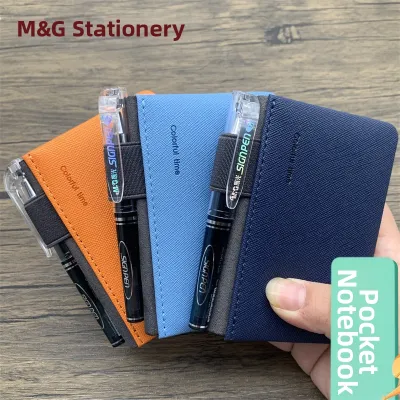
Prices are valid at publication and may change. Please refer to the product page for the latest price.
Paper coatings and internal sizing play a critical role in how paper interacts with liquid ink. Sizing refers to chemical additives, such as starch or synthetic polymers, introduced during manufacturing to control the paper’s absorbency. Unsized paper acts like a paper towel, absorbing ink rapidly and causing lines to spread and blur. Highly sized or coated papers resist moisture, keeping the ink on the surface to produce sharp, crisp lines, though this often results in longer drying times.
The color and brightness of the paper significantly affect readability and visual comfort. High-brightness white paper provides excellent contrast for colorful inks, but it can reflect a lot of light, leading to eye strain during long writing sessions under bright desk lamps. Off-white, cream, or ivory tones are gentler on the eyes and are often preferred for literary journaling and creative writing. The choice of shade is highly personal and should complement the ink colors you use most frequently.
Binding styles dictate how flat a notebook will lie when open, which directly impacts the usable writing area. Thread-bound or lay-flat notebooks allow you to write comfortably across the entire page, including the area close to the center gutter. Perfect-bound or glued notebooks often have stiffer spines, requiring you to hold the pages down while writing, which can put extra tension on the paper and lead to tearing over time. Spiral or wire-bound options offer complete flat-lay utility but can interfere with your hand placement depending on your writing style.
Inspecting Morning Mini Paper Specifications and Build
When evaluating a Morning Mini notebook, start by inspecting the product packaging, labels, or official online listings for technical specifications. Manufacturers who are proud of their paper quality will typically list the exact GSM, paper color, and ruling style. If these details are not readily available, you can infer the paper’s relative weight by comparing the total page count to the physical thickness of the closed notebook. A very thin notebook with a high page count almost always indicates a lower GSM paper.

Next, perform a visual and tactile assessment of the paper sheets under natural light. Run your fingertips gently across the page to feel the texture, often referred to as the paper’s “tooth.” A completely smooth, glass-like surface is ideal for fine-tip gel pens and rollerballs, as it minimizes friction. A slight texture or roughness is desirable if you use pencils or fountain pens, as it helps pull graphite from the core or control the flow of ink from the metal nib.
Examine the manufacturing tolerances by looking closely at the edges of the paper and the alignment of the printed lines. High-quality notebooks feature clean, precision-cut edges without fraying, paper dust, or loose fibers. Open the notebook to the center fold and check if the horizontal lines or dot grids align perfectly across the left and right pages. Misaligned grids or uneven margins are common indicators of rushed manufacturing, which can distract you when writing continuous lines across a two-page spread.
Finally, assess the durability of the binding by gently flexing the spine and inspecting the stitching. In a well-constructed notebook, the paper signatures are sewn together securely, ensuring that individual pages do not pull loose when the book is opened repeatedly. Avoid notebooks where the pages are held together solely by a stiff line of glue along the spine, as this adhesive can dry out and crack, causing pages to fall out over time.
Matching Paper Performance to Your Writing Tools
Fountain pens and other wet writing instruments require paper that can manage a high volume of liquid ink without feathering or bleeding. Feathering occurs when ink spreads along the paper fibers, turning a sharp line into a fuzzy, blurred stroke. Bleed-through happens when the ink penetrates completely through the sheet, ruining the usability of the reverse side. When comparing Morning Mini to other brands, look for paper that exhibits high ink resistance, allowing the ink to dry on the surface and preserve the true width of your pen’s nib.
Gel and rollerball pens use water-based or gelled inks that flow easily but require a balanced absorption rate. If the paper surface is too heavily coated or non-porous, gel ink will pool on top, leading to long drying times and a high risk of smudging when you turn the page or rest your hand on the paper. Conversely, if the paper is too absorbent, the ink may sink in too quickly, causing the pen to feel scratchy or skip during fast writing. The ideal paper for gel pens offers a smooth glide with just enough absorbency to dry the ink within a few seconds.
Pencils, colored pencils, and other dry media rely on the paper’s texture to shave off fine particles of graphite or pigment. If you write on paper that is too smooth, the pencil will slide across the surface without leaving a dark, legible mark, forcing you to apply excessive pressure. Paper with a moderate tooth catches the graphite beautifully, allowing for rich shading and clean lines. However, you must also ensure the paper fibers are strong enough to withstand repeated erasing without pilling, thinning, or tearing.
A Practical Testing Framework for Paper Verification
Before committing to using a new notebook for important journals or daily work, it is wise to conduct a systematic paper test on the very last page. Start by gathering your everyday carry pens, pencils, and highlighters to create a controlled ink testing chart. Draw a short line with each writing tool, followed by a small colored block where you apply a double layer of ink. Write down the name of each pen next to its sample so you can easily identify which tools perform best on this specific paper.
To evaluate drying times, draw a thick line with your wettest pen and gently run a clean finger across it after three seconds, five seconds, and ten seconds. Note when the ink stops smearing, which will give you a clear indication of how careful you need to be while writing. Once the ink is completely dry, turn the page over to assess the double-sided writing feasibility. Examine the back of the page under normal room lighting and then directly under a desk lamp to check for show-through, also known as ghosting.
Test the physical durability of the paper by writing a sentence in pencil and erasing it firmly with a standard vinyl eraser. Inspect the paper surface to see if the fibers have frayed or if the paper has stretched and buckled under the friction. Next, run a heavy chisel-tip highlighter over a line of written text to see if the highlighter ink causes the underlying pen ink to bleed through to the other side. This simple, three-step testing framework ensures you know exactly how the notebook will behave under real-world conditions.
Decision Guide: When to Choose Morning Mini or Alternatives
Choose Morning Mini if you prioritize a compact, highly portable format for quick notes, lists, and daily planning. If your personal ink tests show that your standard ballpoint pens, fine-tip gel pens, or pencils perform cleanly without excessive drying times, this brand offers an excellent balance of utility and convenience. It is particularly suited for students and professionals who need a reliable, lightweight notebook that fits easily into a small bag or pocket for on-the-go writing.
Choose alternative brands if your writing routine relies heavily on wet fountain pens, broad calligraphy nibs, or heavy ink washes. If you require specialized features such as ultra-thick 160 GSM paper for art journaling, specific dot grid spacing, or certified acid-free archival quality for long-term preservation, you should look to dedicated stationery brands that explicitly guarantee these specifications. These alternatives are better suited for permanent diaries or complex creative projects that demand maximum paper resilience.
Verify first if you plan to use the notebook for digital archiving, flat-lay scanning, or mixed-media sketching. Before starting a major project, test how the paper handles heavy pressure and check if the binding allows the book to lie completely flat without casting a shadow in the center gutter. Taking the time to verify these physical traits beforehand will save you from the frustration of ruined pages and ensure your writing experience remains smooth and enjoyable.
Frequently Asked Questions (FAQ)
Does higher GSM always mean better paper quality for journaling?
No, a higher GSM does not automatically guarantee a superior writing experience. While a higher GSM indicates thicker paper that is highly resistant to bleed-through, the actual quality depends heavily on the paper’s surface treatment and fiber composition. A lightweight paper with high-quality sizing can handle wet fountain pen inks much better than a thick, heavy paper that lacks proper coating. You should choose your paper weight based on your preferred writing tools and whether you prioritize a lightweight notebook over absolute opacity.
How can I prevent ink from feathering on standard notebook paper?
To reduce ink feathering on standard paper, try switching to a finer pen nib or using a drier ink formula that does not flow as heavily. You can also place a clean sheet of blotting paper or a heavy pencil board underneath the page you are writing on to absorb excess moisture and prevent oil transfer from your hands. If you continue to experience feathering despite changing your pens, the ultimate solution is to switch to a notebook featuring paper with better internal sizing designed to resist liquid absorption.

Community discussion
Share your experience or ask a question. Comments are reviewed before publication.