
Selecting the right mooncake box size is a balancing act between protecting your delicate pastries and presenting them beautifully. To find the correct dimensions, you must calculate the total footprint of your mooncakes—including their individual diameters, heights, and any packaging accessories like plastic trays or paper dividers—and match these to the internal dimensions of the box. A box that is too small will crush the intricate molded patterns on your pastries, while an oversized box allows them to slide around, leading to damaged edges and oil stains during transport.
Whether you are a home baker preparing gifts for the Mid-Autumn Festival or managing a small-scale commercial run, understanding how to measure and calculate these dimensions ensures your mooncakes arrive in pristine condition. The process involves analyzing the physical properties of your packaging materials, mapping out grid layouts, and accounting for the hidden space consumed by protective inserts.
Understanding Mooncake Box Dimensions
When browsing packaging suppliers, you will frequently encounter two sets of measurements: outer dimensions and inner dimensions. Outer dimensions dictate how much space the box occupies on a shelf or inside a delivery bag, which is useful for logistics planning. However, for the actual fit of your pastries, you must focus entirely on the inner dimensions, which represent the actual usable space inside the closed box.
Products mentioned in this guide
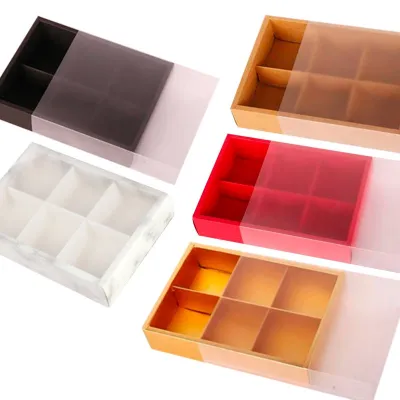
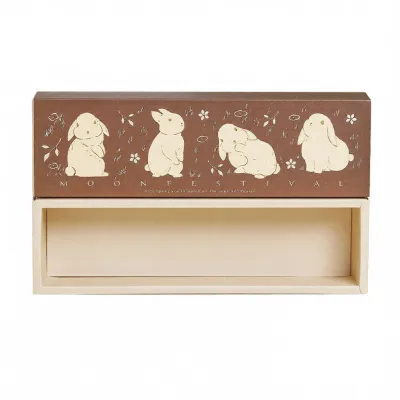
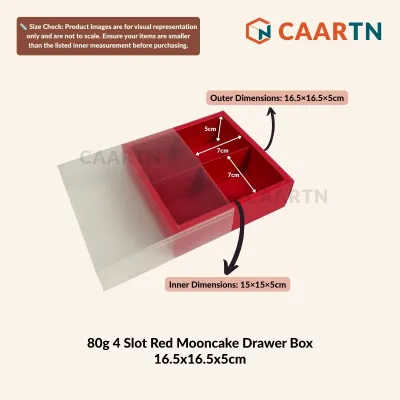
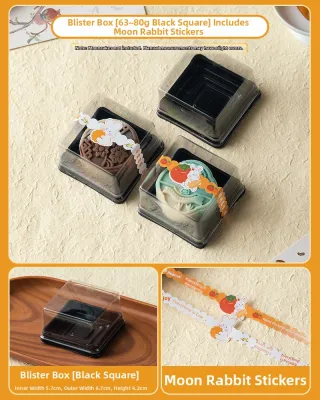
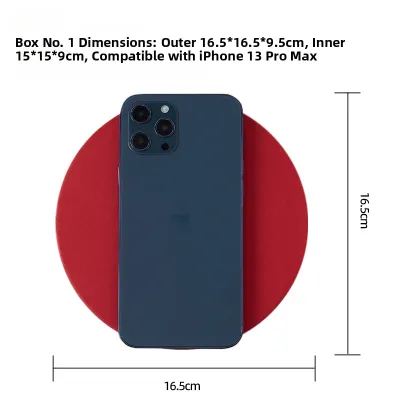
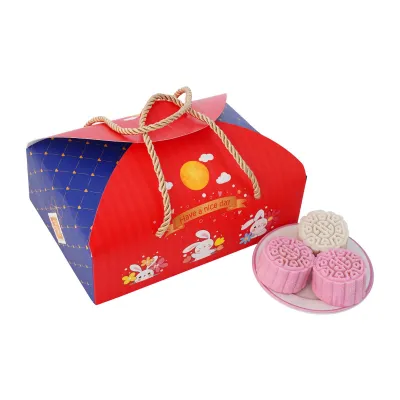
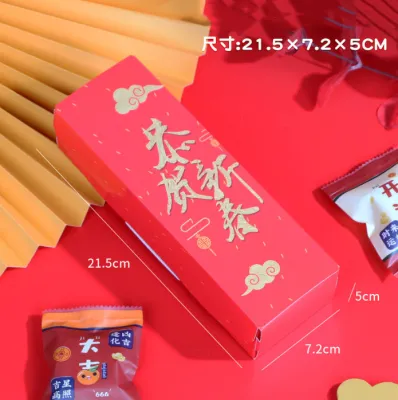
Prices are valid at publication and may change. Please refer to the product page for the latest price.
The difference between these two measurements is determined by the thickness of the packaging material. For instance, a box made from thick, rigid paperboard or corrugated cardboard will have a much larger discrepancy between its outer and inner measurements than a thin folding carton. Rigid boxes, often favored for premium gift sets, can have walls that are several millimeters thick, significantly reducing the internal volume compared to the external footprint.
Relying solely on nominal sizes or external labels can lead to costly packing errors. Always check the manufacturer’s specifications for the exact internal clearance of the box. If the internal dimensions are not explicitly listed, you can estimate them by subtracting twice the material thickness from the external length, width, and height, though obtaining a physical sample remains a highly reliable verification method.
Calculating the Required Base Area by Quantity
To determine the necessary internal length and width of your mooncake box, you must first map out how the pastries will be arranged. Most mooncake boxes utilize a grid system where pastries are placed side-by-side in rows and columns. The total base area is calculated by multiplying the diameter of a single packaged mooncake by the number of pieces in each row and column, then adding space for structural dividers.

It is critical to measure the mooncake while it is inside its individual container, such as a plastic blister tray or dome container, rather than measuring the bare pastry. These individual containers protect the mooncakes from moisture and physical contact, but they also add several millimeters to the overall footprint. Neglecting to account for this extra width will result in a tight fit that warps the outer box or crushes the contents.
When planning your layout, you must also factor in the thickness of the internal dividers or paper partitions. These dividers keep the individual packages separated and prevent them from colliding during transit. For standard cardboard dividers, adding an extra three to five millimeters of clearance per row and column is generally sufficient to accommodate the partitions without forcing the pieces together.
Standard Grid Arrangements
The most common mooncake box configurations are designed for even quantities, typically containing two, four, six, or eight pieces. A two-piece box usually arranges the pastries in a single row (a 1×2 grid), requiring a long, narrow rectangular box. A four-piece box is almost always arranged in a square 2×2 grid, which offers excellent structural stability and a balanced visual presentation.
For larger quantities like six or eight pieces, the layout can vary. A six-piece set can be arranged in a 2×3 grid, while an eight-piece set is often configured as a 2×4 rectangle or split into a double-layer box to keep the footprint manageable. When calculating the footprint for these layouts, remember to multiply the individual packaged diameter by the grid count and add the cumulative thickness of all intersecting dividers.
Mixed Sizes and Odd Quantities
If you are packaging an assortment of different mooncake styles—such as traditional baked mooncakes alongside smaller snowskin varieties—sizing becomes more complex. In these scenarios, you should use the largest mooncake diameter in your batch as the baseline for your grid calculations. This ensures that every cavity in the box is large enough to accommodate any item in the assortment.
To prevent smaller mooncakes from shifting within the larger cavities, you can use adjustable paper inserts or food-safe filler materials to bridge the gap. For odd quantities, such as a five-piece set arranged in a flower pattern around a central larger mooncake, standard rectangular grids will not work. These specialized layouts require custom-designed internal trays that hold each piece securely in its designated spot, requiring close coordination with your packaging supplier.
Factoring in Mooncake Height and Internal Inserts
While the length and width of the box prevent horizontal shifting, the internal height, or depth, is what protects the top of your mooncakes from being flattened. To determine the required depth, you must measure the tallest mooncake in your batch, paying close attention to any raised decorative patterns, embossed characters, or protruding toppings like melon seeds.
The internal height of the box must be greater than the height of your tallest mooncake plus the thickness of any base inserts. Many bakers place mooncakes inside plastic blister trays, which often feature a raised bottom to cushion the pastry. This raised base lifts the mooncake higher inside the box, effectively reducing the available vertical clearance. You must subtract the height of this tray base from the box’s total internal depth to find the true usable height.
Additionally, you should always leave a small safety clearance of at least two to three millimeters between the top of the packaged mooncake and the inside of the closed lid. This gap ensures that if another box is stacked on top during delivery, any slight flexing of the lid will not press down on the delicate pastry surface, preserving the intricate designs and preventing oil from transferring to the packaging.
How to Measure Your Mooncakes for Packaging
Accurate measurements are the foundation of successful packaging selection. To measure your mooncakes properly, use a sliding caliper or a standard ruler to find the widest point of the pastry. For round mooncakes, measure the diameter across the center; for square or rectangular varieties, measure both the length and the width. Always measure the mooncake at its widest point, which is often the flared base rather than the top.
Because handmade or artisanal mooncakes are subject to human variation and slight changes during the baking process, sizes can fluctuate from batch to batch. To account for this, measure at least five to ten different mooncakes from different batches to establish an average size and identify the maximum possible dimensions. Use these maximum dimensions as your guide to ensure that even the largest mooncakes fit comfortably.
Before committing to a large bulk order of packaging boxes, it is highly recommended to perform a physical test fit. Obtain a single sample of your prospective box and its internal inserts, then place your fully packaged mooncakes inside. Close the lid, gently shake the box to check for movement, and inspect the top clearance. This hands-on verification is the most effective way to identify potential sizing issues before investing in inventory.
Frequently Asked Questions (FAQ)
Do I need to add extra space for individual shrink wrapping?
Yes, individual plastic wrapping or heat-sealed flow pack bags do add a small amount of bulk to the mooncake’s footprint. While the plastic film itself is thin, the sealed seams and folded corners of the bag can flare outward, adding several millimeters to the overall width and length. To ensure an accurate fit, always measure the mooncake after it has been fully wrapped and sealed in its final packaging material rather than measuring the bare pastry.
How do I secure mooncakes if they are slightly smaller than the box cavities?
If your mooncakes are slightly smaller than the standard cavities of your chosen box, you can secure them using food-safe paper shred, custom-cut parchment dividers, or silicone spacer rings. These materials fill the excess space and absorb minor shocks during transit. Avoid leaving empty space around the pastries, as excessive movement inside the box can cause the mooncakes to collide with the walls, leading to crumbled crusts and damaged presentation.
Community discussion
Share your experience or ask a question. Comments are reviewed before publication.