
Choosing the right journal is a deeply personal decision that balances tactile satisfaction, ink compatibility, and organizational utility. For many writers, sketchers, and planners, the choice narrows down to three iconic brands: Moleskine, Leuchtturm1917, and Midori. Each brand caters to a distinct philosophy of writing, from Moleskine’s travel-ready heritage to Leuchtturm1917’s structured system and Midori’s uncompromising focus on paper craft. Finding the perfect match requires looking past the cover and examining how the paper interacts with your favorite writing instruments.
Quick Answer: Which Journal Brand Should You Choose?
To find your ideal daily companion, it helps to match your writing style and tool preferences to the unique strengths of each brand. Your choice will largely depend on whether you prioritize cover durability, organizational features, or the tactile feel of the paper itself.
- Choose Moleskine if you prioritize classic aesthetics, everyday portability, and primarily write with ballpoint pens, gel pens, or pencils.
- Choose Leuchtturm1917 if you need built-in organization like page numbers and an index, and prefer writing with moderate fountain pens, fineliners, or rollerballs.
- Choose Midori if you are a pen enthusiast seeking a premium, fountain-pen-friendly paper feel, minimal bleed-through, and a minimalist design.
| Brand | Best For | Paper Feel | Key Feature | Relative Price Tier |
|---|---|---|---|---|
| Moleskine | Casual notes, travel, dry media | Very smooth, ivory shade | Iconic oilcloth cover, back pocket | Mid-range |
| Leuchtturm1917 | Bullet journaling, structured planning | Slightly textured, cream shade | Numbered pages, index, dual bookmarks | Mid-range |
| Midori (MD) | Fountain pens, tactile feedback | Toothier, natural off-white | Minimalist aesthetic, lay-flat thread binding | Mid-range to Premium |
Actual paper performance heavily depends on the specific pen, ink flow, and nib size you use. A combination that works perfectly for one writer might feather or ghost for another, making it essential to understand the physical properties of each brand’s paper before making your choice.
Products mentioned in this guide
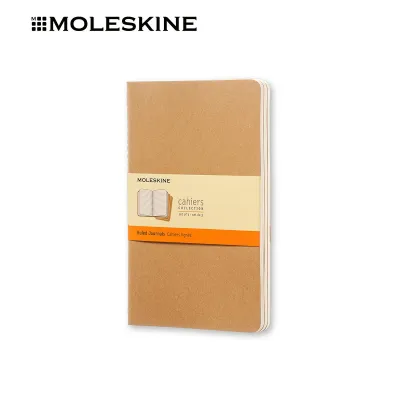
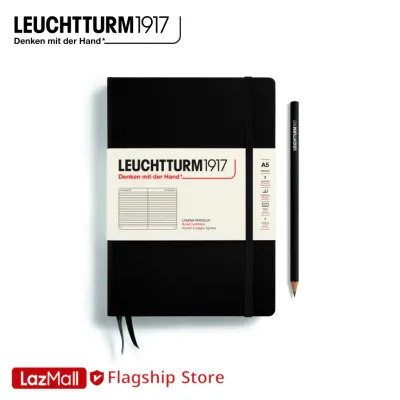
Prices are valid at publication and may change. Please refer to the product page for the latest price.
Paper Quality and Pen Performance: Bleed, Ghosting, and Texture
The core of any journal is its paper. How the paper is manufactured, its weight, and its surface treatment directly dictate how your pen glides across the page and how the ink dries. When comparing Moleskine, Leuchtturm1917, and Midori, the writing experiences differ dramatically due to their distinct paper formulations.

Moleskine journals typically feature 70 gsm (grams per square meter) acid-free paper. This paper is highly calendered, meaning it is pressed between rollers during manufacturing to create an exceptionally smooth, silky surface. While this smoothness makes writing with ballpoint pens and pencils incredibly pleasant, the paper is relatively thin and highly absorbent. Because it lacks heavy sizing—the chemical treatment that prevents liquid from soaking into the fibers—wet inks are easily pulled into the page. If you write with wet fountain pens, heavy rollerballs, or liquid gel pens, you are likely to experience feathering, where the ink spreads sideways into spiderweb-like patterns, and significant bleed-through to the other side of the page.
Leuchtturm1917 addresses ink resistance by using a slightly heavier 80 gsm paper (though they also produce a specialized 120 gsm edition for heavy media). The standard 80 gsm paper is treated with a surface sizing that helps hold ink on the surface longer than Moleskine paper. This treatment significantly reduces feathering, allowing fine and medium fountain pens to write with clean, crisp lines. However, because the paper remains relatively thin, “ghosting”—where the shadow of your writing is visible on the reverse side of the page—is quite common. While ghosting does not ruin the reverse page like actual bleed-through does, writers who prefer a clean canvas on both sides of a sheet may find it distracting.
Midori takes a radically different approach with its proprietary MD Paper, which has been developed and refined in Japan since the 1960s. MD Paper is famous among stationery enthusiasts for its exceptional fountain pen compatibility. Even when subjected to wet inks, broad nibs, or heavy ink pooling, it resists both feathering and bleed-through beautifully. Furthermore, Midori paper features a unique “tooth”—a subtle, natural texture that provides a gentle tactile feedback as your pen tip moves across the page. This texture gives the writer more control over their strokes and produces a satisfying, quiet whisper while writing. The paper is also highly regarded for its ability to showcase the complex properties of specialty inks, such as shading (color variation) and sheening (metallic luster).
In tropical environments like Singapore, ambient humidity can play a silent role in paper performance. Paper naturally absorbs moisture from the air, and high relative humidity can make paper fibers more receptive to liquid, occasionally increasing the risk of feathering and ghosting in standard notebooks. Midori’s high-quality sizing and fiber density help it maintain its structural integrity and ink resistance even in humid conditions, whereas Moleskine paper can become noticeably more absorbent and prone to ink spread over time.
To ensure your stationery collection performs well on your chosen paper, always conduct a controlled ink test. When opening a new journal, turn to the very last page or use the inner margin of the back pocket. Draw small test grids using your go-to pens, markers, and highlighters, noting the drying speed and checking the reverse side for ghosting or bleed-through. This simple step protects your primary pages and helps you adjust your pen choices before you begin journaling daily.
Design, Build, and Usability: Covers, Binding, and Features
Beyond the paper, a journal must survive daily carry and provide a comfortable physical layout. The cover materials, binding style, and built-in organizational tools of these three brands represent very different design philosophies, ranging from highly structured to completely minimalist.
Cover Materials and Durability
Moleskine is famous for its classic hardcovers wrapped in a textured, oilcloth-coated cardboard, as well as its soft, flexible polyurethane alternatives. These covers are highly durable, water-resistant, and slide easily in and out of bags without catching. Leuchtturm1917 offers a very similar hard and soft cover construction but is celebrated for its massive spectrum of colors. Whether you prefer muted earth tones or vibrant pastels, Leuchtturm1917 allows you to color-code your projects or match your journal to your personal style. Midori MD, by contrast, embraces a minimalist aesthetic. The standard notebook comes wrapped only in a simple glassine (paraffin-coated) paper jacket over a cardstock cover, with an exposed cheesecloth spine. It is designed to show character and wear over time, though users who prefer protection can purchase separate clear vinyl, paper, or premium leather covers.
Binding and Lay-Flat Ability
A journal that resists staying open forces you to constantly hold down the pages, which can tire your hand during long writing sessions. Moleskine and Leuchtturm1917 both utilize Smyth-sewn binding, where folded booklets of paper (signatures) are stitched together. Leuchtturm1917 journals are engineered to lay flat relatively easily right out of the box. Moleskine spines can feel stiffer initially, often requiring a gentle break-in period where you press down along the inner gutter of several sections to relax the binding. Midori MD notebooks feature a specialized exposed thread binding. Because there is no heavy outer spine glue to restrict movement, Midori notebooks open a full 180 degrees flat from the very first page, offering an uninterrupted surface that is perfect for writing across the gutter or sketching.
Built-in Organizational Features
Leuchtturm1917 is the clear winner for structural organization, making it the default choice for the Bullet Journal community. It features a pre-printed table of contents (index), pre-numbered pages, dual ribbon markers, an elastic enclosure band, an expandable rear pocket, and a sheet of self-adhesive archival labels for the cover and spine. Moleskine offers a simpler, classic layout: a single ribbon marker, an elastic closure band, a rear expandable pocket, and the iconic “In case of loss…” notice on the flyleaf. Midori MD offers almost no built-in organization. There are no page numbers, no index, no elastic band, and no pocket. It is a completely blank canvas designed to eliminate distractions, though it does include a small sheet of index label stickers that you can apply manually if desired.
Paper Color and Ruling
The color of your paper affects how easy it is to read your writing and how your inks appear. Moleskine paper has a distinct warm, ivory hue that is highly soothing to the eyes but can slightly shift the color of blue or purple inks. Leuchtturm1917 uses a slightly lighter, cream-toned paper that strikes a balance between warmth and color accuracy. Midori MD paper is a warm, natural off-white (almost a soft vanilla) that feels organic and premium. All three brands offer standard ruling options, including lined, grid, dotted, and blank. Midori also offers unique layouts, such as a frame ruled layout (which resembles a clean sketchbook with subtle margin borders) and a grid layout with slightly larger spacing to accommodate Japanese characters or detailed diagrams.
Price and Overall Value: Cost vs. Performance in Singapore
When evaluating these journals, it is important to look at the overall value proposition. A journal’s worth is not just its retail price, but how well its physical attributes align with your specific writing habits and daily routine.
In the Singapore retail market, all three brands occupy the mid-range to premium stationery space. Conceptually, Moleskine and Leuchtturm1917 sit in a similar mid-range pricing tier, representing a standard investment for a high-quality daily tool. Midori MD notebooks are often priced comparably or slightly lower for the basic notebook itself. However, because the basic Midori MD notebook lacks a durable hard cover, most users will want to purchase a separate protective clear cover or paper cover. When you factor in the cost of this accessory, the total investment for a complete Midori setup aligns closely with or slightly exceeds the other two brands.
From a cost-to-performance perspective, the value depends entirely on your primary writing instrument:
- For fountain pen users, Midori MD offers the highest value. The paper's resistance to feathering and bleed-through ensures that your writing remains legible and beautiful, making the investment in both the notebook and a cover highly worthwhile.
- For bullet journalers and planners, Leuchtturm1917 provides the best utility-per-dollar. The time saved by having pre-numbered pages and a pre-printed index easily offsets the cost, and the sturdy cover protects your planning system for the entire year.
- For casual note-takers, Moleskine offers a classic, recognizable aesthetic and excellent cover durability, but you are paying a premium for the brand heritage. If you use standard ballpoint pens, the paper limitations will not affect you, making it a reliable lifestyle choice.
Because retail prices, import costs, and local availability can fluctuate, you should verify current pricing at local Singapore stationery retailers, authorized brand boutiques, or official online channels. Visiting a physical store in locations like Bugis, City Hall, or Orchard also allows you to handle the cover materials and feel the paper weight in person before making your purchase.
Final Verdict: Match the Journal to Your Journaling Style
To make your final decision, look at how you intend to use your journal on a daily basis. Matching the brand’s design philosophy to your personal journaling style ensures a satisfying writing experience.
The Everyday Note-Taker: Moleskine
If your journaling style is spontaneous, fast-paced, and on-the-go, Moleskine is a classic choice. Its durable, wipe-clean covers and robust elastic band make it highly resilient when tossed into a backpack or pocket. Because it performs best with dry media like ballpoint pens, gel pens, and pencils, it is ideal for quick to-do lists, travel journaling, and casual note-taking where speed and portability matter more than ink shading.
The Organized Bullet Journaler: Leuchtturm1917
If you rely on structured layouts, daily planning, and indexing, Leuchtturm1917 is the gold standard. The pre-printed index and numbered pages eliminate the tedious preparation work of setting up a new notebook, allowing you to focus entirely on your organization. Its ink-resistant paper easily handles standard fineliners, gel pens, and fine-nibbed fountain pens, making it the ultimate productivity companion.
The Pen Enthusiast and Minimalist: Midori
If you view writing as a sensory ritual, use fountain pens, or prefer a clean, distraction-free layout, Midori MD is unmatched. Its premium Japanese paper showcases the beauty of your inks while providing a satisfying tactile feedback. The flat-laying binding ensures a comfortable writing angle across the entire page, while the minimalist, cover-free design lets the quality of the paper speak for itself.
As a final tip, avoid buying notebooks in bulk when starting out or switching brands. Purchase a single journal from your top choice first. Test it thoroughly with your personal stationery collection, observing how the paper reacts to your writing pressure, ink flow, and drying speed. This hands-on trial ensures that your chosen journal will fully support your writing habits before you commit to a long-term journaling routine.
Frequently Asked Questions (FAQ)
Can I use fountain pens in a Moleskine journal?
While you can use fountain pens in a Moleskine journal, the experience is often inconsistent. Because Moleskine’s 70 gsm paper is thin and highly absorbent, standard fountain pen inks are highly prone to feathering and bleeding through to the reverse side. If you must use a fountain pen in a Moleskine, use an extra-fine or fine nib paired with a very dry ink. For the best results, stick to ballpoint pens, gel pens, or pencils.
Does Leuchtturm1917 paper bleed through with marker pens?
Standard Leuchtturm1917 80 gsm paper is formulated to resist ink from fountain pens and fineliners, but alcohol-based markers (such as art markers) will almost certainly bleed through the page. Water-based markers and mild highlighters generally perform well, though you may still experience some ghosting. If you plan to use heavy markers or wet media frequently, consider placing a thick sheet of cardstock or a plastic pencil board underneath your active page to protect the sheets below.
Where can I buy authentic Midori MD notebooks in Singapore?
You can find authentic Midori MD notebooks at established local physical stationery stores, specialized pen boutiques, and authorized brand storefronts in Singapore. When shopping online, always purchase from official brand stores or highly rated, reputable local sellers. Avoid unverified third-party listings on open online marketplaces, as counterfeit paper products may not feature the proprietary sizing and quality of genuine Japanese MD Paper.
Community discussion
Share your experience or ask a question. Comments are reviewed before publication.