
Quick Answer: Which Journal Brand Fits Your Needs?
Selecting the right journal is a highly personal decision that depends on your writing instruments, daily habits, and paper preferences. Moleskine, Leuchtturm1917, and Midori each cater to distinct writing styles, and no single brand is universally superior. Your choice should align with how you plan to use the notebook and the specific pens you prefer.
Moleskine is traditionally favored by those who value a classic, globally recognized aesthetic and primarily write with dry media like ballpoint pens, pencils, or light gel pens. Leuchtturm1917 is highly regarded by planners and bullet journal enthusiasts who appreciate structured organizational features and require a balanced paper that handles fineliners and moderate fountain pen inks. Midori, featuring its signature MD Paper, is designed specifically for fountain pen users and minimalist writers who prioritize a tactile, bleed-resistant writing surface.
Because paper formulations, manufacturing batches, and regional pricing can change, you should always verify the exact paper weight, surface coating, and current retail pricing on the product packaging or through authorized retailers before purchasing.
Products mentioned in this guide
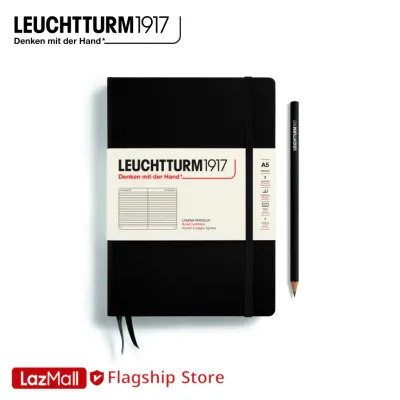
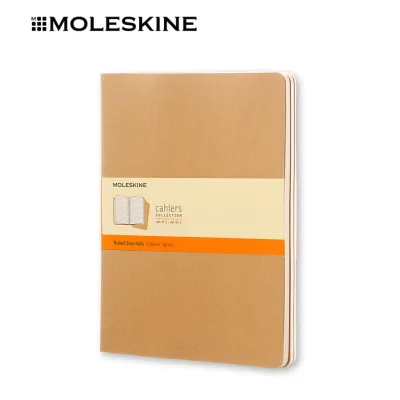
Prices are valid at publication and may change. Please refer to the product page for the latest price.
Comparing Paper Quality and Ink Compatibility
To find a journal that matches your writing style, you must look closely at how the paper interacts with different inks. Paper performance is not just about thickness; it is a combination of fiber density, surface treatment, and weight. Understanding these characteristics helps you avoid frustrating issues like feathering, where ink spreads along the paper fibers, or bleed-through, where ink penetrates to the reverse side of the page.

Moleskine
Moleskine notebooks typically feature a warm, ivory-colored paper that is highly celebrated for its smooth texture. This paper is generally lightweight, often around 70 GSM (grams per square meter). While this makes the journal compact and easy to carry, the thin, uncoated nature of the standard paper means it is highly sensitive to wet inks. If you write with fountain pens, broad rollerballs, or heavy gel pens, you will likely observe noticeable ghosting (where writing is visible on the back of the page) and occasional bleed-through. For those who prefer fountain pens, it is advisable to look specifically for Moleskine’s specialized art or heavy-paper collections, which are designed to handle wetter media.
Leuchtturm1917
Leuchtturm1917 journals generally utilize an 80 GSM ink-proof paper, though the brand also offers dedicated 120 GSM editions for heavy ink applications. The standard 80 GSM paper has a slightly toothier, less slick texture than Moleskine, which helps ink dry more quickly. It is formulated to resist feathering and bleed-through when used with standard fineliners, gel pens, and moderate fountain pen inks. While some ghosting is still common with dark inks or wet nibs on the 80 GSM paper, the page remains entirely usable on both sides for most everyday writing. Always verify the stated GSM on the specific edition you are considering, as the 120 GSM version offers a significantly more opaque writing experience.
Midori (MD Paper)
Midori journals feature proprietary Japanese MD Paper, which is engineered with fountain pen users in mind. Typically weighted around 80 GSM, this paper undergoes rigorous testing to ensure it resists bleed-through and feathering, even when subjected to wet ink flows and broad nibs. MD Paper is uncoated and has a unique, slightly textured surface that provides a distinct tactile feedback—often described as a pleasant “scratchiness”—as your pen glides across the page. It is highly resistant to ghosting, allowing you to utilize every page fully. However, because the paper is designed to prevent ink absorption into the deeper fibers, drying times can be slightly longer, especially in humid environments.
Verification Checklist
Before purchasing any journal, check the product specifications or packaging for the following details:
- Paper Weight (GSM): Higher numbers (80 to 120 GSM) generally offer better resistance to ink penetration and ghosting.
- Surface Texture: Smooth, coated papers offer fast writing speeds but may smear, while toothy, uncoated papers provide more control and better ink shading.
- Ink Compatibility Labels: Look for explicit manufacturer notes regarding fountain pen friendliness or acid-free archival properties.
- Paper Color: Determine whether the paper is bright white, cream, or ivory, as this affects ink contrast and visual comfort.
Build Quality, Binding, and Design Features
A journal’s physical construction determines how well it survives daily carry in a bag and how comfortable it is to write in over several months. The cover material, binding method, and built-in features all contribute to the overall user experience.
Cover Materials
Moleskine and Leuchtturm1917 both offer robust hardcover and flexible softcover options. Hardcovers provide a rigid, stable surface that allows you to write comfortably on your lap or while standing—a practical benefit when commuting or traveling. Moleskine covers are known for their classic, leather-like oilcloth texture, while Leuchtturm1917 uses a durable, wipe-clean synthetic material available in a vast spectrum of colors. Midori takes a radically minimalist approach; its standard MD notebooks feature a simple, heavy cardstock cover wrapped in a glassine paper jacket. To protect a Midori journal from stains and wear, you will typically need to purchase a separate clear plastic, heavy paper, or leather cover.
Binding and Lay-Flat Ability
For a comfortable writing experience, a notebook must lie flat without requiring you to forcefully hold the pages down. All three brands utilize thread-sewn binding, which is the most durable method for securing pages. However, their executions differ:
- Midori: Features an exposed, thread-stitched spine that allows the notebook to open completely flat at a 180-degree angle from the very first page.
- Leuchtturm1917: Uses a traditional bound spine that lies remarkably flat once the spine is gently broken in, ensuring comfortable writing across the center seam.
- Moleskine: Features a tight, traditional binding that may require some physical training or hand pressure to keep open, particularly in the smaller pocket sizes.
Functional Extras
If you use your journal for structured planning, bullet journaling, or professional note-taking, built-in organizational tools can save you significant time. Leuchtturm1917 leads in this category, offering pre-printed page numbers, a blank table of contents (index), dual ribbon markers, an expandable back pocket, and archival labeling stickers. Moleskine offers a simpler set of features, including a single ribbon marker, an elastic closure band, and an expandable inner pocket. Midori strips away almost all extras; it contains no page numbers, no index, and no ribbon markers, focusing entirely on a distraction-free writing canvas, though it does include a small sheet of index tabs for basic labeling.
Evaluating Price Point and Overall Value
When comparing these brands, looking solely at the retail price can be misleading. True value is a calculation of the purchase price relative to the number of usable pages, the durability of the binding, and how well the paper accommodates your preferred writing tools.
Price Positioning
All three brands occupy the premium stationery market, but they target different consumer niches. Moleskine and Leuchtturm1917 are positioned as premium lifestyle products. They are widely distributed and easily found in major bookstores and retail chains. Midori is positioned as a specialty Japanese import. It is often sold in dedicated stationery boutiques and specialized online stores, appealing to enthusiasts who prioritize paper engineering over mainstream brand recognition.
Cost Per Page
To determine the actual value of a notebook, consider the cost per usable page. If a notebook has a lower retail price but suffers from severe ink bleed-through, you may only be able to write on one side of each sheet. This effectively cuts the usable page count in half and doubles your cost per page.
For example, a standard Leuchtturm1917 or Midori notebook might carry a slightly higher initial price tag in local retail shops, but their superior ink resistance allows you to write on both sides of every page. Conversely, a standard Moleskine notebook is highly economical if you write exclusively with ballpoint pens or pencils, as you can utilize every page without experiencing ink issues.
Where to Verify
Because import costs and retail markups vary, you should check authorized stationery retailers, official brand stores, or local bookstores in Singapore to compare current pricing and stock availability. Physical retail stores allow you to feel the paper texture and weight in person, while local online marketplaces often offer bundle deals or seasonal promotions that can significantly lower the cost per notebook.
Decision Framework: Choosing Your Ideal Journal
To simplify your decision, use this framework to match your writing habits with the brand that best supports them.
- Choose Moleskine if: You want a classic, elegant notebook that is easy to find worldwide. It is ideal if you primarily write with ballpoint pens, pencils, or fine gel pens, and you do not require specialized organizational features like page numbers or indexes.
- Choose Leuchtturm1917 if: You are an active planner, bullet journaler, or student who needs built-in organization. It is the right choice if you want a durable hardcover, page numbers, an index, and paper that reliably handles a wide variety of everyday pens, including fineliners and standard fountain pens.
- Choose Midori if: You are a paper enthusiast or dedicated fountain pen user who values a minimalist, distraction-free design. It is perfect if you enjoy a tactile writing experience with distinct feedback and want a notebook that opens completely flat.
- Verify First if: You use high-ink-flow instruments, such as broad fountain pen nibs, calligraphy pens, or heavy art markers. In these cases, always test your pens on a single notebook or opt for specialized high-GSM paper lines before committing to a bulk purchase.
Frequently Asked Questions (FAQ)
Does paper color (cream vs. white) affect writing comfort?
Yes, paper color has a noticeable impact on visual comfort and ink appearance. Cream or ivory paper, which is standard for Moleskine, Leuchtturm1917, and Midori, reflects less light than bright white paper. This reduction in glare helps minimize eye strain during long writing sessions under artificial desk lamps or bright sunlight.
However, cream paper can slightly alter the perceived color of your ink, making blues look slightly greener and muted tones appear warmer. Bright white paper, which is occasionally available in specialized editions of these brands, provides maximum contrast and keeps ink colors true to their original shade, making it highly suitable for sketching, color-coding, or highlighting.
How can I test a journal's paper quality before committing to a bulk purchase?
To verify how a journal handles your specific writing instruments, it is best to purchase a single, standard-sized notebook before buying in bulk. Once you have the notebook, dedicate the very last page to an ink test. Write a few lines using each of your everyday carry pens, noting the drying speed and whether the ink feathers on the surface.
After writing, turn the page over to inspect the back for ghosting and bleed-through. If you are purchasing online and cannot test the paper physically beforehand, carefully review the return policy of the online marketplace or retailer to ensure you can return unused, sealed notebooks if your initial test notebook does not meet your performance standards.
Community discussion
Share your experience or ask a question. Comments are reviewed before publication.