
Choosing the right paper for your traveller’s notebook is a highly personal decision that depends entirely on your primary writing instruments, your preferred ink types, and how much tactile feedback you enjoy from your pen tip. While official Midori inserts are designed to accommodate a wide range of writing tools, alternative brands offer specialized paper characteristics that may better suit your specific creative or professional needs. Finding the ideal match requires balancing paper weight, surface texture, and ink compatibility.
For writers who primarily use fountain pens with highly saturated inks or wet-writing gel pens, the choice comes down to how the paper handles liquid ink. Official Midori inserts provide a balanced, slightly textured writing experience that controls ink spread beautifully, while third-party alternatives might offer either ultra-smooth, non-absorbent surfaces that maximize ink sheen or thicker, sketch-grade paper for mixed media. To avoid disappointment, you should always verify manufacturer specifications and conduct personal swatch tests to evaluate ink drying times and bleed-through resistance before committing to a full journal.
How to Verify Paper Specifications Before Buying
Before purchasing any traveller’s notebook insert, learning to read and interpret paper specifications will save you time and resources. The most common metric you will encounter is paper weight, measured in grams per square meter (gsm). Generally, lighter papers ranging from 52 gsm to 68 gsm offer a slim profile that allows you to pack more pages into a single notebook cover, though they may exhibit more show-through. Medium-weight papers between 80 gsm and 100 gsm strike a balance between durability and thickness, while papers exceeding 120 gsm are typically reserved for heavy sketching, watercolor, or mixed-media applications.
Products mentioned in this guide

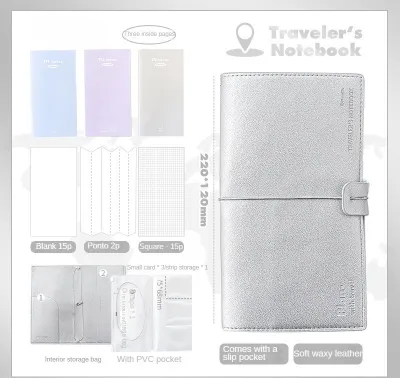
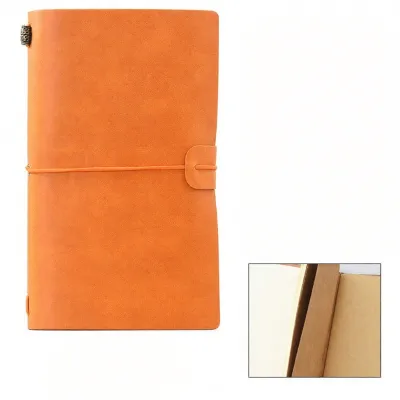
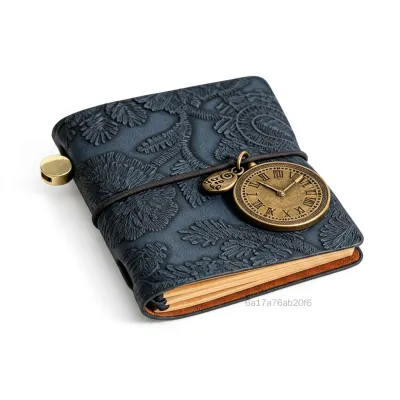
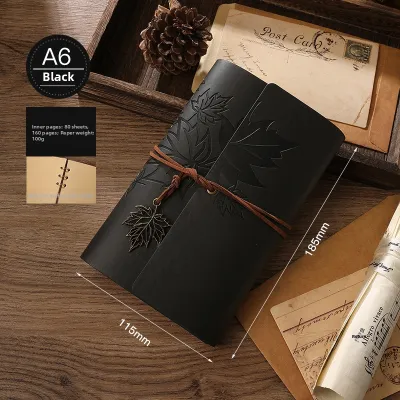
Prices are valid at publication and may change. Please refer to the product page for the latest price.
Beyond weight, you must consider how the paper is treated. Sizing and coating are chemical treatments applied during manufacturing that dictate how quickly paper absorbs liquid. Highly sized or coated papers resist ink penetration, which prevents feathering (where ink spreads along the paper fibers) and bleed-through (where ink penetrates to the back of the page). However, this resistance also extends drying times significantly. Uncoated or lightly sized papers absorb ink almost instantly, making them excellent for quick note-taking with ballpoint or gel pens, though they are more prone to feathering when paired with wet fountain pens.
Finally, pay close attention to the paper’s tooth and opacity. Tooth refers to the physical texture of the paper surface; a paper with more tooth provides a tactile, pencil-like feedback, whereas a smooth paper allows the pen tip to glide effortlessly. Opacity determines how visible your writing will be from the reverse side of the page, commonly referred to as ghosting. When browsing online marketplaces or local stationery boutiques, look for close-up product photos, user-submitted swatch tests, and detailed descriptions of the paper’s origin to assess these tactile qualities before making a purchase.
Assessing Official Midori Inserts for Your Pens
Official Midori inserts are celebrated for utilizing proprietary MD Paper, which is specifically engineered to deliver a premium writing experience. MD Paper is designed to strike a deliberate balance between smoothness and resistance, providing a subtle feedback that lets you feel the pen tip moving across the page. This paper is highly compatible with fountain pens, gel pens, and ballpoints alike, resisting feathering and bleed-through under normal writing conditions. The characteristic cream or warm white hue of standard Midori paper also reduces eye strain during long writing sessions.

To determine if the standard Midori paper matches your specific writing tools, you should perform a controlled swatch test on a sample page. Using your wettest fountain pen, a standard gel pen, and a ballpoint, draw a series of solid blocks, fine lines, and quick scribbles on the back page of the insert. Observe how long the ink takes to dry completely; MD Paper typically requires a few extra seconds for wet inks to set due to its sizing. Once dry, examine the lines closely under a bright light to check for any microscopic feathering along the edges of the strokes.
Next, turn the page over to evaluate the reverse side. While MD Paper is highly resistant to actual bleed-through—where the ink physically drips through the fibers—it is a relatively lightweight paper, meaning you will observe a moderate amount of ghosting or show-through, especially with dark or highly saturated inks. If you prefer a completely clean reverse page for double-sided writing, you may need to adjust your ink flow, opt for finer pen tips, or explore alternative inserts with higher opacity ratings.
Evaluating Third-Party and Alternative Inserts
The market for third-party traveller’s notebook refills is vast, offering a diverse array of paper types that cater to niche writing preferences. When evaluating alternative brands, start by identifying the paper material and origin listed on the packaging. Many popular third-party inserts feature specialized papers, such as ultra-thin Japanese Tomoe River paper, which is famous for its ability to handle heavy fountain pen ink loads without bleeding while showcasing dramatic ink sheen and shading. Other alternatives utilize thicker, toothier European papers that excel with dry media like graphite and colored pencils.
Testing alternative papers for heavy ink loads is crucial if you plan to use broad nib fountain pens, calligraphy pens, or wet markers. Because some third-party papers lack adequate sizing, heavy ink application can lead to pooling, where the ink sits on the surface too long, or severe bleed-through that ruins subsequent pages. During your initial trial, apply a generous amount of ink to a small corner of the page and watch how the paper fibers react. If the paper buckles excessively or the ink spreads rapidly beyond your intended stroke, the paper may not be suited for high-volume liquid ink applications.
Additionally, you must verify the physical construction and binding compatibility of third-party inserts before purchasing. Official Midori covers rely on a simple elastic band system to hold inserts in place, which requires the refills to have a flat, stable spine. Check whether the alternative insert is bound using staples, thread sewing, or glue. Thread-sewn bindings are generally preferred as they allow the notebook to lay completely flat when open, preventing strain on the elastic bands. Most importantly, double-check the exact dimensions of the insert; standard Regular size refills should measure approximately 210 mm by 110 mm, while Passport size refills should measure 124 mm by 89 mm to ensure they do not overhang the edges of your leather cover.
Decision Framework: Choosing the Right Insert for Your Tools
To streamline your selection process, use the following conditional frameworks to match your writing habits with the correct notebook insert.
Choose Midori if…
- You value consistent tactile feedback: You enjoy a slight, satisfying resistance when writing, particularly with fountain pens or pencils.
- You use standard writing instruments: Your daily carry consists of fine to medium fountain pens, standard gel pens, or high-quality ballpoints.
- You prefer a classic aesthetic: You appreciate the signature warm cream tone of MD Paper and want guaranteed compatibility with the official Midori ecosystem.
Choose Alternative Brands if…
- You prioritize ink properties like sheen and shading: You use specialized fountain pen inks and prefer ultra-thin, highly sized papers that allow colors to pop.
- You require specific page layouts: You need unique grid sizes, dot grid patterns, or specialized habit trackers that are not offered in the standard Midori lineup.
- You use heavy or wet media: Your creative process involves watercolors, heavy markers, or mixed media that demand thick, high-gsm sketch paper.
Verify First if…
- You mix multiple paper weights in one cover: Ensure that combining a thick sketch insert with a thin lightweight insert does not create bulk that prevents the leather cover from closing naturally.
- You write in high-humidity environments: If you live in a tropical climate, such as Singapore, keep in mind that highly absorbent papers will pull moisture from the air, which can cause inks to feather more than they would in dry conditions. Always store your unused inserts in a sealed, dry space to preserve their original sizing properties.
Frequently Asked Questions (FAQ)
How can I test a new insert for ink bleed-through before committing to a full journal?
To test a new insert without ruining your primary writing space, always utilize the very last page or the blank flyleaf of the notebook. Draw a small grid of test swatches using your most frequently used pens, varying your writing speed and pressure. Apply a heavy layer of ink in one small section to simulate a slow-moving pen or a heavy ink drop.
Once the ink has dried completely, hold the page up to a direct light source and examine the reverse side. Look closely for any pinpricks of ink that have physically penetrated the paper fibers, which indicates true bleed-through. If you only see a faint shadow of the writing (ghosting) without any physical ink transfer, the paper is safe to use for double-sided writing.
Do I need to condition or break in traveller's notebook paper?
Standard paper inserts do not require any conditioning or breaking in before you begin writing. They are ready for immediate use straight out of the packaging. However, the leather cover holding your inserts may benefit from occasional conditioning with leather cream to maintain its flexibility and protect it from scratches.
For the paper itself, environmental storage is the most critical factor. In regions with high ambient humidity, such as Singapore, paper fibers can absorb moisture from the air over time. This excess moisture can degrade the paper’s sizing, leading to increased feathering and longer ink drying times. To prevent this, store your spare, unused paper inserts in a dry drawer or a sealed container with a small silica gel packet to maintain optimal writing performance.
Community discussion
Share your experience or ask a question. Comments are reviewed before publication.