
When selecting a midori notebook, the paper quality is the defining factor of your writing experience. Midori has spent decades refining its paper formulations to cater to different writing instruments, artistic mediums, and personal preferences. The brand’s two flagship offerings—classic MD Paper and MD Paper Cotton—provide distinct tactile sensations, ink absorption rates, and visual aesthetics.
Choosing between these paper types requires an understanding of how their fibers interact with different inks and graphite. While classic MD Paper is engineered for a smooth yet controlled writing glide that minimizes feathering, MD Paper Cotton introduces natural cotton fibers for a softer, more absorbent texture. By matching the unique characteristics of these papers to your daily writing tools and creative habits, you can find the ideal notebook that elevates your journaling, sketching, or archiving.
Understanding Midori's Core Paper Types: MD vs. Cotton
Midori’s paper philosophy centers on simplicity, quality, and the sensory pleasure of writing. To appreciate these products, it is essential to look at the structural differences between their primary paper lines.
Products mentioned in this guide
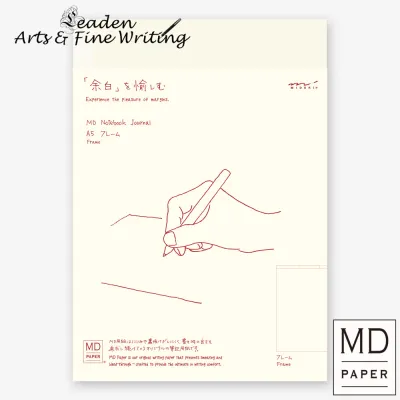
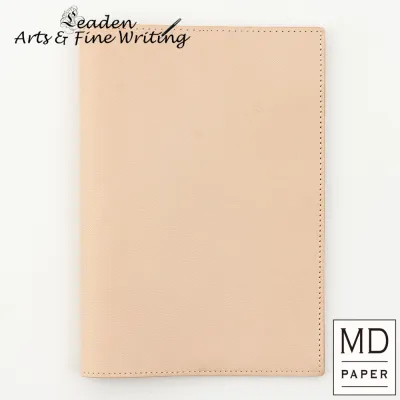
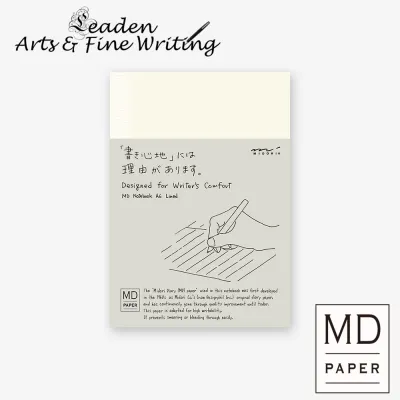
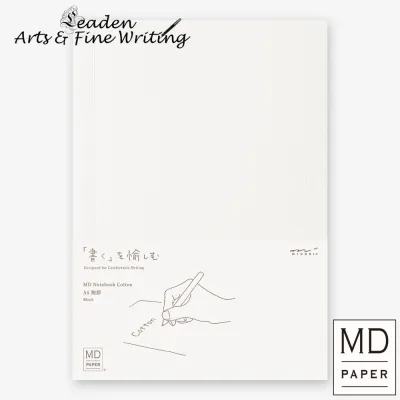
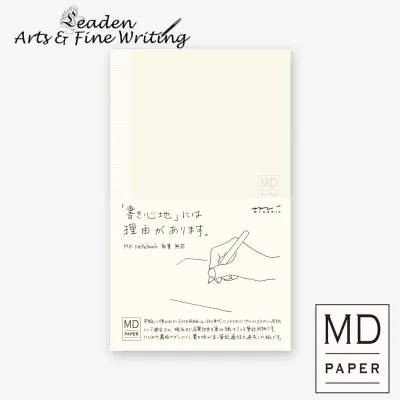
Prices are valid at publication and may change. Please refer to the product page for the latest price.
MD Paper (Classic Cream)
Classic MD Paper in its iconic cream shade is the foundation of the Midori lineup. Developed in Japan during the 1960s, this proprietary wood-pulp paper was designed specifically to offer an exceptional writing experience. The cream color is carefully calibrated to reduce eye strain, absorbing harsh light reflections and providing a warm, inviting background for your thoughts.
In terms of texture, classic MD Paper is characterized by a delicate balance between smoothness and resistance. It features a subtle “tooth”—a slight surface texture that provides physical feedback to the pen tip. This ensures that your pen does not slip uncontrollably across the page, giving you greater control over your handwriting. The paper is specifically treated to resist feathering and bleed-through, making it a favorite for daily writing tasks.
MD Paper Cotton
MD Paper Cotton represents a premium variation of the classic formula, incorporating 20% cotton pulp into the paper mixture. The addition of cotton fibers fundamentally alters the physical properties of the sheet, creating a surface that feels noticeably softer, more pillowy, and highly tactile.
Because cotton fibers are naturally more porous and flexible than standard wood-pulp fibers, Cotton paper is highly absorbent. This absorbency gives the paper a matte, elegant finish and changes how it interacts with wet mediums. It has a slightly higher bulk and weight, offering a luxurious, durable feel that appeals to artists, sketchers, and those who appreciate high-quality tactile materials.
MD Paper White
For users who prefer a clean, neutral background, Midori offers MD Paper White. This variant provides the same technical performance as the classic cream paper but in a bright, pure white finish. It is designed for those who want absolute color fidelity, ensuring that ink colors, highlighters, and colored pencils appear exactly as intended without the warm undertones of the cream variant.
Verification Guidance
When purchasing a midori notebook, it is highly recommended to verify the specific product specifications on the label or packaging. Midori offers its paper in various formats—such as A5, A6, B6 Slim, and Traveler’s Notebook inserts—and different binding styles, including thread-stitched lay-flat bindings and spiral bindings. While classic MD Paper notebooks typically feature standard-weight sheets, specific limited editions or specialized sketchbooks may use thicker variants. Always check the manufacturer’s insert to confirm the exact dimensions, page count, and paper weight (GSM) to ensure compatibility with your preferred notebook covers or storage systems.
How to Choose Your Midori Notebook Based on Your Writing Instruments
The interaction between your writing instrument and the paper surface determines the quality of your writing experience. Different inks, tips, and dry media perform uniquely on each Midori paper type.

Fountain Pens and Liquid Inks
Fountain pen enthusiasts frequently turn to the midori notebook because of its exceptional ink handling. Classic MD Paper is highly resistant to feathering—the spreading of ink along paper fibers—and bleed-through, where ink penetrates to the opposite side of the sheet. The proprietary sizing on classic MD Paper allows fountain pen ink to pool slightly on the surface before drying. This surface retention enhances the visual characteristics of the ink, showcasing complex shading and vibrant sheening properties.
In contrast, MD Paper Cotton behaves differently due to its fibrous, absorbent nature. The cotton pulp draws liquid ink deeper into the paper structure. While this quick absorption reduces the risk of surface smudging, it can slightly soften the sharp edges of fine lines and may mute some high-sheen ink effects. However, the absorbency allows for beautiful, organic ink shading and prevents pooling, making it an excellent choice for those who write with moderate ink flows or prefer a matte, textured finish.
Pencils, Charcoal, and Dry Media
For dry media, the texture or “tooth” of the paper is the most critical factor. Classic MD Paper possesses a very fine, consistent tooth. When writing with a standard graphite pencil, the paper gently abrades the pencil lead, leaving clean, precise, and dark lines. It is highly suitable for everyday sketching, mechanical pencils, and structured technical drawings where precision is paramount.
For expressive sketching, charcoal, pastels, or heavy graphite shading, MD Paper Cotton is the superior option. The soft, textured surface of the cotton fibers grips dry pigments exceptionally well, allowing for rich tonal depth and smooth blending. The paper’s flexibility prevents the surface from pilling or tearing when subjected to repeated blending with a tortillon or eraser, providing a responsive canvas for artistic expression.
Gel Pens, Ballpoints, and Markers
Gel pens and ballpoint pens perform beautifully on classic MD Paper. The smooth, consistent surface allows the rollerball tips to glide effortlessly without skipping or catching. The quick-drying nature of gel inks on wood-pulp paper makes this combination ideal for rapid note-taking, bullet journaling, and daily lists.
However, when using heavy markers, alcohol-based pens, or wet highlighters, users must exercise caution. Standard-weight MD Paper may exhibit ghosting (where the writing is visible on the reverse side) or bleed-through when subjected to highly saturated markers. MD Paper Cotton, with its thicker structure and higher absorbency, handles heavier ink loads more effectively, though highly penetrating alcohol-based markers will still bleed through standard notebook pages. For heavy marker usage, verifying the paper thickness or using a protective backing sheet is advised.
Matching Paper Types to Your Usage Scenarios
Your daily routine, creative hobbies, and lifestyle should guide your final selection of a Midori paper type.
Daily Journaling and Note-Taking
For standard daily journaling, creative writing, and professional note-taking, classic MD Paper (Cream) remains the optimal choice. The warm cream tone is exceptionally gentle on the eyes, making it comfortable for long writing sessions under various lighting conditions.
Additionally, notebooks featuring classic MD Paper are highly portable and lightweight, making them easy to carry in a backpack or briefcase. The thread-stitched binding allows the notebook to lie completely flat on your desk, ensuring a seamless writing experience from the left margin to the right.
Art, Sketching, and Ink Swatching
If your notebook serves as a creative journal, sketchbook, or a space for ink swatching, MD Paper Cotton or MD Paper White is highly recommended. The neutral white surface of these variants ensures that your watercolors, colored pencils, and ink swatches are represented with absolute color accuracy.
While MD Paper Cotton can handle light watercolor washes and wet ink techniques due to its absorbent cotton fibers, it is important to remember that it is not a dedicated watercolor block. Heavy water application will cause the paper to buckle and warp. For light mixed-media work, apply water sparingly and allow the page to dry naturally.
Archiving and Gifting
For long-term archiving, keeping a travel journal, or selecting a premium gift, MD Paper Cotton offers a distinct advantage. Cotton fibers are highly durable and naturally resistant to deterioration, yellowing, and environmental aging. The tactile, fabric-like feel of the cover and pages provides an immediate sense of luxury and craftsmanship.
Pairing a Cotton notebook with a high-quality leather cover creates a beautiful, aging-resistant keepsake that will preserve your thoughts, sketches, and records for decades to come.
Practical Tips for Testing and Maintaining Your Notebook
To ensure your notebook remains in excellent condition and performs as expected, incorporate these practical care and testing habits.
Ink Testing
Because smoothness, bleed resistance, drying speed, and water resistance depend entirely on the specific combination of your writing instrument, tip size, and ink formula, you should always perform a personalized ink test. Before writing on the main pages of a new midori notebook, turn to the very last page or use a dedicated test sheet. Write a few sample lines using your favorite pens, create small ink swatches, and note the drying time and any potential ghosting or feathering. This simple step helps you identify the best pen-and-paper pairings before committing to your journal.
Storage in Humid Environments
In tropical climates like Singapore, high relative humidity can significantly alter paper performance. Paper is naturally hygroscopic, meaning it absorbs moisture from the surrounding air. Cotton paper is particularly sensitive to atmospheric humidity due to its porous fiber structure.
When paper absorbs excessive moisture, it may feel soft or slightly damp, its tooth may change, and liquid inks will take significantly longer to dry, increasing the risk of accidental smudging. To maintain your notebook’s quality, store your notebooks flat in a cool, dry place away from open windows or direct drafts from air conditioners. Keep your notebooks in a protective drawer, sleeve, or box, and consider placing a small, food-safe silica gel packet inside your notebook storage area to absorb excess moisture and preserve the paper’s crisp texture.
Checking Manufacturer Specs
To maximize the lifespan of your notebook, always check the manufacturer’s care instructions and specifications. Different Midori series feature unique covers—ranging from lightweight paper wraps to delicate goat leather—and specialized bindings. Avoid exposing the bindings to excessive stress or bending the spine backward forcefully, as this can damage the thread stitching. Following the recommended care guidelines ensures that your notebook remains structurally sound throughout its entire use.
Frequently Asked Questions (FAQ)
Is Midori MD Paper considered fountain pen friendly?
Yes, classic Midori MD Paper is widely regarded as highly fountain pen friendly. Its proprietary manufacturing process and surface treatment prevent feathering and bleed-through with most standard fountain pen inks. While some ghosting (show-through) may occur with very wet inks or broad nibs due to the paper’s standard weight, the ink lines remain sharp and clean. To ensure optimal results with highly saturated or wet inks, a quick spot test on a back page is recommended.
What is the main difference between Midori MD Paper Cream and White?
The primary difference is visual and aesthetic. MD Paper Cream features a warm, soft off-white tone designed to minimize glare and reduce eye strain during long writing sessions. MD Paper White offers a bright, neutral canvas that provides high contrast and ensures absolute color fidelity for inks, highlighters, and art media. Both variants offer excellent writeability, though the White color is frequently featured in the Cotton paper line, which also introduces a different fiber texture.
Can I use watercolors on Midori Cotton paper?
You can use light watercolor washes on Midori Cotton paper, but it is not a substitute for heavy-weight watercolor paper. The inclusion of 20% cotton pulp allows the paper to absorb wet media more evenly and resist pilling better than standard wood-pulp paper. However, because it is standard notebook weight, excessive water will cause the pages to buckle and warp. For best results, use a dry-brush technique, limit the amount of water, and allow the page to dry completely before closing the notebook.
Community discussion
Share your experience or ask a question. Comments are reviewed before publication.