
Choosing the right gold buttons can elevate a hand-sewn garment from a simple home craft project to a professional-grade masterpiece. However, selecting between metal and plastic gold buttons involves more than just picking a shiny finish. The choice between these two materials hinges on a careful balance of fabric weight, garment care requirements, aesthetic goals, and environmental conditions. Because the term “gold” describes only the surface finish or coloration, the underlying base material—whether it is a heavy metal alloy or a lightweight molded polymer—will ultimately dictate how the button behaves, hangs, and wears over time.
To make an immediate decision for your project, consider this straightforward framework:
- Choose metal gold buttons if you are working with heavyweight fabrics (such as wool, denim, or tweed), sewing structured outerwear like blazers and coats, or requiring an authentic, highly reflective metallic luster and a substantial physical weight that anchors the garment.
- Choose plastic gold buttons if you are sewing with lightweight or delicate fabrics (such as silk, chiffon, linen, or light cotton), creating children's clothing, prioritizing easy machine-washing and tumble-drying, or working within a strict budget.
Quick Answer: Which Gold Button Should You Choose?
When deciding on the perfect fastener, the primary rule of thumb is to match the button’s physical weight to the weight of your fabric. Metal buttons are ideal for heavy fabrics, outerwear, and high-end tailoring projects that require a premium, authentic luster and structural weight. They provide a classic, substantial feel that complements garments like double-breasted blazers, trench coats, and heavy woolen cardigans.
Products mentioned in this guide
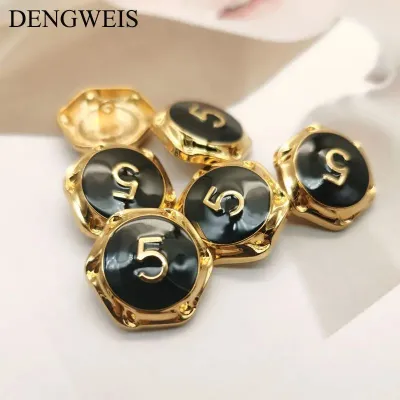
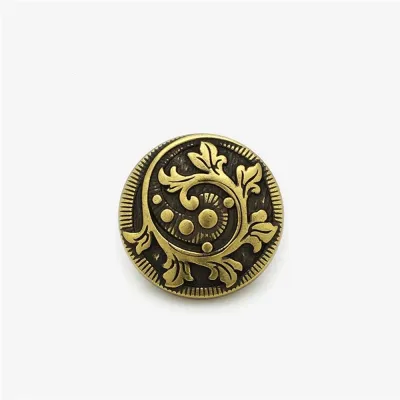
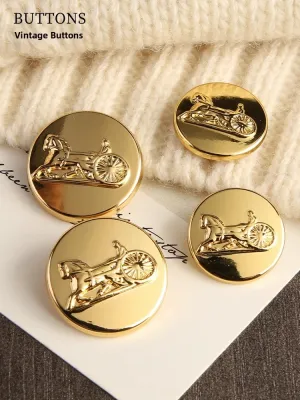
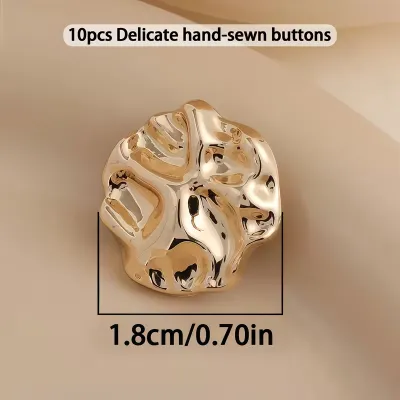
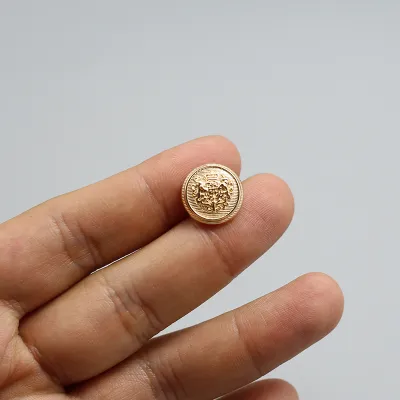
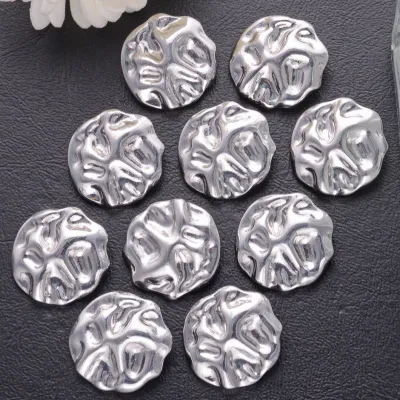
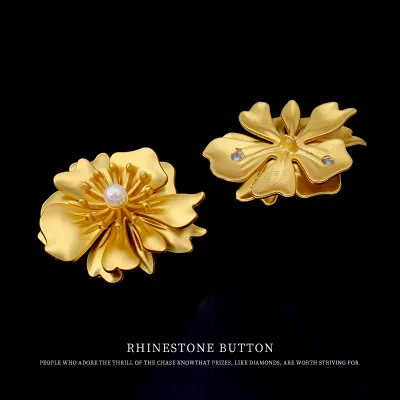
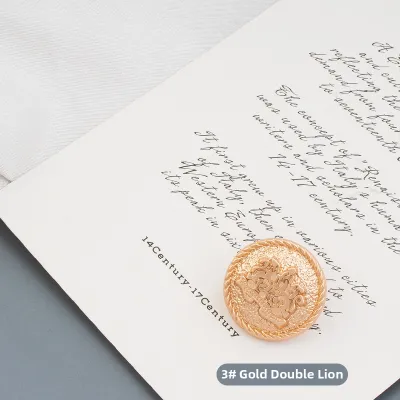
Prices are valid at publication and may change. Please refer to the product page for the latest price.
Conversely, plastic (or resin) gold buttons are the superior choice for lightweight fabrics, children’s clothing, garments that require frequent machine washing, and budget-conscious projects. They offer a lightweight alternative that prevents delicate fabrics from sagging or tearing. It is important to clarify that “gold” refers strictly to the finish or color; the base material (metal alloy versus molded plastic) is what dictates the button’s physical behavior, durability, and care requirements.
Metal vs Plastic Gold Buttons: Core Differences
To understand why these materials behave so differently, it is helpful to look at their physical and practical properties. Metal gold buttons are typically manufactured from zinc alloys, brass, or copper, which are then finished with a thin layer of gold plating or metallic lacquer. This construction gives them a characteristic cool-to-the-touch feel and a satisfying heft. Conversely, plastic gold buttons are molded from synthetic polymers, such as polyester, acrylic, or nylon resin. They are either tinted throughout the molding process or coated with a metallic gold finish on the surface, resulting in a highly uniform, exceptionally lightweight fastener.

| Base Material | Relative Weight | Durability | Heat & Moisture Resistance | Relative Cost | Best For |
|---|---|---|---|---|---|
| Metal Alloy (Zinc, Brass) | Heavy / Substantial | Very High (Resists cracking) | Moderate (Prone to tarnish in high humidity) | Premium / Higher | Outerwear, blazers, structured woolens, and heirloom garments |
| Molded Plastic (Resin, Nylon) | Very Light | Moderate (Can scratch or warp under high heat) | High (Immune to rust and humidity) | Budget-friendly / Economical | Lightweight shirts, blouses, children's wear, and everyday washables |
While metal buttons represent a higher initial investment per piece, their structural integrity makes them nearly indestructible under normal wearing conditions. Plastic buttons offer a cost-effective alternative that can be purchased in bulk, making them highly practical for everyday wardrobe items that undergo frequent laundering.
Matching Buttons to Fabric Weight and Garment Type
The relationship between a button’s weight and the fabric’s structural integrity is one of the most critical factors in garment construction. If the button is too heavy for the fabric, it will pull down on the fibers, causing unsightly sagging, stretching, or even tearing at the buttonhole. If the button is too light, it may fail to hold a heavy garment closed or look visually disproportionate.
Lightweight and Delicate Fabrics
When working with delicate textiles such as silk, chiffon, organza, crepe de chine, or ultra-fine lawn cotton, avoiding excess weight is paramount. Metal gold buttons, even small ones, possess enough physical mass to drag the front placket of a delicate blouse downward. This weight distorts the natural drape of the garment, causes puckering along the seams, and puts immense stress on the fine threads surrounding the buttonholes.
For these delicate projects, plastic gold buttons are highly recommended. Modern molded resins can replicate the bright sheen of gold without adding unnecessary weight. Using lightweight plastic buttons ensures that the fabric retains its fluid movement and structural shape. Furthermore, delicate fabrics are highly susceptible to friction damage; the softer, rounded edges typical of molded plastic buttons are much less likely to snag or abrade fine silk or chiffon fibers during wear and fastening.
Medium to Heavyweight Fabrics
Heavyweight materials like wool melton, denim, canvas, tweed, corduroy, and thick upholstery-grade fabrics require fasteners that match their physical presence. Metal gold buttons are the ideal choice here. They provide the necessary structural counterweight to anchor thick lapels and heavy coat fronts. When you button a heavy wool trench coat, the tension placed on the fastener is substantial; a metal button, particularly one with a welded metal shank, can withstand this pulling force without bending or snapping.
In contrast, using plastic buttons on a heavy blazer or winter coat often yields disappointing results. Standard plastic buttons may look visually thin and cheap when paired with rich, textured fabrics like tweed or cashmere. More importantly, they often lack the tensile strength required to handle the pressure of thick buttonholes, leading to premature cracking or the button pulling completely off the thread. For tailored garments where structure and longevity are key, the physical weight and strength of metal buttons are indispensable.
Washing, Care, and Longevity Requirements
How a garment will be cleaned and maintained throughout its lifecycle should heavily influence your choice of haberdashery. A button that looks beautiful on a newly finished garment may not survive repeated trips through a washing machine or exposure to dry-cleaning chemicals.
Machine Washing and Heat Exposure
If your sewing project is an everyday garment intended for regular home laundering, plastic gold buttons are generally the safer and more convenient option. High-quality plastic and resin buttons are highly resilient against water exposure, detergent enzymes, and the physical agitation of the washing machine drum. They do not rust, tarnish, or corrode, and their gold finishes are often chemically bonded to the polymer, reducing the risk of chipping.
Metal buttons require much more cautious handling during domestic washing. The tumbling action of a washing machine can cause metal buttons to strike the metal drum, which can chip the gold plating, scratch the button’s surface, or even dent the washing machine itself. Additionally, prolonged exposure to water and laundry detergents can break down the protective lacquer on metal buttons, leading to oxidation or tarnishing. If you must machine wash a garment with metal buttons, always turn the garment inside out, place it inside a mesh laundry bag, select a gentle cycle, and avoid high-heat tumble drying, which can accelerate the degradation of metallic finishes.
Dry Cleaning and Chemical Exposure
For tailored garments, formal wear, or coats that require professional dry cleaning, both metal and plastic gold buttons present unique risks that must be managed. Dry cleaning involves chemical solvents, such as perchloroethylene, which can react aggressively with certain materials.
Before sending a garment to the dry cleaner, it is vital to check both the fabric’s care instructions and the button manufacturer’s specifications. Some cheap plastic buttons are made from polymers that dissolve, soften, or warp when exposed to dry-cleaning solvents, leaving you with deformed, sticky fasteners. On the other hand, poorly plated metal buttons can experience chemical stripping, where the solvent eats away the gold finish to reveal a dull, dark base metal underneath. To prevent these issues, high-end tailors often wrap metal buttons in protective foil before dry cleaning, or choose premium, solvent-resistant urea or metal buttons specifically rated for professional care.
Aesthetics, Finish, and Humidity Considerations
The visual and tactile experience of a garment is deeply tied to its hardware. Metal gold buttons offer an authentic, sharp reflectivity and a cool-to-the-touch feel that plastic cannot fully replicate. When a metal button catches the light, it displays a bright, metallic luster with distinct highlights and deep shadows, giving the garment an undeniable sense of luxury and heritage. Over time, high-quality metal buttons may develop a gentle patina, or wear down slightly at high-friction points to reveal the warm brass or copper base metal beneath, adding vintage character to the piece.
However, environmental factors must be considered, especially in humid tropical climates like Singapore’s. High relative humidity and warm temperatures create an environment where moisture can easily settle on metal surfaces. If metal buttons are made from low-grade alloys or feature thin, uneven plating, they are highly susceptible to oxidation. Over time, this can manifest as unsightly green tarnish (verdigris), rust spots, or a dull, cloudy film that ruins the gold appearance.
Plastic gold buttons are completely immune to moisture-induced corrosion, making them exceptionally reliable for garments stored in humid wardrobes or worn frequently in hot weather. Modern manufacturing techniques have significantly closed the aesthetic gap, producing metal-plated plastic (ABS) buttons that mimic the bright luster of real metal while remaining entirely rust-proof. While plastic buttons may scratch over time with heavy use, they will never oxidize, tarnish, or leave rust stains on your fabric, making them a highly practical choice for long-term storage in tropical regions.
How to Inspect and Verify Button Quality
Before sewing buttons onto your carefully crafted project, performing a quick quality inspection can save you from future repairs. Use these observable criteria to evaluate your buttons:
- Edge Smoothness: Run your fingertip carefully around the outer rim of the button and through the sewing holes or along the back shank. High-quality buttons should feel completely smooth. On plastic buttons, check for sharp mold lines or protruding plastic burrs left over from the injection molding process. On metal buttons, look for sharp metal edges or rough spots around the thread holes. These imperfections can easily fray or cut your sewing thread over time, causing the button to fall off.
- Coating Uniformity: Hold the button under a bright light and inspect the gold finish from multiple angles. For metal buttons, ensure the gold plating is uniform, with no signs of bubbling, flaking, or tiny pinholes where the base metal is exposed. For plastic buttons, check that the metallic coating or paint is evenly distributed, without pooling in the crevices or showing thin, translucent patches where the base plastic peeks through. Also, verify that cheap metallic paints do not bleed color onto light fabrics when wet by performing a quick rub test with a damp white cloth.
- Shank and Hole Strength: For shank buttons (which have a loop on the back instead of holes through the face), test the connection point. A metal shank should be securely welded or cast as a single piece with the button body; wiggle it gently to ensure it does not play or feel loose. For plastic buttons, inspect the thickness of the plastic surrounding the sewing holes. If the plastic is too thin, the tension of the thread can easily crack the button during wear.
- The Scrap Fabric Test: If you are still uncertain about how a button will behave, perform a simple trial. Sew a sample button onto a scrap piece of your project's fabric using your intended sewing thread and needle size. Cut a matching buttonhole, and pass the button through it several times. This allows you to observe whether the button's weight distorts the fabric, whether the edges snag the buttonhole threads, and how the overall combination looks and feels in hand.
Frequently Asked Questions (FAQ)
Can I paint or dye plastic buttons to match a specific gold shade?
Yes, you can paint plastic buttons using specialized acrylic paints or spray paints formulated specifically for plastics. However, these DIY finishes rarely match the brilliant reflective depth and durability of factory-molded gold resin or electroplated metal. Painted surfaces are highly prone to scratching, chipping, and peeling when subjected to the friction of buttoning or the agitation of washing. For a lasting finish, it is always best to purchase buttons molded in the exact shade of gold you require.
Do metal gold buttons set off airport security scanners?
Standard-sized metal gold buttons on shirts, trousers, or light jackets are generally too small and contain too little metallic mass to trigger walk-through metal detectors at airport security. However, if you are wearing a heavy winter coat or a structured blazer adorned with multiple large, thick metal buttons, it may occasionally prompt a secondary manual screening or a request to run the coat through the X-ray machine. They are entirely safe and permitted for travel, but opting for plastic buttons on travel garments can streamline your airport experience.
How do I prevent metal buttons from tarnishing over time?
To preserve the brilliant finish of metal gold buttons, store your garments in a cool, dry environment with stable humidity levels, and avoid storing them in damp plastic garment bags. Placing anti-tarnish strips or silica gel packets inside your wardrobe or storage boxes can help absorb excess moisture. After wearing the garment, gently wipe the surface of the metal buttons with a soft, dry microfiber cloth to remove body oils, sweat, or cosmetic residues before hanging it back in the closet.
Community discussion
Share your experience or ask a question. Comments are reviewed before publication.