
Selecting a monthly planner for 2027 requires aligning the physical design of a notebook with your cognitive workflow. The right planner acts as an extension of your mind, helping you offload tasks, track goals, and visualize your time. If the layout does not match your daily habits, the planner will likely sit unused on your desk. To find your ideal match, you must evaluate how you process information, assess the physical paper and binding specifications, and verify product details before committing to a purchase.
Identify Your Core Planning Style
To choose a planner that you will consistently use throughout 2027, you must first diagnose your organizational habits. Planning styles generally fall into three categories: minimalist, highly structured, and flexible. Minimalist planners prefer a high-level overview with minimal daily maintenance, using the planner primarily to remember key dates and major deadlines. Structured planners thrive on detailed schedules, hourly blocks, and explicit prompts that guide their daily routine. Flexible planners need a hybrid system, combining monthly calendars with open-ended pages for sketching, note-taking, or bullet journaling.
Your daily time commitment is a critical factor in this decision. If you only have a few minutes each morning or evening to update your schedule, a highly detailed planner with daily pages will quickly become a source of stress rather than a tool for productivity. For busy individuals, a monthly overview supplemented by a few weekly check-ins is often the most sustainable approach. Conversely, if you enjoy the ritual of morning reflection and detailed task listing, a comprehensive daily or weekly layout will justify the time investment.
Products mentioned in this guide
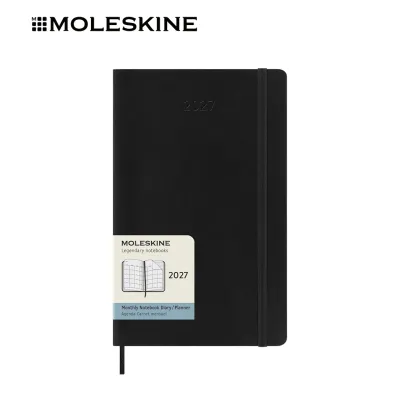
![[2 in 1] 2027 Monthly Planner + Weekly Planner/Notebook - (A5 | Singapore Holidays | 120 pages)|ROYCE PUBLISHING](https://img.lazcdn.com/g/p/70c55d086968b7b70fc25711c879f301.jpg_400x400q80.jpg_.webp)
![[2 in 1] 2027 Winnie-The-Pooh Classic Monthly Planner + Weekly Planner / Notebook-(A5 | 120 pages)|ROYCE PUBLISHING](https://img.lazcdn.com/g/p/3491d50b9272e2bf0ff159491255808a.jpg_400x400q80.jpg_.webp)
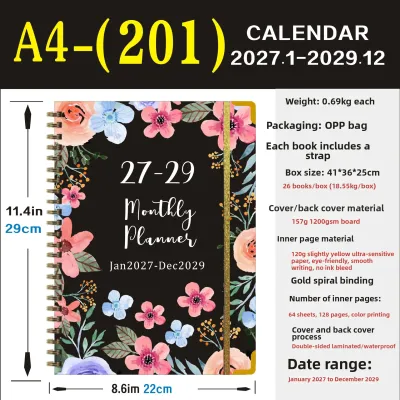
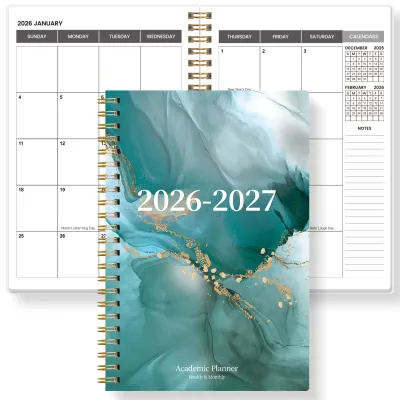
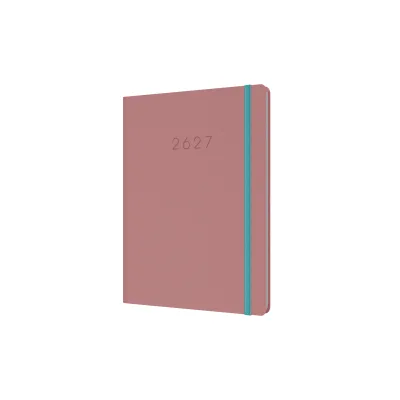
Prices are valid at publication and may change. Please refer to the product page for the latest price.
Finally, consider your specific tracking needs beyond basic scheduling. Do you need to monitor daily habits, track financial budgets, or manage complex project milestones? If your goals require continuous tracking, look for planners that integrate dedicated modules for these activities. If your tracking needs change from month to month, an open layout with blank or dotted sections will serve you better than rigid, pre-printed templates that cannot be repurposed.
Key Features to Evaluate in a 2027 Monthly Planner
The physical construction of a planner directly impacts how comfortable it is to use daily. Paper weight, measured in Grams per Square Meter (GSM), determines how well the pages handle different types of ink. Standard office paper is typically around 80 GSM, which is suitable for ballpoint pens but may cause gel pens, rollerballs, or fountain pens to ghost or bleed through to the other side. For a clean writing experience with minimal show-through, look for planners featuring paper weights of 100 GSM to 120 GSM. If you prefer using fountain pens or heavy markers, verify that the paper has a smooth, coated finish designed to resist ink feathering.

Binding is another crucial usability factor that dictates how the planner sits on your desk. Sewn thread binding, often referred to as lay-flat binding, allows the planner to open completely flat without the spine forcing the pages shut. This is ideal for writing comfortably across the center seam. Spiral or twin-ring binding allows you to fold the planner completely in half to save desk space, though the metal or plastic rings can sometimes obstruct your hand while writing near the margins. Disc-bound systems offer the unique ability to insert, remove, and rearrange pages at will, though they require a specialized punch and can add bulk to the spine.
Physical dimensions must align with your daily carry habits and workspace. An A5 size (148mm x 210mm) is widely considered the industry standard for balancing writing space with portability, fitting easily into most bags. If you travel frequently or prefer to keep your planner in a pocket, a smaller B6 or A6 size may be more appropriate, though you will sacrifice writing room. For desk-bound professionals who manage complex project timelines and require large visual grids, an A4 or letter-sized planner provides the expansive layout necessary to view entire months at a glance without cramping your handwriting.
Matching Planner Layouts to Specific Planning Styles
Once you understand your planning habits and physical preferences, you can focus on selecting a layout that matches your cognitive style. The visual design of a page influences how easily you can process your schedule and focus on your priorities.
Minimalist and Clean Layouts
Minimalist layouts prioritize white space and eliminate unnecessary visual distractions. These designs omit pre-printed motivational quotes, decorative borders, and complex tracking boxes, leaving a clean canvas that allows your schedule to stand out. The absence of rigid structures prevents the feeling of failure if you leave a section blank, making it easier to pick up the planner after a busy week without feeling behind.
To support custom monthly spreads, look for planners that utilize light grey dot-grid or subtle graph backgrounds within the calendar boxes. These faint guides help you write in straight lines and draw custom dividers without cluttering the page. A clean layout should offer a simple, spacious monthly grid where each day has a dedicated box, allowing you to see your entire month’s commitments without visual noise.
When evaluating minimalist options, check that the calendar grid does not split weekend boxes. Some compact designs share a single box for Saturday and Sunday, which can be highly inconvenient if your weekends are just as busy as your weekdays. A truly functional minimalist layout provides equal space for every day of the week, ensuring your weekend plans are not compromised.
Detailed and Structured Layouts
Structured layouts are designed for individuals who require precise time management and comprehensive tracking. These planners often feature vertical weekly columns with pre-printed hourly time blocks, allowing you to schedule appointments, meetings, and deep-work sessions with precision. This layout is highly effective for time-blocking enthusiasts who want to visualize their daily capacity.
In addition to hourly schedules, structured planners often include dedicated sections for goal setting, monthly reviews, and habit tracking. These integrated modules prompt you to define your priorities at the start of each month and reflect on your progress at the end. Having these trackers built directly into the layout saves you the time of drawing them yourself and helps maintain consistency in your routines.
When choosing a structured planner, pay close attention to the ratio of monthly overview pages to weekly or daily detailed pages. If you have a high volume of daily tasks, ensure the planner provides sufficient space for daily lists alongside the monthly calendar. A well-designed structured planner balances these views, allowing you to zoom out for a monthly perspective and zoom in for daily execution without feeling disorganized.
Flexible and Customizable Layouts
Flexible layouts cater to those whose planning needs change throughout the year. Modular systems, such as traveler’s notebooks or refillable leather covers, allow you to curate your own planner by combining different paper inserts. You can bind a monthly calendar insert alongside a dot-grid notebook and a sketchbook, creating a personalized tool that adapts to your changing projects.
Dot-grid and blank pages are the foundation of customizable planning, offering the freedom to design your own monthly spreads, mind maps, and brain dumps. If you find that standard calendar grids are too restrictive for your workflow, a flexible layout allows you to allocate as much space as you need for any given day or project, changing your system whenever your workload shifts.
Before committing to a flexible system, verify the availability and compatibility of brand-specific accessories. Many modular planners rely on proprietary sizes, elastic bands, or disc systems. Ensure that you can easily source compatible refills, pocket inserts, sticky notes, and page markers to maintain your customized setup throughout 2027 without running into compatibility issues.
How to Verify Brand Claims and Product Specifications
To avoid disappointment when purchasing your 2027 planner, you must carefully verify manufacturer specifications rather than relying solely on marketing descriptions. Terms like “premium paper” or “ink-proof” are subjective and vary significantly between brands. Always look for the exact paper weight in GSM and cross-reference this with user reviews or stationery community discussions. Look for feedback from users who write with the same pen types you prefer, paying close attention to reports of ghosting or bleed-through.
Confirm the exact date range of the planner before finalizing your purchase. Some planners are designed on an academic calendar, running from mid-year to mid-year (such as July 2026 to June 2027), while others follow the standard calendar year from January to December 2027. Purchasing an academic planner by mistake can result in several months of wasted pages if you intend to start using it in January. Double-check the product title and detailed specifications to ensure the start and end months align with your timeline.
When purchasing from official brand stores or online marketplaces, review the return policy and warranty terms. Planners can occasionally arrive with manufacturing defects, such as misaligned binding, missing pages, or printing errors in the dates. Ensure that the retailer offers a straightforward return or replacement policy for defective items, and inspect your planner thoroughly upon arrival before writing in it or removing any protective packaging.
Finally, calculate the total cost of the planner, including any international shipping fees to Singapore, and ensure it fits within your annual stationery budget. Shipping fees can sometimes equal or exceed the price of the planner itself, especially when ordering from overseas specialty brands. Expressing the total cost in S$ helps you make an accurate comparison between local retail options and international online orders, ensuring you get the best value for your investment.
Frequently Asked Questions (FAQ)
When is the best time to buy a 2027 monthly planner?
Most major stationery brands release their dated planners for the upcoming year between August and October of the preceding year. Pre-ordering during this autumn window is highly recommended if you have a specific brand, layout, or cover design in mind, as popular styles and limited-edition covers frequently sell out before December.
While waiting until January or February of 2027 can yield significant discounts during post-holiday clearance sales, the selection is usually highly depleted. If you are flexible with your layout and brand preferences, waiting for clearance is an excellent way to save money. However, if your productivity relies on a specific organizational system, purchasing early ensures you are prepared to start the new year on day one.
Can I use an undated planner instead of a dated 2027 version?
Undated planners offer excellent flexibility, allowing you to start planning at any point in the year without wasting pages if you skip a week or a month. This makes them highly suitable for individuals with irregular schedules, students on seasonal breaks, or anyone who finds themselves using a planner inconsistently.
The primary drawback of an undated planner is the manual effort required to write in the dates, months, and days of the week. This setup process can be time-consuming and increases the risk of dating errors that can throw off your scheduling. If you prefer a low-maintenance tool that is ready to use immediately, a pre-dated 2027 monthly planner is generally the more convenient and reliable option.
Community discussion
Share your experience or ask a question. Comments are reviewed before publication.