
Selecting the right magnetic whiteboard is one of the most practical decisions you can make when preparing your child’s study environment for the upcoming academic year. In Singapore, where students balance rigorous school curricula with home revision, a dedicated writing surface acts as an active learning station. Rather than letting math models, science mind maps, and daily schedules clutter paper notebooks or digital screens, a magnetic whiteboard offers a tactile, highly visible space to draft, refine, and organize ideas.
The ideal choice depends on your child’s developmental stage, the physical constraints of their bedroom or study area, and the durability of the board’s surface. A board that works perfectly for a preschooler practicing spelling strokes will not suffice for a Junior College student solving complex organic chemistry mechanisms. By matching the whiteboard’s material, size, and mounting style to your child’s grade level, you can create an efficient, engaging, and long-lasting study hub that supports their academic journey from primary school through to graduation.
Why a Magnetic Whiteboard is a Back-to-School Essential
Adding a magnetic whiteboard to a student’s study space transforms passive reading into active, hands-on learning. Cognitive research highlights that writing on a vertical or large-format surface engages different motor skills and visual processing pathways compared to writing on a flat notebook. For complex subjects like math and science, a whiteboard provides an expansive canvas where students can freely draft long division, balance chemical equations, or map out intricate biology systems without the fear of making mistakes. The ease of erasing errors encourages a growth mindset, letting students treat mistakes as temporary steps in problem-solving rather than permanent marks on a page.
Products mentioned in this guide
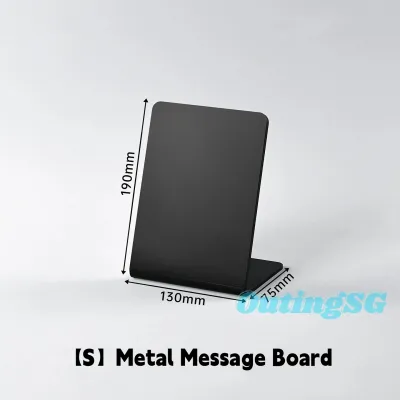
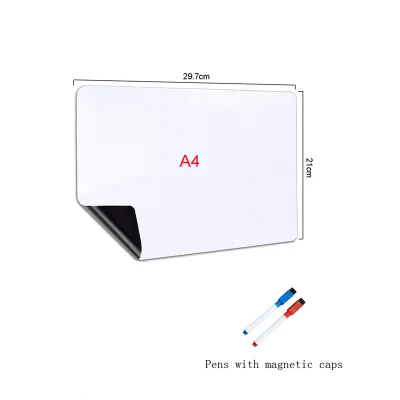
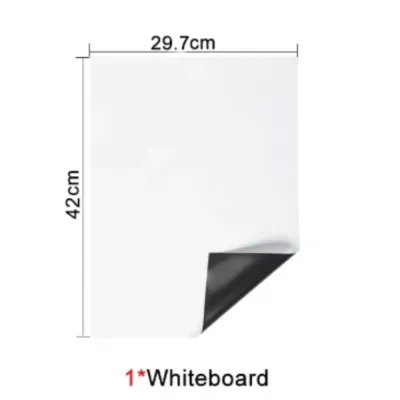
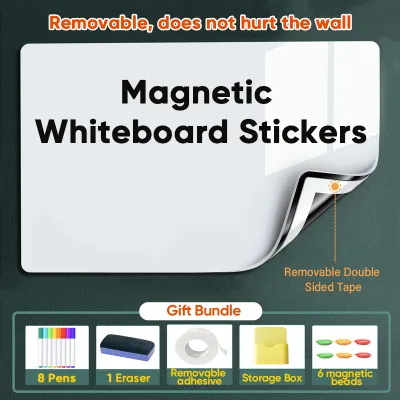
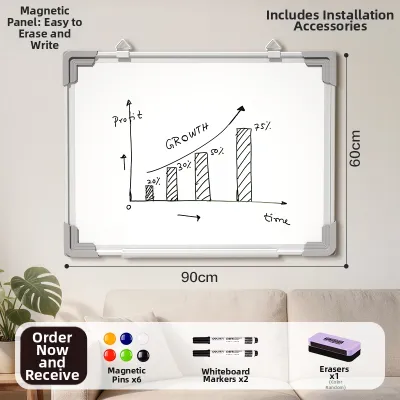
Prices are valid at publication and may change. Please refer to the product page for the latest price.
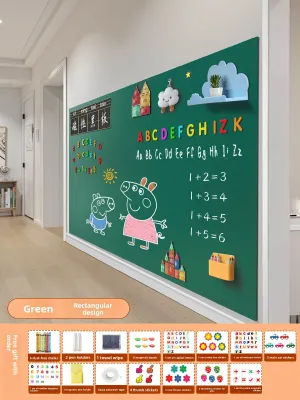
Beyond academic drafting, a magnetic whiteboard serves as a central organizational hub. In Singapore’s fast-paced educational landscape, students must manage a tight schedule of homework, co-curricular activities (CCAs), spelling tests, and examinations. A section of the board can be dedicated to a weekly planner, using magnetic clips to hold school notices, timetables, and motivational goals. This visual organization helps children develop self-management skills early on. Furthermore, using a reusable whiteboard significantly reduces paper waste, teaching students environmentally conscious study habits while keeping their study desks clear of loose, easily misplaced scrap paper.
What to Look for When Choosing a Magnetic Whiteboard
When evaluating different magnetic whiteboards, parents must look beyond the price tag to understand the technical specifications that dictate performance, longevity, and safety. The writing surface is the most critical component, as it directly impacts how smoothly markers glide and how easily the ink can be erased.

Surface Material
The four primary whiteboard surfaces vary significantly in performance and durability:
- Melamine: This is a budget-friendly option made of resin-infused paper over a particleboard backing. While lightweight and highly affordable, melamine is a porous material. Over time, dry-erase ink penetrates the surface, leading to "ghosting"—the permanent, faint grey staining left behind by old writing. It is best suited for light, occasional use.
- Painted Steel: This standard surface consists of a sheet of steel coated with a specialized dry-erase paint. It offers excellent magnetic strength and a smoother writing experience than melamine. Painted steel is highly functional and durable enough to last through several years of primary school, provided it is cleaned regularly.
- Porcelain (Ceramic): Created by fusing ceramic onto a steel backing at incredibly high temperatures, porcelain boards are exceptionally durable, non-porous, and scratch-resistant. They offer superior magnetic pull and are virtually immune to ghosting and staining, making them an excellent investment for heavy, daily academic use.
- Tempered Glass: The premium choice for modern study spaces, tempered glass whiteboards feature a sleek, non-porous writing surface that will never stain, scratch, or ghost. Because the dry-erase ink sits on top of solid glass, it wipes away effortlessly. However, because the glass layer separates the magnet from the steel backing, these boards require high-strength rare-earth magnets to hold papers securely.
Size and Space
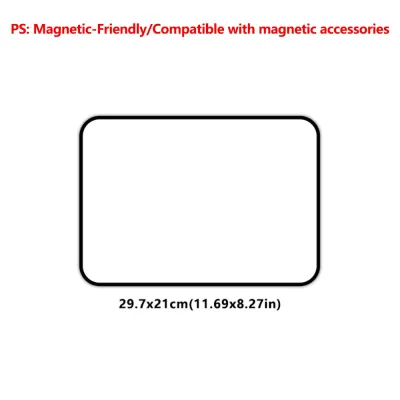
Before purchasing, measure your child’s desk or wall space carefully. In compact Singapore bedrooms, finding the right balance is essential. A small lapboard (around A4 to A3 size) is highly portable but limits the complexity of the work. A medium wall-mounted board (such as 60×90 cm) fits well above a standard study desk and provides ample room for daily math modeling. Large boards (90×120 cm or larger) are ideal for older students but require dedicated wall space and robust mounting hardware.
Magnetic Strength
The magnetic capability of a whiteboard depends on the thickness of its steel core and the material covering it. Standard painted steel and porcelain boards have strong magnetic attraction, allowing you to use lightweight plastic fridge magnets, magnetic letters, and magnetic clips. Glass boards, conversely, have a thick layer of tempered glass over the metal backing, which weakens the magnetic field at the surface. Standard magnets will simply slide down a glass board; you must purchase specialized neodymium (rare-earth) magnets to hold even a single sheet of paper.
Frame and Build
A sturdy frame prevents the whiteboard from warping over time due to changes in humidity. Aluminum frames are lightweight, rust-resistant, and highly durable, making them the standard for wall-mounted boards. Wooden frames offer a warm, classic aesthetic but can be heavier. For younger children, look for frames with rounded plastic corner caps rather than sharp, mitered metal edges to prevent accidental bumps or scrapes during active study sessions.
Best Magnetic Whiteboard Styles by Grade Level
Choosing the right whiteboard requires matching the board’s physical characteristics to your child’s physical development and academic requirements.
Early Years and Lower Primary (Preschool to Primary 2)
For younger learners, study tools must be physically manageable, highly engaging, and exceptionally safe. Children in preschool and lower primary are developing their fine motor skills, learning basic phonics, and practicing early arithmetic.
- Recommended Styles: Lightweight, double-sided handheld lapboards (A4 or A3 size) or small, folding desktop easels. These compact options can be easily carried from the study desk to the living room floor, allowing for flexible learning environments.
- Key Features: Look for boards with bright, colorful plastic frames that appeal to young children, and built-in marker clips or storage trays to keep drawing tools organized. Safety is paramount at this stage; ensure the board features rounded corners, a shatterproof surface, and a lightweight construction that won't cause injury if dropped.
- Educational Use: These portable boards are perfect for interactive parent-child learning. Parents can write out spelling words or Chinese characters (tingxie) for the child to trace, or use colorful magnetic alphabet letters and numbers to build words and solve basic addition problems. The physical act of moving magnetic pieces across the board helps reinforce abstract concepts through tactile play.
Upper Primary (Primary 3 to Primary 6)
As students progress into upper primary, their academic workload increases significantly. They must tackle multi-step math heuristics (such as model drawing for word problems), map out science concepts, and manage a structured weekly revision timetable in preparation for the Primary School Leaving Examination (PSLE).
- Recommended Styles: Medium-sized, wall-mounted boards (typically 60×90 cm) positioned directly above the study desk, or sturdy mobile easels on lockable wheels that can be rolled between rooms.
- Key Features: Consider boards that feature a subtle grid-lined or dot-grid pattern on one side. These grids are incredibly helpful for teaching children how to align numbers for long division, draw neat fraction models, and sketch precise geometric shapes. A deep, full-length marker tray is also essential for holding multiple colored markers and erasers within arm's reach.
- Educational Use: The magnetic surface becomes an active organizational tool at this stage. Students can use magnetic clips to display their school timetable, exam schedules, and high-frequency formula sheets. The whiteboard itself becomes a drafting space for mind-mapping science topics—such as classifying plants or mapping water cycles—allowing students to visualize connections between complex concepts.
Secondary School and Junior College
For secondary and tertiary students, academic demands involve high-volume writing, dense mathematical derivations, and long-term project planning. Subjects like Additional Mathematics, Physics, Chemistry, and Economics require space to work through long, complex equations and structural diagrams.
- Recommended Styles: Large, wall-mounted boards (90×120 cm or larger) or premium magnetic tempered glass whiteboards. These styles offer a mature, professional aesthetic that blends seamlessly into a teenager's bedroom or a dedicated home study.
- Key Features: A non-porous glass surface is highly recommended for older students who use their boards intensively every day. Glass completely eliminates the risk of ghosting, ensuring the board remains pristine even when dense formulas are left written on it for several days.
- Educational Use: These expansive boards allow students to map out entire essays, sketch complex physics free-body diagrams, and write out organic chemistry reaction mechanisms side-by-side. The large surface area supports active recall techniques, where students write down everything they remember about a topic from memory before verifying their notes.
Essential Accessories to Complete Your Whiteboard Station
A magnetic whiteboard is only as functional as the accessories paired with it. Equipping your child with the right tools ensures a smooth, frustration-free writing and organizing experience from the very first day of school.
Markers
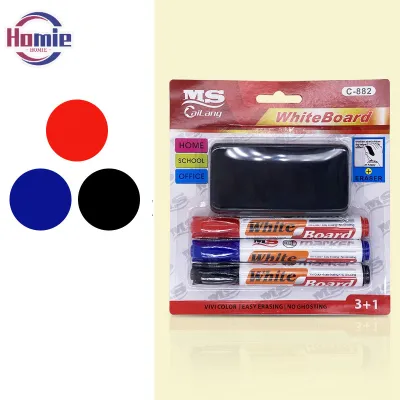
Select high-quality, dry-erase markers that are labeled as low-odor and non-toxic (conforming to safety standards such as ASTM D-4236). This is particularly important for home study spaces, which are often air-conditioned and have limited ventilation. Match the marker’s tip size to the board’s dimensions:
- Fine-Tip Markers: Ideal for small handheld lapboards or for writing detailed mathematical formulas and small text on medium boards.
- Chisel-Tip Markers: Best for large wall-mounted boards, as they allow students to write bold, highly visible headings and draw thick lines for diagrams.
Provide a variety of colors (such as black, blue, red, and green) to help students color-code their notes, highlight key steps in an equation, or differentiate branches in a mind map. Because erasability, drying speed, and writing smoothness depend on the exact combination of marker ink and board surface material, perform an easy, observable trial before heavy use. Write a few strokes in a corner of the board, wait approximately 30 seconds for the ink to dry completely, and then wipe it away. A high-quality pairing should dry quickly without bleeding or feathering, and erase smoothly in a single pass without leaving faint grey shadows or requiring heavy pressure.
Erasers and Cleaning Tools
To maintain a clean writing surface, invest in a dedicated whiteboard eraser with a felt or microfiber cleaning pad. Microfiber is highly effective because its tiny fibers trap dry-erase ink dust rather than simply spreading it across the board’s surface. For quick corrections, small magnetic erasers that stick directly to the board are incredibly convenient, ensuring students do not lose momentum while working through a problem.
Magnetic Tools
Maximize the utility of the magnetic backing by adding specialized tools to the stationery checklist:
- Magnetic Clips: Perfect for holding past exam papers, worksheets, and school schedules securely against the board.
- Magnetic Rulers and Protractors: Invaluable for upper primary and secondary students who need to draw straight lines, coordinate axes, and geometric angles quickly and accurately.
- Neodymium Magnets: If you have chosen a tempered glass whiteboard, ensure you purchase high-strength neodymium magnets, as standard ceramic magnets will not have enough holding power.
Storage Caddies
If your chosen whiteboard does not feature a built-in marker ledge, or if you want to keep the writing surface completely clear, add a magnetic hanging caddy or an adhesive storage tray. These caddies stick directly to the board or adjacent wall, providing a dedicated home for markers, erasers, and cleaning sprays, keeping the study desk clutter-free.
Simple Maintenance Tips to Prevent Staining and Ghosting
To ensure your child’s magnetic whiteboard remains clean, smooth, and usable for years, establishing a regular maintenance routine is essential. The longevity of any whiteboard surface depends heavily on how it is treated and cleaned.
Daily vs. Periodic Cleaning
For daily use, encourage your child to erase the board as soon as they are finished with their study session. Use a clean, dry felt eraser or a dry microfiber cloth. However, dry erasing alone leaves behind microscopic ink residue over time. To combat this, perform a periodic deep clean once a week or once a fortnight. Spray the board with a dedicated whiteboard cleaning solution or a 70% isopropyl alcohol solution, then wipe it clean with a soft microfiber cloth to restore the surface’s original luster.
What to Avoid
Never use abrasive scrubbing pads, steel wool, or harsh household cleaners (such as abrasive kitchen creams or window cleaners containing ammonia) on melamine or painted steel boards. These harsh materials will strip away the specialized, non-porous chemical coating that makes the board dry-erasable, permanently ruining the surface and causing severe ghosting. Additionally, avoid leaving dry-erase ink on the board for weeks at a time; the pigments can cure and bond with the surface, making them incredibly difficult to remove without causing damage.
The Permanent Marker Fix
It is a common household accident: a student mistakenly writes on the whiteboard with a permanent marker. If this happens, do not panic or scrub the board. Simply scribble directly over the permanent ink lines with a fresh, dark dry-erase marker. The liquid solvents in the dry-erase ink will naturally dissolve the permanent marker’s binding polymers. Wait about ten to fifteen seconds for the ink to settle, then wipe both away cleanly with a dry eraser. Repeat the process if any faint lines remain, and finish with a wipe of isopropyl alcohol.
Frequently Asked Questions (FAQ)
Can I use regular fridge magnets on a glass magnetic whiteboard?
No, standard ceramic fridge magnets are generally too weak to work on a magnetic glass whiteboard. Because tempered glass whiteboards feature a relatively thick layer of glass (usually 4mm to 6mm) over the steel backing plate, the distance weakens the magnetic pull. Standard magnets will simply slide down the surface or fall off. To hold papers, photos, or schedules securely on a glass board, you must use high-strength rare-earth (neodymium) magnets, which are specifically engineered to penetrate the glass layer and hold firmly to the steel backing.
How do I safely mount a large whiteboard in an HDB or condo bedroom?
Safe mounting depends entirely on the construction of your bedroom walls. Most structural and boundary walls in Singapore HDB flats are made of solid reinforced concrete. To mount a heavy whiteboard on these walls, you must use a rotary hammer drill with a masonry drill bit, insert plastic wall plugs (anchors), and secure the board with heavy-duty screws. Conversely, internal partition walls in newer condos and HDB flats are often hollow drywall. Drywall cannot support heavy loads directly; you must use specialized toggle bolts or heavy-duty drywall anchors that expand behind the plasterboard to distribute the weight. For exceptionally heavy or large tempered glass boards, it is highly recommended to hire a professional handyman to ensure a secure, safe installation.
What is the best way to store a whiteboard during the school holidays?
If your child’s whiteboard will not be in active use during the school holidays, proper storage will prevent surface damage and warping. First, perform a thorough deep clean using a whiteboard spray or isopropyl alcohol to remove all traces of ink, preventing stains from setting permanently over the break. Store the board flat on a level surface, or securely upright against a wall in a dry, temperature-controlled room. Avoid storing the board in areas exposed to high tropical humidity or direct sunlight, such as balconies or near open windows, as prolonged heat and moisture can warp wood-based backings and degrade the dry-erase surface coating.
Community discussion
Share your experience or ask a question. Comments are reviewed before publication.