
Choosing the right tool to manage your daily tasks can significantly impact your productivity and focus. When selecting a to-do list board, the primary decision often comes down to choosing between a magnetic whiteboard and a traditional, non-magnetic alternative. The most practical choice depends on whether your task management workflow relies on physical, movable elements—such as color-coded magnets, task cards, and printed documents—or if you prefer a purely written format.
Magnetic whiteboards offer a dynamic, multi-dimensional platform that allows you to combine handwriting with physical accessories, making them highly suitable for visual planning systems like Kanban. Traditional non-magnetic whiteboards, on the other hand, provide a lightweight, straightforward, and often more budget-friendly writing surface that excels at simple daily lists and rapid brainstorming sessions. By understanding how these two options perform in terms of structure, workflow integration, surface durability, and installation, you can select the board that best supports your daily routine.
Understanding the Structural Differences
To make an informed decision, it is essential to understand what sets these two types of boards apart structurally. A traditional, non-magnetic whiteboard typically consists of a writing surface applied directly over a lightweight substrate, such as medium-density fiberboard (MDF), corrugated cardboard, or plastic. Because there are no metallic elements within the core, these boards cannot attract magnets; their utility is strictly limited to what you can write or draw with dry-erase markers.
Products mentioned in this guide
![[SG Stock] A3 Rainbow Magnetic Weekly & Monthly Planner Fridge Whiteboard To Do Memo Notes Groceries List Daily Message Drawing Board Refrigerator Scheduler](https://img.lazcdn.com/g/p/07ea0b52b7238d214227bf6ca8c8c200.png_400x400q80.png_.webp)
![[SG SELLER] [FREE 1x MARKER] Monthly Planner A Magnetic Whiteboard Organiser Schedule To Do Checklist Planner](https://img.lazcdn.com/g/p/9345b0552f43ed5e8e10386fb5f6584a.jpg_400x400q80.jpg_.webp)
![LED Acrylic Message Note Board 3 Light Mode Luminous Schedule Organizer Planner To Do List [Local Stock]](https://img.lazcdn.com/g/p/adb4efc883f5ac2ed17fa0670d83745f.jpg_400x400q80.jpg_.webp)
![[SG STOCK] Reusable Planning Board My Chores Checklist Schedule Planner Time Management Punch Card Task Discipline](https://img.lazcdn.com/g/p/089b43087511ee4c7f967c2f29a3fa83.png_400x400q80.png_.webp)
Prices are valid at publication and may change. Please refer to the product page for the latest price.
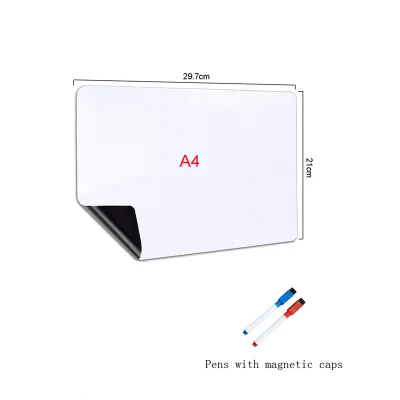
In contrast, a magnetic whiteboard incorporates a thin sheet of steel or iron alloy directly behind the writing surface. This metallic layer provides the magnetic attraction necessary to hold accessories in place. It is a common misconception that the magnetic property comes from the writing surface itself; rather, the surface material is simply a thin, protective coating through which magnetic forces pass.
Crucially, the presence of a magnetic backing does not influence how smoothly a marker glides across the board or how easily the ink erases. Writing performance, drying speed, and resistance to staining are entirely determined by the top surface coating, which can range from basic melamine to premium porcelain or tempered glass. Therefore, when comparing these boards, you must evaluate both the functional backing (magnetic versus non-magnetic) and the quality of the outer writing medium.
Aligning Board Features With Your Task Management Workflow
Your daily task management style should dictate the features of your to-do list board. If you practice visual project management, a magnetic whiteboard opens up a wide range of interactive possibilities. For instance, a Kanban workflow benefits greatly from magnetic status indicators, color-coded task cards, or magnetic labels that you can physically slide across columns as tasks progress from “To Do” to “Done.” This tactile interaction can make tracking progress more engaging and intuitive than simply erasing and rewriting text.

Additionally, a magnetic surface allows you to pin physical documents directly to your board. You can easily attach printed schedules, invoices, reference sheets, or even paper notes using small magnets, keeping all your essential project materials in one centralized location. This hybrid approach—combining handwritten notes with physical documents—is particularly useful for complex projects that require constant reference to external paperwork.
Conversely, if your workflow is straightforward and relies entirely on written lists, a traditional non-magnetic board is often more than sufficient. If your routine consists of writing down a daily checklist in the morning and wiping it clean at the end of the day, the added utility of magnets may go unused. For simple brainstorming, mind mapping, or quick calculations, a standard dry-erase surface provides an unobstructed canvas without the extra weight or cost associated with magnetic backings.
Evaluating Surface Materials for Daily Erasing and Maintenance
Because a to-do list board is subjected to daily writing and erasing, the durability of the surface material is a critical factor in its long-term performance. Melamine is the most common entry-level material; it is lightweight and economical, but its porous nature makes it susceptible to “ghosting”—the faint, permanent staining left behind by marker ink. Over time, daily use can wear down the melamine coating, requiring more frequent deep cleaning or eventual replacement.
Painted steel is a highly popular mid-range option for magnetic boards. It offers a smoother writing experience and better stain resistance than melamine, though it can still scratch if abrasive cleaners or rough erasers are used. For heavy daily use, porcelain (or ceramic) and tempered glass represent the premium tier. Porcelain surfaces are incredibly hard, non-porous, and highly resistant to scratches and ghosting, making them excellent for busy environments. Glass boards offer a sleek, modern aesthetic and are virtually impervious to staining, though they require specialized high-strength neodymium magnets to work effectively due to the thickness of the glass layer.
To verify the quality of a board before purchasing, check the manufacturer’s specifications regarding surface warranties and non-porous ratings. You can also perform an observable trial on a small, inconspicuous area of the board: write a short line with a standard dry-erase marker, let it dry completely for several minutes, and wipe it away. A high-quality surface should erase cleanly with minimal pressure, leaving no shadow or residue. To maintain your board, always use compatible dry-erase markers with high-quality ink, clean the surface regularly with a microfiber cloth, and avoid harsh chemical solvents that can degrade the protective top coat.
Navigating Installation, Weight, and Space Constraints
The physical properties of your chosen board will dictate how and where it can be installed. The steel backing in magnetic whiteboards adds noticeable weight compared to non-magnetic alternatives of the same size. Glass boards, whether magnetic or non-magnetic, are exceptionally heavy and require careful handling during installation.
When mounting a heavier board, especially in a home office or a modern apartment with drywall partitions, you must ensure the wall can support the load. This often requires locating wall studs or using heavy-duty wall anchors designed for the specific wall material. If you are renting your space or prefer not to drill holes into your walls, a heavy magnetic or glass board may present significant installation challenges.
For flexible workspaces or rental properties, lighter non-magnetic boards or smaller, portable magnetic boards offer a practical alternative. These can often be mounted using damage-free adhesive strips or placed on a lightweight easel. Freestanding, double-sided rolling whiteboards are another excellent option for those who need a large writing surface but want the flexibility to move the board between rooms or store it away when not in use.
Decision Framework: Selecting the Right To-Do List Board
To finalize your choice, consider how your specific environment, budget, and daily habits align with the following criteria:
Choose a magnetic whiteboard if:
- You utilize visual task management systems, such as Kanban, that rely on moving physical cards or color-coded indicators.
- You need to display physical documents, receipts, or printed reference materials alongside your handwritten lists.
- You want the flexibility to expand your board's functionality with magnetic accessories like pen holders, timers, or cleaning cloths.
Choose a traditional non-magnetic whiteboard if:
- Your task management consists strictly of written lists, mind maps, or temporary brainstorms that do not require physical attachments.
- You are working with a strict budget and prefer to allocate your funds to a higher-quality writing surface rather than magnetic capabilities.
- You require a lightweight board that is easy to mount on delicate walls or move around your workspace without heavy-duty hardware.
Verify first if:
- Your wall structure can safely support the weight of a heavy steel-backed or glass board.
- Your preferred dry-erase markers and erasers are fully compatible with the specific surface material to prevent premature wear and ghosting.
- You have measured your available wall space accurately, leaving sufficient clearance around the board for comfortable writing and erasing.
Frequently Asked Questions (FAQ)
Can I add magnetic properties to a non-magnetic whiteboard later?
Yes, it is possible to retrofit a non-magnetic board, but the results are generally limited compared to a factory-built magnetic board. You can apply magnetic adhesive sheets or magnetic tape directly to the surface, or even apply magnetic paint to the wall behind a thin non-magnetic board. However, these aftermarket solutions often have a much weaker holding capacity, may interfere with the writing surface, and are prone to peeling or wearing down over time under daily use.
Do magnetic whiteboards interfere with electronics or Wi-Fi?
No, standard magnetic whiteboards do not interfere with office electronics, computers, or Wi-Fi routers. The steel backing sheet inside the board is a passive material, meaning it does not generate an active magnetic field of its own; it simply attracts external magnets. Standard magnetic accessories used on these boards have very localized, low-strength magnetic fields that pose no risk to modern digital devices when used at normal operating distances. If you are mounting sensitive electronic equipment directly adjacent to the board, you can consult the device manufacturer’s manual to verify safe clearance distances.
Community discussion
Share your experience or ask a question. Comments are reviewed before publication.