
When deciding between magnetic and non-magnetic mini whiteboards for educational environments, the primary factor is how you plan to integrate physical teaching aids into your lessons. Non-magnetic mini whiteboards are highly effective, lightweight, and cost-efficient tools for straightforward writing, drawing, and quick formative assessments. However, magnetic mini whiteboards are the necessary choice if your lessons rely on attaching magnetic letters, numbers, or other interactive visual resources directly to the board surface.
To guide your purchasing decision, consider this conditional framework based on your classroom activities:
- Choose Magnetic if: Your curriculum frequently incorporates tactile manipulatives, such as phonics tiles, magnetic counters, or geometric shapes. These boards are also ideal for small-group intervention sessions where students benefit from combining written annotations with physical object movement.
- Choose Non-Magnetic if: The boards will be used primarily for individual student responses, quick math drills, spelling practice, or exit tickets. If you are buying in bulk for an entire school cohort on a strict budget, non-magnetic options deliver the same writing utility at a fraction of the cost.
- Verify first if: You plan to use existing heavy teaching aids. It is crucial to test the magnetic pull strength of the board surface beforehand, as weak steel backing can cause heavier magnets to slide down, disrupting the flow of your lesson.
Core Differences: How Magnetic and Non-Magnetic Surfaces Work
Understanding the physical construction of these two whiteboard types helps clarify why they perform differently over time, especially in high-humidity environments like Singapore. While both options look virtually identical from the front, their internal layers and manufacturing processes differ significantly, impacting their weight, cost, and long-term structural integrity.
Products mentioned in this guide
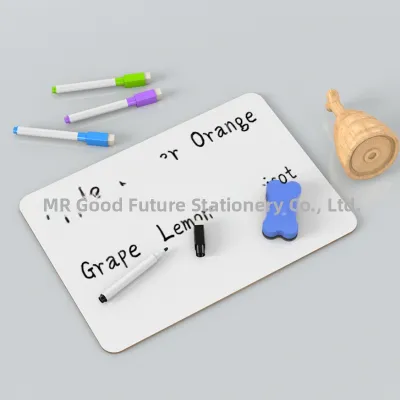
![[SG Ready] Mini Animal Whiteboard with Marker | Childrens Day](https://img.lazcdn.com/g/p/60b7936337e63fc02ec1eef2bda2fd7e.jpg_400x400q80.jpg_.webp)
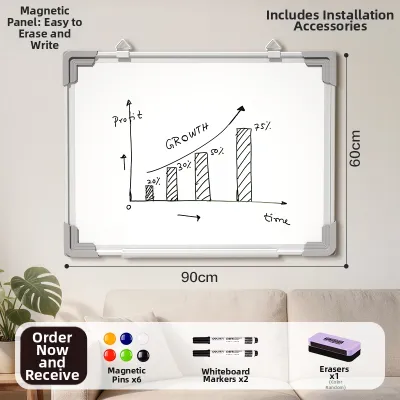
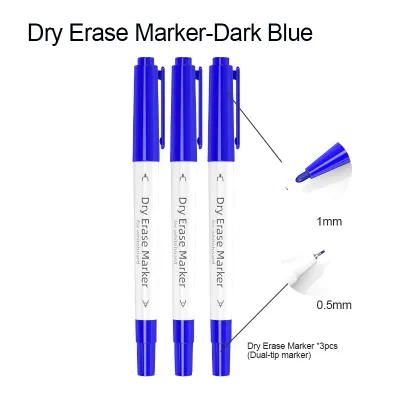
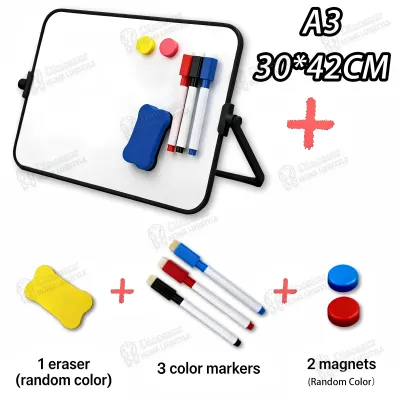
![[Ready Stock] A4 Compact Whiteboard White Board | Ultra Slim 1mm|Marker Erasable|Washable|Writing Board | Childrens Day](https://img.lazcdn.com/g/p/1b120a4258f810a5521ad4de86b022dd.jpg_400x400q80.jpg_.webp)
Prices are valid at publication and may change. Please refer to the product page for the latest price.
The writing surface itself is typically made of a thin top coating designed to resist dry-erase ink penetration. Common materials include melamine (a resin-infused paper laminate), painted steel, or porcelain (ceramic fired onto steel). In a non-magnetic board, this writing layer is bonded directly to a lightweight, non-metallic core, such as medium-density fibreboard (MDF), compressed cardboard, or molded plastic. Because these materials are inexpensive and easy to cut, non-magnetic boards are highly affordable and lightweight.
In contrast, a magnetic whiteboard is not actually a magnet itself. Instead, it features a thin sheet of ferromagnetic metal—usually steel—positioned directly beneath the dry-erase writing surface. When you place a magnetic letter or accessory on the board, the magnet in the accessory adheres to the steel layer underneath. This steel sheet adds structural rigidity, preventing the board from bending or flexing under pressure, but it also increases the overall weight and manufacturing cost.
These material differences have practical implications in tropical climates. In Singapore, where relative humidity levels remain consistently high, non-magnetic boards with unsealed MDF or cardboard cores are highly susceptible to moisture absorption. Over time, this moisture can cause the core to swell, warp, or delaminate, rendering the writing surface uneven. Magnetic boards with steel cores are inherently more resistant to warping, though they must be properly sealed along the edges to prevent humidity from causing rust along the steel layer.
Key Comparison Dimensions for Classroom Use
Compatibility with Teaching Aids and Manipulatives
The ability to combine writing with physical objects is the single biggest differentiator between these two board types. In modern classrooms, interactive learning is a cornerstone of effective pedagogy, making surface compatibility a critical consideration for teachers.

Magnetic mini whiteboards excel in multi-sensory learning environments. For early childhood education and primary school language lessons, teachers can have students place magnetic letters on the board to build words, then use a dry-erase marker to write the word or draw a corresponding picture directly underneath. In mathematics, magnetic counters, ten-frames, and fraction bars can be manipulated on the board surface to represent abstract concepts visually. When purchasing magnetic boards, it is essential to verify the magnetic pull strength. Cheap magnetic boards often use extremely thin steel foil that provides a weak attraction, causing standard classroom magnets to slide off when the board is held upright or tilted during student presentations.
Non-magnetic boards are strictly limited to dry-erase marker work. If a lesson requires physical manipulatives, students must place them on their desks next to the board rather than on the board itself. Some educators attempt to bypass this limitation by using adhesive putty or reusable static-cling stickers on non-magnetic surfaces. However, adhesive putty can leave oily residues that attract dust and permanently damage the whiteboard’s dry-erase coating, leading to hard-to-clean spots. Static-cling resources work on some high-gloss surfaces, but their effectiveness depends heavily on the cleanliness of both the board and the sticker, making them less reliable than magnetic alternatives in busy classroom settings.
Durability, Ghosting, and Surface Wear
A whiteboard’s longevity in a classroom depends on how well it resists “ghosting”—the permanent staining left behind when dry-erase ink penetrates the surface layer. It is a common misconception that magnetic boards are inherently more resistant to ghosting than non-magnetic ones.
In reality, ghosting resistance is entirely determined by the quality of the top coating, not the presence of a magnetic layer. A premium non-magnetic board with a high-quality baked-on paint or porcelain finish will resist ghosting far better than a cheap magnetic board that uses a thin, low-grade melamine coating. Melamine is highly porous; under daily classroom use, the friction from erasing eventually wears down the micro-thin protective layer, allowing marker ink to seep into the wood or plastic backing. Once this occurs, the board becomes permanently stained and difficult to clean.
However, when it comes to structural durability, magnetic boards generally have a clear advantage. The internal steel sheet provides excellent resistance against physical impacts. If a student drops a magnetic board, steps on it, or accidentally sits on it during floor-based activities, the steel core prevents the board from snapping or cracking. Non-magnetic boards with thin plastic or cardboard cores are much more fragile and can easily snap, chip at the corners, or crease if subjected to rough handling by younger children.
Regardless of the type you choose, maintaining the surface is vital. Regular wiping with a soft microfiber cloth and a mild whiteboard cleaner helps remove accumulated oils and marker binders. For classrooms in Singapore, keeping the boards clean also prevents dust and humidity from binding to the surface, which can accelerate wear and ghosting.
Weight, Portability, and Storage
Classroom management requires careful consideration of how easily students can handle their equipment and how efficiently the items can be stored when not in use.
For younger students in preschool or lower primary levels, the weight of the mini whiteboard is a significant factor. Non-magnetic boards, being lightweight, are incredibly easy for small hands to hold aloft during quick-response activities. When a teacher asks the class to write an answer and “show me,” holding up a lightweight non-magnetic board for several minutes causes minimal fatigue. Magnetic boards, while still portable in mini sizes, are noticeably heavier due to the steel core. While older primary and secondary students will not find this weight problematic, it can make handling more cumbersome for very young learners during extended lessons.
On the other hand, the added weight of a magnetic board can provide a more stable writing platform. When placed on a student’s lap or a slightly uneven desk, a heavier magnetic board is less likely to slide around while the student is writing. This stability is particularly beneficial for students developing their fine motor skills or those in special education settings who require a steady surface to practice handwriting.
Storage presents another set of trade-offs. Non-magnetic boards stack flatly and compactly, fitting easily into standard plastic storage tubs, desk drawers, or shelf organizers. Magnetic boards also stack well, but their magnetic properties can cause them to stick slightly to one another or to metal classroom furniture, such as filing cabinets or metal shelving units. While this magnetic attraction can be used creatively to store the boards flat against the side of a steel cabinet to save shelf space, it can also make it slightly difficult for young students to pull a single board from a tightly packed stack without accidentally dragging others along, potentially causing surface scratches.
Practical Classroom Scenarios: Matching the Board to the Activity
To maximize the return on your stationery budget, it helps to map your specific teaching methodologies and student activities to the physical capabilities of each whiteboard type.
Early Years Phonics and Spelling
For early childhood and early primary language arts, magnetic mini whiteboards are highly recommended. Phonics instruction relies heavily on the physical manipulation of graphemes to build words. Using a magnetic board, a student can physically slide the magnetic letters “c”, “a”, and “t” together to spell “cat,” and then immediately use a marker to write the word in cursive or draw a picture of a cat underneath. This seamless integration of tactile manipulation and writing reinforces orthographic mapping in a way that dry-erase writing alone cannot match.
Quick Math Drills and Exit Tickets
For routine formative assessment, such as rapid mental sums, spelling quizzes, or exit tickets at the end of a lesson, non-magnetic mini whiteboards are the ideal choice. In these scenarios, the primary objective is for the student to quickly write down an answer, hold it up for the teacher to scan, erase it, and prepare for the next question. There is no need for physical manipulatives or structural reinforcement. Purchasing non-magnetic boards for these activities allows schools to equip entire classrooms affordably, ensuring every student has an individual writing surface without paying for unused magnetic features.
Small Group Intervention and Special Education
In learning support or special education needs (SEN) settings, lessons are highly customized and tactile. Magnetic mini whiteboards are indispensable here. Educators often work with small groups of two to five students, using specialized magnetic resources such as ten-frames, base-ten blocks, or visual schedule cards. Sticking these resources directly onto the whiteboard allows the teacher to model a concept clearly on a vertical plane, ensuring all students can see the demonstration without the pieces sliding off. The students can then replicate the process on their own magnetic boards, providing a highly structured, interactive learning experience.
Science Diagrams and Labeling
For science lessons, particularly those involving cycles, anatomy, or chemical structures, a magnetic mini whiteboard serves as an excellent interactive diagram tool. Teachers or tutors can print out diagrams, laminate them, and attach small magnetic strips to the back. During a lesson on the water cycle, for example, students can place magnetic labels for “evaporation,” “condensation,” and “precipitation” onto the correct parts of a printed diagram stuck to the board, using markers to draw arrows and add explanatory notes around the labels. This hybrid approach keeps lessons dynamic and highly visual.
What to Verify Before Buying: Specs and Quality Checks
Before placing a bulk order for your school or tuition centre, it is vital to conduct several quality checks to ensure the boards will withstand the rigors of daily classroom use.
Magnetic Strength Test
If you decide to purchase magnetic boards, do not rely solely on standard, lightweight refrigerator magnets for your quality assessment. Test the boards using the actual teaching aids, such as thick plastic magnetic letters or heavy magnetic dry-erase erasers, that will be used in your lessons. Hold the board at a 45-degree angle and then completely vertically; if the accessories slide down or fall off, the steel backing is too thin, and the board will frustrate students and teachers during interactive activities.
Surface Quality and Erasability Check
Always check the manufacturer’s specifications for the top coat material. If possible, request a sample board and conduct an erasability test. Write on the board with a standard dry-erase marker and let the ink dry completely for 24 hours. Attempt to erase it using a standard felt eraser without applying excessive physical pressure. If the ink leaves a dark shadow or requires wet wiping to remove, the surface coating is low-grade and will ghost rapidly under classroom conditions. For long-term durability, look for boards specified as having baked-on enamel or high-pressure laminate surfaces.
Frame and Edge Safety
Classroom safety is paramount, especially when younger children are handling the boards daily. Examine the edges and corners of the whiteboard. Avoid boards with sharp, square corners or exposed metal edges that can cause scratches or cuts. Look for mini whiteboards with rounded plastic corners or those bound with a smooth, protective rubber or silicone frame. If you are opting for wooden or MDF-backed boards, ensure the edges are completely sealed and smooth to prevent splinters and protect the core from absorbing atmospheric humidity.
Marker and Consumable Compatibility
Ensure the whiteboard surface is compatible with standard, easily sourcable dry-erase markers. Some cheap plastic-coated boards only work well with specific proprietary marker brands and will smudge or permanently stain when used with standard classroom markers. Verify that the board can be cleaned easily with standard felt or microfiber erasers, reducing the need for specialized chemical cleaners which can be costly and emit strong fumes in enclosed classroom spaces.
Community discussion
Share your experience or ask a question. Comments are reviewed before publication.