
Quick Answer: Which Whiteboard Type Fits Your Learning Goals?
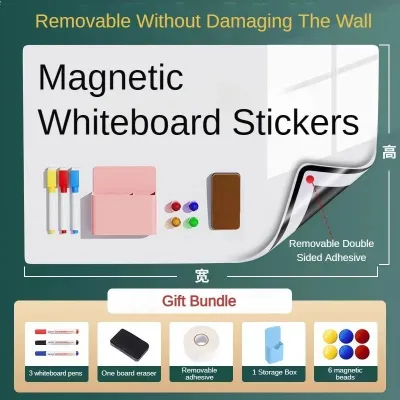
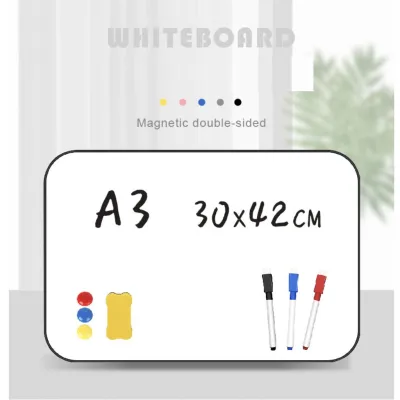
Choosing the right kids whiteboard depends on how your child interacts with learning materials daily. If your educational goals focus on tactile, hands-on activities like spelling with magnetic letters, building words with phonics tiles, or solving math problems with magnetic numbers, a magnetic whiteboard is the ideal choice. The steel backing allows magnetic accessories to stick securely, turning the board into an interactive learning hub.
Conversely, if your primary focus is on freehand drawing, handwriting practice, or visual brainstorming, a non-magnetic whiteboard is highly suitable. These boards are typically lighter, more portable, and budget-friendly, making them excellent for quick sketches or writing drills. Ultimately, the decision hinges on whether your planned daily lessons require physical, magnetic accessories to succeed.
Core Differences in Design and Functionality
To understand which board fits your home, it helps to look at how they are constructed. A magnetic whiteboard is not actually made of a giant magnet. Instead, it features a sheet of steel or iron-infused material layered beneath the dry-erase writing surface. This metallic core is what allows magnetic letters, numbers, and dry-erase erasers to cling to the board. Because of this steel layer, magnetic boards are inherently heavier and stiffer than their non-magnetic counterparts.
Products mentioned in this guide
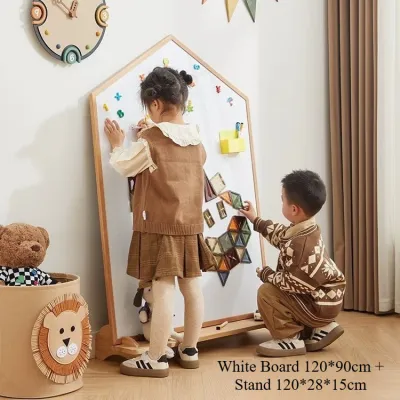
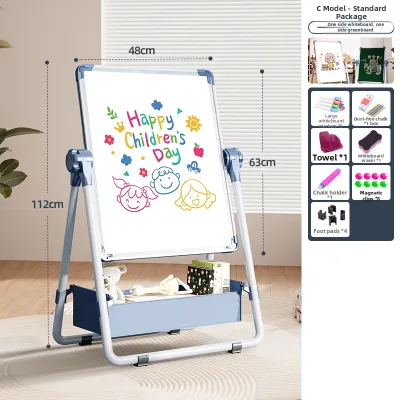
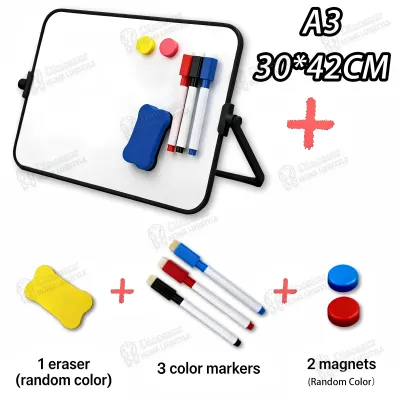
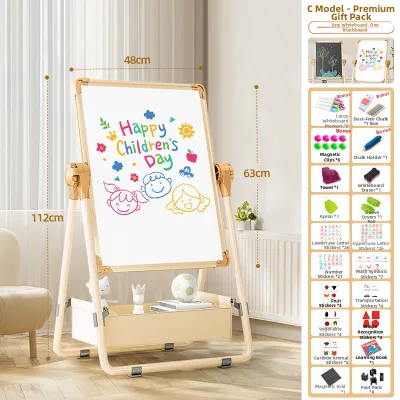
![[Ready Stock] A4 Compact Whiteboard White Board | Ultra Slim 1mm|Marker Erasable|Washable|Writing Board | Childrens Day](https://img.lazcdn.com/g/p/1b120a4258f810a5521ad4de86b022dd.jpg_400x400q80.jpg_.webp)
Prices are valid at publication and may change. Please refer to the product page for the latest price.

Non-magnetic whiteboards generally rely on a lightweight backing material, such as high-density fiberboard (MDF), cardboard, or plastic, coated with a dry-erase melamine or painted surface. Without the internal steel sheet, these boards are significantly lighter and easier for young children to carry from room to room. This makes them highly convenient for small study corners or quick learning sessions on the living room floor.
Despite these structural differences, both board types share baseline compatibility when it comes to writing. You can use standard dry-erase markers and dry-erase erasers on either surface. The writing smoothness and erasability are determined by the quality of the top coating—such as porcelain, painted steel, or melamine—rather than whether the board is magnetic. When selecting either type, verifying the quality of this outer coating is essential to ensure markers glide smoothly and erase without leaving stubborn residue.
Educational Benefits and Activity Compatibility
The educational value of a kids whiteboard changes dramatically based on its compatibility with physical learning tools. Magnetic whiteboards excel at supporting tactile learners who benefit from moving physical objects to grasp abstract concepts. For instance, during early phonics lessons, children can physically slide magnetic consonant and vowel tiles together to blend sounds and build words. This multi-sensory approach—combining sight, touch, and movement—helps reinforce memory retention and keeps young learners engaged longer than writing alone.
In addition to language arts, magnetic boards serve as excellent platforms for early mathematics. Parents can use magnetic counters, geometric shapes, or number tiles to demonstrate addition, subtraction, and pattern recognition. Because the pieces stick to the vertical or slanted surface, children can work on the board while standing or sitting upright, which supports gross motor development and spatial awareness.
Non-magnetic whiteboards, on the other hand, shine during activities that prioritize fluid, uninterrupted movement. They are ideal for freehand drawing, creative storytelling, and practicing handwriting strokes. Without the distraction of movable pieces, children can focus entirely on pen control, letter formation, and fine motor coordination. These boards are also highly effective for visual mapping, where a parent or child draws diagrams, mind maps, or daily schedules to organize thoughts visually.
Before purchasing accessories for a magnetic board, it is crucial to perform an accessory verification check. Not all magnetic toys are created equal; some heavy wooden magnetic letters require a stronger magnetic pull than lightweight plastic ones. Check the weight of your existing educational toys and compare them with the board manufacturer’s specifications to ensure they will not slide down the surface during a lesson.
Durability, Safety, and Maintenance
When introducing any educational tool into a child’s environment, safety and durability must be top priorities. Start by inspecting the frame and edge safety of the whiteboard. Look for models with rounded plastic corners or smoothly sanded wooden frames rather than sharp aluminum edges. A secure, sturdy frame prevents the board from splintering or pinching small fingers during active play, especially if the board is frequently moved or held on a lap.
Surface staining, commonly known as ghosting, is a challenge that affects both magnetic and non-magnetic boards over time. Ghosting occurs when marker pigment penetrates the microscopic pores of the writing surface, leaving faint, unsightly stains behind. To minimize this, always follow the manufacturer’s specific cleaning instructions. Avoid using abrasive sponges, paper towels with rough fibers, or harsh household chemical cleaners, as these can strip away the protective glossy top coat and make the board permanently prone to staining.
For magnetic boards, magnet safety requires extra vigilance. Ensure that any magnetic letters, numbers, or accessories you use are large enough to prevent choking hazards, particularly for children under three years old. Regularly inspect these toys to verify that the small magnets are securely encased or glued to their plastic or wooden backings. Loose magnets pose severe health risks if swallowed, so any accessory showing signs of wear or loose parts should be discarded immediately.
How to Choose the Right Kids Whiteboard
Selecting the right whiteboard involves balancing your child’s learning style with your household’s physical space. If your educational plan centers on interactive phonics, spelling drills, and hands-on math using magnetic manipulatives, a magnetic whiteboard is the clear choice. It provides a versatile, multi-functional surface that grows with your child as they transition from simple letter recognition to complex sentence building.
If your primary goals are drawing, handwriting practice, and portability, a non-magnetic whiteboard is a practical and lightweight alternative. These boards are particularly useful for families living in compact spaces, such as typical Singapore apartments, where a heavy wall-mounted board might not be feasible. A lightweight non-magnetic board can easily be tucked away in a drawer, packed in a backpack for travel, or used comfortably on a child’s lap during car rides.
Before making a final decision, evaluate where the board will be used. If you plan to mount the whiteboard on a wall or place it in a shared study area, verify the exact dimensions, total weight, and the type of mounting hardware included. Heavy magnetic boards require secure wall anchors to ensure they remain safely attached to the wall during enthusiastic use, while lighter non-magnetic boards can often be hung with simple, non-damaging adhesive strips.
Frequently Asked Questions (FAQ)
Can I use magnetic letters on a non-magnetic whiteboard?
Standard magnetic letters will not stick to a non-magnetic whiteboard because these boards lack the necessary steel or iron backing to attract magnets. If you attempt to use them, the letters will simply slide off the surface. While some parents consider alternative attachment methods, such as reusable adhesive putty or double-sided tape, you should check the manufacturer’s care instructions first. Using adhesives on a dry-erase surface can leave a sticky residue that attracts dust, ruins the smooth writing texture, or permanently strips the delicate glossy coating when removed.
How do I remove marker stains from a kids whiteboard?
To safely remove stubborn marker stains or ghosting without damaging the board’s surface, try drawing directly over the old stains with a fresh, dark dry-erase marker. The solvents in the wet ink will temporarily re-liquefy the old, dried pigment, allowing you to wipe both marks away immediately with a soft microfiber cloth. For deeper cleaning, always check the product label for approved whiteboard cleaning solutions. Avoid using harsh household abrasives, window cleaners, or rubbing alcohol unless explicitly authorized by the manufacturer, as these substances can degrade the protective top coat and ruin the board’s erasability.
Community discussion
Share your experience or ask a question. Comments are reviewed before publication.