
Choosing the right notebook is a highly personal decision that directly shapes your daily writing, planning, or sketching experience. In Singapore’s diverse stationery market, Lumi has emerged as a popular choice for those seeking a balance of clean aesthetics, functional design, and reliable paper quality. However, whether a Lumi notebook is the absolute best option for your desk depends entirely on your preferred writing instruments, your tolerance for paper texture, and how you intend to use the pages.
For everyday writers who rely on standard gel pens, ballpoints, or pencils, Lumi offers an exceptionally smooth, reliable canvas that minimizes ink feathering and provides excellent value. If your daily routine involves wet fountain pens, heavy ink washes, or professional archival work, you may find that specialized international premium brands offer the specific paper coatings and higher paper weights required for those demanding mediums. By evaluating how different paper characteristics interact with your specific tools, you can easily determine where Lumi fits within your personal stationery collection.
What Defines Good Notebook Paper? Key Specs to Check
Before comparing specific brands, it is essential to understand the objective metrics that dictate paper performance. Notebook paper is not merely a blank surface; it is a complex material engineered with specific physical properties that alter how ink behaves, how a pen glides, and how long your records will last.
Products mentioned in this guide
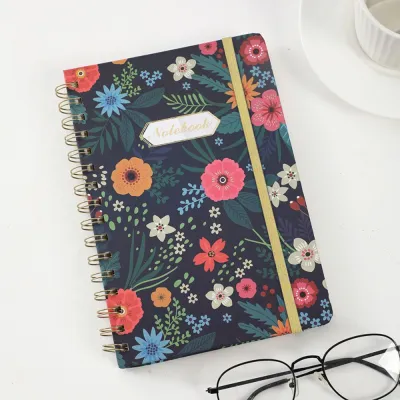
Prices are valid at publication and may change. Please refer to the product page for the latest price.
Paper Weight (GSM)
Paper weight is measured in grams per square meter (GSM) and serves as the primary indicator of paper thickness and opacity. Standard office copy paper typically sits around 70 to 80 GSM, which is lightweight and prone to “ghosting”—a phenomenon where writing is visible as a shadow on the reverse side of the page. Premium notebooks generally range from 80 to 120 GSM, offering a more substantial feel and improved opacity. Higher GSM values (such as 120 to 160 GSM) are common in specialized art journals and bullet notebooks designed to handle heavy marker ink, water media, or dark brush pens without bleeding through to the next page.
Texture and Tooth
The tactile feel of paper is described in terms of its smoothness or “tooth.” High-smoothness paper feels glass-like under the fingertips, allowing gel pens and fine-tip rollerballs to glide effortlessly with minimal friction. Conversely, paper with “tooth” has a subtle, microscopic roughness that provides physical feedback to the writer. This texture is highly desirable for pencil users, as it helps shave off graphite for a richer line, and for fountain pen users who prefer a controlled, deliberate writing pace rather than a slippery sensation.
Coating and Sizing
Sizing refers to the chemical additives applied to paper fibers during manufacturing to control water absorption. Heavily sized or coated papers resist liquid penetration, keeping ink sitting on top of the surface rather than soaking into the core. This preserves sharp line edges, prevents feathering (where ink spreads sideways along the fibers), and enhances ink color vibrancy. However, the trade-off is a significantly longer drying time, which can easily lead to smudging, particularly for left-handed writers or those working in humid environments.
Acid-Free and Archival Quality
For journals and notebooks intended to last for decades, acid-free paper is non-negotiable. Standard wood-pulp paper contains natural acids that cause the pages to turn yellow, brittle, and degrade over time when exposed to light and air. Acid-free paper is chemically treated to maintain a neutral or slightly alkaline pH, ensuring that your written thoughts, sketches, and records remain intact and legible for generations without deteriorating.
Lumi Notebook Paper: Texture, Weight, and Pen Compatibility
Lumi notebooks have carved out a distinct niche in Singapore, particularly among students, office professionals, and journal enthusiasts who appreciate a clean, minimalist design paired with reliable daily performance. To understand how Lumi performs, we must examine its physical characteristics and how it responds to common writing tools.

General Profile and Tactile Feel
Lumi notebooks typically feature a soft, off-white or ivory-toned paper that is gentle on the eyes under bright study lamps. The paper surface leans toward the smoother side of the spectrum, offering a silky touch with just enough subtle texture to prevent a completely slippery writing experience. This balance makes it highly versatile for a wide range of quick note-taking scenarios, where you want your pen to move rapidly across the page without catching on rough fibers.
Pen Compatibility and Ink Behavior
Understanding how different ink types interact with Lumi’s paper surface is key to predicting your daily writing satisfaction:
- Gel and Rollerball Pens: This is where Lumi paper truly excels. Standard gel pens (ranging from ultra-fine 0.38mm to bolder 0.7mm tips) glide smoothly across the page. The ink absorbs relatively quickly, reducing the risk of accidental smudges as you turn the page or move your hand across the sheet.
- Ballpoint Pens: Classic oil-based ballpoint pens perform flawlessly on this paper. The subtle surface friction ensures consistent ink delivery without skipping, making it an excellent combination for rapid-fire lectures, business meetings, or daily brainstorming sessions.
- Fountain Pens: For fountain pen users, Lumi paper requires a mindful approach. Fine or medium nibs paired with drier, standard inks generally perform well, showing clean lines with minimal feathering. However, if you prefer wet, broad nibs, flex nibs, or highly saturated specialty inks, you may observe moderate ghosting on the reverse side of the page. It is always wise to perform a small ink test on the very last page of your notebook to check for bleed-through before committing to a major writing project.
- Pencils and Erasers: The paper holds graphite beautifully, allowing for clean sketching and writing. When corrections are needed, high-quality plastic erasers can remove pencil marks cleanly without tearing or excessively pilling the paper surface, provided you use moderate pressure.
Binding and Lay-Flat Usability
A notebook’s paper quality is only as good as its binding. Lumi notebooks are designed with robust thread-bound or lay-flat bindings that allow the book to open flat across your desk. This construction ensures that you can write comfortably right up to the inner margins (the gutter) of the page without having to fight a stiff spine or hold the notebook down with your off-hand, maximizing the usable surface area of every sheet.
Lumi vs. Other Popular Notebook Brands in Singapore
To help you make an informed decision, we can compare Lumi against two distinct categories of notebooks commonly found in Singapore’s stationery stores, bookshops, and lifestyle boutiques.
Premium International Brands (Fountain Pen & Archival Focus)
Premium international brands—often imported from Japan, France, or Germany—are highly celebrated within the global stationery community for their meticulous paper engineering. Brands such as Rhodia, Midori MD, and Clairefontaine are specifically designed to cater to fountain pen enthusiasts and those who demand uncompromising paper performance.
These premium papers typically feature advanced surface sizing that prevents wet inks from feathering or bleeding, even when using broad calligraphy nibs. They often showcase specialized ink properties, such as shading (color variation within a single stroke) and sheen (a metallic secondary color on top of the ink), much more vividly than standard paper.
However, this premium performance comes with distinct trade-offs. The high-density coatings that protect against ink bleed also slow down drying times significantly. In Singapore’s naturally humid climate, this slow evaporation can be amplified, requiring the use of blotting paper to prevent smudging when closing the book. Additionally, these imported notebooks carry a premium price tag, often costing two to three times more per book than a standard Lumi notebook, making them less practical for high-volume, everyday scribbling.
Standard Everyday & Budget Brands (Ballpoint & Pencil Focus)
On the other end of the spectrum are the standard, budget-friendly notebooks widely available in local supermarkets, neighborhood bookshops, and convenience stores. These are typically basic spiral-bound pads, utility exercise books, or unbranded softcovers designed for utility and high-volume schoolwork.
While these budget options are incredibly cost-effective, they often suffer from inconsistent paper quality. The paper is frequently thin (often 60 to 70 GSM), highly translucent, and prone to significant feathering and bleed-through, even when using standard gel pens. Furthermore, their covers and bindings are rarely built to last; cardboard covers easily crease, and cheap glue bindings can crack and drop pages after a few weeks of being stuffed into a humid backpack.
Lumi positions itself as a highly attractive “value-premium” bridge. It offers a massive step up in paper consistency, cover durability, and binding quality compared to budget brands, ensuring your notes stay secure and legible. At the same time, it avoids the steep luxury pricing of high-end imports, making it an ideal candidate for daily journaling, planning, and professional note-taking where premium fountain pen optimization is not a strict requirement.
Assessing True Value: Cost Per Page and Longevity
When evaluating the true cost of a notebook, looking solely at the price tag on the cover can be misleading. A more practical approach involves calculating the cost per page and assessing how well the notebook survives daily wear and tear in your specific environment.
The Cost-Per-Page Calculation
To find the true financial value of any notebook, use this simple formula:
$$\text{Cost Per Usable Page} = \frac{\text{Retail Price (SGD)}}{\text{Number of Usable Pages}}$$
For example, if a premium imported notebook costs S$24.00 and contains 160 pages, the cost is S$0.15 per page. If a Lumi notebook costs S$12.00 and contains 192 pages, the cost drops to approximately S$0.06 per page.
Furthermore, the concept of “usable pages” is critical. If a budget notebook has thin paper that bleeds through completely, you are forced to write on only one side of each sheet. This effectively cuts the page count in half, doubling your actual cost per page. Because Lumi paper successfully resists bleed-through for standard gel and ballpoint pens, you can confidently write on both sides of every sheet, ensuring you get the full value of your purchase.
Durability in Singapore's High Humidity
Singapore’s tropical climate, characterized by year-round high humidity, poses a unique challenge to paper products. Excessive moisture in the air can soften paper fibers, making them more absorbent and prone to ink feathering over time. Humidity can also cause cheap cardboard covers to warp, and low-grade adhesives in perfect-bound books to degrade and fail.
Lumi notebooks address these challenges well by utilizing sturdy cover materials—such as durable hardboards, protective softcovers, or synthetic textured wraps—that resist warping under normal indoor conditions. Their sewn thread bindings hold up beautifully against moisture, ensuring that the pages remain firmly anchored even if the notebook is carried daily in a humid commuter bag.
Final Verdict: Which Notebook Should You Buy?
To choose the perfect notebook for your desk, match your primary writing tools and daily habits to the following decision framework:
- Choose Lumi if: You primarily write with gel pens, ballpoint pens, fine rollerballs, or pencils, and you want a beautifully bound, lay-flat notebook for daily journaling, planning, or work notes. It offers a smooth, reliable, and aesthetically pleasing experience at a highly reasonable mid-tier price point, making it the ideal daily driver for most Singaporeans.
- Choose Premium International Brands if: You are a dedicated fountain pen user, calligrapher, or sketch artist who regularly uses wet inks, heavy markers, or light watercolor washes. The specialized coatings and superior ink-handling capabilities of these premium papers justify their higher cost for specialized creative work.
- Choose Standard Budget Brands if: You need high-volume, disposable scratch paper for temporary calculations, rough drafting, or quick lists that you plan to discard shortly after writing, where binding durability and paper texture are irrelevant.
Before purchasing any new notebook brand in bulk, it is always highly recommended to buy a single test copy. Dedicate the back page to a quick “pen test” using your favorite writing instruments to observe the drying speed, line crispness, and ghosting levels firsthand, ensuring a perfect match for your writing style.
Frequently Asked Questions (FAQ)
Does Lumi paper bleed through when using fountain pens?
Lumi paper handles fine and medium fountain pen nibs paired with standard, dry inks quite well, showing minimal feathering. However, if you use wet, broad nibs, flex nibs, or highly saturated inks, you may experience some ghosting (where the writing is visible on the reverse side) or occasional minor bleed-through. If you plan to use fountain pens extensively in a Lumi notebook, we recommend sticking to finer nib sizes and drier inks, and performing a quick test on a back page first.
How should I store my notebooks to prevent damage in Singapore's humidity?
To protect your notebooks from warping, yellowing, or developing musty odors in Singapore’s humid climate, store them in a cool, dry place away from direct sunlight and damp walls. Keep your bookshelves well-ventilated, and avoid packing books too tightly, which can trap moisture. For long-term storage of completed journals, consider placing them in airtight plastic containers with a few silica gel packets to actively absorb excess moisture and preserve the paper fibers.
Community discussion
Share your experience or ask a question. Comments are reviewed before publication.