
Choosing your first resin colourant is the moment your craft projects transform from simple clear plastic into vibrant, personalized art. There is no single universal resin colourant for every beginner; the right choice depends entirely on your desired visual effect and project goals. If you want clear, glass-like tints, liquid dyes are the most forgiving. For shimmering, opaque, or metallic finishes, mica powder is the standard choice. Alcohol inks offer unique fluid and cellular effects but require stricter attention to resin compatibility and curing limits. By matching the colourant format to your specific skill level and artistic vision, you can avoid common curing failures and achieve beautiful results on your very first try.
Core Differences: What to Expect from Each Resin Colour Format
Before purchasing your first set of colourants, understand how different formats interact with light and the resin itself. The primary distinction lies in the visual opacity spectrum, which ranges from highly transparent to highly opaque. Liquid dyes dissolve completely into the resin, allowing light to pass through unobstructed for a stained-glass appearance. Mica powders, being fine ground minerals, suspend within the mixture to block light, resulting in a shimmering finish. Alcohol inks sit in between, offering rich transparency but behaving dynamically when dropped onto wet resin.
The physical form also dictates your mixing effort. Liquid options disperse quickly with minimal stirring, making them highly convenient. Powders require thorough, deliberate folding to ensure every particle is fully incorporated without leaving dry clumps. Regardless of the format, it is essential to check manufacturer labels to verify the product is formulated for epoxy or UV resin. Generic paints or unverified pigments can introduce moisture or incompatible chemicals, preventing your resin from hardening properly.
Products mentioned in this guide
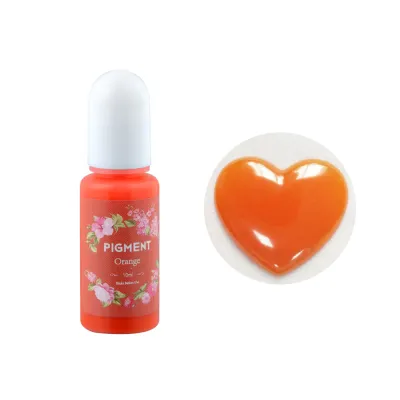
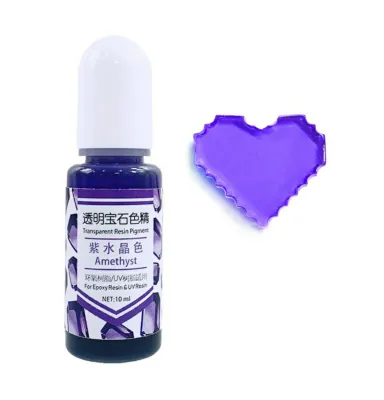
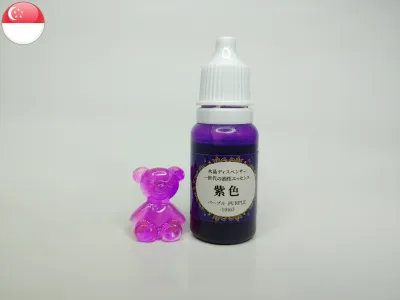
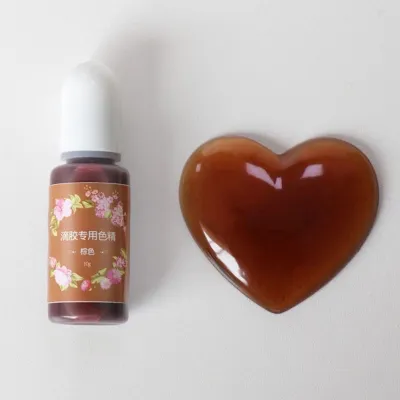
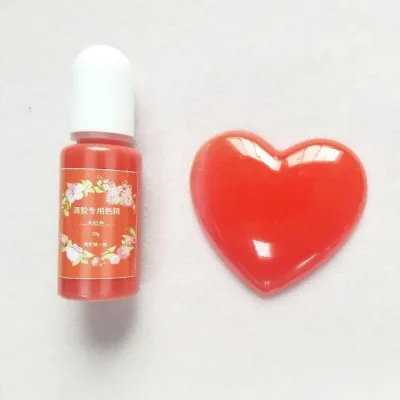
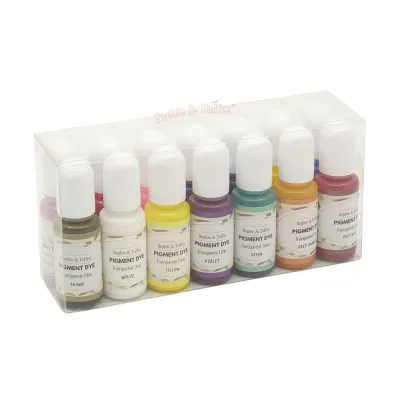
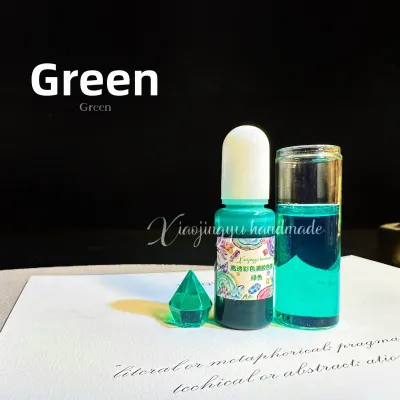
Prices are valid at publication and may change. Please refer to the product page for the latest price.
Liquid Dyes for Transparent and Vibrant Tints
Liquid dyes produce deep, saturated hues while maintaining excellent clarity. When mixed correctly, they allow light to filter through the cured resin, making them an excellent choice for projects relying on depth. If you are embedding objects like dried flowers or small keepsakes, liquid dyes tint the surrounding medium without obscuring the details of your treasures.

Working with liquid dyes is straightforward because they disperse evenly with minimal agitation. Squeeze bottles allow you to add colour drop by drop, giving you precise control. However, because these dyes are highly concentrated, it is easy to over-saturate the mixture. Adding too many drops can darken the resin unexpectedly, turning a delicate sky blue into an opaque navy. Start with a single drop, stir thoroughly, and observe the colour against a white background before adding more.
These characteristics make liquid dyes ideal for clear coasters, tinted jewellery pendants, and faux-glass suncatchers. Because the dye integrates seamlessly into the liquid plastic, you do not have to worry about particles settling to the bottom of the mould while the piece cures, ensuring a uniform appearance throughout.
Mica Powder for Metallic, Pearlescent, and Opaque Effects
Mica powder consists of fine, mineral-based particles that reflect light to create shimmering, pearlescent finishes. Unlike liquid dyes, mica does not dissolve; instead, the tiny reflective flakes remain suspended in the cured resin. This suspension creates a three-dimensional depth, allowing you to capture swirling patterns, marbled veins, and metallic luster that mimic natural stone.
While mica powder is forgiving in terms of curing chemistry, it presents physical mixing challenges. Because it is a dry, lightweight powder, it can easily clump when first introduced to the liquid resin. Stir slowly and methodically to fold the powder into the mixture, ensuring no dry pockets remain. If the resin is too thin or if the powder is not stirred thoroughly, the heavy mineral particles can settle to the bottom of the mould during curing, leaving the top of your project looking dull.
Despite these mixing considerations, mica powder is highly recommended for bold, opaque statements. It is an excellent medium for geode art, decorative trays, and solid-coloured jewellery pieces where you want to hide the background entirely. The natural shimmer of the powder masks minor surface imperfections, making your early projects look polished even if your pouring technique is still developing.
Alcohol Inks for Fluid Art and Cellular Patterns
Alcohol inks are fast-drying, acid-free dye solutions that behave differently from standard liquid pigments. Instead of mixing them uniformly into the resin before pouring, artists drop alcohol inks directly onto the surface of freshly poured, clear resin. Because the alcohol evaporates rapidly, it pushes the surrounding resin away, creating organic cells, wispy tendrils, and dynamic, cloud-like patterns that are difficult to replicate with other colourants.
While the visual effects are mesmerizing, alcohol inks carry strict compatibility and stability limits. The high alcohol content can interfere with the chemical reaction between your resin and hardener. If you use too much ink, the resin may remain tacky, develop a rubbery texture, or fail to cure altogether. To prevent this, limit your ink usage to a few drops and avoid pouring deep layers of ink directly into the mixture.
Furthermore, alcohol inks are sensitive to UV light and chemical reactions over time. Some colours, particularly pinks, purples, and light blues, may shift in hue or fade significantly when exposed to sunlight or during the heat-generating curing process of epoxy resin. To ensure your art lasts, check the guidelines provided by both your resin and ink manufacturers. Conducting small test batches is highly recommended to observe how a specific ink brand reacts with your chosen resin formula before committing to a larger project.
How to Choose the Right Resin Colour for Your Project
Selecting the right colourant involves matching your artistic goals with the physical properties of each medium. To simplify your decision, consider the desired opacity and the specific visual style of your project.
Choose liquid dyes if:
- You want a clean, transparent, or translucent finish that lets light pass through.
- You are embedding delicate objects like dried botanicals, paper, or charms and want them to remain fully visible.
- You prefer a simple, drop-by-drop mixing process with minimal risk of clumping.
Choose mica powder if:
- You want a rich, opaque, or metallic appearance with a pearlescent shimmer.
- You want to create faux-marble, geode, or river-table effects with visible swirls and depth.
- You want a highly stable colourant that will not fade over time or interfere with the curing process.
Choose alcohol inks if:
- You want to create petri dish art, cellular patterns, or wispy, smoke-like designs inside the resin.
- You enjoy experimental, abstract fluid art where the medium guides the final pattern.
- You are willing to perform test pours to monitor curing times and colour stability.
Before starting any complex project, verify first if your chosen colourant is compatible with the specific type of resin you are using. For instance, UV resin cures extremely quickly under ultraviolet light, and highly opaque pigments like thick mica powder can block the light from reaching the center of the piece, resulting in an uncured, sticky core.
The table below summarizes how these three popular colourants compare across key performance and usability metrics:
| Colourant Type | Visual Effect | Opacity Level | Mixing Difficulty | Recommended Scenarios |
|---|---|---|---|---|
| Liquid Dyes | Transparent, vibrant tint | High transparency | Very Low | Coasters, jewellery with embeds, suncatchers |
| Mica Powder | Shimmering, metallic, marbled | Opaque to semi-opaque | Medium (requires thorough folding) | Geode art, trays, solid-coloured castings |
| Alcohol Inks | Cellular, wispy, fluid patterns | Translucent to opaque | High (requires precise drop control) | Petri dish art, abstract coasters, surface painting |
Essential Mixing and Safety Checks for Beginners
Working with resin and concentrated colourants requires a mindful approach to safety and chemical ratios. It is crucial to wear appropriate personal protective equipment, including nitrile gloves and safety glasses, to protect your skin and eyes from accidental splashes. Because both epoxy resin and alcohol-based inks release volatile organic compounds, work in a well-ventilated space or wear a respirator rated for organic vapours to ensure a safe crafting environment.
To ensure your projects cure successfully, you must respect the chemical balance of your resin. As a general rule of thumb, the total volume of added colourant should never exceed 5% of the total volume of your mixed resin. Exceeding this threshold can disrupt the ratio of resin to hardener, leading to soft spots, sticky surfaces, or incomplete curing. When working with alcohol inks, keep this limit even lower—closer to 2% or 3%—due to the solvent’s aggressive nature.
Do not underestimate the value of a small test batch. Before pouring a large, expensive project, mix a tiny amount of resin and add your chosen colourant in a disposable cup. This simple check allows you to verify the curing time, observe the final colour accuracy, and ensure that different colourant brands do not react negatively when combined.
Frequently Asked Questions (FAQ)
Can I mix liquid dyes and mica powder in the same resin batch?
Yes, you can combine liquid dyes and mica powder in the same batch of resin to create custom effects, such as a tinted transparent base with shimmering metallic veins. However, you must be careful not to exceed the overall colourant limit of the resin. Keep the combined volume of both the liquid dye and the powder under 5% of your total mixed resin volume. Mixing them thoroughly is essential to prevent the powder from clumping around the liquid droplets, which can cause uneven curing or unsightly spots in your finished piece.
Why did my coloured resin remain sticky or not cure properly?
Coloured resin usually remains sticky or fails to cure due to an excess of colourant or inaccurate mixing of the resin and hardener. Adding too much liquid dye or alcohol ink introduces excess moisture or solvents that disrupt the chemical curing process. To resolve this, measure your resin and hardener precisely using the manufacturer’s recommended ratios before adding any colour. Keep your colourant additions minimal, adding them drop by drop or in small pinches, and ensure the mixture is stirred thoroughly from the bottom and sides of the mixing cup.
Community discussion
Share your experience or ask a question. Comments are reviewed before publication.