
Quick Answer: Which Notebook Paper Fits Your Fountain Pen?
When choosing a premium notebook, the paper you write on dictates your entire experience. Three brands dominate this space: Leuchtturm1917, Moleskine, and Midori MD. If you are searching for the perfect match, understanding how leuchtturm paper compares to its competitors is the first step toward a frustrating or flawless writing session. The ideal choice is highly dependent on your specific pen and ink combination rather than a single brand’s reputation.
To help you make an immediate decision, use this quick framework:
- Choose Midori MD if you use wet inks, broad or stub nibs, and prioritize zero bleed-through and minimal ghosting. Its specialized, highly sized paper is engineered specifically to handle liquid fountain pen inks without losing its structural integrity.
- Choose Leuchtturm1917 if you want a balanced, feature-rich everyday notebook with good ink resistance for fine to medium nibs. It offers a reliable middle ground for standard fountain pen inks while maintaining a portable form factor.
- Choose Moleskine if you primarily write with pencils, ballpoints, gel pens, or very dry fountain pens with extra-fine nibs. Its standard paper is generally too thin and porous for wet fountain pen inks, making it highly susceptible to bleed-through.
Paper Weight and Thickness: How Leuchtturm and Competitors Compare
Paper weight, measured in grams per square meter (GSM), serves as the foundational metric for how much liquid ink a sheet can physically support. However, GSM is only part of the equation; the manufacturing process, fiber density, and chemical sizing treatments play equally critical roles in ink handling.
Products mentioned in this guide
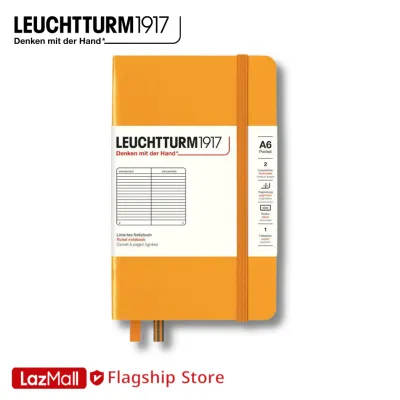
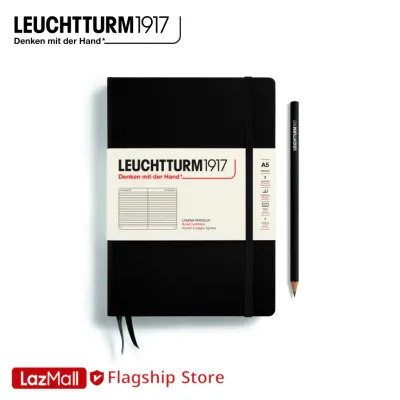
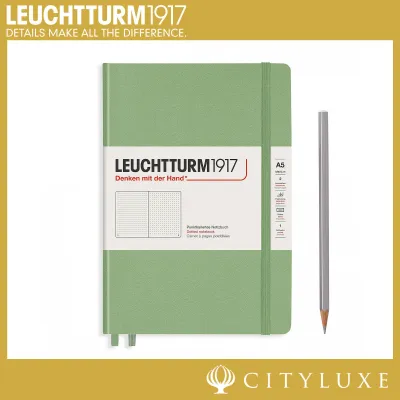
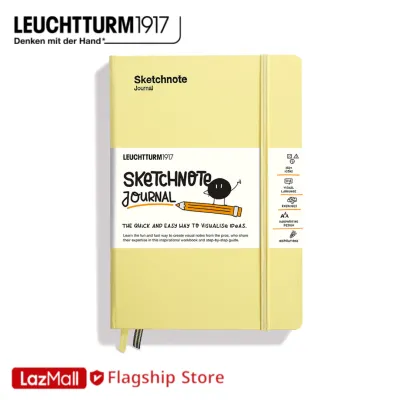
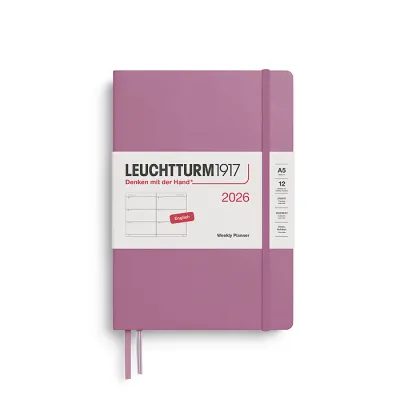
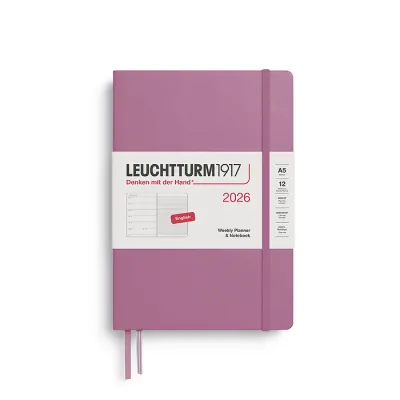
Prices are valid at publication and may change. Please refer to the product page for the latest price.

Standard Leuchtturm1917 notebooks typically feature 80 gsm paper. This weight is designed to balance notebook thickness with daily durability. While 80 gsm is relatively light, the paper undergoes a specialized manufacturing process that applies surface sizing to resist liquid penetration. For writers who require a heavier canvas, the brand also offers a specialized 120 gsm edition, which significantly increases ink resistance at the cost of a thicker, heavier notebook profile.
In contrast, standard Moleskine notebooks utilize a lighter 70 gsm paper. This thinner profile allows Moleskine notebooks to remain slim and highly portable, but the lower density and minimal sizing make the fibers highly absorbent. When liquid ink hits this paper, it behaves like a sponge, drawing the liquid deep into the sheet. This construction is optimized for dry media rather than the wet, water-based inks characteristic of fountain pens.
Midori MD takes a distinct approach. While its standard notebooks are also rated around 80 gsm, the paper is manufactured using proprietary Japanese techniques developed specifically for writing comfort and ink resistance. The fibers are packed exceptionally tight, and the paper is treated with custom sizing agents that prevent wet inks from soaking through. Midori also offers specialized thicker variants and cotton-blend papers that cater to artists and heavy ink users, though their standard 80 gsm paper already outperforms many heavier sheets on the market.
While higher GSM generally correlates with better ink resistance, it introduces a practical trade-off: bulk. A notebook with 120 gsm paper will be nearly twice as thick and heavy as a 70 gsm notebook with the same page count. If you frequently commute, carry your notebook in a small bag, or write on the go, a balanced 80 gsm option like Leuchtturm1917 or Midori MD offers a more practical compromise between portability and performance. Always check the specific product label before purchasing, as manufacturers regularly release limited editions or specialized art variants with non-standard paper weights.
Bleed-Through and Ghosting: Keeping Your Pages Clean
For fountain pen enthusiasts, nothing ruins a beautiful journal entry faster than ink ruining the reverse side of the page. To evaluate these notebooks, you must distinguish between two distinct phenomena: bleed-through and ghosting.
Bleed-through occurs when ink completely saturates the paper fibers, traveling from the writing surface to the back of the sheet or even onto the next page. This is a structural failure of the paper’s sizing. Ghosting, also known as show-through, refers to the shadow of your writing visible on the reverse side of the page. Ghosting does not ruin the paper, but high levels of ghosting can make reading double-sided entries difficult and visually cluttered.
Standard Moleskine paper is highly prone to both bleed-through and ghosting when paired with fountain pens. Because the 70 gsm paper lacks adequate sizing, standard water-based inks quickly penetrate the sheet. Even fine nibs with moderate ink flow can cause noticeable bleed spots, while medium and broad nibs will often make the reverse side completely unusable. This limits you to writing on only one side of each leaf, effectively halving the notebook’s usable capacity.
Leuchtturm1917 handles standard fountain pen inks remarkably well with minimal bleed-through, provided you use extra-fine, fine, or moderate medium nibs. The sizing keeps the ink on the surface, preventing it from soaking through to the next page. However, because the paper is 80 gsm and has a warm, ivory tone, ghosting is quite common. You will clearly see the outline of your previous writing on the back of the page. While the page remains structurally usable, writers who prefer clean, high-contrast pages may find this level of ghosting distracting.
Midori MD is engineered to minimize both issues, making it the safest choice for heavy ink flow and double-sided use. The proprietary sizing and dense fiber structure of Midori paper prevent even highly saturated inks and wet broad nibs from bleeding through. Furthermore, ghosting is exceptionally low for an 80 gsm paper. The cream-colored sheets absorb the visual shadow of the ink, allowing you to comfortably write on both sides of every page with minimal visual distraction.
These results are highly conditional. A dry ink, such as Pelikan 4001, paired with an extra-fine Japanese nib will perform acceptably on almost any paper, including Leuchtturm1917 and occasionally Moleskine. Conversely, a highly saturated, wet sheening ink paired with a broad European gold nib or a stub nib will push even Midori MD to its limits. Matching your ink’s wetness to your paper’s resistance is essential for a clean writing experience.
Writing Feel and Dry Time: Smoothness vs. Speed
The tactile sensation of a metal nib gliding across paper is a highly subjective preference. Stationery enthusiasts describe this sensation in terms of “tooth”—the physical feedback and resistance felt as the nib moves across the page.
Midori MD paper is famous for its distinct, creamy smoothness paired with a slight, pleasant feedback. It does not feel slippery; rather, it offers a controlled drag reminiscent of writing on high-quality drawing paper. This feedback gives the writer excellent control over their strokes, preventing the nib from sliding or skating uncontrollably. It is a highly deliberate writing experience favored by those who appreciate the physical connection between hand, pen, and paper.
Leuchtturm1917 offers a smoother, slightly more coated writing surface. It provides less feedback than Midori, allowing the nib to glide with very low friction. For writers who prefer an effortless, fast-gliding sensation, Leuchtturm1917 is highly satisfying. However, if you use a very smooth, wet gold nib, you may find the surface slightly slippery, which can occasionally lead to minor skipping if the nib loses contact with the page.
Standard Moleskine paper presents a more inconsistent writing feel. Because the paper is highly absorbent and less coated, it can feel dry and slightly rough under a fountain pen nib. Fine and extra-fine nibs may catch on the loose surface fibers, causing a scratchy sensation. Furthermore, this high absorbency can cause feathering, where the ink spreads sideways along the fibers, turning crisp lines into fuzzy, blurred strokes.
This difference in surface treatment directly impacts drying times. To prevent bleed-through and feathering, highly sized papers like Midori MD keep the ink pooled on top of the surface rather than absorbing it instantly. While this showcases the ink’s natural shading, sheen, and color depth beautifully, it significantly increases drying times. A wet line of ink on Midori MD can take upwards of thirty seconds to dry completely.
Leuchtturm1917 strikes a moderate middle ground. It absorbs ink slightly faster than Midori, resulting in quicker drying times that are more practical for rapid note-taking, lectures, or business meetings. Moleskine paper absorbs ink almost instantly due to its porous nature, but this rapid drying speed comes at the expense of severe feathering and bleed-through.
These characteristics present a major trade-off for left-handed writers or fast note-takers. Left-handed writers who overwrite (dragging their hand across the freshly written line) will struggle with Midori’s slow drying times, as they are highly likely to smudge their work. For these individuals, a faster-drying paper like Leuchtturm1917, paired with a fine nib and a dry ink, offers a much more practical daily writing experience.
Side-by-Side Comparison: Leuchtturm1917 vs. Moleskine vs. Midori
To help you quickly evaluate these options, the table below compares the standard editions of each brand across key fountain pen performance metrics.
| Feature / Dimension | Leuchtturm1917 (Standard) | Moleskine (Standard) | Midori MD (Standard) |
|---|---|---|---|
| Typical Paper Weight | 80 GSM (120 GSM options available) | 70 GSM | ~80 GSM (Proprietary density) |
| Fountain Pen Friendliness | Moderate to High | Low | High |
| Bleed-Through Risk | Low (with fine/medium nibs) | High (with most fountain pens) | Extremely Low |
| Show-Through / Ghosting | Moderate to High | Very High | Low to Moderate |
| Drying Time (Relative) | Moderate (Balanced for daily use) | Extremely Fast (High absorption) | Slow (Keeps ink on surface) |
| Surface Texture (Feedback) | Smooth, low friction | Dry, inconsistent, prone to catch | Creamy with pleasant "tooth" |
| Best Suited For | Everyday journaling, quick note-taking | Pencils, ballpoints, dry gel pens | Slow writing, ink shading, wet nibs |
Disclaimer: The performance metrics listed above represent the general characteristics of each brand’s standard notebook editions. Paper behavior can vary significantly based on manufacturing batches, local environmental conditions, and the specific fountain pen and ink combination used. Always verify the paper specifications on the product packaging before purchasing specialized or limited-edition releases.
How to Test and Match Your Specific Pen and Ink
Because paper performance is not absolute, finding your perfect setup requires understanding the relationship between your pen’s wetness, your ink’s properties, and your notebook’s paper. A notebook that works beautifully for one writer may fail for another who uses a different pen and ink combination.
To avoid ruining an entire notebook, perform a simple, low-risk test on the back pages before committing to daily use. Draw a small ink swatch using a cotton swab or the feed of your pen to test the paper’s maximum ink capacity. Next, write a few lines using your standard writing pressure with different nib sizes (Extra-Fine, Fine, Medium, and Broad). Let the ink dry naturally, noting how long it takes to become smudge-proof. After 24 hours, inspect the reverse side of the page to evaluate both bleed-through and ghosting.
Environmental factors also play a critical role in how paper behaves. In humid climates like Singapore, where relative humidity often exceeds 80%, evaporation is significantly slowed. On highly sized, ink-resistant papers like Midori MD, this high ambient humidity can extend drying times even further, making wet inks prone to accidental smudging long after you have written them.
If you live or work in a humid environment, you can adapt your setup using several practical techniques:
- Use Blotting Paper: Placing a sheet of high-quality blotting paper (such as J. Herbin pink blotting paper) inside your notebook acts as a hand rest to prevent skin oils from transferring to the page, and it absorbs excess wet ink when you close the notebook.
- Adjust Your Ink Choice: Pair highly sized papers with drier, faster-drying inks. Brands like Pelikan, Lamy, or specialized quick-dry formulations dry significantly faster on Leuchtturm1917 and Midori MD paper, compensating for high environmental humidity.
- Check for Paper Upgrades: If you love the Leuchtturm1917 format but use very wet pens, look for their specialized "120g Edition" notebooks, which feature thicker paper designed specifically to handle heavy ink applications without bleed-through or ghosting.
Frequently Asked Questions (FAQ)
Does Leuchtturm1917 feather with fountain pen ink?
Standard 80 gsm Leuchtturm1917 paper is designed with light surface sizing that generally resists feathering when paired with standard water-based dye inks. Your lines will remain crisp and defined. However, feathering can occur if you use highly saturated inks, sheening inks with high surfactant content, or extremely wet broad nibs that dump a large volume of liquid onto the page. If you experience feathering, switching to a drier ink or a finer nib size will typically resolve the issue.
Is there a specific Moleskine edition made for fountain pens?
While standard 70 gsm Moleskine notebooks are widely considered unsuitable for fountain pens, the brand does produce specialized options. The Moleskine Art Collection features significantly heavier paper, ranging from 120 gsm sketch paper to 165 gsm and even 200 gsm watercolor paper. These heavier variants handle liquid ink and wet media much better than the standard notebooks. Always check the product specifications on the label for GSM and explicit media compatibility before purchasing.
Which paper is best for left-handed fountain pen users?
Left-handed writers who overwrite or push their pens across the page require a paper that balances ink resistance with fast drying times to prevent smudging. Midori MD’s highly sized surface keeps ink wet for a long time, making it challenging for left-handed users without blotting paper. Leuchtturm1917’s 80 gsm paper offers a more practical, faster-drying alternative. Left-handed writers should pair this paper with a fine or extra-fine nib and a dry, fast-drying ink to ensure a clean, smudge-free writing experience.
Community discussion
Share your experience or ask a question. Comments are reviewed before publication.