
Finding the right LED light drawing board in Singapore requires balancing your specific creative needs against the build quality, lighting consistency, and price of available options. Because the local market features a mix of high-end digital art brands, specialized craft labels, and unbranded budget alternatives, there is no single option that suits everyone. Instead, the ideal choice depends on whether you are using the board for professional animation, diamond painting, or casual sketching. By understanding how different brand categories perform under daily use, you can make an informed decision that fits your workspace and budget.
Key Decision Factors for Evaluating Quality and Value
To determine the true value of an LED light drawing board, you must look beyond basic marketing claims and focus on measurable performance factors. The most critical element is lighting uniformity. Low-quality boards often suffer from hot spots near the LED strips—usually along the edges—and noticeable dimming toward the center. A high-quality board uses an advanced light guide plate that distributes illumination evenly across the entire active area, preventing eye strain and ensuring that your tracing remains consistent from edge to edge.
Another vital consideration is the dimming mechanism. Basic models typically offer three fixed brightness levels, which can limit your flexibility when working with varying paper thicknesses. In contrast, boards featuring stepless touch controls allow you to adjust the brightness smoothly to match your ambient room lighting. Additionally, a built-in brightness memory function is highly convenient, as it automatically restores your last-used setting when you power the device back on, saving you from constant readjustments.
Products mentioned in this guide
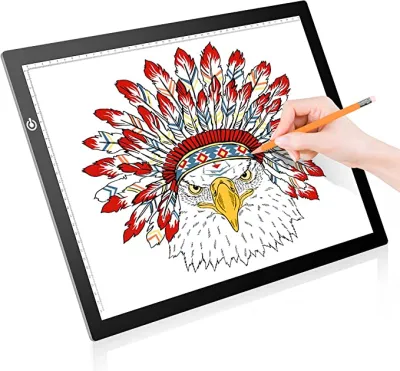
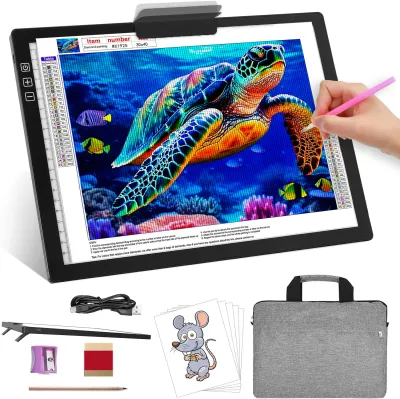
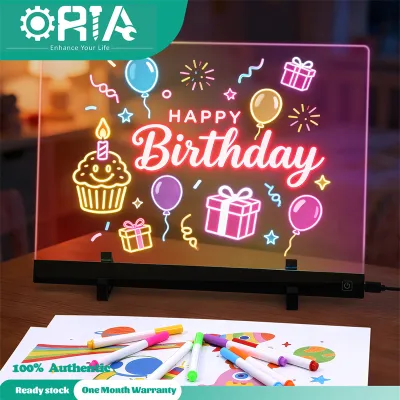
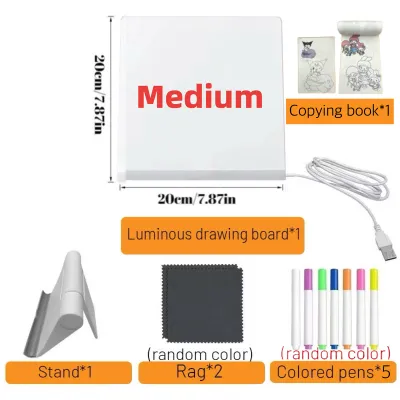
![[SG STOCK] Reusable LED Drawing Board DIY Luminous Acrylic Message Memo Note Pad Night Light Kids Writing Gift发光画板](https://img.lazcdn.com/g/p/4f49319070b36c6e7ba9cbce60944690.jpg_400x400q80.jpg_.webp)
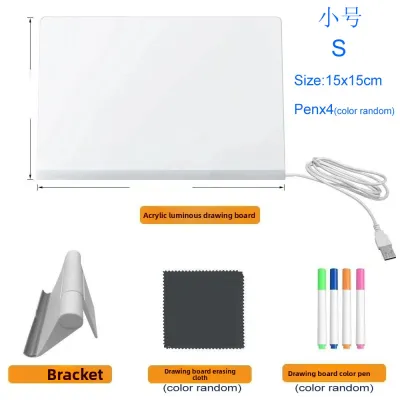
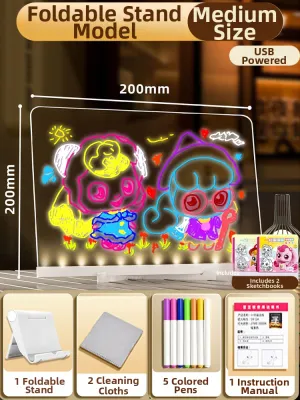
Prices are valid at publication and may change. Please refer to the product page for the latest price.
The physical design of the board also impacts its usability. You should compare the active drawing area to the total physical footprint of the device. Boards with excessively wide bezels take up valuable desk space and are harder to pack into a bag, whereas modern, slim-bezel designs maximize the workspace while remaining highly portable.
Finally, evaluate the power delivery system. Modern boards increasingly utilize USB-C ports, which offer a more secure and durable connection than older Micro-USB ports. Consider whether the board can run efficiently off a standard power bank, which is essential for mobile use in Singapore’s cafes or libraries, and check whether the package includes a dedicated wall adapter or requires you to supply your own USB power brick.
Comparing Brand Categories Available in Singapore
The Singapore market for LED drawing boards is broadly divided into three distinct tiers, each catering to different user profiles and budgets. Because local retail availability and after-sales support vary significantly between these categories, understanding where a brand fits can help you set realistic expectations for durability and customer service. Rather than searching for a universal winner, you should identify which tier aligns with your primary creative discipline, whether that is professional drafting, hobbyist crafting, or occasional student projects.

Professional and Digital Art Brands
Professional-grade LED drawing boards typically come from established manufacturers in the digital graphics tablet and technical drafting sectors. These brands design their products for animators, architects, and professional illustrators who require flawless performance over long working sessions. The primary advantage of this tier is superior build quality, often featuring scratch-resistant, optical-grade acrylic or tempered glass surfaces that can withstand heavy pressure and repeated use without scuffing.
These boards almost always feature precise, flicker-free stepless dimming and high-quality light guide plates that ensure perfect edge-to-edge brightness. Furthermore, purchasing from a recognized professional brand in Singapore usually guarantees reliable local warranty support and customer service, giving you peace of mind if the device encounters electrical issues. While these boards carry a premium price tag, their durability and consistent performance make them a worthwhile investment for professionals, though they may represent unnecessary over-engineering for casual hobbyists.
Dedicated Craft and Stationery Brands
Dedicated craft and stationery brands focus on traditional arts, hobbyist crafting, and specialized activities like diamond painting or cross-stitch. These boards are designed with physical media in mind, often incorporating practical features such as anti-slip rubber feet, sturdy frames that protect the edges from impact, and integrated clips to hold paper or canvas securely in place.
Sizing in this category is highly standardized, aligning perfectly with standard paper dimensions like A4 and A3, which simplifies the process of aligning your work. Many of these brands also offer convenient bundles that include accessories like storage cases, stand mounts, or crafting tools. This tier represents a balanced middle ground for Singaporean hobbyists, offering reliable durability and specialized features without the high cost associated with professional drafting equipment.
Budget and White-Label Options
Budget and white-label options are highly prevalent on local e-commerce platforms and online marketplaces. These unbranded or generic boards are incredibly appealing due to their low price points, making them accessible for students, parents buying for children, or occasional crafters who only need a light board for short projects.
However, these entry-level boards come with notable trade-offs. They frequently suffer from uneven light distribution, flickering at lower brightness levels, and a lack of brightness memory. The physical construction is often lightweight and flexible, using thinner plastics that can warp under pressure or scratch easily. When buying from this tier, it is crucial to verify the seller’s return policy and read user reviews carefully to check for common complaints like edge darkening, loose power ports, or premature LED failure.
Specification and Compatibility Checklist
Before making a purchase, it is essential to verify the technical specifications of the LED drawing board to ensure it is compatible with your tools and workflow. Use the following checklist to guide your evaluation:
- Surface Material: Check whether the board uses optical-grade acrylic or tempered glass. If you plan to use craft adhesives, tape, or sharp tools, a tempered glass or scratch-resistant acrylic surface is necessary to prevent permanent damage and maintain a smooth tracing surface.
- Light Penetration: Look for the manufacturer's specifications regarding light output, often measured in lux. Ensure the board provides sufficient brightness to penetrate your preferred medium; for example, tracing through heavy watercolor paper (300 GSM) or thick canvas requires a much higher light output than standard tracing paper or copy paper (80 GSM).
- Power Input: Confirm the port type on the board. USB-C is highly recommended for its durability and ease of connection. Additionally, verify if a compatible power adapter is included in the box, or if you will need to purchase a separate USB power brick that meets the board's voltage and amperage requirements.
- Physical Dimensions: Review the exact weight and thickness of the board. If you plan to use the board on your lap, during travel, or in different locations around Singapore, a lightweight, ultra-thin profile (under 8mm) is ideal, whereas a thicker, heavier board is better suited for a permanent desk setup.
How to Choose the Right Board for Your Needs
To select the ideal LED light drawing board, you should match your primary creative activities and workspace constraints to the appropriate brand category.
Choose a professional brand if your work involves long hours of detailed animation tracing, technical drafting, or professional illustration. The flicker-free illumination, precise stepless dimming, and robust local warranty support are essential for protecting your eyes and ensuring consistent results over years of daily use.
Opt for a dedicated craft and stationery brand if your primary activities include diamond painting, weeding vinyl, or heavy-duty tracing where you need a sturdy frame, scratch-resistant surface, and exact paper-size alignment. These boards offer the practical durability and accessory compatibility required for physical crafts without the premium price of professional drafting tools.
Select a budget or white-label option if you only require a light board for occasional student homework, casual sketching, or travel. While you must be prepared to verify the light uniformity and port stability immediately upon delivery, these boards offer an incredibly cost-effective entry point for light, non-professional use.
Regardless of the brand tier, always verify the light penetration capabilities first if you plan to trace through exceptionally thick media like heavy watercolor paper, multi-ply cardstock, or dark fabrics. Standard LED boards may not offer sufficient lux levels for these materials, meaning you may need to seek out specialized high-lux models designed specifically for high-density media.
Frequently Asked Questions (FAQ)
Can I use an LED drawing board for diamond painting or tracing thick paper?
Yes, but you must select a board with specifications that match these demanding tasks. For tracing thick media like 300 GSM watercolor paper, a standard light board may not be bright enough; you will need a high-lux model with adjustable brightness to ensure the light penetrates the dense fibers. For diamond painting, ensure the board’s surface is made of durable, easy-to-clean acrylic or glass that can tolerate adhesive residue, and verify that the frame is sturdy enough to withstand the repeated pressure of applying drills.
Does a higher price always guarantee better eye protection and uniform lighting?
Not necessarily. While premium brands generally offer better quality control, eye protection and lighting uniformity depend on specific technical features rather than the price tag alone. When shopping, look for boards that explicitly feature flicker-free LED technology and high-quality light guide plates that diffuse light evenly across the entire surface. Stepless dimming is also crucial for eye comfort, as it allows you to adjust the brightness to match your working environment, preventing the harsh glare that causes eye strain.
Community discussion
Share your experience or ask a question. Comments are reviewed before publication.