
When selecting a leather journal, fountain pen enthusiasts often face a frustrating paradox: a beautifully crafted, rugged leather cover frequently conceals paper that is entirely incompatible with liquid ink. The term “leather journal” refers strictly to the exterior binding material, whereas your writing experience is dictated entirely by the composition, weight, and treatment of the paper inside. Without verifying these paper specifications, using a fountain pen on standard uncoated wood-pulp paper will almost certainly result in severe bleed-through, feathering, and ghosting.
To secure a journal that handles wet ink gracefully, you must look beyond the aesthetic appeal of the leather cover. Prioritize brands that explicitly state their paper specifications—such as weight in grams per square meter (GSM) and surface treatment—or those that utilize modular, refillable systems. Refillable designs allow you to pair a high-quality leather cover with specialized, fountain-pen-friendly paper inserts from trusted paper mills.
Paper Specifications That Prevent Bleed-Through and Feathering
Understanding the technical metrics of paper is the most reliable way to predict how it will interact with fountain pen ink before you ever lay nib to page. The most common specification you will encounter is paper weight, measured in grams per square meter (GSM). While a higher GSM (typically 100 GSM to 120 GSM or more) indicates thicker paper that naturally reduces show-through or “ghosting,” weight alone does not guarantee a bleed-free experience. Thick, porous paper can still absorb ink like a sponge, leading to fuzzy lines and feathering.
Products mentioned in this guide
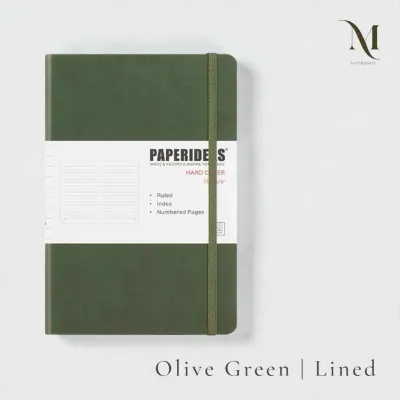
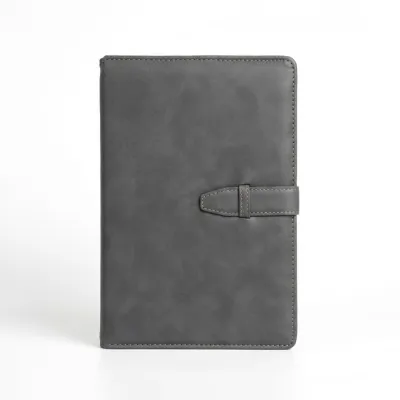
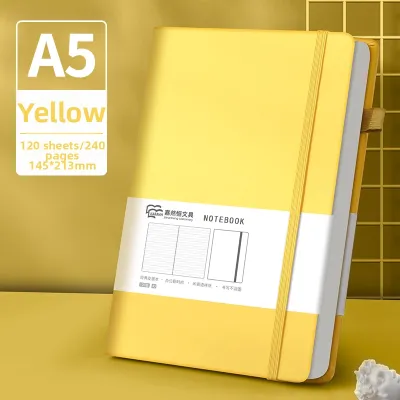
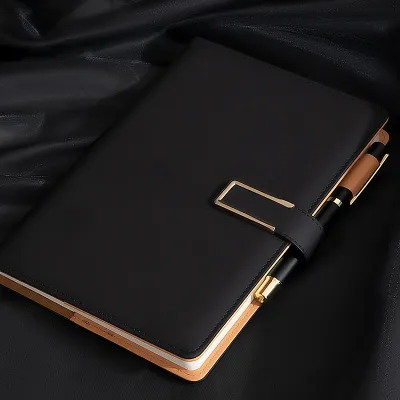
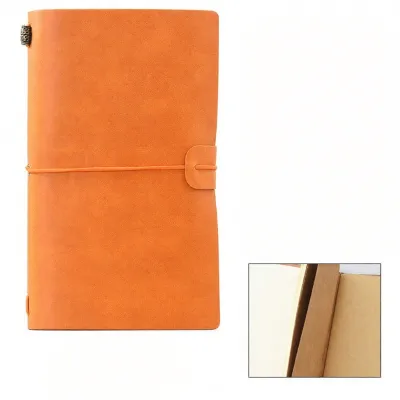
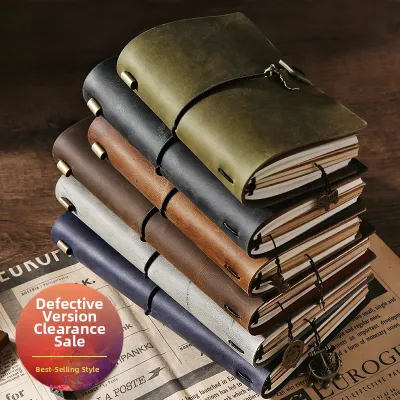
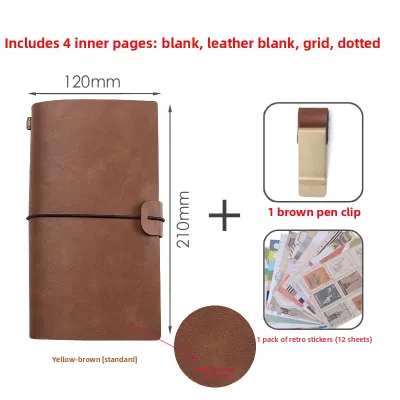
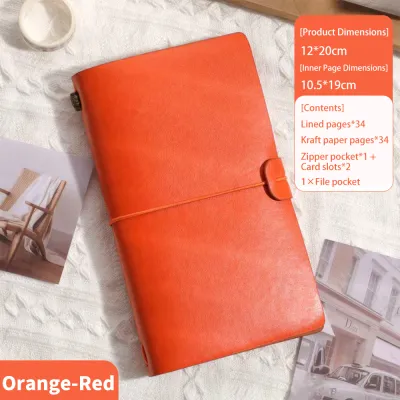
Prices are valid at publication and may change. Please refer to the product page for the latest price.
The true secret to fountain pen compatibility lies in “sizing,” a chemical treatment applied during papermaking. Sizing can be internal (mixed into the pulp) or external (applied to the surface of the dried sheet). This treatment regulates absorbency, forcing ink to sit on top of the page rather than soaking into the fibers. Highly sized or coated papers allow ink to dry slowly through evaporation, preserving sharp handwriting edges and bringing out unique shading and sheen properties.
The raw material of the paper also plays a critical role in ink handling. Standard wood-pulp paper is highly variable; without proper sizing, it feathers excessively. Cotton-blend papers, favored for their soft texture and archival durability, are naturally highly absorbent. Unless cotton paper is specifically treated with heavy sizing, it is generally unsuitable for wet fountain pen nibs. Conversely, specialized coated papers use a thin mineral layer to create an ultra-smooth surface that resists ink penetration, making them ideal for fountain pen users.
When browsing for a leather journal, look for explicit packaging claims such as “fountain pen friendly,” “ink resistant,” or “sized for wet media.” Avoid products that merely advertise “thick paper” or “heavyweight sheets” without providing technical details. In humid climates like Singapore, paper naturally absorbs moisture from the air, which can temporarily weaken the sizing and increase feathering; therefore, choosing a paper with robust, verified sizing is even more critical for local writers.
How to Evaluate Leather Journal Brands for Fountain Pen Use
When evaluating different leather journal brands, the structural design of the notebook is just as important as the paper itself. Brands generally fall into two categories: integrated, pre-bound journals and modular, refillable systems. Integrated journals offer a classic, book-like feel with sewn or glued bindings, but they lock you into a single paper type. If the paper in a pre-bound journal turns out to be incompatible with your ink, the entire notebook becomes difficult to use.

Refillable leather covers, such as traveler’s style notebooks or ring-bound organizers, offer far greater flexibility for stationery enthusiasts. These systems allow you to retain a premium, aging leather cover while swapping out the inner paper inserts as needed. This modularity lets you source specialized inserts made with renowned fountain-pen-friendly papers from independent mills, giving you complete control over your writing surface without sacrificing the luxury of a genuine leather exterior.
To avoid disappointment, identify red flags in product descriptions on online marketplaces. Vague descriptors like “premium quality paper” or “vintage parchment” often mask a lack of technical specifications. If a brand does not list the GSM, fiber source, or sizing status, the journal likely uses standard, absorbent wood pulp that will bleed when paired with liquid ink.
A reliable indicator of quality is whether a leather journal brand partners with established, specialized paper mills. Many high-end stationery brands do not manufacture their own paper; instead, they source sheets from historic mills in Japan, France, or Italy known for rigorous quality control. Additionally, seek out user reviews that specifically mention fountain pen tests. Look for feedback from writers who use wet inks, broad nibs, or stub nibs, as these tools place the greatest demand on paper performance and will quickly expose any structural weaknesses in the sheets.
Practical Tests to Verify Paper Quality Before Committing
Before committing to writing a long entry in a new leather journal, it is wise to perform a systematic paper test on an inconspicuous page, such as the very back sheet. This precaution ensures you do not ruin the aesthetic of your new journal if the paper fails to handle your ink. Begin by creating an ink swatch test using your daily-carry pens and a variety of nib sizes, ranging from extra-fine to broad or stub nibs. Draw simple grids, solid blocks, and intersecting lines to observe how the paper handles different volumes of ink.
Once the ink has dried, examine the reverse side of the page under direct, clear lighting to evaluate the paper’s resistance to ink penetration. It is important to distinguish between “ghosting” and “bleed-through.” Ghosting, or show-through, occurs when you can see the shadow of the writing on the other side of the page, which is common with thin, highly sized papers and is generally acceptable for most writers. Bleed-through, however, occurs when physical spots of ink break through the paper fibers and appear as wet dots on the reverse side, making the back of the page unusable.
Next, conduct an ink dry time test to assess surface sizing. Write a series of words and gently run a clean finger across the ink at set intervals, such as five, fifteen, and thirty seconds. Highly sized papers exhibit longer dry times because the ink pools on the surface. While longer dry times require patience, they prevent feathering and allow specialized inks to display their full color depth, shading, and metallic sheen.
If your test results show immediate feathering or if the ink bleeds through to the next page with a medium nib, the paper is incompatible with wet writing instruments. At this point, stop testing. If the journal is a refillable system, swap the insert for a verified paper type. If it is a pre-bound journal, reserve it for dry media like pencils or ballpoint pens, or check the retailer’s return policy if the product was advertised as fountain pen friendly.
What to Do If Your Current Leather Journal Bleeds
If you already own a beautiful leather journal that suffers from bleed-through, you do not have to abandon it. There are several practical workarounds to make the notebook usable with your fountain pen collection. First, always place a sheet of high-quality blotter paper or a smooth plastic protective sheet (often called a pencil board) directly behind the page you are writing on. This barrier prevents any bleeding ink from transferring onto the clean page underneath, preserving the rest of your journal.
Another highly effective strategy is to adjust your writing instruments and ink chemistry. If you are using a wet, broad nib, switch to an extra-fine or fine nib, which deposits significantly less ink onto the page. Additionally, swap out wet, highly saturated inks for “dry” inks. Dry inks are formulated with higher surface tension, causing them to flow more slowly through the feed and sit more tightly on the paper surface, which drastically reduces both feathering and bleed-through on lower-quality paper.
For those who enjoy bookbinding, you can modify the journal itself. If your leather cover uses a refillable elastic band system, slide out the low-quality booklets and replace them with custom-folded booklets made from your favorite loose sheets. For bound journals, you can carefully cut out the original paper block using a utility knife, leaving the leather spine intact, and glue or sew in a custom-bound block of high-quality paper to preserve the cover.
Frequently Asked Questions (FAQ)
Does genuine leather affect how fountain pen ink dries?
The leather cover material itself does not directly affect the chemical drying process of the ink on the inner pages. However, the physical construction of the leather cover plays an indirect role. A high-quality leather journal that is designed to lay completely flat when open prevents ink from pooling in the center gutter of the page, ensuring an even distribution of ink and uniform drying times. Additionally, ensure that any oils or waxes used to condition the leather cover do not transfer to the edges of the paper, as these oils can create greasy spots that repel water-based fountain pen inks.
Can I use wet fountain pen inks in standard 80 GSM paper?
Using wet fountain pen inks on standard 80 GSM paper is generally not recommended unless the paper has been specifically treated with high-quality external sizing. Without this protective coating, standard 80 GSM wood-pulp paper is too thin and porous to handle the high volume of liquid deposited by wet inks, broad nibs, or flex pens. This mismatch typically results in severe feathering and bleed-through. If you must use 80 GSM paper, pair it with dry inks and fine or extra-fine nibs to minimize ink saturation.
Are refillable leather journals better for fountain pen users?
Refillable leather journals are highly advantageous for fountain pen users because they decouple the exterior aesthetic from the writing surface. Instead of risking a permanent purchase on a bound journal with unknown paper quality, a refillable system allows you to invest in a single, high-quality leather cover that will last for decades. You can then continuously source and swap in specialized paper inserts that are verified to handle wet fountain pen inks, giving you the freedom to experiment with different paper textures, rulings, and weights over time.
Community discussion
Share your experience or ask a question. Comments are reviewed before publication.