
Selecting the right leather for craft projects is the single most critical decision in leatherworking, directly influencing your project’s durability, appearance, and ease of assembly. The ideal material depends entirely on your chosen technique, the tools at your disposal, and the item’s intended function. For instance, a stiff, vegetable-tanned leather is perfect for a carved wallet but completely unsuitable for a draped jacket. Conversely, highly flexible synthetic or chrome-tanned options excel in garments but fail to hold stamped designs. Understanding how different leathers behave under cutting, sewing, gluing, and finishing tools ensures a successful crafting experience.
Understanding the Basics of Craft Leather
To navigate the vast array of leather for craft, one must first distinguish between genuine animal hides and synthetic alternatives. Animal hides are natural, fibrous structures that vary in density, thickness, and texture depending on the animal’s life, breed, and the specific section of the hide used. Synthetic alternatives, often referred to as faux, vegan, or artificial leathers, are manufactured materials designed to mimic the appearance of real leather while offering uniform dimensions and consistency.
Tanning is the chemical process that permanently alters the protein structure of raw animal hides, preventing decomposition and defining the leather’s final physical properties. The two primary tanning methods are vegetable tanning and chrome tanning. Vegetable tanning uses natural organic tannins found in tree bark and leaves, resulting in a firm, dense leather with a distinct earthy scent. Chrome tanning utilizes mineral chromium salts, producing a highly pliable, soft, and chemically stable leather in a fraction of the time. These methods fundamentally dictate how the leather responds to crafting techniques like tooling, carving, dyeing, and edge burnishing.
Products mentioned in this guide
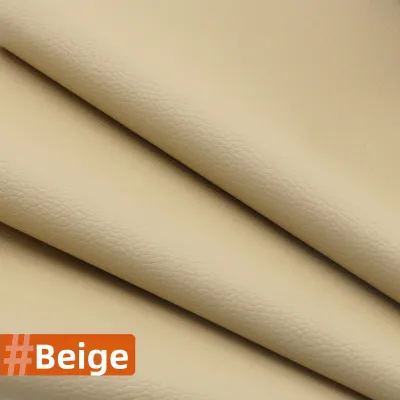
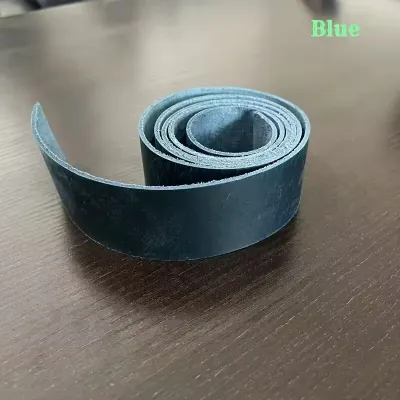
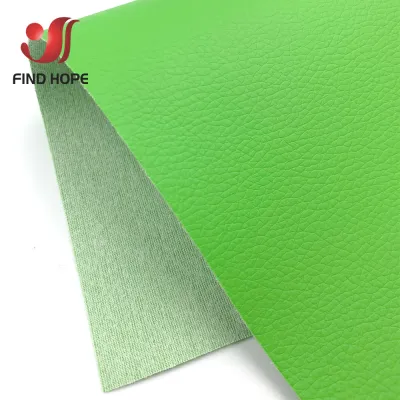
Prices are valid at publication and may change. Please refer to the product page for the latest price.
Another critical concept is “temper,” which refers to the relative stiffness or flexibility of the leather. Leather temper is categorized on a scale from soft (highly pliable, like garment leather) to medium, firm, and extra-firm (rigid, like heavy belt leather). The temper determines how a finished item holds its shape under load or drapes when worn.
Crafters must also look past the commercial label “genuine leather.” In retail and marketing, “genuine leather” is frequently used as a broad catch-all term that often denotes lower-grade split leathers finished with a synthetic surface coating. For serious leathercraft, relying on this term can lead to frustrating results. Instead, successful crafters evaluate leather based on its specific grade, cut, tanning process, and weight to predict exactly how the material will handle during cutting, stitching, and finishing.
Genuine Leather: Types, Tempers, and Crafting Properties
Vegetable-Tanned Leather
Often called “veg-tan,” this material is the gold standard for traditional leathercraft. Because it retains the natural, open-pore structure of the hide, it is highly receptive to moisture. When dampened (a process called casing), vegetable-tanned leather becomes incredibly malleable, allowing crafters to stamp, carve, and tool intricate designs that remain permanently crisp once the leather dries. It possesses a firm to extra-firm temper, providing excellent structural integrity for items like knife sheaths, holsters, and structured bags. Over time, veg-tan leather reacts to sunlight, friction, and body oils, developing a rich, darkened patina that is highly prized by collectors. However, its open pores make it susceptible to water staining unless sealed with a protective topcoat, and its raw edges require dedicated burnishing to achieve a smooth, professional finish. In humid climates like Singapore, unsealed vegetable-tanned leather requires careful storage and regular maintenance to prevent mold growth.

Chrome-Tanned Leather
This type represents the vast majority of commercially produced leather. The chromium tanning process yields a material with a soft to medium temper, exceptional flexibility, and high resistance to heat and water stains. Chrome-tanned leather is available in an almost limitless array of factory-dyed colors and finishes, from matte to high-gloss patent. Because the fibers are chemically saturated with mineral salts, chrome-tanned leather cannot be tooled or stamped; the damp fibers will simply spring back to their original shape. It is also highly resistant to edge burnishing, as the fibers do not compact and stick together under friction. This makes it the ideal choice for projects requiring drape and flexibility, such as jackets, soft tote bags, upholstery, and zippered pouches, where raw edges are typically folded over and stitched rather than left exposed.
Full-Grain vs. Top-Grain
These terms describe the layers of the animal hide. Full-grain leather contains the entire natural grain layer of the hide, including all its natural imperfections, scars, and fiber density. It is the strongest, most durable cut of leather available, making it highly resistant to tearing and wear over decades of use. Top-grain leather is created by sanding or buffing away the outermost fraction of the grain to remove surface blemishes. This process makes the leather slightly thinner, more pliable, and easier to work with, while also providing a highly uniform surface texture. While top-grain is slightly less durable than full-grain, it is highly favored for projects where a pristine, consistent appearance is required without the natural variations of raw hides.
Suede and Split Leather
When thick animal hides are processed, they are often split horizontally into multiple layers. The top layer becomes full-grain or top-grain, while the bottom layers are referred to as split leather. Suede is created by buffing the textured, fibrous underside of split leather to create a soft, velvety nap. Suede is highly pliable and lightweight, making it excellent for linings, fringe, and delicate accessories. However, it lacks a protective grain layer, making it highly susceptible to moisture, stains, and stretching. Working with suede requires specialized techniques; standard leather adhesives can easily bleed through the porous fibers and ruin the nap, requiring the use of dry-bonding contact cements or minimal adhesive application.
Faux and Alternative Leathers: Handling and Limitations
PU and PVC Leather
Synthetic leathers are constructed by applying a plastic polymer coating—either polyurethane (PU) or polyvinyl chloride (PVC)—onto a woven or non-woven fabric backing. PU leather is generally softer and more flexible, closely mimicking the drape of real garment leather, while PVC is thicker, tougher, and highly water-resistant. Both materials offer the advantages of being entirely uniform in thickness, free of natural blemishes, easy to clean with a damp cloth, and highly cost-effective. However, they lack the fibrous structural integrity of genuine leather. They do not develop a patina, cannot be edge-burnished, and are highly prone to peeling, cracking, or delaminating over time as the plasticizers within the polymer layers degrade, especially when exposed to UV light or frequent flexing.
Vegan and Plant-Based Leathers
The modern crafting market has seen a rise in plant-based alternatives derived from materials such as cactus leaves, pineapple leaf fibers, and mushroom mycelium. These materials offer an eco-conscious option for crafters seeking to avoid animal products. However, because these technologies are still evolving, their physical properties vary dramatically. Some plant-based leathers exhibit excellent tensile strength and flexibility, while others are relatively fragile and prone to tearing along stitch lines. Their compatibility with standard leathercraft adhesives, edge paints, and dyes is highly variable. Crafters must carefully review the manufacturer’s technical specifications and perform small-scale tests before committing to a large project.
Handling Differences
Working with synthetic and alternative leathers requires a complete shift in technique. Traditional leatherworking relies heavily on the fibrous nature of the material; for example, skiving (shaving down the edge of the leather to reduce bulk) is virtually impossible on synthetic leathers because the blade will simply tear the fabric backing or slice through the thin plastic coating. When exposed to heat, synthetic leathers melt and release toxic fumes, whereas genuine leather will merely char and smell of burning hair. Sewing synthetics on a standard machine often requires a Teflon or walking foot to prevent the sticky plastic surface from dragging, along with a sharp microtex or denim needle rather than a triangular leather needle, which can slice the fabric backing and cause the seams to pull apart under tension.
Matching Leather Types to Your Specific Craft Projects
For Tooling, Stamping, and Carving
If your project involves decorative carving, geometric stamping, or personalized embossing, your only viable option is natural, undyed vegetable-tanned leather. A thickness of 4 oz to 7 oz (approximately 1.6 mm to 2.8 mm) is ideal for most hand-tooling projects. Soft, chrome-tanned leathers or synthetic alternatives lack the dense, moldable fiber structure required to hold a crisp impression; any stamped designs will quickly fade as the material relaxes back into its original shape.
For Bags, Wallets, and Heavy-Duty Goods
Items that undergo constant handling, structural stress, and exposure to the elements require robust materials. Full-grain vegetable-tanned leather or thick top-grain leather (ranging from 3 oz for wallet interiors to 9 oz for heavy belt straps) is highly recommended. These leathers provide the necessary tensile strength to support metal hardware like rivets, snaps, and buckles without tearing. Furthermore, their dense edges can be beautifully burnished and sealed, ensuring the edges of wallets and bag straps do not fray or split over years of daily use.
For Garments, Upholstery, and Soft Accessories
When drape, comfort, and flexibility are paramount, chrome-tanned leather or high-quality PU leather is the superior choice. Look for lightweight hides between 1 oz and 2.5 oz (0.4 mm to 1.0 mm). These materials bend easily around complex curves, conform comfortably to the body, and can be sewn on domestic sewing machines. Their factory-applied finishes also provide excellent resistance to body oils, sweat, and occasional spills, making them highly practical for everyday wear and home decor.
Verification and Testing
Before purchasing leather for craft, always verify the manufacturer’s specifications for thickness, which is typically measured in ounces (where 1 oz equals approximately 0.4 mm) or direct millimeter measurements. Assess the temper of the hide to ensure it matches the structural needs of your pattern. Because leather properties depend heavily on the exact material combination, always perform observable trials on scrap pieces. Test how the scrap absorbs your chosen dyes, how securely it bonds with your adhesive, and how the edge responds to burnishing or edge paint. If you are working with strong contact cements, leather dyes, or edge sealants, always review the manufacturer’s safety instructions, work in a well-ventilated space, and wear appropriate protective gloves to prevent skin contact.
Frequently Asked Questions (FAQ)
Can I use regular fabric glue on leather for crafts?
Regular fabric glues and standard white PVA glues are generally unsuitable for structural leathercraft. Genuine leather is highly porous yet dense, requiring an adhesive that can penetrate the fibers and remain flexible when dry; standard fabric glues often dry too stiffly or fail to create a deep, permanent bond. Synthetic leathers present the opposite challenge, as their non-porous plastic backings repel water-based adhesives entirely. For reliable, structural bonds on both real and faux leather, use specialized leather contact cement or solvent-based polyurethane adhesives. Apply a thin layer to both surfaces, allow it to become tacky to the touch, and press them firmly together to create an immediate, permanent bond.
How do I finish the raw edges of craft leather?
The optimal edge-finishing method depends entirely on the type of leather you are using. For vegetable-tanned leather, you can achieve a smooth, glassy edge by burnishing: slightly dampen the edge with water, Tokonole, or gum tragacanth, and rub it vigorously with a wooden edge slicker to compact and heat the loose fibers until they fuse. Because chrome-tanned, suede, and synthetic leathers lack the specific fiber structure required for burnishing, their raw edges must be finished differently. You can fold the edges over and stitch them down, bind them with a thin strip of matching leather or fabric tape, or seal them using multiple layers of specialized, flexible acrylic edge paint, sanding lightly between coats to build a smooth, rounded barrier.
Community discussion
Share your experience or ask a question. Comments are reviewed before publication.