
Choosing between an LCD writing pad and a magnetic drawing board comes down to your child’s developmental stage and how they intend to use the device. For toddlers who enjoy tactile play, stamping, and broad-stroke doodling, a classic magnetic drawing board offers a durable, battery-free canvas. For older children practicing handwriting, spelling, or complex math draft work, the high-contrast, fine-line precision of an LCD writing pad provides a closer approximation to real pen and paper. Both options serve as excellent mess-free alternatives to traditional crayons and markers, keeping your home walls and furniture clean.
Core Differences in Technology and User Experience
Let’s break down how these two devices function. An LCD writing pad utilizes a flexible liquid crystal display that responds directly to physical pressure. When your child presses the stylus against the screen, the liquid crystals realign to reflect ambient light, creating a visible line without using any internal backlighting. Erasing is achieved through a small electrical pulse triggered by a button, which instantly resets the crystals to their dark, unaligned state. This creates a highly responsive, near-instantaneous drawing experience where line thickness varies naturally with pressure.
In contrast, a magnetic drawing board relies on a purely mechanical system. The board contains a grid of tiny cells filled with a thick, opaque liquid and fine magnetic particles, usually iron oxide. When the magnetic-tipped stylus passes over the surface, it pulls these dark particles to the top of the cell, making them visible. To clear the screen, a sliding bar containing a long magnet is swept across the back of the grid, pulling the particles back down to the bottom.
Products mentioned in this guide
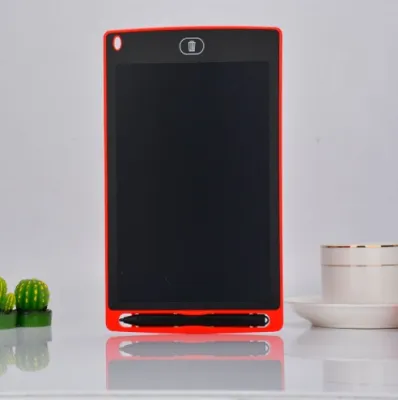

![[✅SG Ready Stock] 8.5 inch / 12 inch LCD Pad Writing Tablet For kidsKids Drawing Pad Portable Electronic Tablet Board](https://img.lazcdn.com/g/p/fee43f1d7f9017a12c1bc992432adbda.jpg_400x400q80.jpg_.webp)
![[SG LOCAL SELLER] 8.5 inch LCD Writing Tablet For kidsKids Drawing Pad Portable Electronic Tablet Board](https://img.lazcdn.com/g/p/306cec4854970feaf4decddf4bdadab7.png_400x400q80.png_.webp)
![[SG LOCAL SELLER] 12 inch LCD Pad Writing Tablet For kidsKids Drawing Pad Portable Electronic Tablet Board](https://img.lazcdn.com/g/p/750c5b36b2e9fed44d96d7335003e660.jpg_400x400q80.jpg_.webp)
![[𝐒𝐆 𝐒𝐞𝐥𝐥𝐞𝐫] BabySPA LCD Pad Writing Tablet for Kids Drawing Pad Portable Electronic Tablet Board](https://img.lazcdn.com/g/p/90ef1ba7a1468063b4497d64afd990c1.jpg_400x400q80.jpg_.webp)
Prices are valid at publication and may change. Please refer to the product page for the latest price.
These technological differences directly shape the tactile feedback and visual clarity of each board. The LCD pad offers a smooth, low-friction glide that mimics writing on smooth paper, producing sharp, high-contrast lines that are easy to read even in bright rooms. The magnetic board, however, provides a distinct physical resistance as the stylus drags across the plastic screen, and the resulting lines are naturally thicker and slightly fuzzy at the edges. This makes the magnetic board less suited for fine lettering but highly satisfying for broad, sweeping strokes.
Durability, Maintenance, and Battery Requirements
When selecting a kids writing pad, long-term upkeep and physical resilience are critical factors, especially for active households. LCD writing pads require a power source to operate their erase function, typically utilizing a small, replaceable lithium coin cell battery. While the screen itself consumes zero power while drawing, the erase mechanism draws a tiny amount of current each time the button is pressed. Parents should check the battery compartment design before buying; look for a secure, screw-fastened compartment to prevent young children from accessing the coin cell.

Magnetic drawing boards require absolutely no batteries, making them a highly reliable option for long road trips or outdoor play. However, they present a different maintenance challenge: the risk of lost accessories. Because magnetic boards rely heavily on specialized magnetic stamps and a dedicated magnetic stylus to function fully, losing these pieces can significantly limit the board’s play value. Look for models that feature securely tethered styluses and recessed, click-in storage slots for stamps to minimize this risk.
Physical durability also varies by design. LCD screens are made of flexible plastic that can withstand moderate drops, but they are susceptible to permanent scratching if scraped with sharp metal objects or non-approved pens. Magnetic boards are generally housed in thicker, bulkier plastic frames designed to absorb heavy impacts from floor play. When shopping, inspect the casing material—high-impact ABS plastic is a standard industry choice that offers excellent drop resistance for both types of pads.
Matching the Pad to Your Child's Activities
Aligning the writing pad with your child’s age and learning goals ensures the toy remains engaging over time. LCD writing pads are highly effective tools for structured learning activities. Because the stylus allows for fine, precise lines, these pads are ideal for primary school students practicing spelling lists, Chinese character stroke orders, or solving multi-step math equations. The smooth glide helps develop the fine motor control needed for traditional pencil-and-paper writing without wasting reams of physical paper.
Magnetic drawing boards are better suited for early childhood development and sensory play. Toddlers and preschoolers benefit greatly from the physical feedback of dragging the stylus and using geometric stamps (such as circles, triangles, and hearts) to learn shape recognition. The broad, forgiving lines of a magnetic board encourage freehand doodling and imaginative play where precision is not required. The physical sliding eraser also provides a satisfying cause-and-effect action that young children enjoy repeating.
Screen size and physical format also dictate where and how the pad is used. LCD pads are typically thin, lightweight, and highly portable, often measuring between 8.5 to 12 inches diagonally. They slide easily into a backpack or a car seat pocket, making them perfect for quiet entertainment during long commutes or while waiting at a restaurant. Magnetic boards tend to be bulkier, featuring wide plastic borders, carrying handles, and built-in stamp slots. While this makes them excellent for floor play or lap use at home, their bulk can make them cumbersome to pack for travel.
Side-by-Side Comparison Matrix
To help you quickly evaluate both options, the table below summarizes the key technical and functional differences between these two popular drawing tools.
| Feature | LCD Writing Pad | Magnetic Drawing Board |
|---|---|---|
| Erasing Method | One-click electronic button | Manual sliding magnetic bar |
| Power Requirement | Replaceable coin cell battery (for erasing) | Completely battery-free |
| Writing Precision | High (fine lines, pressure-sensitive) | Low to medium (thick, slightly fuzzy lines) |
| Accessory Dependency | Works with any plastic stylus or fingernail | Requires magnetic stylus and stamps |
| Typical Age Suitability | 4 years and older | 1.5 to 4 years |
Decision Framework: Which Kids Writing Pad to Choose
To finalize your choice, consider how your family’s daily routines and your child’s specific needs align with each technology.
Choose an LCD writing pad if:
- Your child is over the age of four and is actively practicing handwriting, spelling, or math.
- You prioritize a lightweight, ultra-thin design that fits easily into travel bags for outings.
- You want high-contrast, sharp lines that mimic the precision of a real pen.
- You are comfortable occasionally replacing a secured coin cell battery.
Choose a magnetic drawing board if:
- The primary user is a toddler or preschooler who is still developing basic grip and coordination.
- You prefer a completely battery-free toy with zero ongoing maintenance or electronic components.
- Your child enjoys tactile, stamp-based play and the physical action of a sliding eraser.
- The toy will primarily be used for floor play or stationary home activities where bulk is not an issue.
Verify first checklist:
- Safety Certifications: Look for clear labels indicating compliance with international toy safety standards (such as EN71 or ASTM F963) to ensure non-toxic plastics.
- Screen-Lock Feature: For LCD pads, verify the presence of a physical lock switch on the back, which prevents accidental erasure of your child's drawings.
- Stylus Attachment: Check if the stylus can be securely tethered to the board frame to prevent it from getting lost during travel.
Frequently Asked Questions (FAQ)
Are LCD writing pads safe for children's eyes?
Yes, high-quality LCD writing pads are designed to be safe for children’s eyes because they do not emit active blue light. Unlike tablets or smartphones, these screens rely entirely on reflected ambient light to make the drawings visible, meaning there is no backlighting shining directly into your child’s eyes. To verify eye safety before purchasing, check the product specifications for glare-reduction coatings and matte screen finishes. You can also perform an easy observable check: hold the pad under a bright room light to ensure the screen diffuses reflections rather than acting like a mirror, which helps prevent eye strain during extended drawing sessions.
Do magnetic drawing boards fade or lose magnetism over time?
The magnetic particles inside a drawing board do not naturally lose their magnetism under normal household conditions, but environmental factors can degrade performance. Exposing the board to extreme heat—such as leaving it inside a hot car parked in the sun—can warp the plastic casing or alter the viscosity of the internal liquid, causing the lines to look faint or blurry. Additionally, bringing strong external magnets (like heavy refrigerator magnets or magnetic building tiles) close to the screen can permanently disrupt the internal grid structure. To maintain the board’s longevity, store it in a cool, dry place and follow the manufacturer’s care instructions, checking periodically for any physical cracks that could leak the internal fluid.
Community discussion
Share your experience or ask a question. Comments are reviewed before publication.