
Choosing the right writing board for your child depends on their age, where they will use it, and your tolerance for cleanup. LCD writing tablets offer a highly portable, completely mess-free option for older toddlers and school-aged children who love drawing on the go. Magnetic drawing boards provide a tactile, durable, and safe play experience for younger toddlers who are still developing motor skills. Traditional whiteboards offer the largest canvas and multi-color flexibility, making them ideal for school-aged children practicing handwriting or working on structured lessons at home. By evaluating how each board handles mess, portability, and developmental needs, you can select the most appropriate tool to support your child’s creativity.
Core Mechanics and Key Comparison Factors
To make an informed choice, it helps to understand how these three distinct technologies operate. Each board uses a different physical mechanism to display and erase marks, which directly impacts how children interact with them and how long the boards last.
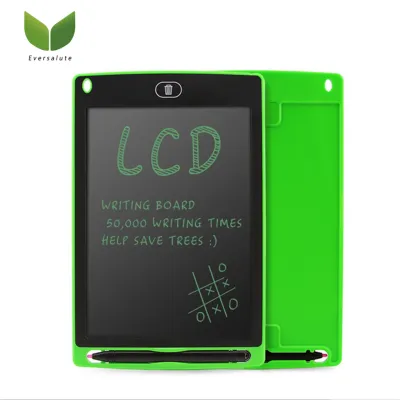
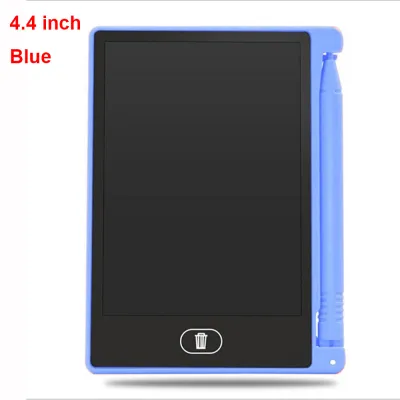
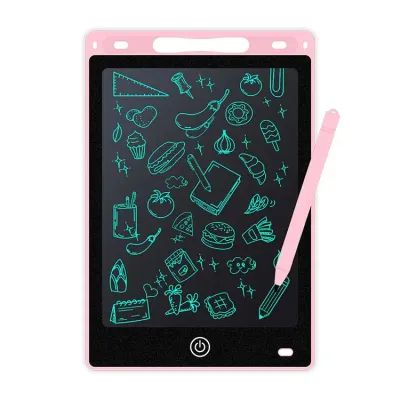
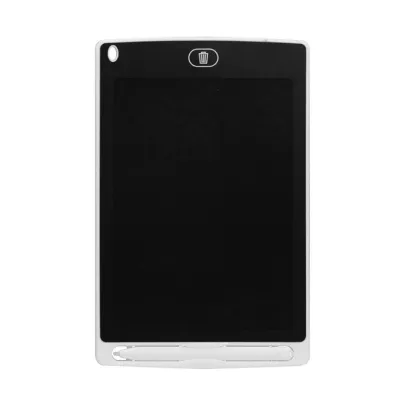
LCD writing tablets rely on a bistable liquid crystal display. When a child presses a plastic stylus against the screen, the pressure alters the alignment of the liquid crystals, allowing light to reflect and reveal a line. The screen requires no power to display the drawing; it only uses a small amount of battery power when the erase button is pressed, sending a tiny electrical signal to reset the crystals to their default state.
Products mentioned in this guide
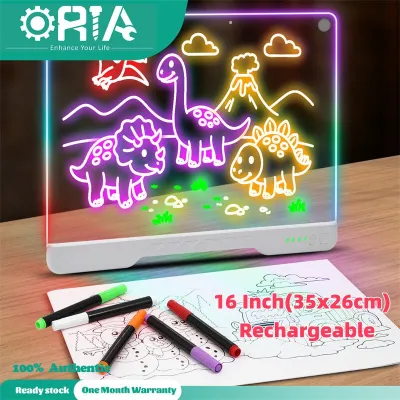
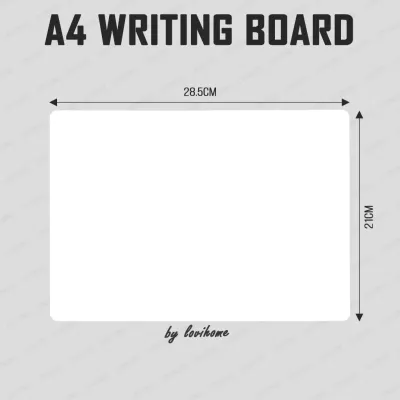
![[✅SG Ready Stock] 8.5 inch / 12 inch LCD Pad Writing Tablet For kidsKids Drawing Pad Portable Electronic Tablet Board](https://img.lazcdn.com/g/p/fee43f1d7f9017a12c1bc992432adbda.jpg_400x400q80.jpg_.webp)
Prices are valid at publication and may change. Please refer to the product page for the latest price.
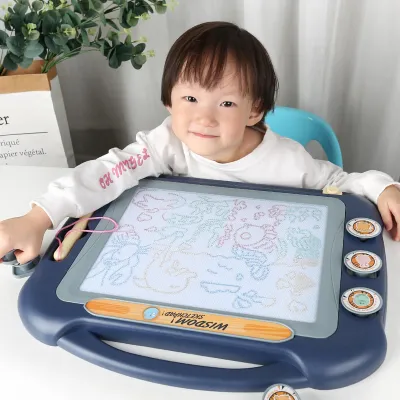
Magnetic drawing boards operate on a purely mechanical system. The board contains a grid filled with a thick liquid and tiny magnetic particles. When the magnetic stylus passes over the surface, it pulls these dark particles to the top of the grid, creating a visible line. Sliding the mechanical eraser bar across the back of the screen sweeps a magnet that pulls the particles back down, clearing the display.
Traditional whiteboards are the simplest of the three, consisting of a smooth, non-porous surface typically made of painted steel, melamine, or porcelain. Children write on this surface using dry-erase markers containing pigment dissolved in a fast-drying solvent. Once the solvent evaporates, a dry powder remains on the surface, which can be easily wiped away with a felt eraser or cloth.
Here is a comparison of the key decision factors to help you evaluate these options at a glance:
| Feature | LCD Writing Tablet | Magnetic Drawing Board | Traditional Whiteboard |
|---|---|---|---|
| Portability | High (thin and lightweight) | Moderate (bulky frame) | Low to Moderate (often stationary) |
| Mess Factor | Zero mess | Zero mess | Moderate (ink dust, marker stains) |
| Erasing Method | Instant push-button | Manual sliding bar | Manual wiping |
| Power/Consumables | Button cell battery | None | Markers and erasers |
| Recommended Age | 3 years and older | 1 to 4 years | 5 years and older |
Please note that specific screen sizes, magnetic strengths, and board dimensions vary significantly by manufacturer. It is always best to verify these physical specifications on the product packaging or manufacturer labels before making a purchase.
LCD Writing Tablets: Portability and Mess-Free Drafting
LCD writing tablets have become incredibly popular for families who need a lightweight, highly portable drawing solution. Because these devices do not use ink, paint, or chalk, they are completely mess-free, making them ideal for travel, long car rides, flights, or waiting rooms. A child can draw for hours without any risk of staining car upholstery, clothing, or furniture. The thin profile of these tablets allows them to slip easily into a backpack or diaper bag, providing an instant distraction whenever needed.

However, LCD tablets do have specific limitations that you should verify before buying. Most basic models only support single-color or pre-set rainbow gradient displays, meaning children cannot choose specific colors for different parts of their drawing. Additionally, standard models do not have a save or sync function; pressing the erase button clears the entire screen instantly, which can frustrate a child who wants to keep their creation. While some premium models offer lock switches to prevent accidental erasing, they still do not save the image permanently. You will also need to replace the small button cell battery periodically, though these batteries typically last for thousands of erases.
Safety and durability are critical when choosing an LCD tablet for young children. Because the screen is made of thin plastic layers, it has a specific pressure tolerance. Excessive force or sharp objects can permanently damage the liquid crystal layer, leaving dark spots that cannot be cleared. When shopping, inspect the battery compartment to ensure it is securely locked with a screw. This prevents young children from accessing the button cell battery, which poses a severe choking and chemical hazard.
Magnetic Drawing Boards: Tactile Play for Early Learners
For toddlers and early learners, magnetic drawing boards offer an excellent introduction to mark-making and fine motor control. These boards provide a highly tactile experience. Children can feel the slight pull of the magnet as they drag the pen across the surface, and they enjoy the physical feedback of sliding the eraser bar back and forth to clear their work. Because there are no screens to scratch or markers to dry out, magnetic boards require zero ongoing consumable costs and can withstand rough handling.
Despite their durability, magnetic boards have clear limitations in terms of drawing quality. The resolution is relatively low, and drawings often appear fuzzy or pixelated due to the honeycomb grid structure that holds the magnetic particles. Over time, some particles may get stuck, leading to faint grey lines or dark spots that do not fully disappear when erased. The mechanical sliding eraser can also require a bit of hand strength, which very young toddlers might find challenging without assistance.
When selecting a magnetic board, safety checks should be your top priority. Ensure that the magnetic stylus is securely tethered to the board with a durable cord so it cannot be lost or swallowed. Inspect the plastic frame and the sliding eraser mechanism for any loose small parts or sharp edges. A sturdy, well-constructed frame is essential, as a cracked casing could release the internal magnetic fluid or small magnetic components, presenting a serious safety risk.
Traditional Whiteboards: Multi-Color Practice and Larger Canvases
Traditional whiteboards are the standard choice for older children who are developing structured writing skills or working on school projects. Unlike LCD or magnetic boards, whiteboards allow for unlimited color customization. Children can use a wide variety of dry-erase marker colors to create detailed drawings, color-code spelling words, or solve multi-step math problems. The larger surface area of a wall-mounted or easel-style whiteboard provides ample space for collaborative play, tutoring sessions, or classroom-style practice at home.
The primary trade-off with a traditional whiteboard is the potential for mess and ongoing maintenance. Dry-erase markers can easily stain clothing, walls, and furniture if children wander away from the board. The markers also dry out quickly if left uncapped, leading to recurring costs for replacements. Additionally, whiteboards require a dedicated space in your home, whether mounted on a wall or set up on a floor easel, making them far less portable than handheld alternatives.
To keep a whiteboard in good condition, regular maintenance is required. Over time, marker residue can build up, causing “ghosting” where old drawings remain faintly visible. You can prevent this by wiping the board with a microfiber cloth and using a specialized whiteboard cleaning spray periodically. When buying markers for children, always check the labels to ensure they are certified non-toxic, low-odor, and washable to minimize stains and chemical exposure.
Decision Framework: Matching the Board to Your Child's Needs
Choosing the right writing board comes down to matching the product’s features with your child’s age, environment, and specific activities. By focusing on how and where the board will be used, you can make a practical choice that keeps your child engaged without adding unnecessary cleanup to your daily routine.
An LCD writing tablet is often the most practical fit if portability and a completely mess-free experience are your top priorities. If you travel frequently, dine out often, or need a quiet activity for the car, the lightweight design and instant-erase feature of an LCD tablet make it an invaluable travel companion. It is best suited for children aged three and older who can handle a stylus gently and understand not to press too hard on the screen.
A magnetic drawing board is a highly suitable choice for toddlers aged one to four. At this developmental stage, children benefit immensely from tactile play and repetitive actions. The durable plastic construction can handle being dropped, and the lack of loose parts or staining inks makes it a safe option for independent play while parents are busy nearby.
A traditional whiteboard is well-suited for school-aged children who need a larger canvas for learning. If your child is practicing handwriting, working on spelling lists, or needs a visual aid for homework, a whiteboard offers the necessary space and color variety. This option works best if you have a dedicated study area or playroom where marker use can be supervised to prevent accidental wall drawings.
Before making your final decision, verify if your child has specific sensory preferences. Some children find the smooth glide of a marker on a whiteboard highly satisfying, while others prefer the physical feedback of a magnetic pen. Additionally, consider your home’s layout; if you do not have a designated space where marker stains can be easily managed, sticking to a mess-free LCD or magnetic board is often the most practical path.
Frequently Asked Questions (FAQ)
Can LCD writing tablets be repaired if the screen cracks?
No, LCD writing tablets generally cannot be repaired if the screen cracks or suffers severe pressure damage. The liquid crystal display is sealed during manufacturing, and any breach of the outer plastic layers destroys the screen’s ability to align the crystals. If the screen is cracked, the tablet will need to be replaced entirely. Before purchasing, it is wise to check the manufacturer’s warranty terms and return policies to see if they cover accidental damage or manufacturing defects.
Are whiteboard markers safe for young children?
Whiteboard markers can be safe, but they require careful selection and supervision. Many standard dry-erase markers contain solvents that emit strong odors and can cause skin irritation or respiratory discomfort in enclosed spaces. When buying markers for children, always look for labels certifying that the product is non-toxic, low-odor, and specifically formulated for kids. It is highly recommended to supervise young children during use to prevent them from putting the markers in their mouths or drawing on skin and clothing.
Do magnetic drawing boards lose their magnetism over time?
The internal magnetic particles in a drawing board do not typically lose their magnetic charge under normal household conditions. However, the overall functionality of the board can degrade over time due to mechanical wear. The sliding eraser mechanism may become loose, or the magnet inside the stylus may lose its strength if dropped repeatedly. If you notice the screen is not clearing fully or the lines are becoming faint, it is usually a sign of physical wear on the mechanical parts rather than a loss of magnetism. Checking user reviews for mechanical durability before buying can help you avoid boards prone to early wear.
Community discussion
Share your experience or ask a question. Comments are reviewed before publication.