
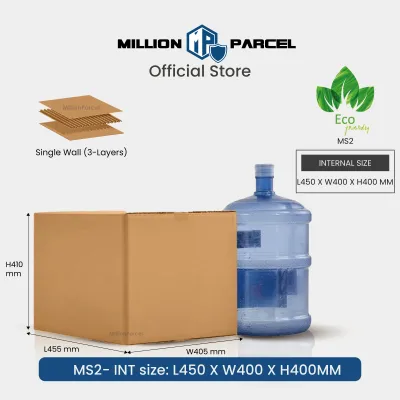
Selecting the right container for household goods is a balancing act between volume and weight. Large moving boxes are designed specifically to accommodate high-volume, low-density items that would otherwise require multiple smaller containers. While their spacious dimensions make them highly efficient for clearing out closets and storage areas, their physical size often tempts packers to overfill them with heavy items. This structural mismatch is a primary cause of box failure, leading to torn handles, ruptured bottoms, and damaged belongings during transit.
To ensure a successful move, especially when navigating the long corridors, lifts, and trolley transfers typical of high-rise living, understanding the limits of your packaging materials is essential. Cardboard is a paper-based medium that reacts dynamically to weight, distribution, and environmental factors like humidity. By matching the correct household items to these larger containers and verifying their structural limits, you can protect your possessions and make the lifting process safe for everyone involved.
Ideal Items for Large Moving Boxes
Large moving boxes are most effective when filled with bulky, lightweight household goods. High-volume, low-density items are perfect because they fill the box’s capacity without pushing the total weight past a safe lifting threshold. Excellent candidates include bedding, pillows, winter clothing, linens, towels, and plush toys. These items naturally absorb shock, conform to the shape of the box, and keep the overall package light enough for easy carrying.
Products mentioned in this guide
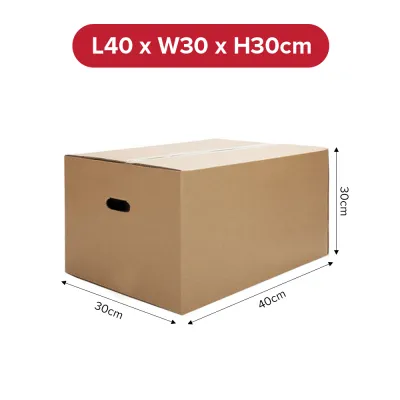
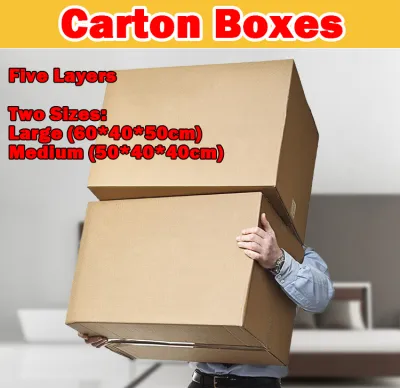
Prices are valid at publication and may change. Please refer to the product page for the latest price.
Irregularly shaped but lightweight items also belong in these larger containers. Items such as lampshades, decorative cushions, empty plastic storage bins, and lightweight silk flower arrangements are difficult to pack in smaller boxes without bending or crushing. Placing them in a large box provides the necessary physical clearance while keeping the container’s center of gravity stable. When packing these items, place the sturdiest pieces at the bottom and use softer items, like pillows or clothing, to fill the surrounding gaps.
Conversely, there are several items you must never pack in a large moving box. Books, dense files, small kitchen appliances, canned goods, and liquids should be kept far away from large containers. Packing these dense objects into a large space creates concentrated weight that easily compromises the box floor. Even if the cardboard does not rupture immediately, the sheer mass makes the box incredibly difficult to lift safely, increasing the risk of personal injury or accidental drops.
Understanding Weight Limits and Box Capacity
To determine the safe weight capacity of a large moving box, you must look at its manufacturing specifications. Most high-quality corrugated boxes feature a circular stamp printed on a bottom flap, known as the Box Manufacturer’s Certificate (BMC). This stamp provides critical data, including the Edge Crush Test (ECT) rating or the burst strength. A standard large box often has a rating of 32 ECT, which indicates its resistance to crushing when stacked, while heavy-duty versions may feature 44 ECT or higher. The certificate also lists a maximum gross weight limit, which is the absolute limit the box can support under ideal laboratory conditions.

However, the structural paradox of large boxes is that their generous volume makes it incredibly easy to exceed these limits. While a box might be rated to hold up to 30 kilograms on paper, packing it to that limit makes manual handling highly impractical and risky. For residential moves, a practical working limit of 15 to 20 kilograms is generally recommended for a large box. This ensures the container remains manageable for a single person or a pair of movers to lift without straining.
Before lifting any packed box, you should perform observable physical checks to identify potential overloading. Watch for bottom sagging, where the center of the bottom flaps bows downward under pressure. Look for side bulging, which indicates that the contents are pressing outward against the vertical walls, weakening the box’s stacking strength. Other warning signs include handle tearing or audible cracking sounds when you first attempt to lift the box. If any of these signs are present, you must unpack the box and redistribute the weight immediately.
Packing Strategies to Prevent Box Failure
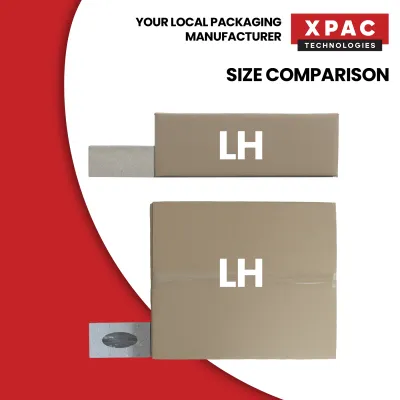
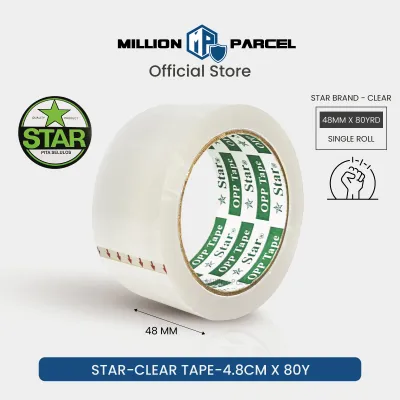
Maintaining the structural integrity of a large box requires proper assembly and reinforcement. The foundation of a strong box is the way it is taped. Avoid simply folding the flaps over one another, as this offers zero structural support. Instead, use high-quality packaging tape designed specifically for corrugated cardboard. Apply the tape in an “H-pattern” by sealing the center seam first, extending the tape at least three inches up the sides of the box. Next, seal the exposed side edges of the flaps to prevent them from catching on surfaces or peeling open during transit.
Weight distribution inside the box is equally important. Never allow a single heavy item to rest directly on the center of the bottom panel without surrounding support, as this concentrates the downward force on the weakest point of the tape seam. If you must pack slightly heavier items within a large box, place them flat along the bottom to distribute the load across the entire surface area. Always place the lightest, most compressible items at the very top of the box.
Finally, eliminate any empty space inside the container. Void fill is crucial because shifting items can cause sudden impact stress on the box walls when the box is tilted or carried. If there are empty pockets, the box is also highly susceptible to collapsing when another box is stacked on top of it. Use crumpled packing paper, bubble wrap, or even clean towels and t-shirts to fill every gap until the contents are snug and cannot move when the box is gently shaken.
When to Choose Alternative Packaging
There are many scenarios where a large moving box is simply the wrong tool for the job. Recognizing these situations early will save you from damaged belongings and broken boxes. For dense, high-weight items like books, hand tools, or vinyl records, you should always opt for small or medium heavy-duty boxes. These smaller containers naturally limit the volume of items you can pack, keeping the total weight within a safe, liftable range of 10 to 15 kilograms.
For large, fragile, or high-value items, standard corrugated boxes do not offer adequate protection. Items like large mirrors, framed artwork, and flat-screen televisions require specialized packaging. Mirror boxes, which feature telescoping sections to fit flat items snugly, or custom-built wooden crates provide the rigid external support needed to prevent bending and glass breakage. Whenever possible, use the original manufacturer packaging for electronics, as it contains custom-molded foam designed specifically for that item’s dimensions.
Oversized items that cannot fit entirely within a box or cannot be supported internally should not be forced into a large moving box. Attempting to tape multiple boxes together to cover an oversized item often results in a weak structure that collapses under pressure. Instead, protect these items using alternative wrapping methods, such as heavy-duty moving blankets, bubble wrap, and stretch wrap. This approach shields the surfaces from scratches and dust while allowing movers to grip the item’s natural lifting points directly.
Frequently Asked Questions (FAQ)
Can I pack books or heavy appliances in a large moving box?
No, you should avoid packing books, heavy files, or kitchen appliances in a large moving box. While the box has the physical volume to hold these items, the concentrated weight will quickly exceed the cardboard’s structural limits. This makes the box extremely difficult to lift safely and increases the risk of the bottom flaps collapsing. Use small, heavy-duty boxes for these dense items to keep the weight manageable.
How should I tape the bottom of a large box to prevent it from breaking?
To secure the bottom of a large box, use the H-taping method with high-quality packaging tape. First, tape down the center seam where the two main flaps meet, running the tape several inches up the sides of the box. Then, apply tape along the two side seams where the outer flaps meet the box edges. This seals all open seams, distributes the weight load evenly, and prevents the flaps from peeling open.
What is the difference between single-wall and double-wall corrugated boxes?
Single-wall boxes consist of one layer of fluted paper sandwiched between two flat linerboards, making them lightweight and suitable for standard household items like clothing and linens. Double-wall boxes feature two layers of fluting and three linerboards, which provides significantly higher puncture resistance, stacking strength, and weight capacity. Always check the manufacturer’s stamp on the box to verify which type you are using.
Community discussion
Share your experience or ask a question. Comments are reviewed before publication.