
Determining which Japanese notebook brand offers “better” paper quality depends entirely on your primary writing instruments and personal preferences. Kokuyo Campus is widely recognized for its consistent manufacturing, flat-opening binding, and optimization for everyday gel and ballpoint pens. However, other Japanese brands may offer specialized paper treatments tailored for fountain pens, ultra-thin high-opacity formats, or distinct surface textures. Rather than declaring a single winner, this guide provides a framework to match specific paper characteristics with your exact writing needs.
When evaluating paper quality, it is easy to get lost in subjective marketing terms. In reality, the performance of any notebook is the result of a physical interaction between the paper fibers, the sizing agents used during manufacturing, and the specific ink or graphite you apply. Understanding these variables allows you to select a notebook that enhances your writing experience rather than causing frustration with smudged ink or torn pages.
Defining Paper Quality Standards for Your Writing Tools
To establish an objective basis for comparison, you must look at how paper is constructed. The first key specification is paper weight, typically measured in grams per square meter (gsm). While a higher gsm often indicates a thicker, more opaque sheet that resists show-through (ghosting), weight alone does not determine how well paper handles ink. Thin papers can be engineered with high-density fibers to offer excellent opacity and bleed resistance, while some thick papers may absorb ink too quickly, leading to feathering.
Products mentioned in this guide
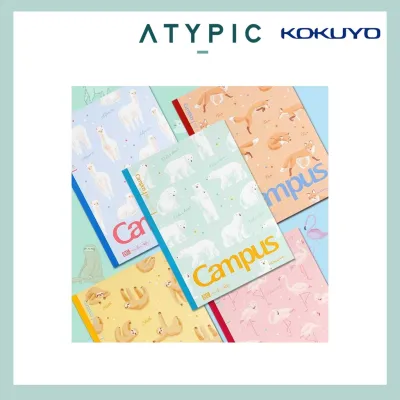
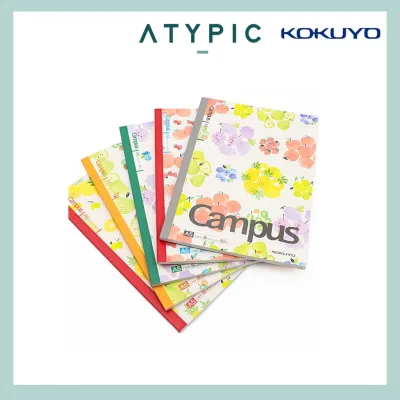
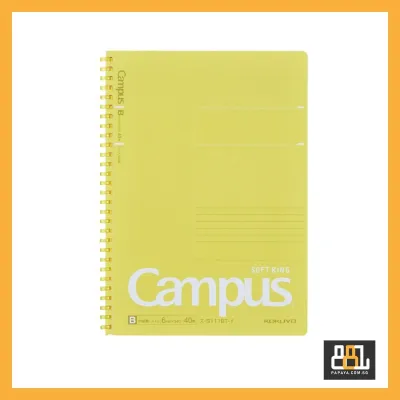
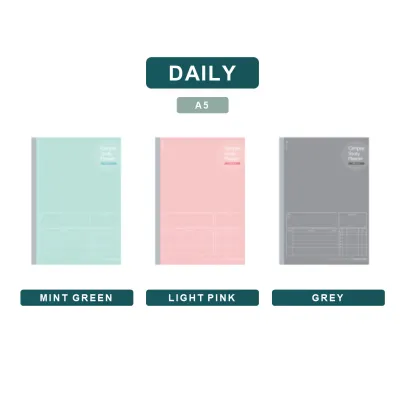
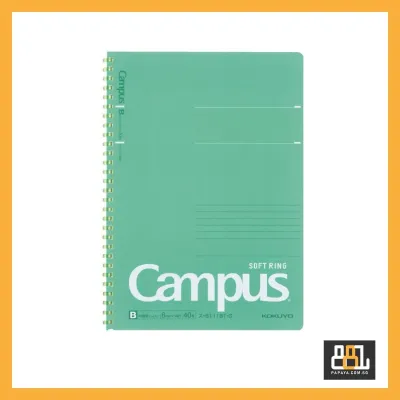
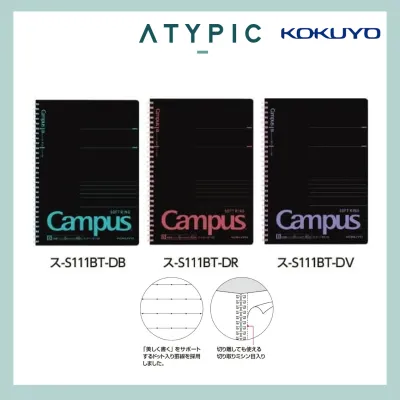
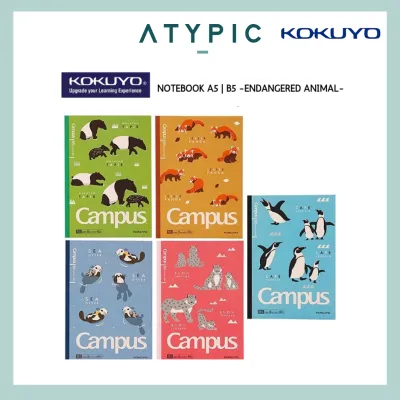
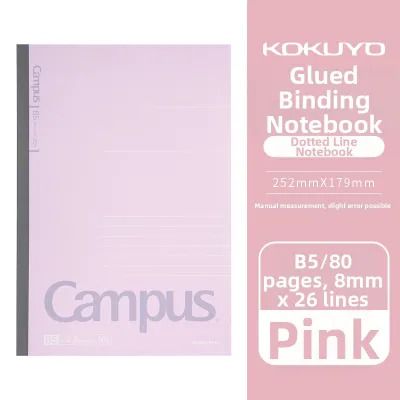
Prices are valid at publication and may change. Please refer to the product page for the latest price.
Surface texture, or “tooth,” is another critical factor. Smooth finishes are achieved through a process called calendering, where the paper is pressed between heavy rollers during manufacturing. This creates a slick surface that allows fine-tip gel pens and fountain pens to glide effortlessly without catching. Conversely, a toothy surface retains a slight texture that provides physical feedback. This resistance is highly beneficial for mechanical pencils and ballpoint pens, as it prevents the tip from slipping and gives you greater control over your handwriting.
Finally, ink interaction determines how the paper behaves when wet. Sizing agents—chemicals added to the paper pulp or applied to the surface—control how quickly the paper absorbs liquid. Highly sized papers resist absorption, keeping the ink on the surface where it dries into crisp, vibrant lines. This is essential for preventing feathering (where ink spreads along the paper fibers) and bleed-through (where ink penetrates to the reverse side). However, the trade-off for high bleed resistance is often a longer drying time, which can lead to smudging, particularly for left-handed writers.
Kokuyo Campus Paper Characteristics and Variations
The standard Kokuyo Campus notebook is engineered as a versatile, everyday workhorse. The paper used in these notebooks is designed to accommodate the most common writing instruments found in schools and offices, such as gel ink pens, ballpoint pens, and mechanical pencils. It strikes a deliberate balance between smoothness and absorption. This means that while gel ink dries relatively quickly to prevent smudging during fast-paced note-taking, the paper still maintains enough surface tension to prevent standard inks from feathering.

Beyond the standard lineup, Kokuyo offers specialized paper variations that cater to specific tactile preferences. When browsing these notebooks, you will often find labels indicating “Sarasara” or “Shikkari” paper. The “Sarasara” variant is formulated for an ultra-smooth, low-friction writing experience, making it ideal for those who write quickly with gel pens or fine-liner pens. The “Shikkari” variant, on the other hand, features a slightly rougher texture designed to provide feedback, making it the preferred choice for mechanical pencils and ballpoint pens where precision and control are paramount.
Another defining characteristic of the Kokuyo Campus line is its binding technology. Many Campus notebooks utilize a specialized wireless adhesive binding. Unlike traditional stapled or tightly stitched spines, this method allows the notebook to open completely flat on your desk. This flat-opening design is not just a matter of convenience; it ensures that you can write comfortably across the entire width of the page, including the inner margins, without having to hold the pages down or deal with a curved writing surface.
Evaluating Alternative Japanese Notebook Brands
While Kokuyo Campus excels at everyday versatility, alternative Japanese notebook brands often target highly specialized writing niches. For instance, writers who exclusively use fountain pens frequently seek out brands that utilize high-density, heavily sized papers. These specialized papers are designed to handle wet, slow-drying fountain pen inks without allowing the ink to bleed through to the other side of the page. The sizing keeps the ink sitting on top of the paper, which preserves the sharp edges of your writing and allows unique ink properties, such as shading and metallic sheen, to become visible.
Another major category of alternative Japanese paper is the ultra-thin, high-opacity format. These papers are engineered for high-volume notebooks, journals, and planners where keeping the overall thickness of the book manageable is a priority. Despite being incredibly thin—often resembling Bible paper—these sheets undergo specialized manufacturing processes that pack the fibers tightly together. This high density prevents ink from bleeding through, though some degree of show-through (ghosting) is normal and expected due to the thinness of the sheet.
For artists, designers, and those who prefer graphite, other Japanese brands focus on creating textured, toothy papers. These papers are designed to shave off microscopic amounts of graphite or colored pencil lead as you write, resulting in rich, dark lines and excellent erasability. To verify these characteristics before purchasing, always check the manufacturer’s product descriptions or packaging labels for specific paper names, weight specifications, and recommended writing instruments.
Paper Trait Comparison Matrix
The following matrix summarizes how typical Kokuyo Campus paper compares to specialized alternative Japanese notebook brands across key performance dimensions.
| Paper Trait | Kokuyo Campus Typical Profile | Alternative Brand Focus | Best Suited For |
|---|---|---|---|
| Surface Smoothness | Balanced; options for ultra-smooth (Sarasara) or textured (Shikkari). | Often highly specialized (either glass-like smooth or distinctly toothy). | Everyday multi-pen users (Campus); specialized pen enthusiasts (Alternatives). |
| Ink Drying Speed | Moderate to fast; optimized to prevent smudging during quick writing. | Often slower; designed to let wet inks pool and dry on the surface. | Students and fast note-takers (Campus); slow, deliberate writers (Alternatives). |
| Fountain Pen Compatibility | Good for fine/medium nibs; may show minor ghosting with very wet inks. | Excellent; engineered specifically to resist feathering and show off sheen. | General writing (Campus); dedicated fountain pen journaling (Alternatives). |
| Paper Weight & Thickness | Standard notebook weight; durable and opaque for double-sided writing. | Ranges from ultra-thin planner sheets to heavy, premium art paper. | Standard school/office work (Campus); compact planners or heavy sketching (Alternatives). |
Decision Framework: Choosing the Right Notebook
To choose the right notebook, you must align your primary writing tool with the paper’s physical properties. If your daily writing routine involves gel pens, ballpoint pens, or mechanical pencils, and you require a notebook that lies perfectly flat on your desk for structured note-taking, Kokuyo Campus is an exceptional choice. Its balanced paper formulation ensures that your everyday inks dry quickly enough to avoid smudging, while the flat-opening binding maximizes your usable writing space.
Conversely, you should look toward alternative Japanese brands if your writing habits demand specialized paper performance. If you write primarily with wet fountain pens and want to highlight the unique color variations and sheening properties of your inks, a high-density, heavily sized paper will serve you better. Similarly, if you are looking for a compact, multi-page planner or journal that won’t bulk up your bag, an ultra-thin format is the ideal solution.
Before making a final decision, always verify your specific requirements. If you plan to switch to a new ink type, use a particularly wet pen, or require archival-grade paper that will not yellow over time, check the manufacturer’s specifications. Testing a single notebook or a sample sheet under your typical writing conditions is the most reliable way to ensure compatibility before investing in a bulk purchase.
Purchasing Guide and Pre-Purchase Verification
When purchasing Japanese notebooks online or in-store, paying close attention to product specifications is essential to avoid compatibility issues. First, verify the paper size standard. Japanese notebooks commonly use Japanese Industrial Standards (JIS) sizes, such as JIS B5 or JIS A5. It is important to note that a JIS B5 notebook (182 mm x 257 mm) has different dimensions than an ISO B5 notebook. Always check the exact millimeter measurements listed on the product page, especially if you are buying a separate cover or organizer.
Next, examine the ruling format. Japanese notebooks offer a variety of ruling styles, including standard lined (often labeled as A-rule for 7mm or B-rule for 6mm), dot grid, and section grid. Check the packaging labels or online product descriptions for these specific codes to ensure you get your preferred spacing.
Finally, confirm the binding type and page count. Whether you prefer a glue-bound notebook that opens flat, a spiral-bound option for easy page turning, or a staple-bound booklet for portability, verifying these details beforehand ensures the notebook fits your specific workflow.
Frequently Asked Questions (FAQ)
What is the difference between JIS and ISO paper sizes in notebooks?
The primary difference lies in the dimensional standards used. While ISO (International Organization for Standardization) sizes like A4 and A5 are globally common, Japanese notebooks frequently use JIS (Japanese Industrial Standards) sizes. A JIS B5 notebook, for example, measures 182 mm x 257 mm, which is slightly larger than an ISO B5 notebook. Because of these variations, you should always check the exact millimeter dimensions of a notebook before purchasing aftermarket covers, pencil boards, or binder refills to ensure a perfect fit.
How can I test a new notebook's paper quality without ruining it?
To safely test a new notebook’s compatibility with your pens, use the very last page or a designated index page at the back of the book. Write a few test lines using your most common writing instruments, applying normal writing pressure. Observe how quickly the ink dries to assess smudging resistance. After a few minutes, turn the page over to check for show-through (ghosting) or bleed-through (ink penetrating the paper). This simple, reversible test allows you to evaluate the paper’s performance without compromising the main pages of your notebook.

Community discussion
Share your experience or ask a question. Comments are reviewed before publication.