
Selecting the right fastener can make or break a sewing project, especially when working with specialized closures like Kam snaps. These popular plastic and metal fasteners are categorized by “T” numbers, such as T3, T5, and T8, which indicate the physical dimensions of the snap cap and the length of the attachment prong. Choosing the correct size ensures that your closure holds securely without tearing the fabric, puckering, or falling off during daily use.
To make an accurate decision, you must evaluate both the weight of your fabric and the total thickness of the layers you plan to join. While standard sizing charts offer a helpful starting point, the ultimate success of your installation depends on matching the snap’s physical dimensions to your specific material combination.
Decoding Kam Snap Sizes: What T3, T5, and T8 Actually Mean
The “T” in Kam snap sizing historically refers to “Taille” or trade size, serving as a standardized numbering system to classify the physical dimensions of the fasteners. The number following the “T” directly correlates with the cap diameter and the corresponding prong length. As the number increases, both the cap diameter and the overall heavy-duty capacity of the snap increase, making it easy to scale your fasteners to the size of your project.
Products mentioned in this guide
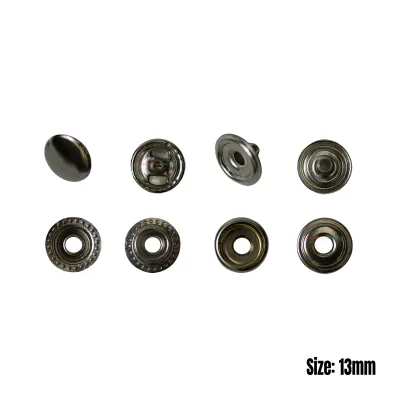
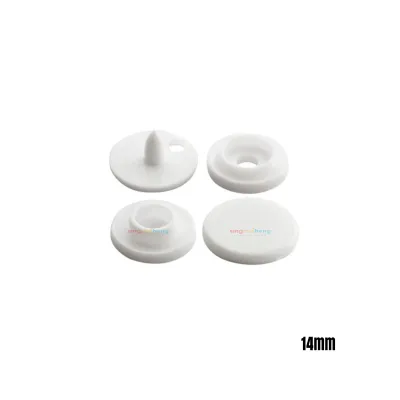
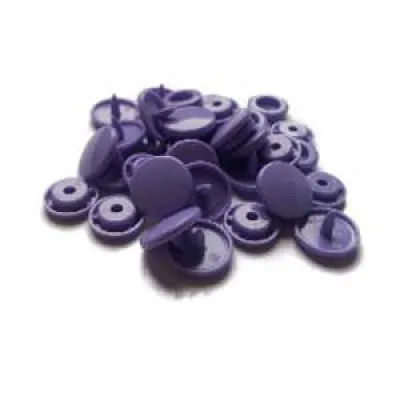
Prices are valid at publication and may change. Please refer to the product page for the latest price.
The three most common sizes you will encounter in haberdashery are T3, T5, and T8. T3 snaps are the smallest of the trio, featuring a cap diameter of approximately 10.7 mm. T5 snaps serve as the industry standard and are the most widely used, measuring around 12.4 mm in cap diameter. T8 snaps are the largest and most robust, typically measuring 14 mm or more, designed specifically for heavy-duty applications that require a strong, physical grip.
While the cap diameter is the most visible difference, the “T” size also dictates the available prong lengths. The prong is the central spike on the underside of the cap that pierces the fabric and locks into the socket or stud. Larger snap sizes naturally feature thicker and longer prongs to accommodate heavier materials. Although these snaps are available in a vast array of colors, finishes, and materials—such as polyacetal plastic or brass—these aesthetic variations do not alter the fundamental sizing mechanics or installation requirements.
How to Match Prong Length to Your Fabric Thickness
Achieving a secure, professional finish requires a precise match between the snap’s prong length and the total thickness of your fabric stack. This stack includes not just the primary fabric, but also any interfacing, batting, lining, or stabilizer layers. For a snap to install correctly, the prong must be long enough to pass entirely through the fabric layers with enough excess tip remaining to be flattened or flared by your installation tool.

If the prong is too short, the tip will not penetrate far enough through the fabric to catch the socket or stud. This results in a weak connection where the snap components will easily pull apart or fall off after just a few uses. Conversely, if the prong is too long, the excess material will bend or pucker during compression. This can cause the snap to sit crookedly, create sharp edges, or even pierce through the opposite side of the cap, ruining the clean look of your project.
To prevent these issues, always check the manufacturer’s specifications for the recommended fabric thickness range of each snap size. Because fabric density and compressibility vary wildly—such as comparing a dense canvas to a lofty fleece—you should never rely on measurements alone. Always perform a test installation on a scrap piece of your exact fabric stack, including any interfacing, to verify that the snap compresses smoothly and holds firmly without distorting the surrounding material.
Quick-Reference Guide: Matching Sizes to Sewing Projects
When planning your next sewing project, matching the snap size to the weight and function of your fabric is essential for durability. In warm, humid climates like Singapore, crafters often work with lightweight, breathable textiles that require careful fastener selection to avoid fabric damage.
T3 snaps are best suited for lightweight fabrics and delicate items where a small footprint is preferred. They are ideal for doll clothes, delicate baby garments (such as rompers made of lightweight cotton voile or double gauze), and small, low-stress accessories like cardholders. Because these fabrics have delicate fibers, the smaller prong of the T3 minimizes the risk of tearing the weave.
T5 snaps are the versatile standard for everyday sewing and haberdashery. They provide the perfect balance of holding power and ease of use for items like cloth diapers, standard baby bibs, medium-weight clothing, hand towels, and everyday pouches. If you are unsure which size to start with for general crafting, T5 is almost always the most reliable choice.
T8 snaps are reserved strictly for heavy-duty items that must withstand significant tension or consist of dense, thick materials. Typical applications include heavy canvas bags, outerwear, upholstery, straps, and utility gear. The large cap and thick prong of the T8 ensure that the fastener remains secure even when subjected to constant pulling and packing.
While these categories serve as an excellent general guide, always remember that the final decision must be verified against the actual measured thickness of your specific fabric stack. If your fabric is exceptionally dense or highly compressible, you may need to adjust your snap size accordingly.
How to Measure and Verify Your Snaps Before Installation
It is common for loose snaps to become mixed up in storage bins, especially when packaging is lost or discarded. Before starting an installation, you can easily verify the size of your snaps using digital calipers or a precise ruler. Measure the outer diameter of the cap; a measurement of roughly 10.7 mm indicates a T3, 12.4 mm indicates a T5, and 14 mm or larger indicates a T8.
Next, measure the prong length from the flat underside of the cap to the very tip of the pointed spike. This measurement will help you confirm whether the prong is suitable for your fabric thickness. Ensure that the prong extends approximately 1.5 mm to 2 mm beyond your compressed fabric stack to allow for proper flaring during installation.
Finally, always verify that your installation tools are compatible with the specific snap size you are using. Hand pliers and table presses utilize interchangeable dies or press attachments designed to cradle the exact curve and diameter of each cap size. Attempting to install a T5 snap using a T3 die will cause the cap to slip, resulting in a crushed or misaligned snap that cannot close properly.
Frequently Asked Questions (FAQ)
Do T3, T5, and T8 snaps use the same installation tools?
While the main body of your hand pliers or table press remains the same, you must use the correct interchangeable die or press attachment for each specific snap size. The die must match the cap diameter of the snap to hold it securely in place during compression. Using an incorrect die size will unevenly distribute pressure, leading to crushed caps, bent prongs, or failed installations.
Can I use a longer prong for thin fabric if I trim it down?
It is highly recommended that you do not trim plastic prongs down to fit thinner fabrics. Trimming the prong alters the engineered shape of the tapered tip, which is designed to melt or mushroom down evenly under pressure. A trimmed prong often splits, fails to secure the socket or stud properly, or leaves sharp, jagged plastic edges that can scratch skin or snag delicate fabric. Instead of trimming, use the correct snap size or add a layer of fabric stabilizer or interfacing to build up the thickness of your fabric stack.
Community discussion
Share your experience or ask a question. Comments are reviewed before publication.