
Selecting the right air dry clay for your crafting projects depends heavily on how the material behaves under your hands, during the curing process, and after it has fully dried. Jovi air dry clay is a widely available option that many crafters consider for its accessibility and traditional clay-like feel. However, determining whether it is the right choice for your specific sculpting, modeling, or school projects requires comparing its physical properties against other mainstream brands. By evaluating key characteristics such as workability, shrinkage rates, and post-drying durability, you can make an informed decision that aligns with your creative goals and workspace conditions.
In regions with high humidity, such as Singapore, the performance of air dry clay can vary from standard manufacturer guidelines. Moisture in the air slows down the evaporation process, which directly impacts curing times and structural integrity. Therefore, understanding how to test and verify these materials in your local environment is essential for achieving consistent, crack-free results. This guide provides a practical framework to help you evaluate Jovi and other popular modeling clays, ensuring your finished pieces remain durable and vibrant over time.
Essential Criteria for Comparing Air Dry Clays
To make an objective comparison between different air dry clays, you must establish a consistent set of evaluation criteria based on observable physical traits. The first and most critical factor is workability and texture. High-quality clay should feel pliable and smooth straight out of the packaging, allowing you to knead and shape it without immediate crumbling. Elasticity determines how far the clay can be stretched or rolled thin before it tears, which is vital for delicate details like flower petals or intricate figurines. You should also observe how easily the clay joins to itself; a material that requires excessive water to bond can become muddy and prone to structural weakness.
Products mentioned in this guide
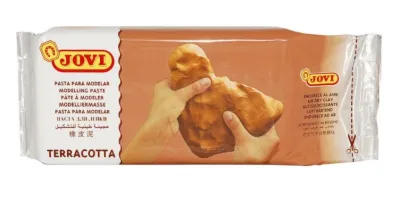
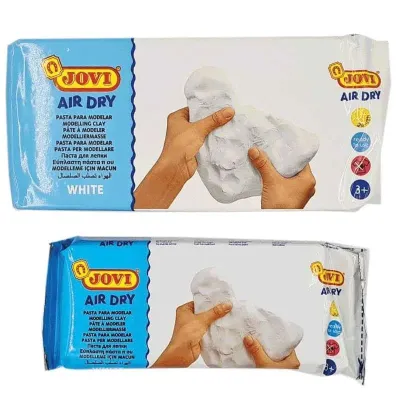
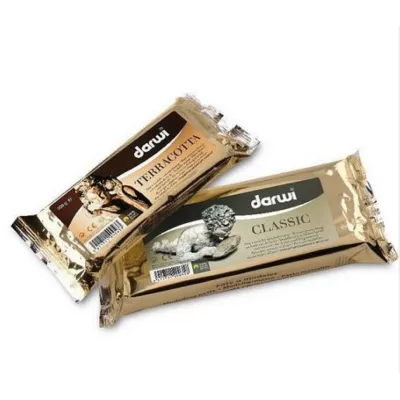
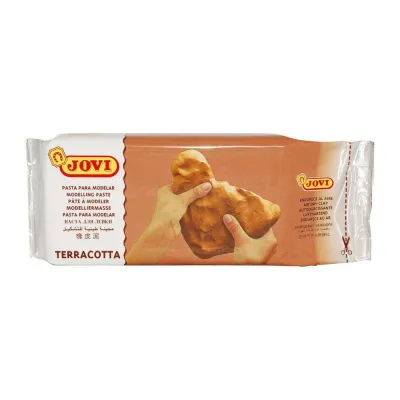
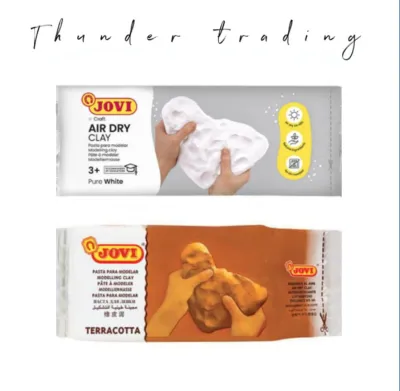
Prices are valid at publication and may change. Please refer to the product page for the latest price.
Drying time and shrinkage are equally important dimensions that are governed by the clay’s formulation. As water evaporates from the clay body during the curing process, the overall dimensions of your sculpture will decrease. This shrinkage can cause tension within the piece, leading to cracks, especially if the outer layer dries much faster than the core. Reviewing the manufacturer’s label for estimated drying times and shrinkage percentages provides a baseline, but these figures must always be verified against your actual workspace conditions.
Finally, post-drying durability determines how well the finished object will withstand handling and subsequent decorative steps. Once fully cured, the clay should offer a solid, carvable surface that can be sanded smooth without excessive shedding or powdering. It must also demonstrate compatibility with common craft mediums, such as acrylic paints, water-based varnishes, and protective sealants. A clay that remains overly brittle or reacts poorly to surface coatings will limit your ability to achieve a professional, long-lasting finish on your crafting projects.
Evaluating Jovi Air Dry Clay for Your Projects
When working with Jovi air dry clay, the initial experience begins with its tactile properties straight from the sealed package. This clay typically presents a dense, clay-like consistency that closely mimics traditional kiln-fired earthenware. It is generally moist and ready to use, requiring only a brief kneading session to achieve optimal pliability. Crafters should observe whether the clay leaves a heavy residue on their hands or tools, as this can indicate a high water-to-solid ratio, which may lead to greater shrinkage during the drying phase.

According to manufacturer specifications, Jovi air dry clay is designed to dry naturally in the air without the need for baking or firing. The packaging typically recommends a drying period of 24 to 48 hours, depending on the thickness of the sculpted piece and the ambient humidity. For projects exceeding a thickness of one centimeter, it is advisable to build the clay over a lightweight internal support, or armature, to ensure even drying and to prevent the interior from remaining wet while the exterior hardens. Proper storage of unused clay is also critical; any leftover material must be wrapped tightly in plastic film and stored in an airtight container to prevent premature curing.
Compatibility with finishing materials is another key aspect to verify when using this brand. Once the clay is completely dry, its surface becomes porous, making it highly receptive to acrylic paints, tempera, and poster colors. However, because the cured clay remains sensitive to moisture, applying a protective varnish or sealer is necessary to shield the finished piece from humidity and dust. Before applying any solvent-based coatings, it is best to test a small, dried scrap of the clay to ensure the chemical binders do not soften or discolor the surface.
How Jovi Stacks Up Against Other Mainstream Brands
Comparing Jovi to other popular air dry clays requires a systematic approach, as different brands utilize varying binders, fibers, and fillers. To evaluate texture and detail retention, you can conduct small test batches using identical molds or sculpting tools. Some mainstream brands offer ultra-lightweight, resin-based formulas that feel spongy and elastic, which contrast sharply with Jovi’s heavier, mineral-based composition. While lightweight clays are excellent for flexible, bounce-resistant items, mineral-based clays like Jovi are generally preferred for projects requiring a solid, substantial weight and a traditional ceramic feel.
Shrinkage and cracking tendencies vary widely across different brands and are heavily influenced by the raw materials used. Mineral-based clays tend to shrink more noticeably than their lightweight, synthetic counterparts as the water content evaporates. To perform a simple shrinkage test, roll out a flat strip of clay from each brand to a precise length, such as 10 centimeters, and allow them to dry completely under identical conditions. Measuring the dried strips will reveal the exact shrinkage percentage, helping you adjust your initial sculpting dimensions for projects where precise sizing is critical.
Drying speed is another area where brand claims often diverge from real-world performance, particularly in humid environments. In high-humidity conditions, the moisture in the air slows down the evaporation rate, extending the curing process well beyond the standard 24-hour estimate. While some brands formulate their clays to dry rapidly, this can sometimes lead to surface cracking if the exterior cures too quickly. Observing how each brand behaves in your specific workspace will help you determine whether you need to slow down the drying process by covering your piece loosely with a damp cloth, or if a faster-drying alternative is more suitable for your timeline.
Decision Framework: Choosing the Right Clay for Your Craft
To select the ideal air dry clay for your next project, you can apply a structured decision framework that matches your specific crafting requirements to the physical characteristics of each brand. Jovi air dry clay is highly suitable if your project demands a traditional, clay-like texture that can be easily carved, sanded, and detailed with standard pottery tools. Its substantial weight and solid feel make it an excellent choice for creating decorative bowls, small figurines, tiles, and relief sculptures where a ceramic-like finish is desired. Additionally, its availability in larger, economical block sizes is advantageous for classroom settings or large-scale projects.
Conversely, you should consider alternative brands if your project requires specialized properties that mineral-based clays do not provide. For instance, if you are crafting delicate jewelry, wearable accessories, or hanging ornaments, an ultra-lightweight, polymer-modified air dry clay may be more appropriate to minimize weight and prevent breakage. If your workflow requires a rapid turnaround time without the risk of cracking, or if you prefer a clay that dries to a semi-flexible finish rather than a rigid, stone-like state, searching for brands that specify these traits on their labels is recommended.
Before finalizing your choice, always verify the environmental and safety limitations of standard air dry clays. None of these standard formulas, including Jovi, are inherently food-safe or waterproof, meaning they should never be used for functional tableware, cups, or items that will come into direct contact with food or liquids. Furthermore, if your sculpture features thin, protruding elements or must support its own weight, you must plan to integrate a structural armature made of wire, aluminum foil, or wood. This internal support prevents sagging during the sculpting phase and minimizes the risk of structural failure as the clay shrinks and cures.
Purchasing Tips and Label Verification
When purchasing air dry clay from physical craft stores or online marketplaces, careful inspection of the product packaging is essential to ensure you receive a fresh, usable batch. Always check the exterior of the package for any signs of punctures, tears, or broken seals, as even a tiny pinhole can allow air to enter and cause the clay to harden prematurely inside the wrapper. If possible, gently press the packaging; fresh air dry clay should feel soft and yielding, whereas a batch that has begun to cure will feel stiff, rubbery, or completely solid.
Comparing unit prices is another practical step to ensure you get the best value for your crafting budget. Prices for air dry clay can vary depending on the retail channel, with physical specialty art shops often offering different pricing structures compared to online marketplaces. To make an accurate comparison, calculate the cost per gram (S$/g) rather than simply looking at the total package price. Larger bulk packages, such as one-kilogram blocks, typically offer a lower unit cost than smaller 250-gram packs, making them more economical for frequent crafters or group activities.
Finally, review the retailer’s return and exchange policies before making a purchase, especially when buying in bulk. Because air dry clay is a perishable art supply with a finite shelf life, reputable sellers should offer clear recourse if you receive a product that is defective or has hardened prior to opening. Keeping your purchase receipts and inspecting the clay immediately upon delivery will allow you to address any quality issues promptly, ensuring your crafting workflow remains uninterrupted.
Frequently Asked Questions (FAQ)
Can I mix Jovi air dry clay with other brands?
Mixing different brands of air dry clay is generally not recommended due to potential variations in their chemical compositions, binders, and shrinkage rates. When you combine a mineral-based clay like Jovi with a synthetic or paper-based clay from another brand, the two materials may shrink at different speeds as they dry, leading to severe cracking, warping, or separation along the seams. If you must combine materials, it is essential to test a small mixed batch first and observe the entire curing process to verify that the bond remains stable and crack-free before applying it to your main project.
How do I prevent air dry clay from cracking while it dries?
To minimize the risk of cracking, you should ensure your sculpture maintains a relatively uniform thickness throughout, as uneven sections dry at different rates and create internal tension. For thicker designs, use a lightweight internal armature made of crumpled aluminum foil or wire to reduce the volume of clay needed and promote even drying. Additionally, avoid drying your pieces near direct heat sources, air conditioners, or direct sunlight; instead, let them cure slowly in a cool, shaded area with moderate airflow, turning the piece periodically to expose all sides to the air.
Is air dry clay waterproof after it dries?
Standard air dry clays, including Jovi, are not waterproof after curing because they do not undergo the chemical transformation that occurs during high-temperature kiln firing. The dried clay remains porous and water-soluble, meaning exposure to moisture, spills, or high humidity can soften the material and ruin your sculpture. To protect your finished projects, you must apply a high-quality, water-resistant sealant, acrylic varnish, or polyurethane coating over the entire painted surface, ensuring all crevices are fully sealed to block out environmental moisture.
Community discussion
Share your experience or ask a question. Comments are reviewed before publication.