
Foam board is a highly popular, lightweight, and rigid material widely used for short-term event signage, presentation boards, and exhibition displays. Its core appeal lies in its clean, flat surface and ease of handling, making it a go-to choice for quick setups. However, determining whether it is the right material for your specific event depends entirely on matching its thickness, facing materials, and environmental limitations to your display duration and venue conditions. Understanding these physical properties before placing a print order helps prevent common issues like warping, bending, or surface damage during your event.
Understanding Foam Board Composition and Structure
To understand how foam board behaves under different conditions, it helps to look at its multi-layered construction. Standard foam board features a sandwich structure, consisting of an expanded polystyrene foam core bonded between two outer facing sheets. This internal foam core is mostly air, which gives the material its characteristic lightweight profile and makes it exceptionally easy to transport, carry, and mount without heavy-duty hardware.
The outer facing layers determine the board’s surface texture, print quality, and durability. Standard, economical foam boards typically use paper facings, which provide a smooth, matte surface suitable for high-resolution direct printing or mounting printed posters. For more demanding applications, some suppliers offer clay-coated or plastic-faced boards, which provide a smoother finish and slightly better resistance to surface scuffs. When selecting a board, always check the supplier’s material description to identify the specific facing material, as this directly impacts how the surface handles ink adhesion and minor physical contact.
Products mentioned in this guide
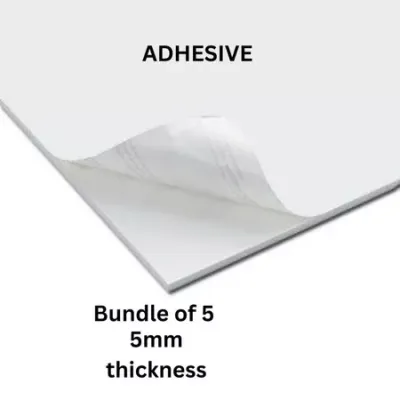
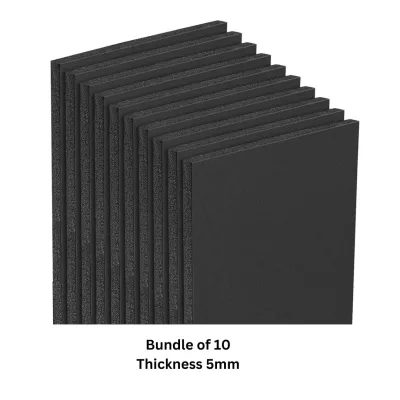
16 Lazada user ratings
Order was received on time, but the way the boards were packed was very poor. It resulted in only 1 of 5 was in a state I could use. Corners…Read full reviewShow less
Order was received on time, but the way the boards were packed was very poor. It resulted in only 1 of 5 was in a state I could use. Corners were bent and the sides was pushed during transport which is to be expected. The boards had been put into bobbelplast and then a lot of small cardboard pieces on top. A proper cardboard box would have been good and would prophase prevented the damage
well packed and nice fast delivery! recommended and will explore the shop to see for future project needs. not bad for the package too
came well packaged. a couple of boards are slightly warped, but otherwise no damage. edges are intact. not bad!
All bent. Cannot use and have to throw away.
Very well packed.
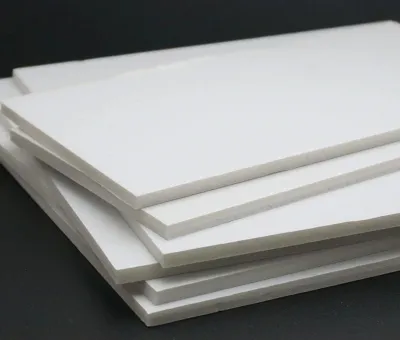
27 Lazada user ratings
Fast delivery-- practically next day! Thanks seller! packaging is great too. No wrinkles on the board.
Used it to build simple DIY covers for my switches.
Prices are valid at publication and may change. Please refer to the product page for the latest price.
Evaluating Thickness and Rigidity for Display Needs
Foam board is commonly available in standard thicknesses of 3mm, 5mm, and 10mm, each offering a different balance of weight, rigidity, and structural support. Choosing the correct thickness is essential to ensure your signage remains flat and professional throughout your event. Thinner boards, such as 3mm options, are highly flexible and lightweight, making them suitable for small tabletop displays, photo booth props, or signs that will be fully supported by a rigid wall or backing frame.

For standard easel displays and medium-sized hanging signs, 5mm foam board is the industry standard. It offers sufficient structural stiffness to resist bowing under its own weight when placed on an easel, provided the sign is not excessively large. If you are planning large-format displays, such as freestanding welcome signs, media backdrops, or suspended overhead banners, upgrading to a 10mm board is highly recommended. The added thickness significantly increases the board’s resistance to bending and warping.
Before finalizing your order, check the manufacturer’s specifications for maximum unsupported spans. Large sheets of thin foam board will naturally bow over time if they are not supported by a frame or backing stand. If your display requires a large, flat surface without visible support structures, verifying the rigidity of a 10mm board or planning for additional back-bracing is a necessary step to maintain a professional appearance.
Key Limitations and Environmental Constraints
While foam board is highly versatile, it has distinct physical limitations that make it unsuitable for certain environments. The most critical factor to consider is moisture sensitivity. Standard paper-faced foam boards are highly susceptible to humidity and water exposure. In humid tropical climates, such as Singapore’s indoor and outdoor environments, paper facings can absorb moisture from the air, leading to rapid warping, bubbling of the printed surface, or delamination of the outer layers.
Physical vulnerability is another key constraint. The polystyrene core is soft, meaning the edges and corners of the board can dent, crush, or crease easily if bumped during transport or setup. Additionally, because foam board is extremely lightweight, it has virtually no wind resistance. When used outdoors, even a gentle breeze can act as a sail, knocking over easel stands or snapping the board along its mounting points.
To avoid display failures, always check the product packaging or consult your print supplier for explicit indoor or outdoor usage ratings. If your event is outdoors, in a semi-outdoor pavilion, or in a high-traffic area where physical contact is likely, standard paper-faced foam board is generally not recommended. For these environments, verifying whether the supplier offers water-resistant plastic-faced alternatives or choosing a different material altogether is essential.
Comparing Foam Board to Alternative Signage Materials
When deciding on the best material for your event, it is helpful to compare foam board against common alternatives like corrugated plastic and rigid PVC board. Corrugated plastic, often referred to by brand names like Coroplast, consists of a fluted polypropylene structure. It is highly water-resistant, durable, and impact-resistant, making it the preferred choice for outdoor temporary signage, though it lacks the perfectly smooth, premium surface finish of foam board.
Rigid PVC board, often called forex board, is a denser, heavier material made of expanded polyvinyl chloride. It offers exceptional flatness, high rigidity, and excellent moisture resistance, making it suitable for both indoor and outdoor long-term displays. However, rigid PVC is significantly heavier than foam board, which can complicate transport and require stronger mounting adhesives or heavy-duty stands.
To choose the right material, establish a clear decision framework based on your event’s duration, location, and budget. For a one-day indoor seminar where signs sit on easels, foam board offers an economical, high-quality visual solution that fits within a modest budget of a few S$ per board. For a multi-week outdoor exhibition, corrugated plastic or rigid PVC will deliver the necessary durability. Always verify the exact material specifications and supplier guarantees rather than relying on generic category names when requesting quotes, as material quality can vary significantly between print shops.
How to Specify and Order Foam Board Signage
To ensure your printed foam board signage arrives exactly as intended, you must prepare your print files and order specifications carefully. Start by verifying your file resolution and bleed requirements. Large-format prints typically require images to be at least 150 to 300 DPI at full output size to prevent pixelation. Additionally, include a standard bleed of 3mm to 5mm around the perimeter of your artwork to account for minor shifting during the mechanical cutting process, ensuring no white paper edges are visible on the finished sign.
Next, confirm your edge finishing and mounting compatibility. Standard straight cuts are clean but leave the foam core exposed along the sides. If you prefer a more polished look, ask your supplier about wrapped edges or framing options. You must also ensure the board’s thickness is compatible with your chosen mounting hardware, such as the slot width of your table stands, the strength of your double-sided mounting tape, or the hook-and-loop fasteners used on exhibition walls.
Finally, before committing to a large production run for a major event, request a physical material sample or a digital proof from your print provider. This step allows you to verify the color accuracy, surface finish, and overall rigidity of the specific board stock the printer uses, preventing costly mistakes and ensuring the final signage meets your expectations.
Frequently Asked Questions (FAQ)
Can foam board signage be reused for multiple events?
Foam board signage can be reused, but its lifespan depends heavily on how it is handled and mounted. Because the edges and corners are highly susceptible to denting and crushing, frequent transport increases the risk of visible wear. Surface creasing can also occur if the board is bent during setup. Furthermore, if you use strong double-sided adhesives or velcro tapes directly on a paper-faced board, removing them will likely tear the backing paper, making the board unsuitable for future use. For signs intended for multiple events, consider using protective edge guards and non-destructive mounting clips.
How should foam board be stored between events?
Proper storage is critical to prevent foam board signage from warping or bowing between events. Always store the boards flat on a clean, level surface in a dry, climate-controlled environment. Storing boards upright or leaning them against a wall for extended periods causes gravity to gradually bow the material, making them difficult to display flat later. Avoid damp storage areas, direct heat sources, and high-humidity zones, as moisture will degrade the paper facing. Never place heavy or sharp items on top of stored boards, as this will cause permanent indentations in the soft foam core.
Community discussion
Share your experience or ask a question. Comments are reviewed before publication.