
Verifying the authenticity of KATSEYE photocards requires a careful eye for print precision, paper stock quality, and official security markings. As the global girl group gains immense popularity, counterfeiters quickly produce replica cards that closely mimic official merchandise. To protect your collection and ensure your money supports the artists directly, you must learn to distinguish the subtle differences in card thickness, image resolution, and official branding elements. By establishing a systematic inspection routine, you can confidently trade and purchase these highly collectible items without falling victim to unauthorized reproductions.
Common Red Flags in Counterfeit Idol Photocards
Counterfeit photocards almost always reveal themselves through subtle manufacturing deficiencies that occur when replicating high-resolution official files. The most immediate indicator of a fake card is poor print quality, which often manifests as slight blurriness, visible pixelation, or unnatural color saturation. Because counterfeiters typically scan an original card to create their printing plates, the resulting copy loses sharpness, making fine details like hair strands, eye reflections, and small background textures appear muddy or washed out.
Material and tactile differences offer another clear warning sign during physical handling. Official photocards are printed on premium, heavy-weight paper stock that feels rigid and substantial between your fingers. In contrast, counterfeit cards often feel flimsy, thin, or excessively flexible because producers use cheaper, lower-grade paper to minimize costs. Additionally, the surface finish—whether it is a smooth matte coating or a high-gloss laminate—should be uniform across the entire card; replicas frequently exhibit uneven gloss application, sticky residues, or a texture that feels rough and unfinished.
Products mentioned in this guide





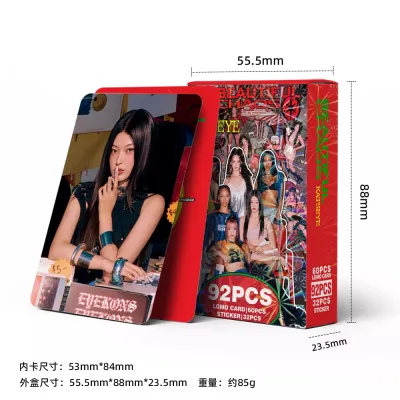


Prices are valid at publication and may change. Please refer to the product page for the latest price.
Edge cutting and border alignment are also highly telling of a card’s origin. Official manufacturing facilities utilize industrial-grade die-cutting machinery that produces perfectly rounded corners and clean, smooth edges. Counterfeit cards, often cut with lower-precision equipment, may display uneven borders, asymmetrical corner radiuses, or tiny paper fibers clinging to the edges. On dark-themed cards, look closely for white paper core exposure along the cut lines, which indicates that the card was sliced poorly, exposing the inner paper layers.
How to Check Official Security Features
Official entertainment agencies and merchandise distributors frequently implement specialized security measures to protect their intellectual property from replication. One of the most reliable methods to verify authenticity is inspecting the holographic stickers or security seals affixed to the outer packaging of albums or official merchandise kits. These stickers are not simple, generic metallic decals; they feature intricate, proprietary holographic patterns, official logos, and sometimes color-shifting elements that are exceptionally difficult for counterfeiters to reproduce accurately.

In addition to physical stickers, modern merchandise releases sometimes incorporate digital verification methods such as QR codes or Near Field Communication (NFC) tags. When scanning these codes, always ensure that the link directs you exclusively to the official artist application or a verified web portal managed by the official label. Counterfeiters may print fake QR codes that lead to lookalike websites designed to mimic the official verification screen, so double-check the URL structure in your browser to confirm it matches the official domain.
Serial numbers and batch codes printed on the packaging or the cards themselves provide another layer of verification. Official merchandise teams often utilize specific alphanumeric formats, font styles, and placement rules for these codes. By cross-referencing the serial number format with confirmed official releases or community-verified databases, you can identify discrepancies in font thickness, spacing, or character sequences that point to a counterfeit batch.
Physical Inspection Checklist for KATSEYE Photocards
A structured physical inspection allows you to compare a suspect card against known standards of official production. Begin your checklist by examining the front design alignment, paying close attention to the placement of the group’s logo, member names, and copyright text. Official cards maintain strict alignment standards, meaning the text should be perfectly centered, sharp, and free from typographical errors or font substitutions. Even a minor shift in logo placement or a slightly thicker font weight can indicate an unauthorized reprint.
Turn the card over to inspect the back design details, which are often overlooked by counterfeiters who focus primarily on the front image. The back of an official photocard typically features high-contrast logos, clean member signatures, and intricate background patterns that should remain crisp under close inspection. Look for any color bleeding where dark inks meet light backgrounds, as well as any fuzziness in the signature lines, which should look like clean vector graphics rather than scanned images.
Finally, perform a light transmission test by holding the photocard up to a bright, concentrated light source, such as a smartphone flashlight. Official photocards are constructed with multiple layers of paper and laminate, creating a specific level of opacity that allows only a muted, diffused glow to pass through. Counterfeit cards, which often lack these internal structural layers or use thinner paper, will typically appear highly translucent, allowing the light to shine through brightly and revealing an uneven internal paper fiber structure.
Where to Buy Authentic KATSEYE Merchandise Safely
Minimizing the risk of acquiring counterfeit photocards starts with choosing secure and verified purchasing channels. Your primary option should always be official online stores, authorized global retailers, or official pop-up events organized directly by the group’s management. Buying directly from these sources guarantees authenticity and ensures that your purchase is officially counted toward music charts and artist support.
When official stores are sold out, many collectors turn to third-party sellers on e-commerce platforms and online marketplaces. To navigate these platforms safely, you must thoroughly evaluate the seller’s profile by checking their historical reviews, transaction ratings, and return policies. Reliable sellers are transparent about their sourcing, often providing clear, high-resolution photos of the actual product rather than stock images, and are willing to show proof of purchase from official retailers upon request.
Peer-to-peer trading on social media and dedicated collector forums requires extra vigilance to avoid scams. Be highly skeptical of listings that feature unusually low prices, as deals that seem too good to be true almost always involve counterfeit goods or fraudulent sellers. Always request a personalized unboxing video or a photo of the card next to a handwritten note containing the seller’s username and the current date, and avoid sellers who refuse to provide these standard verification materials.
Steps to Take If You Suspect a Fake Purchase
If you receive a photocard and suspect it is a counterfeit, taking immediate, organized action is crucial to securing a refund and protecting the community. Start by documenting the item thoroughly in a well-lit environment, capturing clear, close-up photographs of the print quality, edges, and any specific discrepancies you identified. If possible, take side-by-side comparison photos next to a confirmed authentic card to make the differences undeniable to third-party mediators.
Once your evidence is prepared, contact the seller or the customer support team of the platform where the transaction took place to initiate a dispute. Clearly present your photographic evidence and explain the specific physical characteristics that prove the item is not authentic. Most reputable e-commerce platforms have buyer protection policies that cover counterfeit merchandise, provided you initiate the claim within their specified dispute window.
Lastly, report the fraudulent listing and the seller’s account directly to the platform’s administration to prevent other fans from falling victim to the same scam. Sharing your experience within local collector communities can also raise awareness about active counterfeit batches and unreliable sellers. By documenting the issue and reporting it promptly, you help maintain a safer, more transparent trading environment for all collectors.
Frequently Asked Questions (FAQ)
Can I use a UV light to check if a KATSEYE photocard is real?
Using a ultraviolet light can sometimes assist in verification, but it is not a universal solution for all photocard releases. While some official merchandise lines utilize UV-reactive inks or hidden watermarks that glow under blacklight, this feature is typically reserved for specific special editions or high-security items rather than standard album inclusions. Before relying on this method, check official merchandise announcements or community guides to confirm if the specific photocard batch you are inspecting was manufactured with UV-reactive elements.
Do all official KATSEYE photocards have a holographic sticker?
No, holographic stickers are not applied to every individual photocard released by the group. Typically, these security seals are placed on the outer packaging of albums, DVD sets, or larger merchandise kits rather than on the individual cards inside. Standard inclusion photocards usually rely on high-quality printing techniques, specific paper stock, and official copyright text on the back for authentication, so the absence of a sticker on the card itself does not automatically mean it is counterfeit.
Community discussion
Share your experience or ask a question. Comments are reviewed before publication.