
To verify if a BTS lightstick is official or counterfeit, you must look beyond basic aesthetics and perform a two-step verification process: a detailed physical inspection of the packaging and build quality, followed by a digital connectivity test using the official companion app. While counterfeit manufacturers have improved their replication techniques, they consistently fail to replicate the secure Bluetooth chips required for concert synchronization and the high-standard materials used in genuine merchandise.
Purchasing an authentic BTS lightstick—commonly known as the Army Bomb—ensures you can fully participate in the interactive concert experience, where the venue controls the colors and patterns of thousands of devices simultaneously. This guide outlines how to inspect your lightstick’s physical details, test its digital features, and navigate the purchasing market safely to avoid counterfeit products.
Why Authenticity Matters for K-Pop Lightsticks
During live performances, official lightsticks are integrated into the venue’s central control system. This wireless system syncs the color, brightness, and flashing patterns of every lightstick in the stadium to the rhythm of the music. Counterfeit lightsticks lack the proprietary wireless receivers and secure Bluetooth microchips required to connect to these systems. If you bring a fake device to a concert, it will remain static, display incorrect colors, or fail to light up entirely, separating you from the shared fan experience.
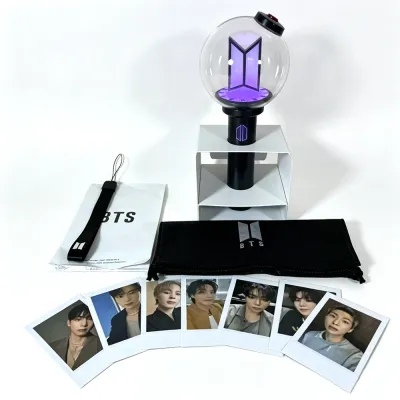
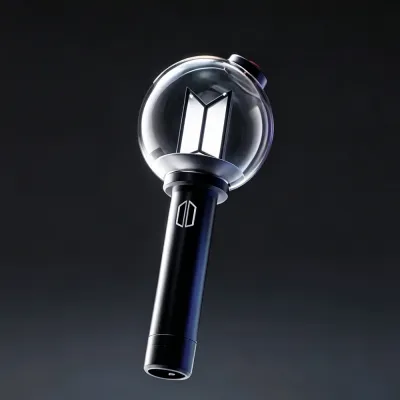
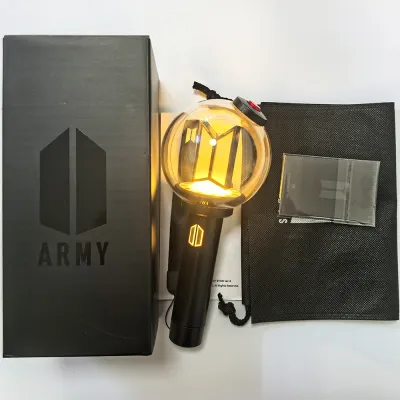
Products mentioned in this guide
Prices are valid at publication and may change. Please refer to the product page for the latest price.
Beyond aesthetic disappointment, counterfeit lightsticks present significant functional and safety risks. Fake devices frequently suffer from unstable Bluetooth connectivity, making it impossible to pair them with official mobile applications or download firmware updates. From a safety perspective, counterfeit products bypass rigorous quality control. They often feature substandard plastics, poorly insulated wiring, and low-grade battery compartments. In warm climates like Singapore, these manufacturing defects can quickly lead to battery overheating, acid leakage, or short circuits during hours of continuous concert use.
Physical Inspection: Spotting the Differences
Conducting a thorough physical inspection immediately after receiving your lightstick is your first line of defense. Before opening the shipping package, prepare a clean, well-lit workspace and set up your smartphone to record a continuous, unedited unboxing video. This video should capture the shipping label, the sealed box, and the extraction of the lightstick and its accessories. If you discover physical defects or connectivity issues later, this unedited footage serves as vital evidence when filing a dispute or requesting a refund.

While high-grade replicas can look convincing at a casual glance, counterfeiters almost always cut corners on materials, printing, and manufacturing precision. By comparing the packaging, weight, and structural details against official standards, you can quickly identify the subtle red flags of a fake product.
Packaging, Holograms, and Print Quality
The external packaging is often the easiest place to spot a counterfeit. Official packaging is constructed from thick, premium cardstock designed to protect the lightstick during international transit. The printing on a genuine box is exceptionally crisp, with deep, uniform colors, sharp font weights, and perfectly aligned text. In contrast, counterfeit boxes are frequently made of thin cardboard that dents or creases easily, featuring blurry text, pixelated graphics, or misaligned logos.
A critical security feature to examine is the official holographic sticker. Authentic BTS lightsticks feature a highly reflective holographic security seal issued by the official distributor. When you tilt a genuine sticker under a direct light source, the holographic patterns, colors, and embedded logos shift smoothly and dynamically, showing clear, multi-layered depth. Counterfeiters often attempt to replicate this with flat, non-reflective silver stickers that display a static, printed pattern with no color-shifting properties.
Additionally, pay close attention to the barcodes, warning labels, and enclosed documentation. Official merchandise includes a professionally printed, high-quality user manual folded precisely. Counterfeit manuals are often printed on cheap, thin paper, folded sloppily, and frequently contain noticeable typographical errors or blurry diagrams.
Build Quality, Weight, and Logo Details
The physical feel and structural integrity of the lightstick provide immediate clues about its authenticity. Official lightsticks have a substantial, balanced weight in the hand, reflecting the quality of the internal electronics, LED modules, and durable ABS and polycarbonate plastics. Counterfeit lightsticks often feel light, hollow, or top-heavy because manufacturers use cheaper, thinner plastics and highly simplified internal circuitry.
Carefully inspect the structural seams where the different plastic components of the lightstick meet, particularly along the handle and around the clear globe. Genuine Army Bombs are manufactured with high-precision molds, resulting in tight, flush, and perfectly smooth seams with no visible gaps or rough edges. Counterfeit units often exhibit sloppy assembly, characterized by uneven seams, rough plastic flash along the edges, or visible traces of glue.
Branding details must also be examined with high scrutiny. Locate the engraved or printed BTS and Army logos on the handle. On an official lightstick, these logos are perfectly centered, rendered in the correct official font weights, and feature precise, consistent engraving depths. On counterfeit versions, the logos are frequently misaligned, printed with blurry edges, or engraved shallowly.
Battery Compartment and Internal Details
The battery compartment is a critical area for evaluating both authenticity and electrical safety. To inspect this area, carefully unscrew the battery cap at the bottom of the handle and slide out the battery holder. Do not attempt to force open any sealed plastic components or unscrew the globe itself, as doing so can cause irreversible damage to the internal wiring and compromise your ability to return the item.
Once the battery holder is removed, inspect its construction and the internal contacts. Official battery holders are made of sturdy, heat-resistant, molded black plastic with clean, robust metal contacts and high-tension springs that hold the AAA batteries securely in place. The polarity markings are clearly and cleanly engraved into the plastic. On counterfeit lightsticks, the battery holder often feels incredibly fragile, with thin, easily bent metal springs and messy, unaligned plastic molds.
If you look inside the empty handle of a genuine lightstick, you will see clean, orderly internal components. In contrast, counterfeits often reveal sloppy, hand-soldered joints, exposed wire strands, or incorrect wire colors.
Digital Verification: App Connectivity and Bluetooth Sync
Digital verification is the most definitive method for confirming the authenticity of a BTS lightstick, as counterfeiters cannot easily replicate the secure, proprietary communication protocols used by official software. To perform this test, download the official companion application, such as the BTS Official Lightstick app or the integrated Weverse app, directly from the Apple App Store or Google Play Store. Avoid downloading third-party pairing tools or scanning unverified QR codes.
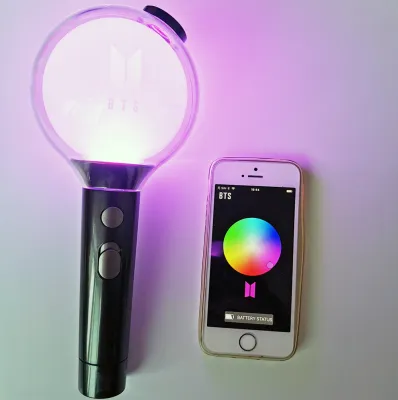
To begin the digital test, insert fresh, high-quality AAA batteries into the lightstick’s holder, ensuring correct polarity. Turn on your smartphone’s Bluetooth and open the official app. Switch your lightstick into Bluetooth pairing mode—this is typically achieved by pushing the power switch down to the ‘blue’ setting or holding down the main button for several seconds, depending on the specific version of your Army Bomb.
Once in pairing mode, follow the on-screen instructions in the app to connect the device. An official lightstick will be detected by the app almost instantly. Once paired, the app will establish a secure handshake, display the correct model of your lightstick, and allow you to interact with the color wheel. Moving your finger across the color wheel should result in an immediate, smooth color change on the lightstick’s globe. The app will also check for official firmware updates and install them successfully.
A counterfeit lightstick will typically fail this test. Because fakes lack the official proprietary Bluetooth microchip, they will either fail to appear in the app’s search results, show up as an unrecognized generic Bluetooth device, or fail to complete the pairing process. Even if a high-end fake manages to establish a basic Bluetooth connection, it will not be recognized by the official app’s secure interface.
During a live concert, the venue’s central control transmitters send localized signals to sync all devices. Official lightsticks receive these signals seamlessly, while counterfeit devices remain completely unresponsive, staying static or displaying incorrect colors.
It is important to note that temporary pairing failures can occasionally occur even with genuine lightsticks due to local wireless interference, low battery power, or temporary server maintenance on the official app. To ensure an accurate diagnosis, always test your lightstick using brand-new batteries in a low-interference environment, and cross-reference any digital pairing issues with your physical inspection findings before making a final determination.
Safe Purchasing Channels for Official Merchandise
The most effective way to avoid receiving a counterfeit lightstick is to purchase exclusively through verified, official retail channels. The primary source for official BTS merchandise is the Weverse Shop, the official global commerce platform operated by HYBE. Purchasing directly from Weverse Shop, or visiting official physical HYBE pop-up stores and authorized retail partners, guarantees that you will receive a genuine, certified product.
If you must purchase from third-party e-commerce platforms or online marketplaces, you must exercise extreme caution. Avoid listings that rely solely on stock photos or generic product descriptions. Instead, look for reputable sellers with high positive feedback ratings and read through recent customer reviews. Pay close attention to reviews that include real photos posted by buyers, looking specifically for clear shots of the holographic security sticker, the packaging box, and successful app connection screens. Always verify the seller’s return and refund policies before finalizing your purchase, ensuring they offer buyer protection in case the item is counterfeit.
Be highly skeptical of prices that seem too good to be true. Official K-pop lightsticks generally retail within a consistent price band, typically ranging from S$50 to S$80, depending on the specific version, local taxes, and international shipping costs. If an online listing offers a brand-new, supposedly official lightstick for S$20 or S$30, it is almost certainly a counterfeit. Official merchandise is produced in controlled quantities and rarely, if ever, subject to steep, unauthorized discounts outside of official seasonal clearance sales.
Finally, avoid purchasing from unverified social media accounts or unofficial group-buy organizers. These sellers cannot provide a traceable supply chain, official invoices, or any form of buyer protection, leaving you with no recourse if you receive a fake or damaged product.
What to Do If You Receive a Counterfeit Lightstick
If your physical and digital inspections confirm that you have received a counterfeit lightstick, you must take immediate action to protect your financial and physical safety. Start by thoroughly documenting the evidence. Take clear, high-resolution photographs of the physical discrepancies, such as the low-quality printing, the flat holographic sticker, and the rough plastic seams. Record a video demonstrating the device’s failure to pair with the official app, showing that you are using fresh batteries and following the correct steps.
Next, initiate a formal dispute or refund request through the online marketplace or payment processor you used for the purchase. Submit your continuous unboxing video and side-by-side comparison photos as evidence of fraud. Most reputable e-commerce platforms have robust buyer protection programs that cover counterfeit goods, provided you file the claim within their specified return window.
For your safety, never attempt to use, charge, or modify a suspected counterfeit lightstick. If the device becomes unusually hot to the touch, emits a chemical or burning odor, or displays signs of battery leakage, immediately remove the batteries using protective gloves and discontinue use. Unofficial electronic products bypass standard electrical safety certifications, making them prone to short circuits, overheating, and potential fire hazards.
Once your refund dispute is resolved, do not attempt to resell the counterfeit lightstick to other fans, as this perpetuates the cycle of fraud. Instead, dispose of the counterfeit device responsibly. In Singapore, electronic waste should be deposited at official e-waste collection points, which can be found at various community centers, retail malls, and supermarkets. This ensures that the plastic and electronic components are recycled safely without harming the environment.
Frequently Asked Questions (FAQ)
Can a fake BTS lightstick connect to the official app?
No, a counterfeit BTS lightstick cannot fully connect to or function with the official app. While some high-end replicas use generic Bluetooth chips that allow them to appear in your phone’s general Bluetooth settings, they lack the proprietary, secure microchips required to complete the app’s official handshake protocol. Consequently, fake lightsticks will fail to register inside the official app, cannot receive firmware updates, and will remain completely unresponsive to the automated color-change signals used during live concert performances.
Is it safe to buy a second-hand BTS lightstick?
Buying a second-hand lightstick carries a much higher risk of receiving a counterfeit or a damaged unit. If you choose to buy second-hand, always ask the seller to provide their original digital receipt from Weverse Shop or an authorized retailer. If you are meeting in person in Singapore to complete the transaction, bring fresh AAA batteries and your smartphone with the official app pre-installed. Test the lightstick’s physical build quality and verify its Bluetooth connectivity on the spot before handing over any money.
Community discussion
Share your experience or ask a question. Comments are reviewed before publication.