
Determining whether a BABYMONSTER photocard is authentic or fake requires a close inspection of its physical properties, print resolution, and manufacturing details. Official photocards released by YG Entertainment are produced using high-grade industrial printing presses that deliver sharp details, natural skin tones, and consistent physical dimensions. In contrast, counterfeits—often referred to as “lomo cards” or fan-made replicas—frequently display pixelation, incorrect color grading, flimsy card stock, and irregular corner cuts.
For collectors in Singapore’s active K-pop trading community, verifying these items before finalizing a transaction is essential. High-quality replicas have become increasingly common on peer-to-peer marketplaces and social media trading groups. By understanding the specific visual and tactile benchmarks of genuine merchandise, you can protect your financial investment and ensure your collection consists only of official releases.
Why Verifying BABYMONSTER Photocards Is Essential
The global and local demand for BABYMONSTER merchandise has grown rapidly, making individual member photocards highly sought-after collectibles. This high market value has unfortunately incentivized unauthorized sellers to produce and distribute convincing counterfeit cards. These replicas are often mixed into bulk trades or sold individually to unsuspecting buyers who may not know how to distinguish them from official album pulls.
Products mentioned in this guide
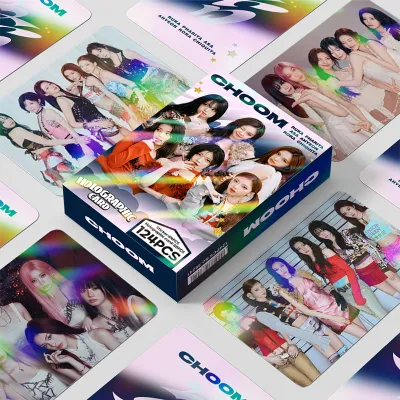

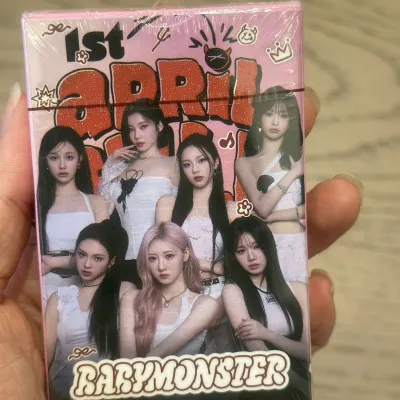
![127pcs/BABYMONSTER Photocard CHOOM Album LOMO Card Sticker KPOP Collection Card [G]](https://img.lazcdn.com/g/p/a49f3030ccb540d3bc2ef3b5fe04965c.jpg_400x400q80.jpg_.webp)
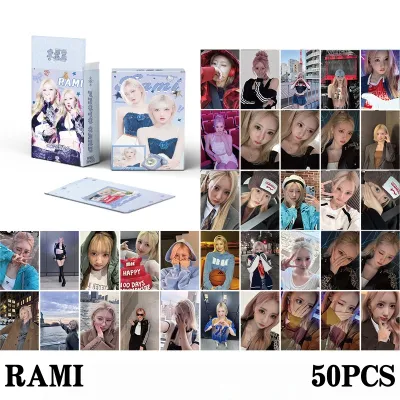
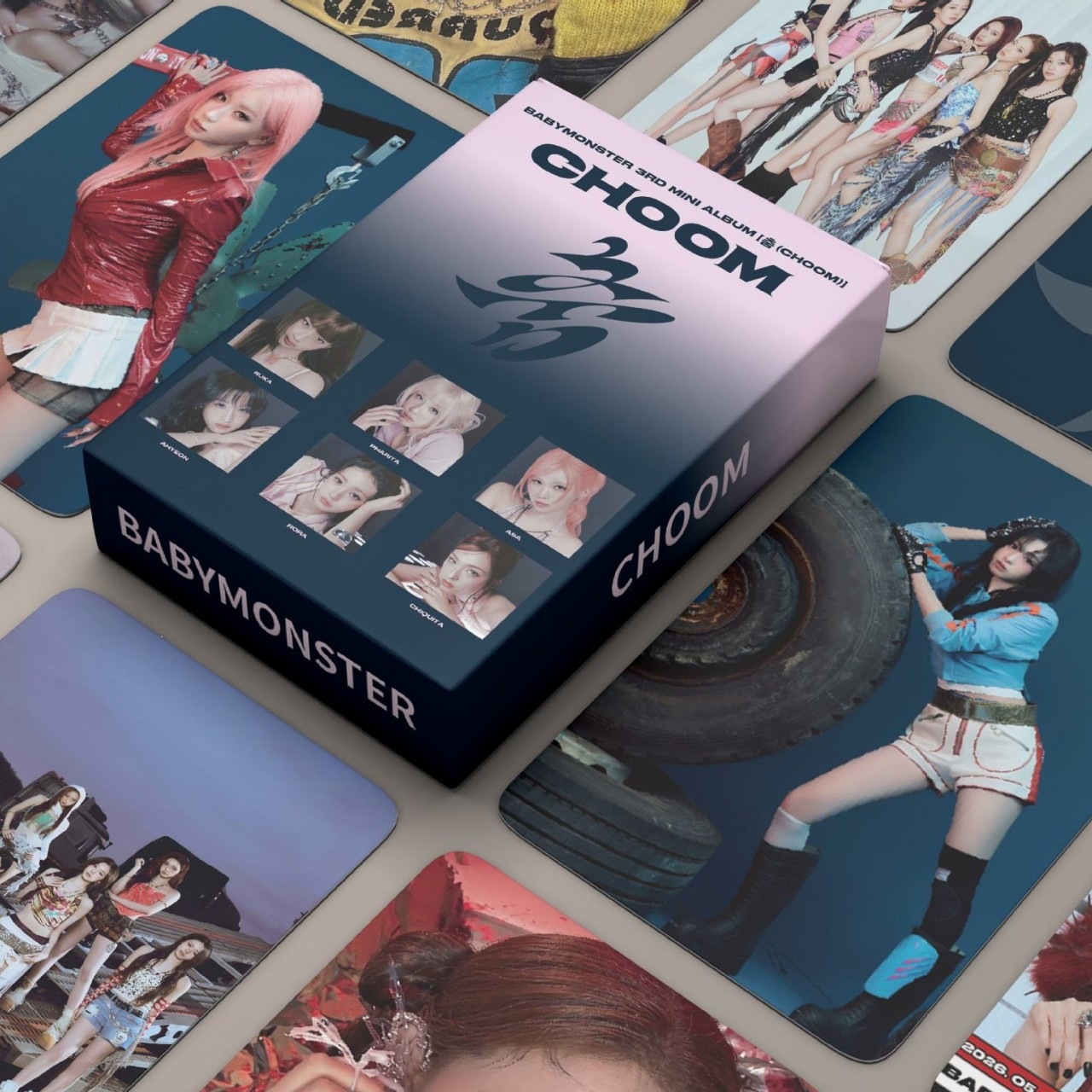
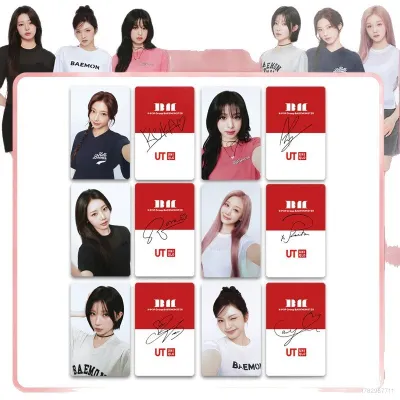

Prices are valid at publication and may change. Please refer to the product page for the latest price.
When authenticating a card, it is important to remember that no single visual cue guarantees authenticity. Instead, collectors must perform a holistic check that combines visual, tactile, and contextual indicators. Relying solely on one detail can lead to false conclusions, as manufacturing standards can occasionally yield minor variations.
While official YG Entertainment products maintain strict quality control, minor factory variations can occur between different printing batches or regional press runs. These variations might include slight shifts in color saturation or minor alignment offsets on the back design. Therefore, authentication should focus on identifying consistent, systemic patterns of industrial manufacturing rather than isolated, microscopic differences.
Key Physical and Visual Traits of Authentic Cards
Print Resolution and Color Saturation
Official BABYMONSTER photocards are printed using professional offset lithography, a process that produces incredibly sharp, continuous tones. When inspecting a genuine card, pay close attention to high-contrast areas such as the eyes, hair strands, and logo outlines. The printing should look clean and crisp, with no visible dot patterns or fuzzy borders.

Counterfeit cards are almost always produced using digital scans of official cards rather than the original high-resolution image files. This scanning process introduces a loss of detail, resulting in a slightly blurry or pixelated image. Under bright, natural light, these scans often reveal a distinct halftone dot pattern (a grid of tiny ink dots) that is a clear indicator of secondary digital printing.
Color saturation is another critical indicator of authenticity. Official cards feature balanced, natural skin tones and vibrant but controlled background colors. Replicas frequently suffer from unnatural color shifts—appearing either overly saturated with a reddish tint or washed out and yellowed. Inspecting the card under consistent, neutral lighting will help you identify these subtle color discrepancies.
Card Stock Thickness and Surface Texture
The tactile feel of the card stock is one of the most reliable ways to detect a counterfeit. Official YG Entertainment photocards are printed on premium, heavyweight paperboard that provides a sturdy, resilient structure. When held, the card should feel firm and resist bending under light pressure, snapping back into shape immediately.
In contrast, counterfeit cards are often printed on thinner, cheaper paper stock that feels flimsy and flexible. Some counterfeiters attempt to mimic the thickness of official cards by using excessively thick, rigid plastic laminates, which results in an unnaturally stiff card that lacks the organic flex of genuine paperboard.
The surface finish of official cards is carefully applied and varies by album version, ranging from smooth matte to high-gloss or semi-gloss coatings. These finishes are chemically bonded to the paper, creating a uniform texture across the entire surface. Fake cards often have a sticky, rubbery, or overly plasticized texture, and the laminate layer may begin to peel or bubble at the corners over time.
From a stationery perspective, you can also verify the card’s compatibility with standard protective storage. Official BABYMONSTER photocards typically adhere to standard dimensions of approximately 55 x 85 mm. They should fit precisely inside standard archival-safe, acid-free polypropylene sleeves (such as 56 x 87 mm or 57 x 89 mm sleeves). If a card is too wide to fit into a standard sleeve or slides around with excessive room, its physical dimensions are incorrect, pointing to a counterfeit origin.
Edge Cutting and Corner Alignment
Industrial manufacturing ensures that official photocards feature highly precise, clean die-cut edges. The corners of genuine cards are rounded using automated machinery, resulting in perfectly symmetrical curves. When you run your finger along the edges of an official card, the border should feel completely smooth and uniform.
Counterfeit cards are often cut using manual paper cutters or low-grade corner rounders. This manual process leaves distinct physical imperfections, such as tiny paper fibers (burrs) sticking out from the edges, rough or jagged borders, and asymmetrical corner cuts. If one corner has a slightly different radius or angle than the others, the card is highly likely to be a fake.
Additionally, many official YG Entertainment photocards feature tiny, subtle circular nubs on the top, bottom, or side edges. These are known as “printing tabs” or “nubs,” which occur when the cards are detached from their larger printing sheets during manufacturing. These nubs are clean, consistent, and appear in specific, predictable spots on cards from the same album batch. Replicas printed individually on single-sheet cutters will lack these characteristic industrial manufacturing marks.
Common Red Flags: How to Spot a Counterfeit
To help you quickly evaluate a card, the table below outlines the primary physical differences between genuine BABYMONSTER photocards and counterfeit replicas.
| Feature | Authentic BABYMONSTER Photocard | Counterfeit / Fake Photocard |
|---|---|---|
| Print Quality | High-resolution, sharp details, natural skin tones, no visible pixelation. | Blurry details, high contrast, visible printing dots, unnatural color shifts. |
| Back Logo Clarity | Crisp fonts, correct YG copyright symbols, sharp vector lines. | Blurry logos, incorrect font weights, misaligned text, muddy colors. |
| Card Thickness & Flex | Sturdy, resilient paperboard; snaps back when lightly flexed. | Flimsy, easily bent, or excessively thick with cheap plastic lamination. |
| Edge Finish | Clean, smooth die-cut edges with uniform, symmetrical rounded corners. | Rough, frayed edges, paper burrs, or uneven, hand-cut corner angles. |
When evaluating the back of the card, look closely at the typography and logos. Counterfeiters often struggle to replicate the exact font weights and spacing of the official YG Entertainment branding. On a fake card, the copyright text, social media handles, and album logos may appear slightly thicker, thinner, or misaligned compared to a known authentic reference card.
Another common misconception among collectors is that scanning a barcode or QR code on the back of a photocard proves its authenticity. While some special promotional cards feature QR codes, these codes simply link to a general website, video, or digital album portal. Because a QR code is merely a printed image, counterfeiters can easily copy and print the exact same code onto a fake card. A successful scan only proves the code itself is valid, not that the physical piece of paper in your hand is an official product.
Navigating Purchasing Channels Safely
To minimize the risk of acquiring counterfeit merchandise, prioritize buying your albums and photocards from official brand stores or authorized K-pop retailers. In Singapore, purchasing directly from established physical record shops in major retail hubs ensures that your items are sourced directly from official distributors, eliminating the risk of aftermarket tampering.
If you choose to purchase individual cards through peer-to-peer online marketplaces or social media trading groups, always conduct thorough background checks on the seller. Review their transaction history, look for feedback from previous buyers, and avoid accounts with little to no trading history or those selling highly sought-after cards at prices far below market value.
Before completing a transaction, always ask the seller for high-resolution, unfiltered photos and videos of the card taken under bright, natural light. Request that they place a piece of paper with their username and the current date next to the card to verify ownership. For rare or high-value cards, ask for additional proof of authenticity, such as the original album purchase receipt or an unboxing video showing the card being pulled from a sealed album.
What to Do If You Suspect You Bought a Fake
If you receive a card and suspect it is counterfeit, document your findings immediately. Take clear, close-up photographs and video recordings under natural daylight, comparing the suspected card side-by-side with a known authentic card from your collection. Focus your camera on the print resolution, the edge cuts, and any visual discrepancies on the back logo.
Contact the seller or the customer support team of the e-commerce platform where the transaction took place. Present your documented visual evidence clearly and politely to initiate a return, refund, or dispute process. Most reputable platforms offer buyer protection policies that cover counterfeit merchandise if sufficient proof is provided.
Do not attempt to alter, clean, or test the card using harsh household chemicals, solvents, or water to check its ink resistance. These substances can easily dissolve the protective laminate, cause the ink to bleed, or warp the paper fibers of even a genuine card. Damaging the card through testing will ruin its collectible value and may void your buyer protection claims, leaving you unable to secure a refund.
Frequently Asked Questions (FAQ)
Can I use a UV light or blacklight to verify BABYMONSTER photocards?
While some limited-edition K-pop concert goods or special merchandise packages incorporate UV-reactive security ink, standard BABYMONSTER album photocards do not feature hidden UV watermarks. Using a UV light or blacklight is not a standard or reliable method for verifying regular album photocards, as a genuine card will not display any special hidden images under ultraviolet light.
Do authentic YG photocards always have a holographic sticker?
No, standard individual photocards found inside BABYMONSTER albums do not feature holographic authenticity stickers. Official KOMCA (Korea Music Copyright Association) holographic stickers and YG Entertainment seals are placed on the outer shrink-wrap or the back cover of the physical album packaging, box sets, or large merchandise items. The absence of a holographic sticker on an individual photocard is completely normal and does not indicate that the card is a fake.
Community discussion
Share your experience or ask a question. Comments are reviewed before publication.