
To determine if a vintage Singapore 1977 coin is genuine or a replica, you must systematically verify its physical dimensions, weight, edge details, and magnetic properties against official specifications. Genuine coins from this era feature crisp, high-relief strikes, precise edge reeding, and a distinct metallic composition that cannot be easily replicated by casting or cheap plating methods. By conducting simple home tests—such as precision weighing with a digital scale, checking for magnetic attraction, and examining the surface under magnification—you can confidently identify counterfeit pieces before making a purchase.
Understanding Counterfeit Risks for Vintage Singapore Coins
The late 1970s marked an era of rapid development in Singapore, and the coins minted during this period have become highly sought-after souvenirs and collector’s items. Because these coins hold nostalgic value and, in some cases, significant numismatic premiums, they have increasingly become targets for counterfeiters. This applies to both standard circulation issues, such as the iconic First Series “Marine Series” coins, and special commemorative releases.
While high-value precious metal commemorative coins (such as the 1977 silver or gold proof issues) are often targeted by highly sophisticated counterfeiting operations, the market also sees a steady flow of lower-quality replicas of standard circulation coins. These replicas are frequently sold in local souvenir shops, flea markets, or unverified online listings as genuine historical keepsakes. For buyers looking to purchase these coins as sentimental gifts or investments, understanding the risk landscape is crucial. Counterfeits range from crude base-metal casts to deceptive struck fakes, making a methodical verification process essential for any transaction.
Products mentioned in this guide
Prices are valid at publication and may change. Please refer to the product page for the latest price.
Key Physical Markers of a Genuine Singapore 1977 Coin
Genuine coins from the 1977 mintages were struck under strict quality control standards. Each denomination has precise physical specifications. For example, a standard 1977 copper-nickel one-dollar coin has a specific weight, diameter, and thickness. Any deviation from these official measurements—even by a fraction of a gram or millimeter—is a strong indicator of a counterfeit. Authentic pieces must match the official historical specifications published by the Monetary Authority of Singapore (MAS) or reputable numismatic catalogs.

During this era, Singapore’s circulation coins utilized specific alloys. The 1-cent coin was struck in bronze, while the 5, 10, 20, 50-cent, and 1-dollar coins were made of copper-nickel. Commemorative issues were often struck in sterling silver or gold. These metals have unique physical properties, including a specific natural luster and distinct aging patterns. Copper-nickel coins develop a soft, greyish-toned patina over decades, whereas replicas made of cheap lead, zinc, or iron alloys often exhibit an unnatural shine, greasy texture, or incorrect oxidation colors.
The edge of a coin is one of the most difficult features for counterfeiters to replicate. Depending on the denomination, a genuine 1977 coin will feature specific edge treatment, such as sharp, uniform reeding (grooves) or a smooth, polished finish. On genuine coins, these reeds are perfectly spaced and cut cleanly into the metal. Replicas often have soft, uneven, or completely missing edge details due to poor casting or inferior striking machinery.
Genuine coins were struck using heavy industrial presses with high-tonnage pressure. This process creates sharp, well-defined details on both the obverse (featuring the national coat of arms and the word “Singapore” in four official languages) and the reverse (depicting marine life or commemorative designs). The lettering should be crisp, with flat fields (the flat background areas) and sharp, vertical edges on the raised design elements.
Common Red Flags in Replica and Counterfeit Coins
Many low-end replicas are made using centrifugal casting rather than being struck from dies. This process leaves telltale signs, such as tiny microscopic bubbles (pitting) on the surface where air was trapped in the mold. Additionally, cast coins often display a faint raised line or seam along the outer edge where the two halves of the mold met, a flaw never found on genuine mint-struck coins.
Counterfeiters often struggle to replicate the exact fonts and spatial alignments of original mint dies. When examining a suspect 1977 coin, pay close attention to the spacing between letters, the thickness of the font strokes, and the alignment of the obverse design relative to the reverse. Singapore coins typically use “medal alignment” (where both sides are upright when flipped horizontally) or “coin alignment” depending on the specific series; an incorrect orientation is an immediate giveaway.
To make modern replicas look decades old, counterfeiters frequently apply chemical darkeners, acid washes, or even dark paint to simulate natural tarnish. This artificial toning often looks blotchy, concentrated in deep recesses without natural wear patterns, or excessively dark. Genuine toning develops slowly over decades and follows the natural contours of the coin’s circulation wear.
The base metals used in genuine 1977 Singapore circulation coins (copper-nickel and bronze) are entirely non-magnetic. If a 1977 circulation coin is attracted to a magnet, it contains an iron or steel core, proving it is a cheap modern counterfeit.
Practical Verification Steps You Can Do at Home
Precision Weighing and Measuring
To perform a reliable physical assessment at home, you will need a digital jewelry scale capable of measuring to at least two decimal places (0.01 grams) and a set of digital calipers. Begin by cleaning your hands or wearing cotton gloves to avoid transferring oils to the coin. Place the coin on the calibrated scale and record its weight. Compare this figure to the official MAS specification for that specific 1977 denomination. A genuine coin that has circulated may lose a tiny fraction of a gram due to wear, but a variance of more than 2% to 3% is highly suspicious.
Next, use the digital calipers to measure the outer diameter and thickness at multiple points around the coin. Ensure the calipers do not scratch the surface by applying minimal pressure. Cast replicas are often slightly thicker or wider than genuine pieces because metals shrink slightly as they cool in a mold, forcing counterfeiters to alter the dimensions to match the target weight.
Visual and Magnetic Inspections
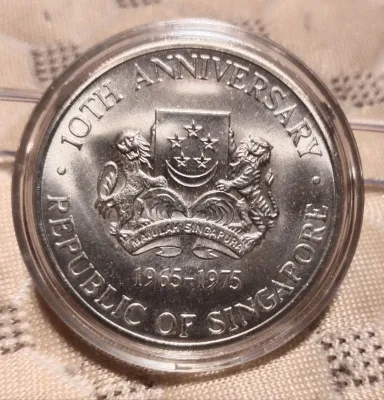
A visual inspection requires adequate lighting and a high-quality magnifier, such as a 10x or 30x jeweler’s loupe. Examine the fine details of the Singapore coat of arms on the obverse. Look closely at the shield, the lion, and the tiger; on genuine coins, the fur textures and facial details are distinct and sharp. Inspect the fields for any signs of circular tool marks, which indicate that a counterfeit die was cut using computer numerical control (CNC) engraving rather than hand-hubbed master dies.
Next, perform the magnet test using a strong neodymium magnet. Slowly bring the magnet close to the coin. If the coin jumps to the magnet or shows any physical attraction, it is a counterfeit containing ferrous metals. However, remember that a negative magnetic test is not definitive proof of authenticity. Deceptive counterfeiters often use non-magnetic alloys like brass, lead, or copper-aluminum, which will pass a simple magnet test but fail on weight and visual details.
Professional Authentication and Trusted Purchasing Channels
Choosing Reputable Dealers and Grading Services
When purchasing high-value 1977 Singapore coins—such as silver commemorative proofs or rare uncirculated specimens—the safest route is to buy from established numismatic dealers. Reputable dealers in Singapore often belong to recognized trade associations and offer lifetime authenticity guarantees. If you are considering a significant financial investment, look for coins that have been professionally certified, graded, and encapsulated by leading independent third-party grading services, such as the Professional Coin Grading Service (PCGS) or the Numismatic Guaranty Company (NGC). These coins are sealed in tamper-evident plastic holders (“slabs”) with a unique serial number that can be verified online, providing an ironclad assurance of grade and authenticity.
Navigating Online Marketplaces Safely
If you choose to source coins from online marketplaces or peer-to-peer ecommerce platforms, exercise extreme caution. Avoid listings that rely on generic stock photos or low-resolution images. Always request clear, high-resolution, macro photographs of both the obverse and reverse faces, as well as a sharp shot of the coin’s edge. Read the seller’s feedback carefully, looking for history in selling historical collectibles rather than general merchandise. Be wary of listings that use evasive language such as “historical replica,” “collectible token,” or “novelty souvenir” buried deep in the description, as these are legal loopholes used to sell replicas as genuine items.
What to Do If You Suspect a Counterfeit
If you suspect that a 1977 Singapore coin you have purchased is a replica, immediate action is necessary to protect your investment. Begin by documenting the coin thoroughly. Take clear, well-lit macro photographs of the specific areas of concern, such as casting seams, soft details, or incorrect weights displayed on a digital scale. Keep all original packaging, invoices, and physical certificates of authenticity that accompanied the purchase, as these will serve as vital evidence.
Contact the seller immediately to request a refund, stating your specific findings calmly and professionally. If the seller is unresponsive or refuses to cooperate, escalate the issue by initiating a dispute through the ecommerce platform’s buyer protection program or by contacting your credit card company to request a chargeback based on receiving counterfeit merchandise. To prevent other collectors and gift buyers from falling victim to the same scam, report the fraudulent listing and the seller’s account to the platform administrators. For persistent or large-scale counterfeit operations, you can also file a report with local consumer protection agencies.
Frequently Asked Questions (FAQ)
Are all 1977 Singapore coins valuable collectibles?
No, the vast majority of standard circulation 1977 Singapore coins (such as the 1-cent, 5-cent, and 10-cent denominations) were minted in very large quantities and carry minimal numismatic value today. They are generally worth only their face value or a small premium if they are in pristine, uncirculated condition. However, specific commemorative coins, such as the 1977 Southeast Asian Games S$10 silver coin or proof sets, carry significant collector value due to lower mintages and precious metal content.
Can I clean a 1977 Singapore coin to make it look more authentic?
You should never clean, polish, or chemically treat a vintage coin. Cleaning removes the original mint luster and the natural patina that has developed over decades, which actually proves its age and authenticity. Professional collectors and grading services can easily detect cleaned coins, and doing so can reduce the coin’s market value by 50% or more. If a coin is dirty, it is best to leave it in its natural state.
Do genuine 1977 Singapore coins have mint marks?
Standard circulation coins minted for Singapore during the 1970s do not typically feature prominent mint marks like those found on coins from the United States or Europe. While some proof and commemorative issues may have subtle mint marks or packaging variations, you should rely on overall strike quality, weight, and physical dimensions rather than searching for a specific mint letter to verify authenticity.
Community discussion
Share your experience or ask a question. Comments are reviewed before publication.