
Spotting authentic NewJeans merchandise requires a keen eye for physical details, printing standards, and secure packaging. As the group’s global popularity grows, the market has seen a rise in counterfeit goods, ranging from replica photocards to imitation plush toys and stationery. To protect your collection and support the artists, you must learn how to evaluate security holograms, paper weight, print resolution, and seller credibility before making any transaction.
Why Authenticity Matters for K-pop Merchandise
Buying official merchandise directly supports NewJeans and their creative team, ensuring they can continue producing high-quality music, concepts, and physical releases. Official items are manufactured under strict quality control guidelines, meaning photobooks feature durable binding, apparel uses safe and comfortable textiles, and stationery items are printed on premium, acid-free paper that resists yellowing over time. Conversely, unregulated counterfeits often bypass safety standards, using cheap inks that may smudge easily or emit strong chemical odors.
Furthermore, the secondary market for K-pop memorabilia relies entirely on authenticity. Official photocards and limited-edition merchandise hold or increase in value over time, making them genuine collectibles. Unofficial items and replicas hold no resale or collectible value among serious collectors, meaning money spent on counterfeits is essentially lost capital if you ever decide to trade or sell your collection.
Products mentioned in this guide

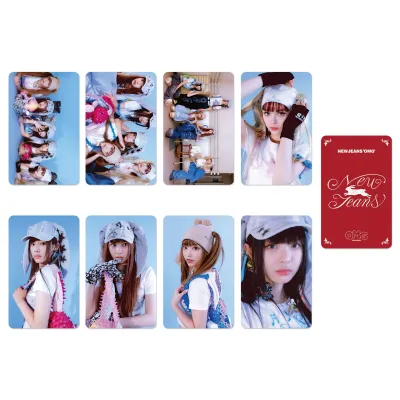
Prices are valid at publication and may change. Please refer to the product page for the latest price.
Key Visual and Physical Checks for NewJeans Official Goods
To verify your items, start with the official licensing sticker. Most official Korean music releases and merchandise carry a reflective Korea Music Copyright Association (KOMCA) hologram sticker or a specialized agency hologram. When tilted under a light source, these stickers display a distinct, clean color shift and sharp, micro-printed logos. Counterfeit stickers often look dull, lack the multi-layered holographic depth, or have blurry text that is difficult to read even under close inspection.

Next, examine the print and graphics. Official NewJeans photocards are printed using high-end industrial presses, resulting in crisp, high-resolution images with accurate color balancing and sharp typography. Counterfeits are often printed from scanned digital images, which introduces a visible “dot matrix” or halftone pattern, fuzzy edges around text, and unnatural color saturation that often appears too dark or overly red. Additionally, official photocards typically measure exactly 55mm by 85mm with perfectly uniform, machine-cut rounded corners. If a card has rough edges, tiny paper tabs at the corners, or does not fit smoothly into standard archival sleeves, it is likely a replica.
Material and build quality offer further clues. Feel the texture and thickness of the paper. Official photobooks, planners, and cards use heavy, rigid cardstock with a professional matte or glossy protective laminate. This coating provides excellent water resistance against minor splashes and prevents the ink from smudging during handling. If you bend a card slightly and it feels flimsy or creases easily, the material quality is substandard. For lifestyle merchandise like plush keyrings, examine the stitching and fabric. Official plush items feature tight, hidden seams, symmetrical embroidery, and high-quality stuffing that retains its shape, whereas counterfeits often have loose threads and uneven facial features.
Finally, inspect the packaging details. Official packaging is designed to protect the contents and maintain a high aesthetic standard. Look for clean shrink-wrapping without excessive heat wrinkles or messy seams. Check the placement of logos and copyright text on the back of the box; spelling mistakes, missing trademark symbols, or misaligned text blocks are immediate red flags.
Evaluating the Seller and Purchase Channels
To guarantee authenticity, always prioritize purchasing from official platforms, such as the official agency webstore, official pop-up stores, or authorized global music retailers. These entities receive stock directly from the manufacturer, ensuring every item is genuine and counts toward official music charts.
When browsing third-party online marketplaces or social media buy-sell groups, analyze the listing details carefully. Be highly skeptical of prices that fall significantly below the standard retail value. For instance, if a highly sought-after limited-edition photocard normally trading for S$30 is listed for S$5, it is almost certainly a replica. Avoid listings that rely solely on official promotional graphics or stock photos. A reputable seller should be willing to provide clear, high-resolution photos of the actual physical item in their possession, including close-ups of the security stickers and corners.
Before committing to a purchase, research the seller’s history. Read customer reviews thoroughly, paying close attention to comments regarding packaging safety, shipping times, and item condition. Reliable sellers who deal in authentic goods will have a history of positive feedback detailing how items were securely packed in top loaders, bubble wrap, or sturdy boxes to prevent damage. Be wary of sellers with private profiles, newly created accounts, or a pattern of generic, repetitive positive reviews that may be automated.
What to Do If You Suspect a Counterfeit Purchase
If you receive an item and suspect it is counterfeit, immediate and thorough documentation is crucial. Always record a continuous, unedited unboxing video starting from the sealed parcel. Ensure the shipping label, tracking number, and all tape seals are clearly visible before you begin opening the package. Keep the camera focused on the item as you inspect its physical features, print quality, and security stickers. This video serves as indisputable proof of the item’s condition upon arrival.
Next, open a formal dispute through the e-commerce platform’s official customer service channel as soon as possible. Select the appropriate reason, such as “item not as described” or “counterfeit product.” Upload your unboxing video, high-resolution photos of the suspect areas, and side-by-side comparisons with verified official items if available. Avoid communicating with the seller outside the platform’s official chat system, as external agreements are rarely recognized during disputes.
If the platform’s dispute resolution is unsuccessful or if the seller refuses to cooperate, contact your credit card issuer or payment gateway provider. Many financial institutions offer buyer protection policies that cover counterfeit goods. Provide them with your documentation, transaction receipts, and records of your communication with the seller to initiate a chargeback request.
Frequently Asked Questions (FAQ)
Can I verify NewJeans merchandise using a QR code or app?
Some official NewJeans releases, particularly digital album formats, include a unique QR code or NFC card inside the packaging. These codes must only be scanned using the official, verified application downloaded from authorized app stores. Be extremely cautious of QR codes printed on external packaging or cards that direct you to third-party websites asking for personal information or account logins, as these are often phishing attempts or fake verification portals.
Are unofficial fan-made goods considered fake?
Unofficial fan-made goods, commonly referred to as fan merch or fan art, are independent creations designed by fans to celebrate the group. These items—such as custom keyrings, fan-designed stickers, or art prints—are not considered fake as long as the creator does not market them as official agency products. They only cross into counterfeit territory if a seller explicitly misrepresents them as official NewJeans merchandise to deceive buyers and inflate prices.
Community discussion
Share your experience or ask a question. Comments are reviewed before publication.