
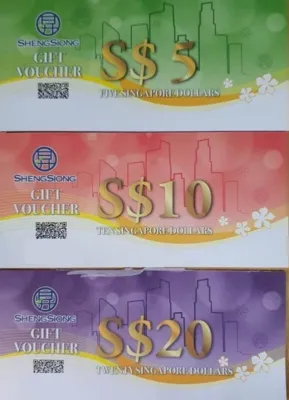
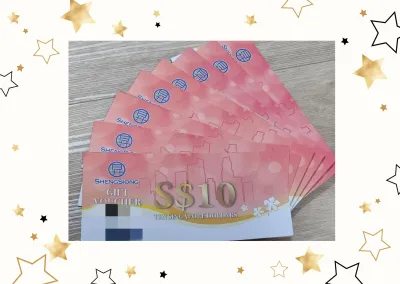
Redeeming a physical Shengsiong voucher at the supermarket is a straightforward process, but it requires following specific in-store procedures to ensure a hassle-free checkout. To use your voucher successfully, you must present the physical document to a manned cashier counter before your items are scanned, as automated self-checkout kiosks cannot accept or process paper vouchers. Whether you received these vouchers as a corporate gift, a community distribution, or a festive present, understanding the exact steps of redemption prevents unnecessary delays at the checkout lane. This guide outlines everything you need to know, from pre-shopping checks to handling leftover balances and navigating store policies in Singapore.
Before You Shop: Checking Your Shengsiong Voucher
Before heading down to your nearest outlet, taking a few moments to inspect your physical Shengsiong voucher can save you from disappointment at the cash register. Supermarkets maintain strict standards for processing paper-based payment methods to prevent fraud and accounting errors. A damaged or expired voucher can lead to checkout delays, requiring cashier supervisors to intervene or forcing you to pay the entire bill out of pocket.
Begin by examining the physical condition of the voucher. Ensure that the barcode, magnetic strip, or any embedded security features are completely intact, clean, and free of deep creases or tears. Cashiers rely on optical scanners to read the barcode instantly; if this area is smudged, crumpled, or defaced, the scanner may fail, leading to manual entry delays or potential rejection if the serial numbers are also unreadable. In Singapore’s humid climate, paper vouchers can easily degrade, stick together, or suffer ink smudging if stored in damp environments. Keeping them flat in a dry, dark compartment of your wallet or a dedicated card organizer preserves their physical integrity.
Products mentioned in this guide
Prices are valid at publication and may change. Please refer to the product page for the latest price.
Next, locate and verify the printed expiry date on the voucher. Shengsiong vouchers generally carry a specific validity period, and once this date has passed, the point-of-sale system will automatically reject the voucher code during transaction processing. It is always wise to plan your grocery trips well before this final date to avoid losing the monetary value of your voucher. If you have multiple vouchers, sort them chronologically by expiry date so you can prioritize using the ones that will expire first.
Finally, carefully read the Terms & Conditions printed on the reverse side of the physical voucher. These fine-print clauses detail any specific usage limitations, minimum spend requirements, or store-specific restrictions that might apply. Some vouchers may only be valid for specific product categories, while others might be restricted to certain corporate accounts or promotional windows. Understanding these parameters beforehand ensures your shopping list aligns perfectly with the voucher’s terms, preventing any awkward moments when trying to pay for restricted items.
Step-by-Step Guide to Redeeming Vouchers at Checkout
Once you have completed your shopping and filled your trolley, navigating the checkout process correctly ensures your physical voucher is processed smoothly. Following these chronological steps will help you complete your transaction without any friction.

Step 1: Choose the right counter. As you approach the checkout area, look for a manned cashier counter rather than heading toward the self-checkout machines. Automated self-checkout kiosks are designed for digital payments or cash insertion and typically do not have the physical mechanisms or optical configurations required to securely scan, verify, and deposit paper vouchers. A human cashier must physically handle and collect the voucher to reconcile their cash drawer at the end of the shift. Look for the overhead lane lights that indicate an active cashier is present, and join that queue to ensure your paper voucher can be processed.
Step 2: Notify the cashier early. As soon as you place your items on the conveyor belt, inform the staff member that you intend to pay using a physical Shengsiong voucher. Giving the cashier an early heads-up allows them to prepare the correct payment tender code on their point-of-sale terminal before they finish scanning your items. This proactive step prevents the cashier from having to void or restart the transaction screen after the final total has already been calculated. It also allows them to quickly double-check if their register is currently set up to accept physical vouchers without any system lag.
Step 3: Present the voucher. When the cashier has finished scanning your groceries and prompts you for payment, hand over the physical voucher directly. The cashier will scan the printed barcode using their handheld or counter-mounted scanner, or manually key in the voucher’s serial number if the barcode does not read immediately. The cashier will then securely place the paper voucher into the cash register drawer, as it serves as a physical proof of payment for internal auditing. Do not attempt to take the voucher back once it has been scanned; the store must retain the physical copy to balance their accounts.
Step 4: Settle any remaining balance. If your total grocery bill exceeds the face value of the voucher, you will need to pay the remaining difference. Be prepared to settle this outstanding amount using any of the store’s accepted secondary payment methods, such as cash, NETS, contactless debit cards, or major credit cards. The cashier will apply the voucher value first and then prompt you for the remaining balance on the card terminal or cash receiver. For example, if your total bill is S$55 and you present a S$50 voucher, you will need to pay the remaining S$5 using your preferred secondary payment method.
Step 5: Verify the receipt. After the payment is finalized, collect your printed receipt along with any purchased items. Take a moment to check the receipt to ensure the voucher deduction is accurately reflected under the payment breakdown. The receipt should clearly display the voucher’s face value as a deducted tender, alongside any secondary payment method used, confirming that the transaction was completed correctly. Keeping this receipt is also useful for tracking your household expenses and verifying that any loyalty points associated with your purchase have been correctly credited.
Important Restrictions and Store Policies to Keep in Mind
To avoid unexpected surprises at the counter, it is essential to familiarize yourself with the standard retail policies and restrictions governing the use of physical vouchers. Supermarkets enforce these rules strictly to maintain operational consistency across all outlets.
No change policy: One of the most critical policies to remember is that physical vouchers operate on a “no change” basis. If your total purchase amount is lower than the face value of the voucher, the supermarket will not provide cash change or credit notes for the remaining balance. For example, using a S$50 voucher for a S$45 purchase means you will forfeit the remaining S$5, so it is highly recommended to plan your shopping total to meet or exceed the voucher’s value. This policy is standard across most retail vouchers in Singapore, as the point-of-sale systems are not configured to dispense cash refunds on voucher transactions.
Excluded items: Certain product categories and services are typically excluded from voucher payments due to licensing regulations and third-party agreements. These restricted categories generally include tobacco products, lottery tickets, and specific third-party bill payment services or gift cards. If your shopping cart contains these items, you must pay for them separately using cash or card, as the voucher value cannot be applied to their cost. Ensure you separate these items at the checkout or clarify with the cashier before they begin scanning.
Promotion stacking: In most cases, physical vouchers can be used alongside general store-wide discounts, member loyalty points, and ongoing promotional bundles. However, some special promotional events or senior citizen discount days may have specific terms regarding voucher usage. It is best to check the in-store signage or ask the customer service staff if you plan to combine multiple discount schemes with your voucher payment. Generally, the voucher acts as a cash equivalent, meaning you can still enjoy promotional prices on individual items while paying with the voucher.
Lost or damaged vouchers: Physical vouchers are treated exactly like cash by the retail system. If your voucher is lost, stolen, or severely damaged beyond recognition, the store cannot replace, refund, or reissue it. Keeping your vouchers in a secure, dry place, such as a wallet or a dedicated organizer, ensures they remain safe and usable until your next shopping trip. Treating them with the same care as physical banknotes is the best way to safeguard their monetary value.
Managing Multiple Vouchers and Leftover Balances
When planning a larger household shopping trip, you may find yourself wanting to use several vouchers at once or trying to figure out how to avoid losing money due to the no-change policy. Managing these scenarios effectively helps you maximize every dollar of your voucher value.
Using multiple vouchers: You are generally allowed to use multiple physical vouchers for a single transaction, provided they are all valid and intact. When checking out, hand all the vouchers to the cashier together and request that they scan them sequentially. The point-of-sale system will aggregate the values of the vouchers and apply them to your total bill, leaving you to pay only the remaining balance if the total exceeds the combined voucher amount. This is particularly useful for major grocery runs where your total easily surpasses the value of several smaller-denomination vouchers.
Maximizing value: To avoid losing any leftover balance due to the no-change policy, keep a running estimate of your cart’s total value as you shop. If you find that your total is slightly below the voucher’s denomination, you can easily top up your bill by adding small, non-perishable household items at the checkout lane. Items such as pocket tissues, writing pads, basic stationery accessories, or household cleaning sponges are excellent, low-cost additions that ensure your final bill slightly exceeds the voucher value, allowing you to maximize the utility of your voucher without wasting any balance. Keeping a few of these small items in mind as you navigate the aisles prevents you from scrambling for filler items at the last minute.
Frequently Asked Questions (FAQ)
Can I use Shengsiong vouchers at the self-checkout machines?
No, physical paper vouchers cannot be used at self-checkout machines. These automated kiosks do not have the capability to securely collect, verify, and store physical paper vouchers for cash drawer reconciliation. To redeem a physical voucher, you must queue at a manned cashier counter where a staff member can manually inspect, scan, and retain the voucher as part of the store’s standard payment auditing process.
What happens if my Shengsiong voucher is torn or the barcode is unreadable?
If your physical voucher is torn, creased, or has an unreadable barcode, you should visit the store’s customer service desk before joining the checkout queue. Standard cashiers may not have the system authorization or tools to manually verify and process damaged vouchers. The customer service team can inspect the security features and serial numbers on the voucher to determine if it can be manually validated and authorized for use at the register.
Community discussion
Share your experience or ask a question. Comments are reviewed before publication.