
A thoughtful customised gift goes beyond simply adding a name to a cover; it requires matching the notebook’s physical traits to the recipient’s daily habits. When you choose a notebook that aligns with how someone writes, works, or creates, you transform a standard piece of stationery into an indispensable daily companion. By understanding the specific needs of students, professionals, and creatives, you can select the ideal combination of paper, binding, and personalisation to make your gift truly meaningful.
Selecting the right notebook involves evaluating several physical characteristics, including paper weight, ruling style, binding durability, and cover materials. Because different writing instruments interact uniquely with various paper types, considering the recipient’s preferred pen is also essential. This guide provides a practical framework to help you navigate these choices and select a customised notebook that your recipient will cherish and use every day.
Understanding Your Recipient's Daily Needs
Before selecting a notebook, consider where and how your recipient will use it. Students generally require notebooks that can withstand the rigours of daily transit. Their notebooks are frequently packed into backpacks, carried between lecture halls, and laid out on cramped desks. For these users, durability, ease of page-turning, and structured layouts for systematic note-taking and revision are the primary considerations.
Products mentioned in this guide
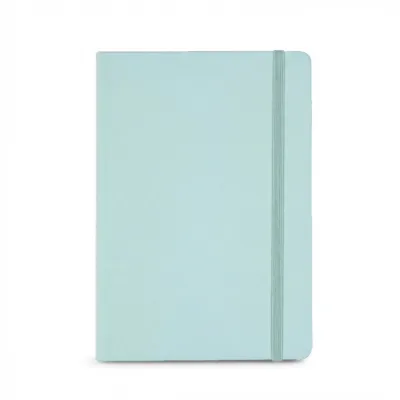
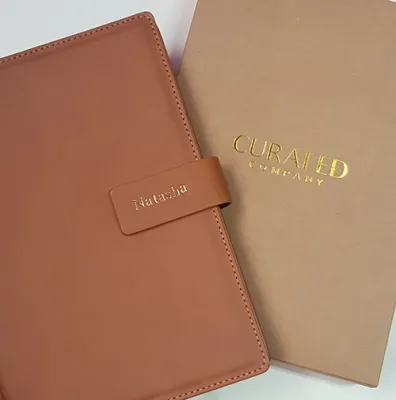
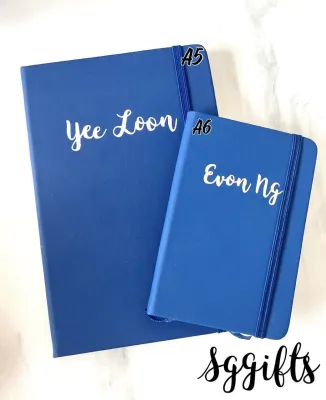
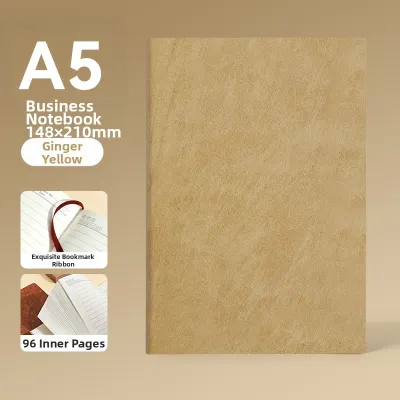
Prices are valid at publication and may change. Please refer to the product page for the latest price.
Professionals, on the other hand, often operate in structured office environments or meeting rooms where presentation matters. They typically benefit from sleek, minimalist designs with premium covers that look appropriate during client meetings or board presentations. Their writing habits often revolve around quick note-taking, tracking action items, and organising daily schedules, which makes structured layouts or clean, ruled pages highly practical.
Creatives, such as artists, designers, and writers, require a canvas that supports freeform thinking and visual expression. They often find rigid lines restrictive and instead prefer blank or dotted pages that accommodate sketching, mind mapping, and mixed media. For these recipients, the ability of the notebook to lie completely flat is crucial, as it allows them to work seamlessly across two-page spreads without obstruction.
Matching Paper Types to Writing and Sketching Habits
The choice of paper ruling directly influences how a recipient will organise their thoughts. Ruled paper is the classic choice for linear writing, making it excellent for traditional journaling, lecture notes, and meeting minutes. Dotted paper offers a subtle grid of dots that provides just enough structure for bullet journaling, vertical alignment, and basic sketching without cluttering the page. Blank paper offers complete freedom, making it the preferred option for freehand drawing, quick ideation, and unstructured brainstorming.

For technical tasks, grid paper is highly functional. It is particularly useful for mathematics students, engineering professionals, and designers who require precise horizontal and vertical guides for technical drawings, graphs, or layout planning. The structured nature of grid paper helps maintain accuracy when drawing to scale or aligning complex diagrams.
Paper weight and texture are critical factors that determine how the notebook handles different writing instruments. Paper weight is measured in grams per square metre (GSM). Standard notebooks often use paper ranging from 70 GSM to 80 GSM, which is lightweight and suitable for standard ballpoint pens. However, if your recipient prefers fountain pens, heavy gel pens, or markers, look for thicker paper ranging from 100 GSM to 120 GSM to prevent ink from bleeding through or ghosting on the reverse side of the page.
It is important to note that smoothness, bleed resistance, drying speed, water resistance, and erasability depend on the exact material combination of the paper and the ink used. Some high-GSM papers may still experience feathering if they lack the proper surface sizing or coating. To ensure the notebook matches the recipient’s favourite pen, it is always wise to check the manufacturer’s specifications regarding ink compatibility or suggest a quick trial on an inconspicuous back page before extensive use.
Selecting the Right Size and Binding for Their Lifestyle
The physical dimensions of the notebook dictate its portability and writing surface area. Standard paper sizes serve different lifestyle needs:
- A4 Size: Offers a generous writing area, making it ideal for desk-bound professionals, extensive sketching, or comprehensive lecture notes where portability is not a primary concern.
- A5 Size: Represents the most versatile option, fitting easily into most work bags and backpacks while providing ample space for daily journaling, meeting notes, and planning.
- Pocket Sizes (A6 or smaller): Highly portable and convenient for individuals who need to jot down quick ideas, reminders, or field observations while on the move.
Binding styles affect how the notebook opens and how easily pages can be turned or removed. Lay-flat binding, such as thread-bound or section-sewn binding, is highly recommended for writers and artists because it allows the notebook to open completely flat on a desk. This design ensures a comfortable writing experience across the entire page, which is especially beneficial for left-handed writers who often struggle with bulky center rings.
Spiral or wire-bound notebooks allow for 360-degree page rotation, making them highly functional when writing space is limited, such as on a small lecture desk or while standing. However, they do not offer the seamless two-page spread of a lay-flat notebook, and pages can tear easily if handled roughly. Hardcover notebooks provide a sturdy, built-in writing surface that protects the inner pages from bending, making them excellent for travel. Softcover notebooks are lighter and more flexible, making them easier to slide into tight bag compartments.
Cover materials contribute significantly to both the aesthetic appeal and the durability of the notebook. Vegan leather and genuine leather covers offer a classic, professional appearance that ages beautifully and resists wear. Bookbinding fabric or linen covers provide a tactile, organic feel that appeals to creatives, though they may require more care to keep clean. Kraft paper covers offer a minimalist, eco-friendly aesthetic that is lightweight and highly customisable through direct printing or drawing.
Personalisation Options That Add a Thoughtful Touch
Customisation elevates a standard notebook into a memorable customised gift. Debossing and foil stamping are classic methods for personalising the cover. Blind debossing presses a design or name directly into the cover material without colour, creating a subtle, elegant, and tactile indentation. Foil stamping uses heat and pressure to apply a metallic foil—such as gold, silver, or copper—to the cover, creating a striking contrast that stands out beautifully against darker cover materials.
When choosing text for personalisation, consider the recipient’s professional and personal context. For a professional setting, debossing the recipient’s initials or full name in a clean, sans-serif font is a safe and sophisticated choice. For students or creatives, you might choose an inspiring short quote, a significant date, or a custom illustration that reflects their personality. Always ensure the font style and placement align with the overall aesthetic of the notebook.
Some customisation services allow you to personalise the interior of the notebook as well. This can include adding a custom dedication page at the front, incorporating specific page templates like weekly planners or project trackers, or selecting custom endpapers. If you are ordering a premium notebook, pairing it with matching accessories—such as a high-quality pen, a leather pen loop, or an elegant presentation box—completes the gifting experience and makes the presentation feel truly special.
Pre-Order Checklist for Customised Notebooks
To ensure your customised gift arrives exactly as intended, complete this quick verification checklist before finalizing your order:
- Double-Check Spelling: Carefully review the spelling, capitalisation, and punctuation of any names, initials, or custom text. Once debossed or printed, these elements cannot be altered.
- Verify Specifications: Confirm the notebook size (e.g., A5), paper weight (e.g., 100 GSM), ruling style (ruled, dotted, or blank), and cover material against the retailer's product description.
- Review Layout Previews: If the online marketplace or stationery site provides a digital proof, check the alignment, font size, and positioning of the customisation on the cover.
- Confirm Lead Times: Customised items require additional production time. Check the estimated delivery dates to ensure the notebook will arrive in time for your specific occasion, especially during peak gifting seasons.
- Check Return Policies: Keep in mind that personalised items are typically non-refundable unless there is a manufacturing defect, making accurate pre-order checks essential.
Frequently Asked Questions (FAQ)
What is the best paper weight to prevent ink from bleeding through?
To prevent ink from bleeding through, look for paper with a weight of 100 GSM to 120 GSM. This thickness generally provides sufficient opacity and density to handle fountain pens, gel pens, and fine liners without significant ghosting. However, because bleed resistance also depends on the paper’s coating and the specific ink formulation, it is always best to check the manufacturer’s product specifications for explicit pen compatibility.
Can I customise the inner pages of a notebook, or just the cover?
Most standard customisation services focus primarily on cover personalisation, such as debossing names or foil-stamping initials. However, some specialised stationery brands and print-on-demand services do offer options to customise the inner pages. This can range from adding a personalised title page or dedication message to choosing custom page templates, such as planners, trackers, or specific grid layouts. You should verify the available customisation levels directly with the retailer before placing your order.
Community discussion
Share your experience or ask a question. Comments are reviewed before publication.