
The ideal leather journal cover for your A5 notebook depends entirely on whether your specific brand follows strict standard dimensions or uses a proprietary size, as well as the cover’s attachment mechanism. Because “A5” labels vary across manufacturers, finding the right fit requires verifying your notebook’s exact measurements and matching them to the cover’s structural design, such as slip-in flaps, elastic bands, or wrap-around closures.
A high-quality leather cover is more than just an aesthetic upgrade; it serves as a protective shield for your thoughts, sketches, and daily schedules. However, stationery enthusiasts often face the frustrating discovery that a cover labeled “A5” does not automatically accommodate every notebook marketed under the same size category. A discrepancy of just a few millimeters in width, height, or spine thickness can prevent a notebook from fitting inside a cover, cause the pages to buckle, or strain the notebook’s binding. To avoid these issues, you must understand how different stationery brands approach the A5 format and how various leather cover designs accommodate those differences.
Why "A5" Does Not Guarantee a Universal Fit
In the world of paper and stationery, the term “A5” technically refers to the international standard ISO 216 size, which measures exactly 148 millimeters wide by 210 millimeters high. While many European and Japanese stationery brands adhere strictly to these dimensions for their paper refills and notebooks, other global manufacturers use the term “A5” or “Large” as a general approximation rather than a precise measurement. For instance, some popular notebook brands produce journals that are slightly narrower or taller than the ISO standard, often to create a more pocket-friendly or streamlined profile.
Products mentioned in this guide
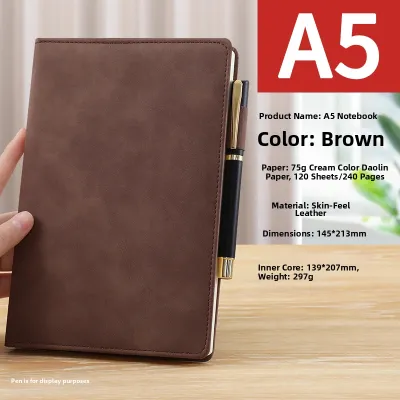
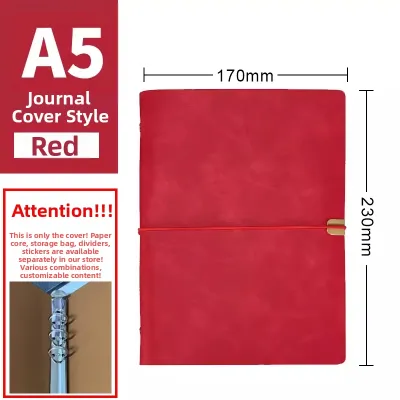
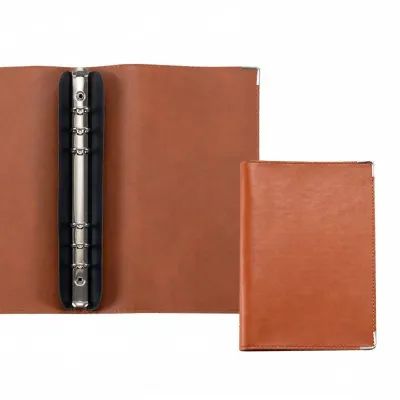
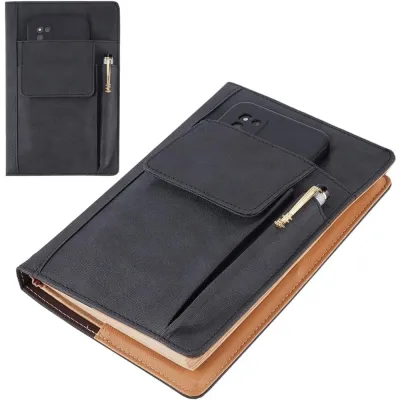
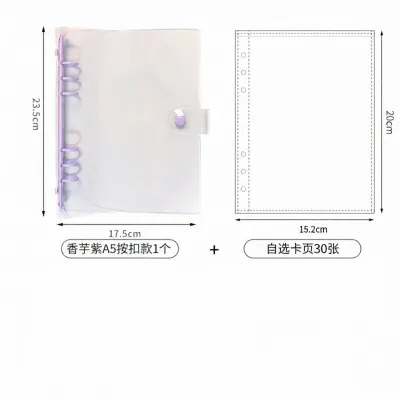
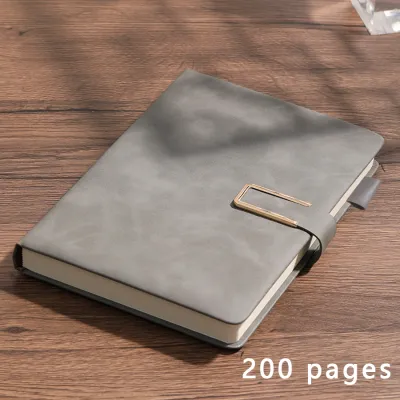
Prices are valid at publication and may change. Please refer to the product page for the latest price.
Beyond the height and width of the cover pages, the thickness of the notebook—often referred to as the spine depth—plays a critical role in compatibility. A standard 80-page notebook will have a significantly thinner spine than a comprehensive 400-page daily planner, even if both share the exact same height and width. When a notebook is inserted into a leather cover, the spine thickness consumes a portion of the cover’s overall width. If you attempt to fit a thick, high-page-count notebook into a cover designed for a slim notebook, the cover will fail to close properly, and the edges of your notebook pages may extend past the leather boundary, leaving them exposed to damage.
To ensure a perfect match, you should never rely solely on the product title or category label on an online marketplace. Instead, use a physical ruler or calipers to measure the exact height, width, and thickness of your closed notebook. Write down these measurements in millimeters, as this is the standard unit used by most premium leather artisans and stationery manufacturers. Additionally, check the notebook manufacturer’s official specification sheet to verify if the dimensions include the hard or soft cover of the notebook itself, as hardcovers add extra bulk that must be accounted for when selecting a leather sleeve.
How Leather Cover Attachment Mechanisms Affect Compatibility
The structural design of a leather cover determines how it holds your notebook in place and how much tolerance it has for variations in notebook size. The most common design is the slip-in pocket flap system, where the front and back covers of the notebook slide into leather pockets sewn into the interior of the cover. This mechanism provides a clean, traditional book-like feel and keeps the notebook securely anchored. However, slip-in flaps offer the least amount of tolerance for size discrepancies. If your notebook is even two millimeters wider than the pocket design allows, the cover will stretch tightly, bending the notebook’s cardboard backing or preventing the spine from sitting flat.

For writers who prefer flexibility, elastic band closures—often associated with traveler’s style notebooks—offer a highly adaptable alternative. Instead of sliding the notebook covers into pockets, you slide the center fold of the notebook booklet under one or more vertical elastic bands running along the spine of the leather cover. This system allows you to mix and match multiple slim notebooks, add folder inserts, or accommodate notebooks of varying thicknesses without worrying about precise pocket dimensions. The primary limitation of elastic bands is that they are best suited for softcover, thread-bound, or stapled booklets rather than thick, rigid hardcovers.
Another versatile option is the wrap-around or tie closure system, which often utilizes a long leather strap or a cord to secure the journal. These covers typically feature a single large pocket on one side and a loose flap on the other, allowing the leather to wrap naturally around notebooks of varying thicknesses. Wrap-around covers are highly forgiving for journals that expand over time as you paste in photos, receipts, or memorabilia. However, they tend to have a bulkier footprint in your bag and may not provide the structured, flat writing surface that some users prefer.
The binding type of your notebook also dictates how it interacts with a leather cover. Stitched and glued bindings (such as lay-flat thread bindings) require a cover that allows the notebook to open fully to 180 degrees without putting undue tension on the spine. Spiral-bound or wire-bound notebooks present a unique challenge; the metal or plastic coils require extra clearance in the spine area of the leather cover. If you slide a spiral notebook into a standard slip-in leather cover, the coils will push against the leather, creating an awkward bulge and potentially scratching the interior leather surface over time.
Matching Cover Styles to Your Notebook's Binding and Dimensions
When pairing a leather cover with your notebook, establishing a conditional framework based on the notebook’s physical characteristics will help you avoid a costly mismatch. If your notebook strictly adheres to standard ISO A5 dimensions and features a fixed, non-expanding spine (such as a standard thread-bound hardcover or softcover), a precise slip-in flap cover is highly recommended. This combination offers a tailored, professional look and ensures that the notebook remains perfectly stable while you write.
If you use a notebook with proprietary sizing, a very thin spine, or if you plan to customize your setup by adding extra page inserts, look for adjustable elastic systems or covers with gusseted pockets. These designs accommodate the natural expansion of your journal and prevent the leather from warping. When shopping, always prioritize cover makers who explicitly list compatible notebook models in their product descriptions. Many independent leather artisans design their covers specifically around popular heritage stationery brands, adjusting the tolerances to account for the unique thickness and cover stiffness of those specific products.
Forcing a mismatched notebook into a rigid leather cover should always be avoided. If you attempt to squeeze a notebook that is too large into a tight cover, you risk permanently stretching the leather, which can ruin its shape and prevent it from holding correctly sized notebooks in the future. Furthermore, the excessive pressure can crack the glued spine of your notebook or tear its outer pages. If your measurements fall between two cover sizes, it is always safer to opt for the slightly larger size or choose a cover design with adjustable closures.
Evaluating Leather Quality and Functional Features
Selecting the right cover also requires evaluating the material quality and practical features to ensure they align with your daily writing habits. When reviewing product descriptions, look for terms like “full-grain” or “top-grain” leather. Full-grain leather retains the natural grain of the hide, offering maximum durability and a unique patina that develops over time as it absorbs oils from your hands. Top-grain leather is slightly sanded to remove imperfections, providing a more uniform appearance and a softer initial feel. Avoid covers labeled simply as “genuine leather” or “bonded leather,” as these are often made from reconstituted leather scraps and lack the structural integrity and longevity required for daily stationery use.
Consider your daily workflow when evaluating functional additions such as pen loops, card slots, and document pockets. A built-in pen loop is highly convenient, but you must verify that it is wide enough to accommodate your preferred writing instrument, whether it is a slim ballpoint or a thick fountain pen. Interior card slots and document sleeves are excellent for carrying business cards, transit passes, or loose notes, but adding too many items to these pockets can create uneven bumps beneath your notebook pages, making it difficult to write smoothly on a flat surface.
Finally, pay close attention to the interior lining of the leather cover. A raw, unlined suede interior offers a rustic look but can sometimes shed small fibers onto your notebook pages or cause friction when sliding the notebook in and out. A lined interior—whether made from smooth pigskin, fabric, or a finished leather split—protects your notebook’s original cover from sticking, moisture transfer, or dye bleeding. If you use a notebook with a light-colored paper or fabric cover, testing the interior of the leather cover for colorfastness with a damp white cloth can prevent accidental staining.
Decision Framework: Which Leather Cover Should You Choose?
To finalize your decision, follow this structured framework to match your notebook to the ideal leather cover:
First, choose a precise slip-in cover if your notebook matches standard ISO A5 dimensions (148 mm x 210 mm), has a fixed spine, and you prefer a streamlined, classic book-like profile for office or desk use. This style provides the most stable writing platform and keeps your notebook securely in place.
Second, choose an elastic band or adjustable wrap-around cover if your notebook uses proprietary sizing, has a very thin softcover spine, or if you plan to carry multiple inserts and accessories simultaneously. This style offers the flexibility needed to accommodate changing setups and expanding journals.
Third, verify if the cover manufacturer explicitly lists your specific notebook brand and model as a guaranteed fit. Many premium cover makers design custom editions tailored to the exact dimensions of popular Japanese and European stationery brands.
Fourth, if your notebook features an unusual binding (such as a thick spiral coil), extreme thickness, or non-standard proportions, stop and consult the cover maker or a stationery specialist before purchasing. Many independent artisans are willing to customize the pocket depth or spine width to ensure a flawless fit for your specific writing tool.
Frequently Asked Questions (FAQ)
Can I use an A5 leather cover for a smaller notebook?
Using an A5 leather cover for a smaller notebook, such as an A6 or B6 size, is generally not recommended for daily mobile use. Because the interior slip-in pockets or elastic bands are designed for the wider and taller dimensions of an A5 notebook, a smaller journal will slide around, slip out of the cover entirely, or become damaged at the corners. The lack of structural support can also make writing on the go highly uncomfortable, as the notebook will shift with every pen stroke.
If you must use a smaller notebook in an A5 cover as a temporary solution, you can secure it by using supplementary elastic bands, adhesive dots, or by placing the notebook inside an A5-sized plastic zip pouch insert that fits securely into the cover’s pockets. However, for long-term comfort and protection, it is always best to invest in a cover specifically sized for your notebook’s exact dimensions.
How do I care for a leather journal cover in a humid climate?
In humid climates, such as Singapore, leather journal covers require regular care to prevent mold growth and moisture damage. Start by dusting your cover weekly with a soft, dry microfiber cloth to remove dust and skin oils, which can trap moisture on the leather’s surface. Store your journal in a well-ventilated area away from direct sunlight, and avoid keeping it sealed in airtight plastic bags or dark, damp drawers where humidity can accumulate.
Apply a high-quality, manufacturer-approved leather conditioner sparingly once every few months to keep the leather supple and prevent it from drying out or cracking. When applying conditioner, use a clean cloth, rub it in gentle circular motions, and allow the cover to air-dry completely in a cool room before inserting your notebook. Always ensure that both your notebook pages and the leather cover are completely dry before closing and storing the journal to minimize the risk of mildew.
Community discussion
Share your experience or ask a question. Comments are reviewed before publication.