
Selecting the right A3 80gsm paper for your printing needs in Singapore requires balancing upfront costs with long-term operational efficiency. While it is tempting to simply purchase the cheapest ream available on the shelf, low-grade paper often leads to frequent printer jams, poor ink absorption, and excessive wear on office equipment. True value lies in finding a brand that delivers consistent runnability, clean print contrast, and trouble-free feeding at a competitive price point.
This guide outlines how to evaluate A3 80gsm paper brands, understand the local market tiers, perform compatibility checks on your office hardware, and implement cost-effective bulk sourcing strategies tailored to Singapore’s unique climate and business environment.
What Makes an A3 80gsm Paper Brand "Good Value"?
Evaluating the value of copy paper goes far beyond comparing the price tag on individual reams. In a busy office or commercial printing environment, a paper’s performance directly impacts productivity. If a slightly cheaper paper causes frequent multi-sheet feeds or mid-job jams, the cost of wasted toner, ruined sheets, and employee downtime quickly eclipses any initial savings.
Products mentioned in this guide
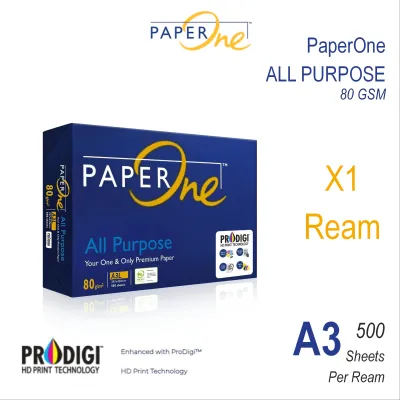
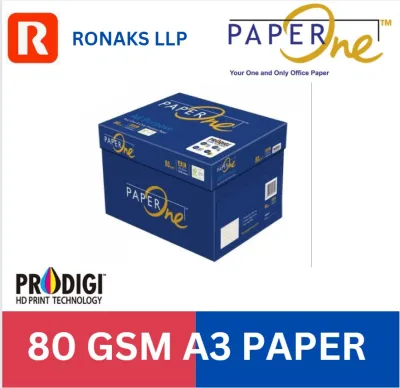
Prices are valid at publication and may change. Please refer to the product page for the latest price.
Runnability is the primary metric of paper value. High-quality 80gsm paper is engineered with precise moisture control and structural stiffness to ensure it glides smoothly through high-speed copiers and multi-function printers (MFPs). Because A3 sheets are twice the size of standard A4 sheets (measuring 297mm by 420mm), they are twice as susceptible to bending, misaligning, or curling under the intense heat of a printer’s fuser unit.
Another critical factor is surface smoothness and chemical composition. A well-calibrated paper surface allows toner to adhere evenly and prevents inkjet ink from feathering or spreading along the paper fibers. This ensures that fine lines, architectural schematics, and small text characters remain sharp and legible.
To calculate the true cost per sheet of your A3 paper, use a comprehensive formula that accounts for hidden expenses. Take the total invoice price—including any delivery surcharges or handling fees—and divide it by the number of usable sheets. If a cheap carton of paper results in a five percent discard rate due to jams or poor print quality, your actual cost per sheet is significantly higher than the nominal purchase price.
Understanding Common Brand Tiers in Singapore
When sourcing A3 80gsm paper in Singapore, you will generally encounter three distinct brand tiers. Understanding these categories helps you align your purchasing decisions with your specific printing requirements without relying on unverified marketing claims.

Premium Brand Tier
Premium brands focus on maximum brightness, exceptional smoothness, and high opacity. These papers typically feature a CIE whiteness rating of 160 or higher, providing a high-contrast background that makes printed text and graphics stand out. They are manufactured using advanced alkaline papermaking processes that reduce paper dust and prevent yellowing over time. Premium paper is highly recommended for client-facing documents, official contracts, and detailed color presentations where visual appeal is paramount.
Standard Brand Tier
Standard brands represent the workhorse category for most corporate offices and administrative departments. With a CIE whiteness rating ranging between 150 and 158, these papers offer excellent contrast for daily black-and-white printing, internal reports, and high-volume copying. They are designed with balanced stiffness and curl resistance, making them highly reliable for double-sided (duplex) printing on both laser and inkjet systems.
Economy Brand Tier
Economy brands prioritize low cost and are often sold in unbranded or generic packaging. These papers usually have a lower whiteness rating (below 145 CIE) and a slightly rougher surface texture. While suitable for single-sided internal drafts, packing slips, or basic worksheets, economy papers often carry a higher dust content. Over time, this fine paper dust can accumulate on your printer’s feed rollers, leading to slippage and frequent paper jams.
To verify brand claims, always inspect the product packaging for technical specifications rather than relying on generic descriptors like “premium quality.” Look for certified physical metrics such as ISO brightness, Bendtsen roughness, and environmental certifications like FSC (Forest Stewardship Council) or PEFC (Programme for the Endorsement of Forest Certification). Physical inspection of a sample sheet should reveal a uniform texture when held up to the light, with no visible clumps of fiber or thin patches.
Printer Compatibility and Paper Performance Checks
Before committing to a large bulk purchase of A3 80gsm paper, it is essential to verify how the paper interacts with your specific printing hardware. Different printer models have varying tolerances for paper thickness, stiffness, and surface coatings.
First, consult your printer’s user manual to confirm the supported media weights for each input tray. While almost all A3-capable office printers easily support 80gsm paper, some smaller or older multi-function devices may require you to feed A3 sheets through a specific bypass tray rather than the main internal cassettes. Ensure the paper guides in the tray are adjusted snugly against the edges of the A3 stack to prevent skewed feeding.
Next, perform a small-batch test run of approximately 20 to 50 sheets to observe the paper’s physical behavior under operating conditions. Pay close attention to the following three factors:
- Paper Curl: As the paper exits the fuser unit, it should lie relatively flat. Excessive upward or downward curling indicates that the paper has either absorbed too much ambient moisture or cannot withstand the printer's operating temperature.
- Static Buildup: Observe whether the printed sheets stack neatly in the output tray. If sheets cling together or slide out of alignment, static electricity may cause feeding issues during subsequent double-sided print runs.
- Dust Accumulation: Wipe the area around the paper feed rollers with a clean, dry microfiber cloth before and after your test run. A high accumulation of white paper residue indicates a low-grade paper cutting process, which will eventually require professional printer maintenance.
Establish clear stop conditions for your testing. If you experience more than two paper jams during a standard 100-sheet print run, or if you notice significant toner flaking off the page when the paper is folded, halt usage immediately. Continuing to run incompatible or low-quality paper can scratch delicate drum units or damage the fuser rollers, leading to costly repair bills.
Sourcing Strategies and Bulk Purchasing in Singapore
Because A3 paper is twice the size of A4, a standard carton of A3 paper (typically containing five reams of 500 sheets each) is heavy and bulky, weighing approximately 12.5 kilograms. This physical weight makes logistics and delivery a major factor in your overall purchasing strategy.
When comparing sourcing channels, evaluate local stationery distributors, B2B office supply specialists, and general e-commerce platforms. Local B2B suppliers are often the most cost-effective option for businesses, as they specialize in bulk deliveries and can offer structured contract pricing. General e-commerce platforms may offer convenience for single-ream purchases but often add high shipping fees for heavy items.
Pay close attention to Minimum Order Quantities (MOQs) and delivery terms. Many office suppliers in Singapore offer free delivery only when your order exceeds a specific dollar value, such as S$150 or S$200. If you only need one or two cartons of A3 paper, consider bundling your purchase with other office essentials like toner cartridges, writing instruments, or A4 paper to avoid paying high delivery surcharges.
Always verify the supplier’s return and replacement policies before placing a large order. Inspect the delivery immediately upon arrival. If any reams show signs of damage, torn protective wrappers, or water exposure, reject those specific cartons and request immediate replacements. Damp paper is unusable in modern laser printers and will cause immediate jamming.
Finally, inquire about the supplier’s storage practices. Reliable distributors store their paper inventory in dry, temperature-controlled warehouses to prevent moisture absorption. Avoid purchasing from vendors who store paper in open-air industrial units or high-humidity environments, as the paper’s structural integrity may already be compromised before it reaches your premises.
Frequently Asked Questions (FAQ)
Is 80gsm thick enough for double-sided A3 color printing?
For standard office documents containing text, simple charts, and light color highlights, 80gsm paper is generally sufficient for double-sided (duplex) printing, especially when using a laser printer. Laser printers deposit dry toner on top of the paper surface, which minimizes bleed-through.
However, if you are using an inkjet printer or printing high-density color graphics, such as full-page photos or heavy solid backgrounds, 80gsm paper may suffer from show-through (where the image on the reverse side is visible) or cockling (where the paper wrinkles due to moisture absorption). To verify suitability, print a test sheet and hold it up to standard office lighting. If the reverse image is distracting or the paper warps, you should upgrade to 100gsm or 120gsm paper for that specific project.
How should I store open A3 paper reams in a humid climate?
Singapore’s high relative humidity can quickly ruin open paper. Paper is highly hygroscopic, meaning it readily absorbs moisture from the surrounding air. When paper absorbs moisture, it expands unevenly, leading to wavy edges, feeding failures, and severe printer jams.
To maintain paper quality, keep all reams sealed in their original moisture-resistant wrappers until the exact moment you are ready to load them into the printer. If you have a partially used ream, fold the wrapper tightly over the exposed end and secure it with tape. Store your paper reams completely flat on a shelf or inside a closed cabinet. Never store paper reams upright, directly on concrete floors, near open windows, or directly underneath air conditioning vents, as these areas are prone to rapid temperature and humidity fluctuations.

Community discussion
Share your experience or ask a question. Comments are reviewed before publication.