
To find the correct bubble wrap bag size, measure your product’s maximum length, width, and thickness, then add specific allowances for the internal bubble lining and sealing seams. A flat bubble wrap bag loses usable width and length as the thickness of the inserted item increases. As a general rule, add the thickness of your product to both the width and length measurements of your item, plus an additional 10 to 20 millimetres of clearance, to identify the minimum usable interior dimensions required.
Selecting the wrong size can lead to split seams, crushed corners, or excessive shipping costs. By understanding how manufacturers measure these bags and how to calculate the physical space occupied by the bubble cushioning, you can ensure your items remain secure throughout transit across Singapore or international shipping routes.
Decoding Bubble Wrap Bag Dimensions and Usable Space
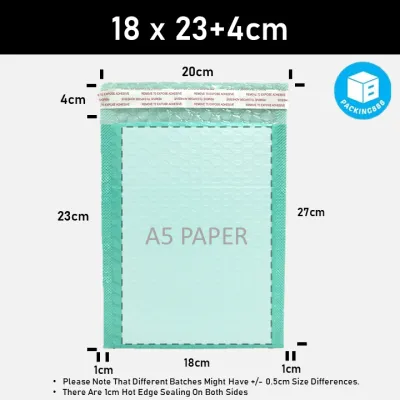
When browsing packaging supplies, the dimensions printed on the box or listed on an ecommerce platform are typically the nominal exterior dimensions. These represent the outer edges of the bag before it is filled. The actual usable interior space is always smaller because of the heat-sealed side seams, which usually take up 5 to 10 millimetres on each side.
Products mentioned in this guide
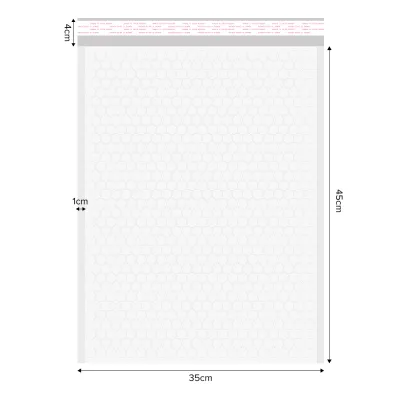
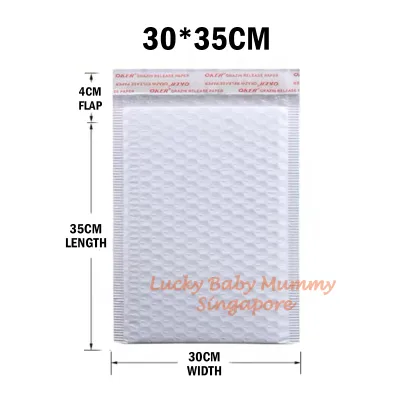
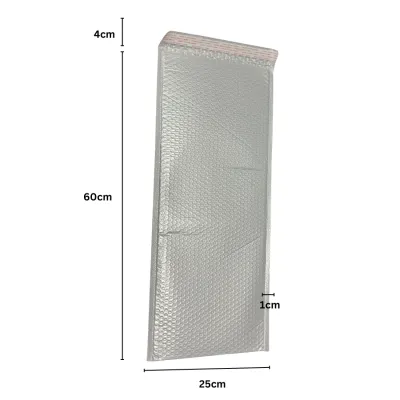
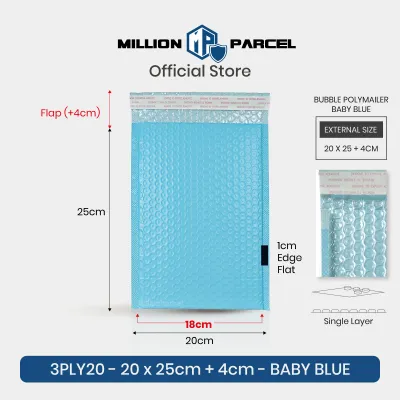
Prices are valid at publication and may change. Please refer to the product page for the latest price.
Furthermore, flat bubble wrap bags do not have built-in side gussets. Inserting a three-dimensional object into a flat envelope forces the panels apart, pulling the sides inward and reducing the effective width. It is also critical to check whether the manufacturer’s stated length includes the adhesive flap. In most standard designs, the listed length only measures up to the opening of the bag, with the lip or flap extending beyond that measurement. Always verify this specification on the product label before ordering in bulk.
Measuring Your Products to Establish Baseline Dimensions
To establish an accurate baseline, measure the absolute maximum dimensions of your product using a reliable ruler or measuring tape. If your item is already packed in a retail box, measure the outer dimensions of that box rather than the item itself. Always measure the longest, widest, and thickest points, including any protruding parts such as knobs, handles, or decorative elements.

For irregularly shaped items, do not rely on the base measurements alone. Place the object on a flat surface and imagine a rectangular box fitting tightly around it. Measure the height of the tallest protrusion and the width of the widest point. If you plan to bundle multiple items together in a single bubble wrap bag, stack them exactly as they will be shipped and measure the entire bundle as a single unit.
Calculating Allowances for Sealing and Bubble Cushioning
Once you have the maximum length, width, and thickness of your product, calculate the necessary allowances to accommodate the physical thickness of the bubble layer. Unlike standard paper envelopes, a bubble wrap bag is lined with air-filled plastic pockets that project inward, reducing the interior volume.
To calculate the minimum required bag width, use the formula: Product Width + Product Thickness + Sealing Margin. The sealing margin should be at least 15 to 20 millimetres to allow the item to slide in smoothly. For the bag length, use the formula: Product Length + Product Thickness + Clearance. If the bag features a peel-and-seal adhesive strip, ensure the flap can fold over completely and seal flat. If your item requires extra void fill, foam inserts, or cardboard edge protectors, add the thickness of these materials to your baseline measurements before calculating the final bag size.
Matching Bubble Size and Thickness to Product Fragility
The level of protection your product receives depends heavily on the bubble diameter and the thickness of the bag’s outer material. Small bubbles, typically measuring about 10 millimetres in diameter, are ideal for lightweight items that require surface scratch prevention, such as smartphone cases, cosmetics, or small stationery items. These smaller bubbles allow the bag to remain relatively flexible, making it easier to pack tight spaces.
For heavier, delicate, or highly impact-sensitive items like glassware, electronics, or ceramics, larger bubbles measuring 25 millimetres in diameter provide superior shock absorption. You should also evaluate the outer material of the bag. Single-layer bubble bags are lightweight but prone to punctures. Multi-layer or co-extruded poly bubble mailers offer enhanced tear resistance and water resistance. To verify the water resistance of a specific material combination, place a few drops of water on an unused sample; the water should bead up and slide off without soaking through.
Final Sizing and Compatibility Checklist Before Purchasing
Before placing a bulk order for your business, run through a final compatibility checklist to ensure the selected dimensions meet all practical requirements. Compare your calculated minimum usable dimensions against the manufacturer’s detailed specification sheet. If your calculated needs fall right on the boundary between two standard bag sizes, always choose the larger size to avoid tight fits that can cause seam blowouts.
Next, verify that the bag’s material is compatible with your preferred sealing method. While built-in peel-and-seal adhesive strips are highly convenient for rapid packing, some high-volume operations prefer using impulse heat sealers to create a tamper-evident, airtight closure. Ensure the plastic material of the bag is rated for heat sealing if you plan to use this method. Finally, confirm that the fully packed bag fits within the size and weight tiers of your chosen courier service in Singapore. An oversized or bulging bag can push your shipment into a higher pricing bracket.
Frequently Asked Questions (FAQ)
Does the stated width of a bubble wrap bag include the sealing flap?
No, the stated width of a bubble wrap bag refers to the horizontal measurement across the opening and does not include the sealing flap. However, the width measurement does include the heat-sealed side margins, which typically reduce the usable interior width by 10 to 20 millimetres. Always check the supplier’s detailed product description or request a physical sample to confirm the exact usable interior width before purchasing in bulk.
Can I use a flat bubble wrap bag for thick or boxy items?
While you can use a flat bubble wrap bag for thick or boxy items, it is not ideal. Forcing a thick, rigid box into a flat bag stretches the plastic, flattens the protective bubbles, and puts extreme tension on the side seams, which can cause them to split during transit. For items with a thickness greater than 50 millimetres, consider using gusseted bubble bags or wrapping the item in traditional bubble wrap rolls.
How do I know if the bubbles are large enough to protect my product?
To determine if the bubble size is sufficient, perform a simple, observable trial with a sample bag. Pack your product inside, seal it, and conduct a controlled drop test from a low height onto a protected surface, or apply firm hand pressure. If the bubbles easily deflate or allow the product to feel the impact directly, upgrade to a larger bubble diameter or a thicker, multi-layer bubble wrap bag.
Community discussion
Share your experience or ask a question. Comments are reviewed before publication.