
Finding the ideal monthly planner notebook depends entirely on your specific writing tools, planning habits, and daily carry requirements. There is no single universal winner; instead, the best choice emerges from matching paper specifications to your pens, aligning layout structures with your organizational workflow, and balancing durability against your budget. This guide provides a structured framework to evaluate and compare different planner brands across these core dimensions, helping you make an informed decision without relying on generic marketing claims.
When selecting a planner, you are choosing a daily companion that must withstand constant handling while remaining functional. A mismatch in paper weight can turn your favorite gel pen into a bleeding mess, while an incompatible layout can leave you with unused pages and disorganized thoughts. By understanding the technical specifications of paper, the structural benefits of different bindings, and the actual utility of various layouts, you can confidently select a planner that enhances your productivity.
Evaluating Paper Quality for Your Writing Tools
Paper quality is the foundation of any stationery experience, directly influencing how your writing tools perform. The most common metric used to measure paper is grams per square meter (GSM), which indicates the weight and density of the paper. Standard office paper typically ranges from 70 to 80 GSM, which is often prone to ghosting—where writing is visible on the reverse side—and bleed-through when using wet inks. For a reliable monthly planner, looking for paper between 80 GSM and 120 GSM is generally recommended to accommodate a wider variety of writing instruments.
Products mentioned in this guide
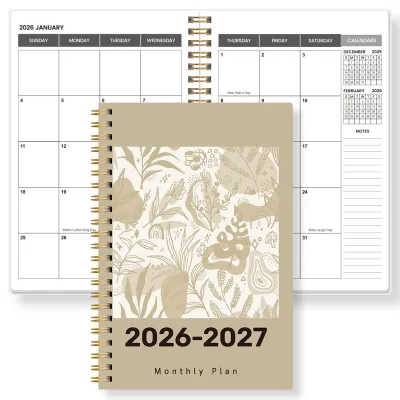
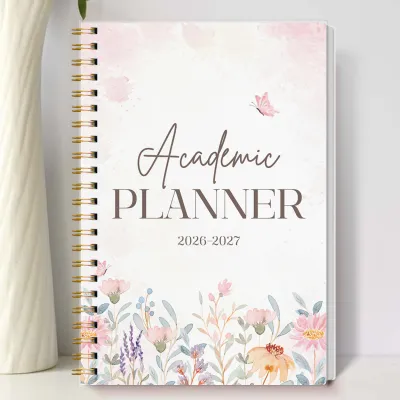
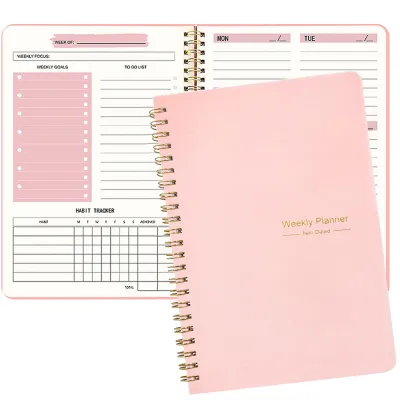
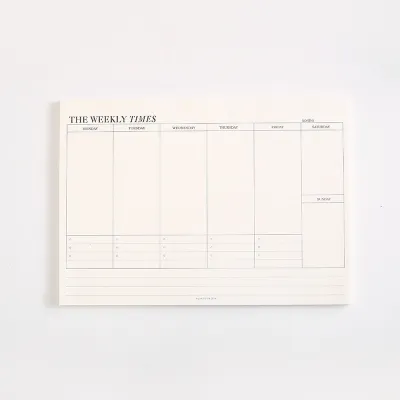
Prices are valid at publication and may change. Please refer to the product page for the latest price.
If you prefer using fountain pens, rollerballs, or heavy gel pens, the paper density and sizing (the chemical treatment applied to paper during manufacturing) become critical. High-quality planners designed for wet inks often use specialized paper that resists feathering, which is when ink spreads along the paper fibers to create fuzzy lines. While higher GSM often correlates with better ink resistance, some lightweight papers around 52 to 68 GSM are specifically engineered with unique coatings to handle fountain pen ink beautifully without bleeding, though they may exhibit some show-through.
The texture of the paper, often described as its tooth, also dictates your writing experience. Smooth, coated papers allow pens to glide effortlessly across the surface, which is excellent for fine-tip gel pens and fountain pens, though this coating can extend ink drying times. Conversely, toothy or textured papers provide more feedback, making them ideal for pencils, ballpoint pens, and quick-drying inks where smudging must be minimized. If you frequently write on the go, a slightly toothier paper with faster drying times can prevent accidental smudges when you close your planner quickly.
When physical testing is not possible, you can verify paper compatibility by examining manufacturer specifications and product labels. Look for explicit terms such as “fountain pen friendly,” “acid-free,” or “bleed-resistant” in the product description. Additionally, checking independent user reviews and stationery forums can provide real-world insights into how specific paper handles popular pens. Many stationery enthusiasts share detailed pen tests on various planner brands, offering a reliable preview of how your preferred writing tools will behave on those exact pages.
Comparing Monthly Layout Structures and Binding
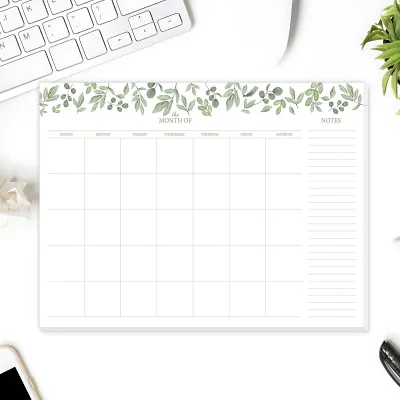
The layout of your monthly planner determines how you visualize your time and organize your tasks. A standard monthly spread typically spans two pages, providing a spacious grid that allows you to see the entire month at a glance. This layout is highly effective for tracking long-term deadlines, appointments, and major events. Some compact planners offer a single-page monthly layout, which is highly portable but limits the amount of detail you can record, making it better suited for high-level milestone tracking rather than daily scheduling.

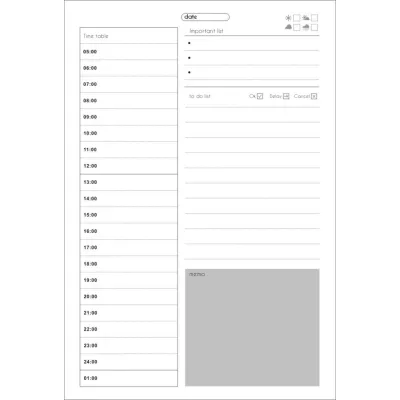
Beyond the main calendar grid, the surrounding elements on the page significantly impact usability. Many planners include dedicated margins or sidebars for monthly goals, task lists, or habit trackers. If you prefer a structured approach, look for layouts with pre-printed prompts and checkboxes. If you prefer flexibility, seek out designs that leave these areas blank, dotted, or lined, allowing you to customize the space for sketching, mind mapping, or detailed note-taking as your needs change throughout the year.
The background format of the pages—whether grid, dotted, lined, or blank—plays a major role in how you align your handwriting and structure your thoughts. Dotted and grid formats offer the greatest versatility, providing subtle guidance for straight writing and neat layouts without being as visually intrusive as solid lines. Lined pages are excellent for structured journaling and long-form writing, while completely blank pages offer total freedom for sketching and creative brainstorming, though they require more effort to keep writing aligned.
Binding is another critical factor that affects both the usability and longevity of your planner. Thread-sewn binding, often referred to as Smyth-sewn, allows the notebook to lie completely flat when open, providing a seamless writing surface across both pages of a spread. Spiral and wire-o bindings also lie flat and allow you to fold the planner back on itself to save desk space, though the central rings can sometimes interfere with your hand while writing. Disc-bound and ring-bound systems offer the ultimate flexibility, allowing you to add, remove, or rearrange pages easily, though they tend to be bulkier and require specialized hole punches.
Assessing Overall Value and Durability
A planner must endure daily transport in bags, constant opening and closing, and varying environmental conditions over the course of a year. Cover materials play a primary role in protecting the inner pages from wear and tear. Hardcovers, typically made from thick cardboard wrapped in paper, bookcloth, or synthetic leather, offer maximum rigidity and allow you to write comfortably without a desk. Softcovers, made from flexible cardstock or thin plastics, are lighter and conform better to tight spaces in your bag, though they are more susceptible to bent corners and creasing.
When evaluating the price of a planner, consider the functional extras that enhance your daily workflow. Features such as multiple ribbon markers allow you to jump quickly between the current month and your notes pages. Elastic closures keep the planner securely shut in your bag, preventing pages from getting crumpled, while expandable back pockets provide convenient storage for loose receipts, stickers, or business cards. Built-in index pages and pre-printed page numbers can also save you time by helping you organize and locate your notes efficiently.
To determine the true value of a planner, it is helpful to calculate the cost-per-page or cost-per-month rather than focusing solely on the initial purchase price. A premium planner with high-quality paper and durable binding may have a higher upfront cost, but if it prevents ink bleed-through and lasts the entire year without falling apart, it offers excellent long-term value. Conversely, a budget-friendly option that requires you to buy separate notebooks for notes or suffers from torn pages after a few months may end up costing you more in both money and frustration.
Decision Framework: Choosing the Right Planner for Your Style
To finalize your choice, align your primary writing tools and daily habits with the physical characteristics of the planner. Choose a high-GSM, thread-sewn planner if you primarily write with fountain pens, rollerballs, or wet gel inks, and if you value a seamless, lay-flat writing experience. This combination ensures that your ink will not bleed through to the next page, and the durable binding will keep your records intact for archival purposes, making it ideal for detailed journaling and professional record-keeping.
Choose a spiral or disc-bound planner if you prioritize flexibility, portability, and the ability to customize your layout on the fly. These systems are perfect for those who need to fold their planner in half to write on small surfaces, such as on public transit or in crowded meetings. Disc-bound options are particularly beneficial if you like to integrate printed documents, loose notes, or different paper types directly into your monthly calendar, allowing your planner to evolve alongside your projects.
Before making your final purchase, always verify key specifications to ensure the planner fits your lifestyle. Confirm the exact start month, as some planners follow the academic calendar starting in July, while others follow the standard calendar starting in January. Check the physical dimensions to ensure the notebook fits comfortably in your daily bag, and verify that the paper weight matches your most frequently used pens to avoid any disappointing ink reactions on your very first page.
Frequently Asked Questions (FAQ)
Can I use fountain pens in standard monthly planners?
You can use fountain pens in standard monthly planners, but success depends heavily on the paper’s treatment and your ink choice. Standard planner paper that is not specifically optimized for wet inks may cause feathering, where the ink spreads, or bleed-through, which ruins the reverse side of the page. To ensure a clean writing experience, look for planners that explicitly state they use fountain pen friendly paper, or opt for extra-fine nibs and dry inks. Alternatively, you can place a blotting sheet or a plastic pencil board beneath your active page to protect the sheets underneath from pressure marks and accidental ink transfer.
What is the difference between a monthly planner and a monthly calendar?
The primary difference lies in their structural design and intended depth of use. A monthly planner is a bound notebook that combines monthly calendar spreads with additional blank, lined, or dotted pages designed for detailed goal setting, task tracking, and journaling. It is built for portability and comprehensive organization. In contrast, a monthly calendar is typically a single-sheet wall hanger or a desk stand designed primarily for quick reference of dates and major appointments. It features larger daily blocks for brief notes but lacks the structured, private, and portable writing space required for daily planning and reflection.
Community discussion
Share your experience or ask a question. Comments are reviewed before publication.