
Selecting the right copy paper for an office involves balancing print quality, machine reliability, and cost efficiency. While it is tempting to purchase the least expensive carton available, low-grade paper often leads to frequent printer jams, poor ink absorption, and premature hardware wear. To make an informed decision, office managers must evaluate key physical specifications, equipment compatibility, packaging formats, and environmental certifications.
In Singapore’s tropical climate, high relative humidity adds another layer of complexity to paper selection. Excess moisture in the air can compromise paper structure, leading to feeding issues and print distortion. Understanding how different paper brands and specifications perform under these conditions is essential for maintaining a productive, frustration-free workspace.
Core Specifications That Define Paper Quality
Paper weight is measured in Grams per Square Meter (GSM), which indicates the density and thickness of the sheet. Standard office copy paper typically ranges from 70 GSM to 80 GSM. An 80 GSM sheet is the industry standard for daily office printing, offering a reliable balance of stiffness and feed reliability. Lower-weight options, such as 70 GSM, are highly cost-effective for high-volume internal drafts but are more prone to curling and double-sheet feeding in high-speed copiers. For premium documents, client proposals, or double-sided color prints, paper weights of 90 GSM to 100 GSM or higher provide a more substantial, professional feel.
Products mentioned in this guide
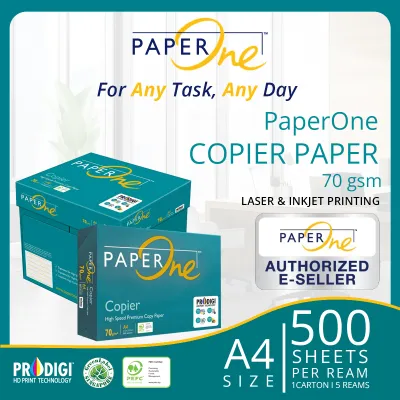
![PaperOne™ Copier Paper 70gsm / 75gsm Copy Paper A4 [1 Box]](https://img.lazcdn.com/g/p/62f961291078a3b12171dd45eea2a9a4.jpg_400x400q80.jpg_.webp)
![PaperOne™ Digital Premium Quality 85gsm / 80gsm Carbon Neutral Copy Paper A4 [1 Box]](https://img.lazcdn.com/g/p/314e28db684b5a59446140a7a613d0c3.jpg_400x400q80.jpg_.webp)
![PaperOne™ All Purpose Premium Quality 80gsm Copy Paper A4 [2 Reams]](https://img.lazcdn.com/g/p/6fe22f63efd1aeac13600887dc29a7da.jpg_400x400q80.jpg_.webp)
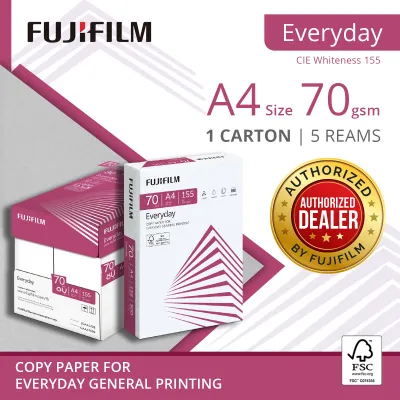
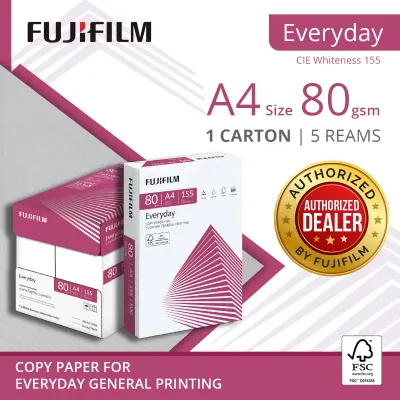
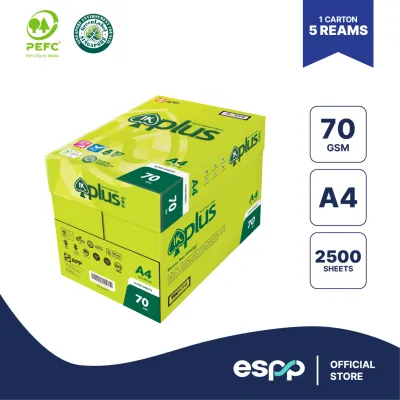
![[SG]Perfect Print A4 Size 70gsm White Copier Paper [Evergreen Stationery] (5 Reams per Carton) | MAX 2 CARTONS/ORDER](https://img.lazcdn.com/g/p/5b68d91431474af3ae7b65825324d08d.png_400x400q80.png_.webp)
Prices are valid at publication and may change. Please refer to the product page for the latest price.
Brightness and whiteness are distinct metrics that determine how clean and legible your printed text will appear. Brightness measures the reflectance of a specific blue light wavelength on a scale of 1 to 100. High-brightness paper, typically rated 96 or above, provides sharp contrast, making black text stand out and colors appear more vibrant. Whiteness, often measured using the CIE whiteness index, represents how the paper looks to the human eye under full-spectrum light. When comparing brands, look for a whiteness rating above 150 CIE for client-facing documents, while a lower rating is perfectly acceptable for internal records.
Opacity and thickness directly influence how well a sheet handles double-sided (duplex) printing. Opacity refers to the amount of light obstructed by the paper; a low-opacity sheet allows text from the reverse side to show through, creating a messy, illegible document. Thickness, or caliper, affects how the paper feels and how easily it passes through the printer’s internal rollers. To verify opacity and thickness before committing to a bulk purchase, hold a printed sample up to an office light source to check for visible ghosting or bleed-through.
Printer Compatibility and Jam Prevention
Laser and inkjet printers utilize entirely different technologies to transfer text and images onto paper, requiring different paper characteristics for optimal results. Laser printers use intense heat and pressure to fuse dry toner powder onto the page. Consequently, laser-compatible paper must have low moisture content and high thermal stability to prevent curling under extreme heat. Inkjet printers, on the other hand, spray liquid ink droplets onto the surface. Inkjet-compatible paper requires specialized surface sizing to control ink absorption, preventing the ink from spreading, feathering, or bleeding through the fibers.

Paper curl is a primary cause of printer jams, particularly in humid environments. When paper absorbs moisture from the air, its fibers expand unevenly, causing the sheet to warp. To minimize jams, always verify your printer manufacturer’s recommended paper weight range and tray capacity in the user manual. High-speed enterprise copiers often require stiffer, more uniform sheets to handle rapid paper paths without misfeeding. Testing a single ream of a new brand under normal operating conditions is the most reliable way to evaluate its real-world feed performance.
Paper dust and lint are often overlooked factors that can gradually degrade office hardware. During the manufacturing process, industrial blades cut large paper rolls into individual sheets. Lower-quality brands often leave microscopic paper fibers and dust along these cut edges. As the paper passes through your printer, this dust accumulates on rubber pickup rollers, feed tires, and optical sensors. Over time, this buildup reduces roller grip, leading to frequent multi-sheet pulls and sensor errors. Choosing brands that utilize precision rotary cutting processes helps protect your equipment and extend maintenance intervals.
Evaluating Value: Unit Cost and Packaging Formats
To determine the true value of copy paper, look beyond the total price of a carton and calculate the unit cost. Divide the total cost of the carton by the number of reams, or calculate the cost per sheet in S$. This allows for an accurate comparison between different brands and packaging sizes. While a cheaper carton might seem attractive, it may contain fewer sheets or lower-quality paper that leads to costly printer downtime and wasted toner from misprints.
Buying paper by the carton (typically containing 5 reams or 2,500 sheets) offers significant bulk savings compared to purchasing individual reams. However, bulk purchasing requires careful consideration of your office’s storage capacity and consumption rates. In Singapore, storing large quantities of paper in non-air-conditioned spaces can expose the stock to high humidity, causing the sheets to absorb moisture and warp before they ever reach the printer tray. If your office has limited climate-controlled storage, purchasing smaller quantities more frequently may prevent costly moisture damage.
Consistency across batches is a hallmark of reputable paper brands. When evaluating a brand, inspect the physical packaging of the reams. The wrapper should be made of moisture-resistant, poly-shielded material that is tightly sealed to protect the paper from environmental humidity. Additionally, check that the sheet count is accurate and that the edges of the paper are cleanly trimmed without burrs or sticking. Consistent manufacturing standards ensure that the last ream in a carton performs just as reliably as the first.
Sustainability Labels and Sourcing Standards
Environmental responsibility is an increasingly important factor in corporate procurement. When comparing copy paper brands, look for recognized, third-party forestry certifications rather than vague, self-declared eco-friendly claims. The Forest Stewardship Council (FSC) and the Programme for the Endorsement of Forest Certification (PEFC) are globally recognized standards. These labels guarantee that the wood fiber used to manufacture the paper was harvested from responsibly managed forests that protect biodiversity, prevent deforestation, and respect local community rights.
Recycled copy paper is an excellent way to reduce your office’s environmental footprint, but it involves certain performance trade-offs. Paper made from post-consumer waste (PCW) requires less raw wood pulp and energy to produce. However, repeated recycling shortens the paper fibers, which can result in a slightly rougher texture, lower brightness, and a higher tendency to generate paper dust. For daily internal printing, a blend of 30% to 50% recycled content often provides a good balance of sustainability and printer compatibility, while 100% recycled paper should be thoroughly tested in your specific machines first.
The bleaching process used to whiten paper fibers also has environmental implications. Traditional bleaching methods used elemental chlorine, which released harmful dioxins into water systems. Modern sustainable brands utilize cleaner bleaching technologies. Look for labels indicating Elemental Chlorine Free (ECF) or Totally Chlorine Free (TCF) processing. ECF paper uses chlorine dioxide instead of elemental chlorine, significantly reducing pollution, while TCF paper uses non-chlorine agents like oxygen or hydrogen peroxide, representing the cleanest manufacturing standard.
Decision Framework: Matching Paper to Your Office Needs
To finalize your copy paper selection, apply a structured decision framework based on your office’s specific daily printing requirements and equipment setup:
- For high-volume internal drafts and everyday text documents: Select a standard 70 GSM to 80 GSM paper with moderate brightness (90 to 92). This option minimizes operational costs while providing clear readability for internal memos, emails, and reference sheets.
- For client-facing proposals, color presentations, and double-sided prints: Opt for a premium 90 GSM to 100 GSM paper with high brightness (96+) and whiteness (150+ CIE). The added thickness prevents double-sided show-through, while the superior brightness ensures sharp contrast and professional visual appeal.
- For high-speed enterprise printers and multi-function copiers: Prioritize paper stiffness and low-dust manufacturing. Always consult your printer manual to verify compatible GSM ranges, and test a single ream of a new brand to observe feed reliability before committing to a bulk carton purchase.
- When to avoid a purchase: Do not buy paper that lacks clear GSM, brightness, or environmental labeling on the packaging. Additionally, reject any cartons or reams that show signs of physical damage, tearing, or moisture exposure, as warped paper will inevitably cause printer malfunctions.
Frequently Asked Questions (FAQ)
Does copy paper expire or go bad in storage?
While copy paper does not have a formal expiration date, its performance will degrade over time if it is not stored correctly. Paper is highly hygroscopic, meaning it readily absorbs moisture from the surrounding air. In humid environments, exposed paper will absorb water vapor, leading to wavy edges, curling, and a significant increase in printer jams. To maintain paper flatness and print quality, store unused reams flat on a shelf or pallet off the floor, away from direct sunlight and air conditioning vents. Always keep the paper sealed in its original moisture-resistant wrapper until you are ready to load it into the printer tray.
Can I use the same copy paper for both laser and inkjet printers?
Yes, you can use multi-purpose copy paper, which is specifically engineered to perform acceptably in both laser and inkjet machines. Multi-purpose paper features a balanced moisture content to withstand the high heat of laser fusing while incorporating surface sizing to control the absorption of liquid inkjet inks. However, for specialized or high-density printing, dedicated papers perform better. If your office prints high-resolution color graphics on an inkjet printer, dedicated inkjet paper will prevent bleeding and feathering. Conversely, if you run high-volume monochrome print jobs on a laser copier, dedicated laser paper will minimize curling and static buildup.
Community discussion
Share your experience or ask a question. Comments are reviewed before publication.