
To choose your first embroidery threads set, prioritize a manageable collection of standard six-strand cotton threads—ideally between 30 and 50 colors—that are clearly labeled with color codes. Avoid massive, unbranded bulk assortments that tangle easily or bleed when washed. Instead, look for a set that offers a balanced mix of primary colors, neutrals, and essential shading tones, packed in a way that keeps the skeins organized and ready for use.
Quick Guide: What Makes a Good Beginner Embroidery Thread Set?
For anyone starting out in needlework, the primary goal is to find a thread set that minimizes frustration and maximizes early success. It is highly tempting to purchase the largest, cheapest box available online, but these assortments often contain low-quality threads that fray, knot, or break mid-stitch. A beginner-friendly set should prioritize ease of use, manageable color variety, and forgiving materials over sheer quantity or professional-grade specialty threads.
Your decision process when evaluating a starter threads set should rest on three main pillars. First, the material composition must be easy to handle and stitch. Second, the thread structure should allow you to customize thickness easily for different fabrics. Third, the color range must offer practical versatility for a wide variety of introductory projects. A well-curated, smaller set with clear color labels and organized packaging will always provide more long-term value than a disorganized bulk box of unknown quality.
Products mentioned in this guide
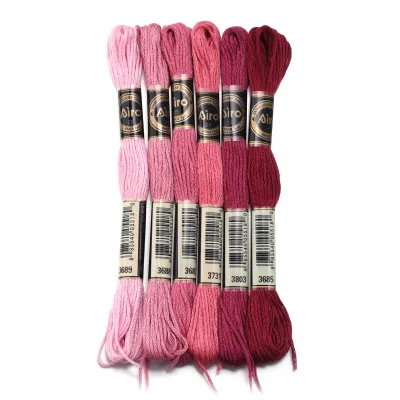
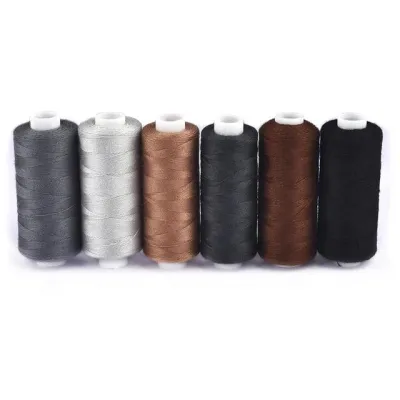
![[SG SELLER]30 Pcs/Set Polyester Sewing Threads Set Embroidery Threads for Upholstery Sewing Machine (250 Yards / Roll)](https://img.lazcdn.com/g/p/99320171026eaf046e806d59bcb7c85c.jpg_400x400q80.jpg_.webp)
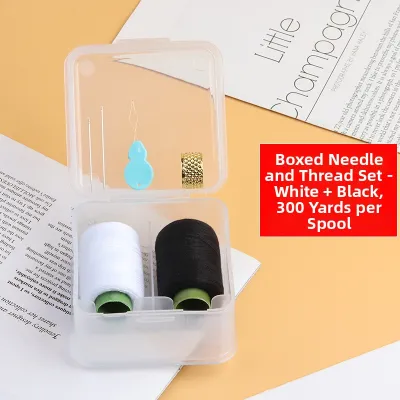
Prices are valid at publication and may change. Please refer to the product page for the latest price.
Choosing the Right Thread Material for Easy Stitching
When browsing for a threads set, always check the product packaging or online listing for the exact material composition rather than relying solely on visual appearance. Many synthetic threads are treated to look like cotton but behave very differently under tension. Understanding what your thread is made of will help you anticipate how it behaves on your fabric.

Material choice directly affects thread tension, fraying, and the final texture of your embroidery. Some fibers glide smoothly through tight fabric weaves, while others create friction that can warp your base material or cause the thread to shred. Selecting a forgiving fiber ensures that minor mistakes in tension or stitch pull do not ruin your overall design.
Cotton and Stranded Cotton
Stranded cotton is the absolute standard recommendation for beginners, and for good reason. It features a soft, matte finish that delivers a classic, traditional look to hand embroidery. The fibers are spun loosely enough to allow you to separate individual strands easily, yet they remain cohesive enough to resist fraying during active stitching.
This material is highly breathable and shares similar structural properties with common base fabrics like cotton calico, linen, and canvas. Because the thread and the fabric stretch and react to moisture in similar ways, using cotton thread on cotton or linen fabric minimizes puckering and ensures a flat, professional finish.
Polyester and Blends
Polyester and cotton-polyester blends are common alternatives found in entry-level thread sets. Pure polyester threads are incredibly durable, have a slight sheen, and are highly resistant to shrinking, fading, or breaking under high tension. This makes them excellent for items that will undergo frequent washing, such as embroidered clothing or tote bags.
However, pure synthetic fibers can sometimes feel slippery or become prone to static electricity, which makes them trickier for beginners to knot securely. A cotton-polyester blend serves as a highly practical middle ground, combining the smooth handling and matte appearance of cotton with the strength and colorfastness of polyester.
Materials to Avoid Initially
While metallic threads, pure silk, and heavily textured novelty yarns look beautiful in the store, they require advanced handling skills and should be avoided in your very first set. Metallic threads have a stiff, wire-like texture that catches on fabric, kinks easily, and shreds under minimal friction. Silk is highly slippery and delicate, making it difficult to maintain consistent tension without experience.
Save these specialty threads for later projects once you have mastered basic stitch tension, needle control, and fabric preparation. Starting with standard cotton or high-quality blends ensures you can focus on learning stitches without fighting your materials.
Decoding Thread Strands, Ply, and Thickness
One of the most common points of confusion for beginners is the difference between “thread count” and “thread strands.” In embroidery, thread count is a term reserved for the weave density of the base fabric. When evaluating a threads set, you should instead focus on the strand structure and ply of the embroidery floss itself.
Standard embroidery floss is constructed as a single thread composed of six individual strands that are lightly twisted together. This six-strand structure is designed specifically so that you can peel apart the strands to customize the thickness of your stitches. For instance, you might use a single strand for delicate facial features, two or three strands for standard satin stitching, and all six strands for bold, chunky outlines or French knots.
Your thread thickness must always match the weave of your fabric and the size of your needle eye. If you pull a thick six-strand thread through a tight, finely woven fabric, you will struggle to pull the needle through and will leave permanent, unsightly holes in the material. Conversely, using a single thin strand on a coarse canvas will make your stitches look sparse and swallowed by the background.
When purchasing your first set, look for options that explicitly state they are “six-strand” or “stranded” floss. Avoid single-thickness specialty threads, such as perle cotton or tapestry wool, for your initial general-purpose set. While these non-divisible threads are excellent for specific techniques like cross-stitch, sashiko, or punch needle, they lack the versatility required for learning a broad range of surface embroidery stitches.
Evaluating Color Variety and Practical Organization
It is easy to be enticed by thread sets boasting 150 or 200 different colors, but a high color count does not always translate to a useful collection. A set with dozens of nearly identical shades of neon pink is far less practical than a smaller, thoughtfully balanced palette. Focus on the utility of the colors provided rather than the sheer volume of skeins.
Assessing Color Distribution
A versatile starter set should feature a balanced representation of the color wheel. Look for a collection that includes clear primary colors (reds, blues, yellows), secondary shades (greens, oranges, purples), and soft pastels. This variety allows you to tackle diverse patterns, from bright floral designs to subtle geometric layouts.
Equally important is the presence of adequate neutrals and shading colors, such as deep blacks, clean whites, warm browns, and cool grays. These shades are essential for outlining shapes, adding shadows, creating highlights, and grounding your colorful stitches. Without a solid foundation of neutrals, your finished pieces may lack depth and contrast.
Checking Labels and Storage
Before buying, verify that the thread set uses a clear color-coding system. Reputable manufacturers label each skein with a specific color number or code on the paper band. This coding is vital because it allows you to easily repurchase the exact shade when you run out mid-project, rather than trying to match colors by eye under different lighting conditions.
Additionally, consider how the threads are packaged and stored. Sets that arrive pre-wound on plastic or cardboard bobbins, or those packed in compartmentalized plastic storage boxes, offer immense value. If you purchase loose skeins stuffed into a single plastic bag, you will quickly find yourself spending more time untangling knots than actually stitching. Organized packaging keeps your workspace tidy and protects your threads from dust.
How to Spot Good Value and Avoid Beginner Traps
To find a set that offers genuine value, look past the price tag and calculate the actual cost per meter. A set containing 100 tiny spools with only 2 meters of thread each is far less useful than a set of 40 standard skeins that measure 8 meters each. Standardizing your comparison on total yardage ensures you are getting enough material to complete multiple projects.
Another critical factor is colorfastness, which refers to a thread’s ability to retain its dye without bleeding when wet. You can easily perform an observable trial to verify this: wet a small piece of the thread with water and press it firmly against a clean scrap of white cotton fabric using a warm iron. If any dye transfers to the scrap fabric, the thread is not colorfast and will likely ruin your embroidery if the finished piece is washed.
Before washing any completed embroidery project, always check the care label of your base garment or fabric. If the manufacturer’s care instructions for the fabric conflict with your thread’s washing guidelines, default to the gentler, hand-wash-only option to protect your stitches. In Singapore’s humid climate, storing your thread sets in airtight plastic containers with silica gel packets is also a highly effective way to prevent mold and preserve the strength of cotton fibers over time.
Avoid extremely cheap, unbranded bulk sets sold on discount online marketplaces. These products often suffer from poor quality control, resulting in threads that fray excessively as they pass through the fabric, or colors that vary wildly from one batch to the next. Investing a small amount more—typically ranging from S$15 to S$35 for a curated starter set—guarantees a smooth stitching experience and a finished piece you can be proud of.
Frequently Asked Questions (FAQ)
Do I need to buy a massive thread set with hundreds of colors?
No, you do not need a massive set to begin. A smaller, well-curated set containing 30 to 50 distinct colors is more than enough for learning basic stitches and completing your first few projects. Starting with a smaller collection keeps your workspace organized, reduces decision fatigue when choosing colors, and fits easily into a compact storage box.
Can I use regular sewing thread for embroidery?
While you can use regular sewing thread in a pinch, it is not ideal for standard hand embroidery. Sewing thread is designed to be thin, strong, and unobtrusive for joining seams, meaning it lacks the thickness, matte texture, and distinct sheen of embroidery floss. It also cannot be separated into individual strands, which severely limits your ability to vary stitch thickness.
How do I keep my embroidery threads from tangling?
To prevent tangling, avoid cutting thread lengths longer than 18 inches (approximately 45 cm) at a time, as longer pieces tend to twist and knot as you pull them through the fabric. Additionally, wind your loose skeins onto plastic or cardboard bobbins and store them flat in a partitioned plastic embroidery box to keep them clean, organized, and tangle-free.
Community discussion
Share your experience or ask a question. Comments are reviewed before publication.