
Selecting your first embroidery thread set is an exciting milestone, but the sheer variety of options can quickly feel overwhelming. To make a successful first purchase, look for a set that offers a versatile colour palette (a balanced mix of primary, neutral, and skin tones), high-quality 6-strand cotton floss that separates smoothly, standard colour coding for future matching, and a manageable quantity (typically 24 to 50 skeins with at least 8 meters per skein) rather than massive, unbranded bulk packs. This ensures you have the right materials to practice basic stitches without wasting money on low-quality fibers that shred, fade, or bleed.
Define Your Embroidery Style and Project Scale
Beginners often dive in without realizing that different needlework styles require distinct thread types. Surface embroidery (often called hand embroidery) and classic cross-stitch rely heavily on divisible cotton embroidery floss, which allows you to adjust the thickness of your lines. In contrast, punch needle work and crewel embroidery typically use thicker, non-divisible wool or acrylic yarns to fill spaces quickly and create a plush, raised texture.
The scale of your project also dictates your purchasing strategy. If you are starting with a small, delicate floral motif on a 10 cm (4-inch) hoop, you only need a few meters of a few select colours. However, tackling a large geometric tapestry or a highly detailed landscape requires a broader spectrum of shades and a much larger volume of thread.
Products mentioned in this guide
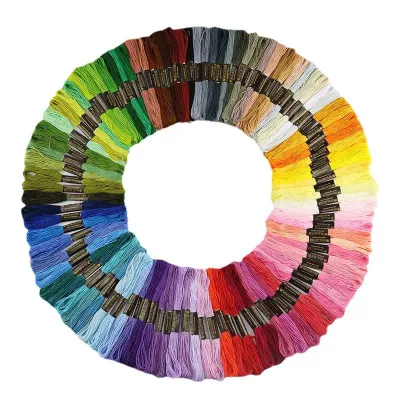
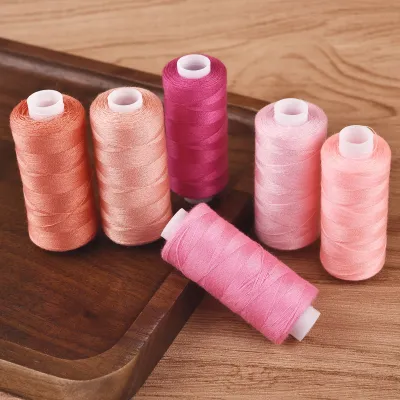
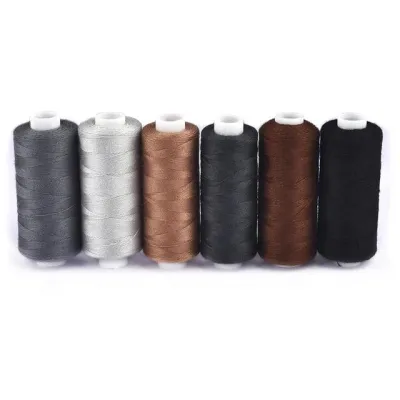
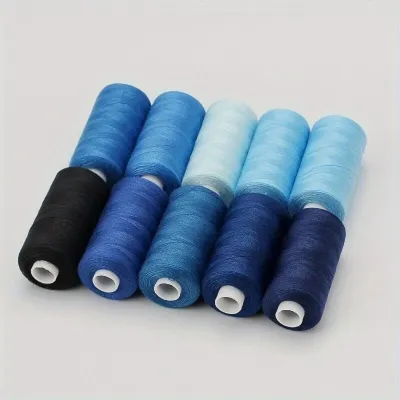
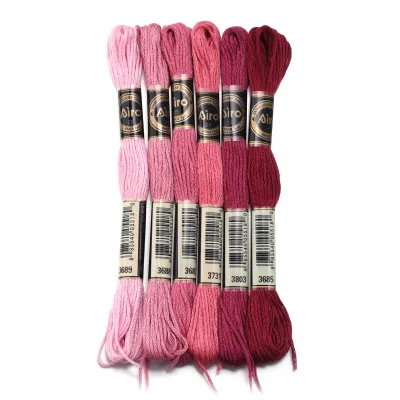
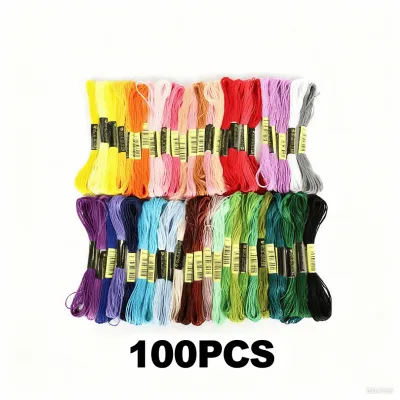
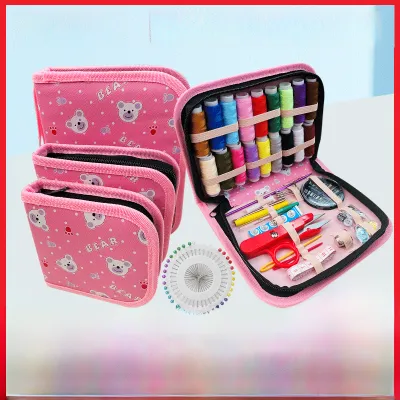
Prices are valid at publication and may change. Please refer to the product page for the latest price.
To avoid accumulating a drawer full of unused craft supplies, always start with a clear project idea or a specific beginner-friendly pattern. Many modern patterns come with a recommended list of thread colours and quantities. Selecting a starter set that aligns with your chosen pattern ensures every skein has a purpose, saving you from the frustration of running out of a key color or owning shades you will never use.
Evaluate Thread Material and Strand Separability
When browsing for your first set, you will encounter various fiber types, primarily cotton, wool, polyester, and rayon. For absolute beginners, 100% cotton floss is the gold standard. Cotton offers a soft, semi-matte finish, behaves predictably under tension, and does not slip easily, making it incredibly forgiving for those learning basic stitches like the satin stitch or French knot.

Synthetic blends, such as polyester-cotton or pure polyester, are often cheaper and highly durable, but they can feel stiff, springy, and prone to knotting during use. Rayon and metallic threads offer beautiful sheen and sparkle, but they are notoriously slippery, prone to fraying, and highly frustrating for a beginner to control. Wool is excellent for heavy, textured work but requires sturdy, open-weave fabrics like canvas or heavy linen to prevent friction damage.
The structural hallmark of standard embroidery thread is the 6-strand cotton floss. This design is highly versatile because the six loosely twisted plies can be easily separated. For fine, delicate details on lightweight fabrics like cotton lawn or batiste, you might use only one or two strands. For bold outlines or full coverage on heavier linens or denim, you might use four to six strands.
Always check the product label or online description for the exact material composition and ply count. Avoid sets that use vague, misleading marketing terms like “premium craft thread” or “soft embroidery fiber” without specifying the actual material. Unspecified synthetics often shred when pulled through tightly woven fabrics, causing puckering and ruining your base material. Ensure your thread weight matches your fabric: heavy threads on thin fabrics cause puckering, while ultra-fine threads on heavy canvas will look sparse and uneven.
Assess the Colour Palette and Dye Reliability
It is easy to be seduced by sets boasting 150 different colours, but a beginner is far better served by a smaller, well-balanced palette of 24 to 50 distinct shades. Look for a set that includes a versatile spectrum: essential neutrals (white, black, grey, cream, brown), primary and secondary colors (red, blue, yellow, green, orange, purple), and a selection of skin tones or earth tones. A curated set prevents you from getting lost in dozens of nearly identical pastel pinks or neon greens that you may never find a use for.
Dye reliability, or colourfastness, is a critical quality marker. There is nothing more heartbreaking than spending twenty hours on a beautiful red-and-white embroidery piece, only for the red dye to bleed and stain the white fabric the first time you wash or steam it. High-quality threads undergo rigorous dyeing processes to ensure the color remains locked within the fibers.
To verify dye reliability, perform a simple, observable test before starting your project. Cut a 10 cm snippet of the darkest or most vibrant thread from your set—usually deep reds, dark blues, or intense blacks. Wet the snippet with room-temperature water and press it firmly between two layers of clean, white scrap fabric or a white paper towel. If any color transfers to the white medium, the thread is not colourfast.
If you discover your threads are prone to bleeding, you must exercise extreme caution. You can still use them for decorative items that will never be washed, but you should avoid using them on garments, tea towels, or any item exposed to moisture. For mildly bleeding threads, rinsing them thoroughly in cold water until the water runs completely clear before stitching can help mitigate the risk, though choosing a higher-quality, colourfast set from the start is always the safer path.
Check Skein Quantity and Thread Length per Spool
When comparing embroidery thread sets online, look closely at how the manufacturer defines quantity. A set advertised as having “100 pieces” might sound like an incredible bargain, but you must distinguish between the number of skeins (individual bundles of thread) and the actual physical length of thread per skein.
Standard high-quality embroidery skeins typically measure 8 meters (approx. 8.7 yards) in length. Some budget-friendly sets inflate their skein count by offering “mini-skeins” that are only 4 or 5 meters long. If you are working on a standard beginner project, such as a 10×10 cm (4×4 inch) hoop design with moderate satin stitching, you can easily use 4 to 6 meters of a single color. If your set only provides short skeins, you risk running out of a crucial shade halfway through your design.
To estimate if a set’s thread length is sufficient, assume that a standard 8-meter skein of 6-strand floss yields 48 meters of single-strand thread. If your pattern calls for 3-strand stitching, one standard skein gives you 16 usable meters of thread. This is generally more than enough for small-to-medium motifs.
Additionally, pay attention to how the threads are packaged. Some sets deliver threads loosely tied in loops or packed tightly in plastic bags, which can quickly turn into a tangled nightmare when you pull a strand. Sets that come pre-wound on plastic or cardboard bobbins, or those packaged as neatly wrapped pull-skeins with clear paper sleeves, offer immediate usability and save you hours of manual wind-up time.
Review the Practical Value of Included Accessories
Many beginner embroidery thread sets are sold as all-in-one kits, bundling threads with hoops, needles, scissors, water-soluble pens, and storage cases. While these bundles seem convenient, you must evaluate whether these accessories offer genuine utility or simply inflate the overall price. Starter sets in Singapore typically range from S$15 to S$40, and the quality of the bundled tools often dictates whether they are worth the investment.
The most critical accessory is the embroidery needle. High-quality embroidery needles (often called crewel needles) have sharp points to pierce fabric cleanly and long, smooth eyes that accommodate multiple strands of floss without shredding them. Low-quality needles included in cheap kits often have rough, burred metal inside the eye, which acts like a tiny saw, constantly fraying and snapping your thread as you work.
Embroidery hoops are another area where quality varies wildly. A good hoop must hold your fabric drum-tight throughout your stitching session. Sturdy wooden hoops (such as those made of smooth beechwood) or high-quality plastic hoops with a nesting groove are excellent. Avoid flimsy, lightweight bamboo hoops that warp easily or plastic hoops with weak metal tension screws that strip when tightened.
A dedicated storage box or organizer adds significant value, especially in a humid climate like Singapore. A plastic box with adjustable dividers keeps your bobbins organized by color, prevents them from tangling, and protects the fibers from dust, pet hair, and direct sunlight. If a set includes low-grade tools, it is often more cost-effective to buy a high-quality, thread-only set and purchase your needles, hoops, and scissors separately from a reputable stationery or craft supplier.
Common Purchasing Mistakes to Avoid as a Beginner
One of the most common pitfalls for first-time buyers is the temptation to purchase massive, low-cost sets containing hundreds of colors. While a giant rainbow of thread looks appealing on screen, it often leads to decision paralysis and leaves you with dozens of shades you will never use. Furthermore, storing hundreds of loose skeins requires significant space and organization, which can quickly overwhelm a beginner.
Another critical mistake is buying unbranded or generic threads that lack standard color codes. Reputable manufacturers use a standardized numbering system (such as the DMC color card) printed on the skein’s paper sleeve. If you run out of a specific shade of blue while working on a large pattern, having a color code allows you to walk into any craft store or order online to get an exact match. Unbranded threads have no such codes, meaning you will have to visually match the thread, often resulting in noticeable color mismatches due to different dye lots.
When purchasing from online craft stores, always check the return and exchange policies. It is not uncommon for cheap, poorly packaged threads to arrive damaged, damp, or smelling of mildew due to improper storage in transit. This is especially true for deliveries to tropical regions like Singapore, where high humidity can cause mold to develop rapidly on natural cotton fibers if they are sealed in airtight plastic bags without desiccant packets.
Finally, do not assume that a higher price tag automatically guarantees superior quality or colourfastness. Always verify user reviews, look for specific material disclosures (such as “100% long-staple Egyptian cotton”), and perform your own water-bleeding test before committing to a major project.
Frequently Asked Questions (FAQ)
Do I need to buy a specific brand of embroidery thread?
While established brands offer consistent dye lots and standard colour codes, many unbranded or craft-store sets are perfectly suitable for learning basic stitches. The main advantage of buying coded brands is the ability to purchase matching replacement colours later if you run out. If you plan to work on large, multi-session patterns, investing in a reputable, coded brand prevents the frustration of mismatched dye lots. For small practice pieces, a budget-friendly unbranded set is a low-risk way to build your confidence.
How should I store my embroidery threads to prevent tangling and fading?
Store your threads in a cool, dry place away from direct sunlight to prevent fading and fiber degradation. In Singapore’s humid climate, cotton threads are susceptible to mold and mildew if left exposed. It is highly recommended to wind your threads onto plastic or cardboard bobbins and store them in a clear plastic bobbin box. For extra protection, place a few silica gel packets inside the storage container to absorb excess moisture and keep your collection fresh and clean.
Can I use regular sewing thread for embroidery?
Regular sewing thread is typically much thinner than embroidery floss, lacks its characteristic soft sheen, and is not designed to be separated into individual strands. While you can use regular sewing thread for extremely fine, single-strand details or delicate machine embroidery, it will not provide the coverage, texture, or visual impact expected in standard hand embroidery projects. Using it for surface embroidery often results in flat, sparse stitches that fail to fill your design properly.
Community discussion
Share your experience or ask a question. Comments are reviewed before publication.