
Choosing your first circular needles as a beginner is an exciting step that opens up a world of seamless knitting, from cozy hats to seamless sweaters. To make the right choice, you must match the needle material to your current level of stitch control, select a versatile mid-range tip size that pairs with beginner-friendly yarn, and choose a cord length that fits the physical dimensions of your project. By focusing on these core elements, you can avoid the common frustrations of dropped stitches and split yarn, ensuring a smooth and enjoyable introduction to the craft.
While traditional straight needles have long been the default image of knitting, circular needles offer superior versatility and ergonomics. They consist of two short needle tips joined by a flexible cord, allowing you to knit both flat pieces and seamless tubes. Understanding how to evaluate their components, materials, and sizing will help you make an informed purchase that supports your learning journey.
Understanding the Basic Components of Circular Needles
To choose the right circular needles, you must first understand their anatomy. Unlike straight needles, which are rigid from end to end, circular needles are engineered with three distinct structural components: the needle tips, the flexible cord (often referred to as the cable), and the join where these two elements meet. Each component plays a vital role in your knitting experience and must be evaluated carefully before you make a purchase.
Products mentioned in this guide
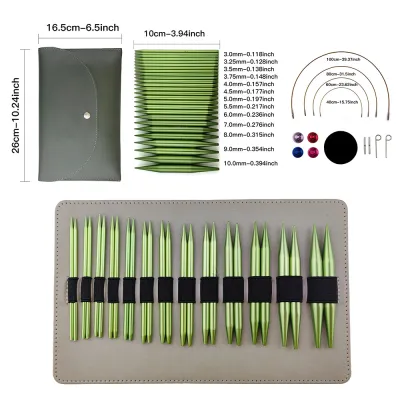
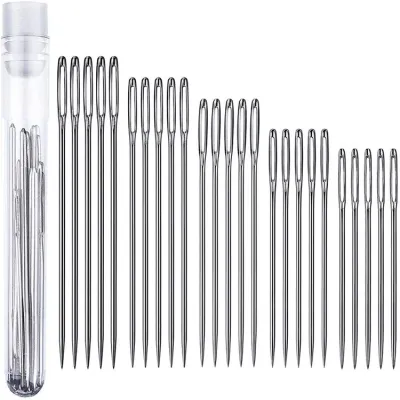
Prices are valid at publication and may change. Please refer to the product page for the latest price.
The needle tips are the rigid ends where you physically form your stitches. They are typically shorter than straight needles, usually measuring between 3.5 and 5 inches (approximately 9 to 13 cm). The taper—the gradual narrowing of the needle toward the point—greatly affects how easily you can manipulate your yarn. A moderate taper is ideal for beginners. If the tips are too sharp, they can easily split your yarn or prick your fingers; if they are too blunt, you will struggle to insert them into tight stitches.
The flexible cord holds the bulk of your project’s stitches, allowing them to rest between the needle tips. This design provides the primary ergonomic advantage of circular needles over straight ones. Instead of supporting the entire weight of your growing project on your wrists and hands, the cord allows the weight of the fabric to rest comfortably in your lap. This significantly reduces muscle strain, making circular needles a popular choice for knitters who experience hand fatigue or joint discomfort.
Connecting the tips to the cord is the join, which is the most critical quality indicator of any circular needle. A high-quality join must be completely smooth and flush. As you knit, stitches must slide continuously from the flexible cord onto the rigid needle tip. If the join has a lip, gap, or rough edge, the yarn fibers will snag, catch, or split. This disrupts your rhythm, alters your stitch tension, and can damage delicate fibers, turning an otherwise relaxing hobby into a frustrating chore.
Choosing the Best Needle Material for Your First Circular Needles
The material of your circular needles dictates the friction, speed, and control you will experience while working. Because different fibers behave differently on various surfaces, matching your needle material to your current skill level is essential for maintaining consistent tension and preventing mistakes.

Wood and Bamboo needles are highly recommended for beginners due to their natural, organic texture. This texture provides a subtle grip on the yarn, creating a comfortable level of friction that keeps your stitches secure. When you are still learning to hold your yarn and control your tension, this grip prevents stitches from accidentally sliding off the needle tips. If you make a mistake or drop a loop, the textured surface helps hold the yarn in place, giving you time to correct it. Bamboo is also warm to the touch, lightweight, and offers a slight flex that is gentle on your hands. In humid climates like Singapore’s, high-quality finished bamboo or wood needles hold up well, though they should be stored away from excessive moisture to prevent warping.
Metal needles, typically crafted from aluminum, brass, or stainless steel, feature a slick, polished surface. They are designed for speed, allowing stitches to glide effortlessly from the cord to the tip. While experienced knitters appreciate metal for its efficiency and durability, it can be highly frustrating for a beginner. The lack of friction means stitches can easily slip off the tips when you least expect it, leading to dropped stitches that are difficult to recover. However, metal needles are exceptionally durable, do not warp in humid environments, and are excellent for working with grabby, rustic wool yarns later in your knitting journey.
Plastic and Acrylic needles offer a lightweight, budget-friendly alternative. They generally provide a moderate level of grip that sits between wood and metal, though the exact texture varies widely by brand. Some plastic needles can feel slightly sticky or squeaky when paired with certain synthetic acrylic yarns, while others offer a very smooth glide. While they are an affordable way to test different sizes, thin plastic needles can warp or bend if exposed to high heat or stored under heavy items.
For your very first purchase, the definitive recommendation is to start with bamboo or wood circular needles. The natural friction of these materials provides the control you need to build muscle memory, maintain consistent stitch tension, and build your confidence without the stress of runaway stitches.
Matching Tip Sizes and Cord Lengths to Your Project
Selecting the correct physical dimensions for your circular needles is essential for ensuring your stitches fit comfortably on the tool and match the scale of your project. You must consider both the needle tip size (diameter) and the overall cord length.
Tip Size (Diameter) determines the size of the stitches you create and must match the thickness of your yarn. To find the correct size, check the paper band wrapped around your skein of yarn. Manufacturers print a recommended needle size on this label, usually specified in both millimeters (mm) and US sizes. For your first project, a versatile starter range is 4.0 mm (US 6) to 5.0 mm (US 8). This range pairs perfectly with medium-weight yarns, such as worsted or Aran weight. These yarns are thick enough to handle easily and allow you to see your stitch structure clearly, making it much easier to identify and correct mistakes.
Cord Length requires careful planning, especially when knitting in the round. The golden rule is that the total length of your circular needle must be shorter than the circumference of the item you are knitting. If the needle is too long, your stitches will be stretched too far apart around the loop, making it impossible to join the work or slide the stitches smoothly. Conversely, if the cord is too short, your stitches will be crowded, making them difficult to manipulate.
To guide your purchase, use these practical length guidelines based on common projects:
- 16 inches (40 cm): This short length is ideal for small-circumference circular projects like hats, cowls, collars, and baby garments.
- 24 to 32 inches (60 to 80 cm): These are the most versatile and widely used lengths. They are perfect for knitting sweaters, cardigans, shawls, or even working large projects flat.
- 40 inches (100 cm) or longer: These long cords are designed for large blankets, heavy afghans, or advanced techniques like the magic loop method.
When buying your first needle, always check how the manufacturer measures the length. Most reputable brands measure circular needles from tip to tip. This means the stated length (e.g., 24 inches) includes both the flexible cord and the two rigid needle tips combined. Double-checking this detail on the packaging ensures you do not accidentally purchase a cord that is too long or too short for your project.
Fixed vs. Interchangeable Needles: Which Should You Buy?
As you shop for circular needles, you will encounter two primary formats: fixed and interchangeable. Understanding the structural and financial differences between them will help you make a smart investment that fits your budget and commitment level.
Fixed Circular Needles are single, permanent units where the needle tips and the cord are permanently fused together. Because they are constructed as a single piece, they are highly reliable and rarely suffer from structural failures. They offer a very low upfront cost, typically ranging from S$8 to S$15 per needle in Singapore. This makes them the perfect option for beginners who want to try out a specific project without committing to a significant financial outlay.
Interchangeable Sets are modular systems. They feature separate needle tips and cords of various lengths that connect using a secure screw-in thread or a click-lock mechanism. This system allows you to mix and match different tip sizes with different cord lengths as your projects require. While interchangeable sets offer unmatched versatility and convenient storage, they require a much higher initial investment, often starting around S$80 to S$150+ for a quality set.
For a first-time buyer, the best approach is to start with one or two fixed circular needles in the exact size required for your first project. This low-risk entry point allows you to test different materials and brands to see what feels most comfortable in your hands. Once you have completed a few projects, confirmed your long-term interest in the craft, and developed a preference for a specific needle material, upgrading to a high-quality interchangeable set becomes a highly rewarding and cost-effective investment.
A Step-by-Step Checklist for Buying and Inspecting Your Needles
To ensure a smooth start to your knitting journey, follow this step-by-step checklist to select, purchase, and verify the quality of your circular needles before you cast on your first stitch:
- Step 1: Pick a simple project and yarn. Choose a straightforward beginner-friendly project, such as a basic beanie or a simple cowl. Purchase a high-quality, worsted-weight yarn in a light, solid color. Avoid dark, highly variegated, or textured novelty yarns for your first project, as they make it difficult to see your stitches and track your progress.
- Step 2: Check the yarn band. Locate the recommended needle size on your yarn label. Purchase a circular needle in that exact size, ensuring the total length matches your project's physical requirements (for example, a 16-inch needle for a standard adult hat).
- Step 3: Inspect the join. Once you have your needle, run your fingernail or a piece of scrap yarn back and forth over the connection point where the needle tip meets the cord. The join must feel completely smooth. If your nail catches or the yarn fibers split on a rough edge, return or exchange the needle immediately, as a rough join will ruin your knitting experience.
- Step 4: Check the cord memory. Uncoil your needle and let it hang freely. High-quality cords will relax and straighten out relatively quickly. If the cord remains tightly coiled, stiff, or has severe permanent kinks, it will twist and fight you while you knit, causing hand fatigue and distorting your fabric. For stiff cords, you can try dipping the cord (not the wooden tips) in warm water for a few seconds to help relax the plastic, but starting with a flexible, low-memory cord is always the best choice.
Frequently Asked Questions (FAQ)
Can I use circular needles to knit flat pieces?
Yes, you can absolutely use circular needles to knit flat pieces. Instead of joining your work into a continuous loop, you simply cast on your stitches and knit back and forth, turning the needle at the end of each row just as you would with traditional straight needles. This approach offers a major ergonomic benefit: the flexible cord allows the weight of large flat projects, like heavy blankets or long scarves, to rest comfortably in your lap rather than placing strain on your wrists and hands.
What is the magic loop method?
The magic loop method is a popular knitting technique that allows you to knit small-circumference items, such as socks, mittens, or sleeves, using a single, long circular needle (typically 32 to 40 inches long). By pulling a loop of the flexible cord out between your stitches, you divide the work into two halves and knit them continuously. Mastering this technique is highly beneficial for beginners because it eliminates the need to purchase specialized short circular needles or double-pointed needles for small projects.
Community discussion
Share your experience or ask a question. Comments are reviewed before publication.