
Selecting the right waterproof name stickers for school items depends on matching the label’s material, adhesive strength, and protective finish to the specific surface texture, washing frequency, and daily wear of each object. Rather than relying on a single universal label, understanding these variables ensures that names stay legible and intact throughout the school year. School environments subject personal items to diverse conditions, from the high heat of dishwashers to the constant friction of packed school bags.
To make a reliable choice, parents and students must evaluate how different sticker backings and adhesives interact with plastics, metals, and paper. A label that adheres perfectly to a flat plastic folder may quickly peel off a curved stainless steel water bottle. By analyzing the physical properties of these labeling materials, you can prevent the frustration of peeling corners and faded names before the school term even begins.
Decoding Sticker Materials and Adhesives for School Supplies
Waterproof name stickers are primarily manufactured from two synthetic polymers: vinyl (polyvinyl chloride) and polyester (polyethylene terephthalate). Vinyl is highly flexible and possesses a slight stretch, making it the ideal choice for curved, irregular, or flexible surfaces. It conforms easily to contours without creating tension that leads to edge lifting. Polyester, on the other hand, is more rigid and boasts exceptional dimensional stability and tear resistance, making it highly suitable for flat, hard surfaces that undergo heavy handling.
Products mentioned in this guide
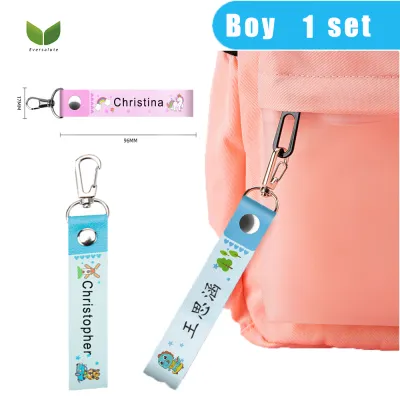
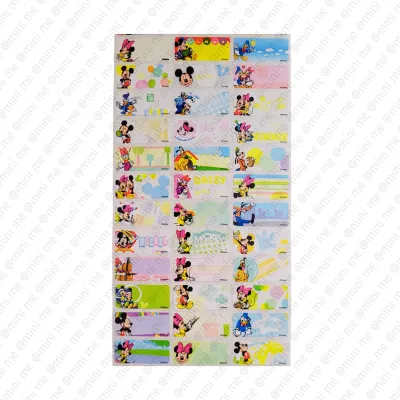
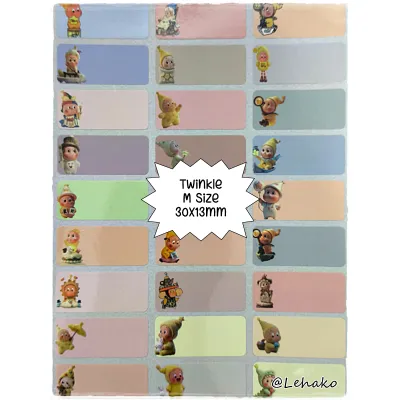
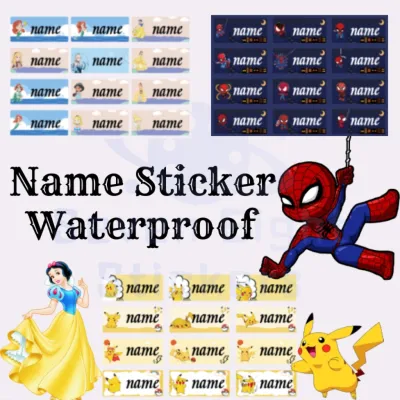
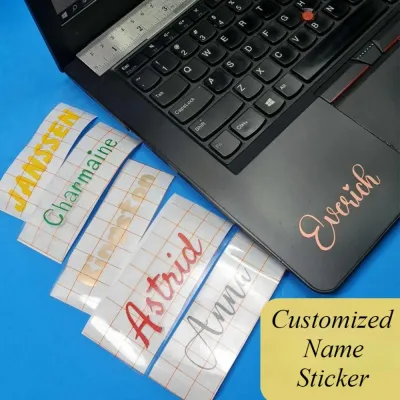
Prices are valid at publication and may change. Please refer to the product page for the latest price.
The adhesive backing is equally critical to the sticker’s performance. Most high-quality waterproof labels utilize acrylic-based pressure-sensitive adhesives, which are categorized as either permanent or removable. Permanent adhesives are formulated to create a chemical bond with the substrate over a curing period of 24 to 48 hours, making them highly resistant to water, detergents, and heat. Removable adhesives offer a lighter initial tack, allowing the label to be peeled away cleanly without leaving sticky residue, though they are more prone to lifting when exposed to moisture or friction.
To protect the printed name from wearing off, durable stickers feature a clear protective top layer, known as a laminate. This overlay shields the underlying ink from the abrasive action of hands, cleaning sponges, and UV rays from sunlight. Unlaminated stickers, even if made of waterproof vinyl, will eventually suffer from faded or smudged text as hand oils and friction wear away the printed surface. When selecting labels, verifying the presence of a protective laminate is essential for long-term legibility.
Choosing Labels for Washable Items Like Bottles and Lunch Boxes
Labeling items that require regular washing, such as water bottles and lunch boxes, presents unique challenges. Cylindrical water bottles, whether made of stainless steel or plastic, exert constant outward pressure on a sticker’s edges. To counteract this, choose highly flexible vinyl labels with rounded corners. Sharp 90-degree corners are highly susceptible to catching on dishcloths or backpack pockets, which initiates peeling. Rounded corners distribute physical friction more evenly, significantly extending the label’s lifespan.

Before applying stickers to food containers, it is vital to check the manufacturer’s specifications regarding temperature limits. School lunch boxes and snack containers are frequently subjected to microwave heating, dishwasher cycles, and sometimes steam sterilization. High temperatures can soften standard adhesives, causing the sticker to slide or peel off. Look for labels explicitly rated as dishwasher-safe and microwave-safe, which indicates the adhesive can withstand elevated temperatures without degrading or releasing chemical residues.
For items used by younger children, material safety is an important consideration. Ensure that the stickers are manufactured from non-toxic, BPA-free, and phthalate-free materials, especially if they are placed on items that come into direct contact with food or mouth areas, such as the rims of water bottles or the lids of snack boxes. While the adhesive itself is on the underside, choosing certified safe materials provides peace of mind for daily school use.
Physical friction is another major factor for washable items. Lunch boxes are repeatedly slid into tight backpack compartments, rubbing against books and folders. This constant abrasion can quickly degrade a standard label. Opting for scratch-resistant finishes or heavy-duty laminated vinyl ensures the sticker remains intact despite daily wear. In humid climates like Singapore, where condensation frequently forms on cold water bottles, the adhesive must also resist moisture-induced sliding, making a strong permanent acrylic adhesive indispensable.
Selecting Labels for Books, Folders, and Dry Stationery
Dry stationery items, such as textbooks, notebooks, folders, and writing instruments, do not face water immersion but require protection against tearing, scuffing, and handling. When labeling books, the texture of the cover dictates the type of adhesive needed. Smooth, laminated paper covers and plastic binders provide excellent surfaces for standard adhesives. However, textured or porous paper covers can absorb the adhesive unevenly, leading to poor contact or, conversely, permanent fiber tearing if you ever attempt to remove the label.
For rented, borrowed, or school-issued textbooks that must be returned in pristine condition at the end of the year, permanent adhesives pose a significant risk. Applying a permanent sticker directly to a paper cover will damage the surface upon removal. To avoid this, apply the name sticker to a removable plastic book jacket instead of the book itself. Alternatively, select labels with specialized removable adhesives that are designed to peel away cleanly without lifting the paper fibers beneath.
Small stationery items like pens, pencils, and rulers require a different labeling strategy due to their extremely tight curves and small surface areas. Standard rectangular labels will quickly flag and peel off a pencil. For these items, look for ultra-slim, highly flexible mini-labels. When applying them to pencils or pens, wrap the label around the barrel so that the end of the sticker overlaps its own starting point. This creates a vinyl-to-vinyl bond, which is significantly stronger than a vinyl-to-wood or vinyl-to-plastic bond, preventing the edges from lifting during use.
Application and Care Steps for Maximum Sticker Lifespan
The longevity of any waterproof name sticker depends heavily on proper surface preparation and application technique. Before applying a label, the target surface must be meticulously cleaned to remove oils, dust, fingerprints, and manufacturing residues. Wash the area with mild dish soap and warm water, or wipe it down with isopropyl alcohol if the material allows. Ensure the surface is completely dry and free of lint before proceeding, as even microscopic dust particles can compromise the adhesive bond.
When applying the sticker, position it carefully to avoid trapping air bubbles. Press down firmly starting from the center and work your way outward to the edges. Use your thumb or a flat plastic card to apply even pressure across the entire surface, paying extra attention to the corners. Once applied, allow the adhesive to cure. While the sticker may feel secure immediately, pressure-sensitive adhesives require a curing period of 24 to 48 hours to establish a permanent bond. Avoid washing, wetting, or heating the item during this critical window.
To verify the water resistance and adhesion quality of a new batch of stickers before labeling an entire set of school gear, you can perform a simple home trial. Apply a sample sticker to a spare plastic container, let it cure for 24 hours, and then submerge it in warm, soapy water for 30 minutes. After submerging, check for any edge lifting, color bleeding, or texture changes. Gently rub the surface with a soft sponge to ensure the print does not smudge, confirming the labels are ready for the rigors of the school term.
Frequently Asked Questions (FAQ)
Can I use the same waterproof sticker for a water bottle and a textbook?
While it is tempting to purchase a single bulk pack of stickers for all school supplies, using the same label across different items involves clear trade-offs. A highly flexible vinyl sticker designed to wrap around a curved water bottle will work on a flat textbook, but it represents an unnecessary expense for items that never get wet. Conversely, a rigid polyester sticker meant for flat book covers will struggle to adhere to the tight curves of a bottle, resulting in peeling edges. For the best results, use flexible vinyl for washable, curved items and scuff-resistant or removable labels for dry stationery.
How do I remove permanent waterproof stickers without leaving residue?
Removing permanent waterproof stickers from school items requires a careful approach to avoid damaging the underlying material. For plastic or metal items, apply gentle heat using a hairdryer on a low setting for 10 to 15 seconds to soften the acrylic adhesive. Slowly peel the sticker back at a sharp 45-degree angle rather than pulling straight up. If any sticky residue remains, apply a small amount of vegetable oil or a mild adhesive remover to a cloth and rub gently. Avoid using harsh chemical solvents like acetone on plastics, as they can melt or cloud the surface.
Community discussion
Share your experience or ask a question. Comments are reviewed before publication.