
Choosing your first watercolor starter set in Singapore requires balancing pigment quality, format convenience, and local environmental factors. For most beginners, a student-grade half-pan set containing 12 to 24 colors offers the most practical entry point. This setup provides a manageable palette for learning color theory while remaining compact enough for typical local apartment spaces or outdoor sketching sessions. By pairing a reliable starter set with the correct paper and accessories, you can avoid common frustrations and build a solid foundation in this expressive medium.
What to Look for in a Beginner Watercolor Set
When entering the world of watercolor painting, the sheer variety of available products can be overwhelming. The first major decision involves choosing between student-grade and professional-grade paints. Student-grade pigments are formulated with affordable alternative ingredients and a higher proportion of binders or fillers, such as dextrin or gum arabic blends. This keeps the cost accessible while still offering a reliable painting experience. Professional-grade paints, by contrast, use highly concentrated, pure pigments with minimal fillers, resulting in exceptional vibrancy and lightfastness. For those just starting out, student-grade sets are highly recommended because they allow you to practice essential techniques without the pressure of wasting expensive materials.
Your painting environment should also dictate the type of set you select. Singapore’s compact living spaces often mean that a dedicated, permanent art studio is a luxury. If you need to set up and pack away your supplies at a multi-purpose dining table or study desk, a highly portable set is ideal. Portable pocket-sized sets often feature built-in mixing wells and secure lids, making them easy to store in a drawer. If you plan to paint outdoors at local parks or cafes, a lightweight travel set that fits easily into a small bag is a necessity. Conversely, if you have a dedicated creative corner where supplies can remain undisturbed, a larger studio setup with individual tubes and a separate mixing palette becomes a viable option.
Products mentioned in this guide
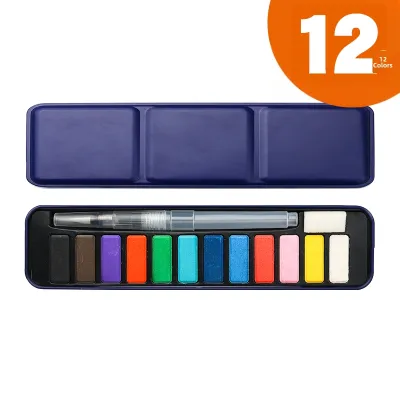
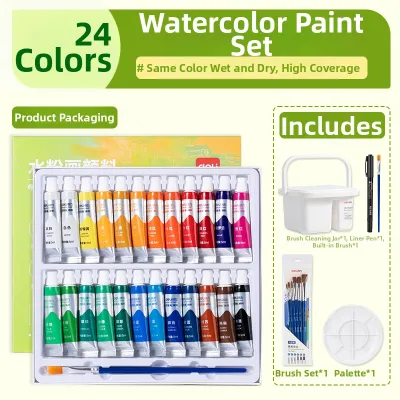
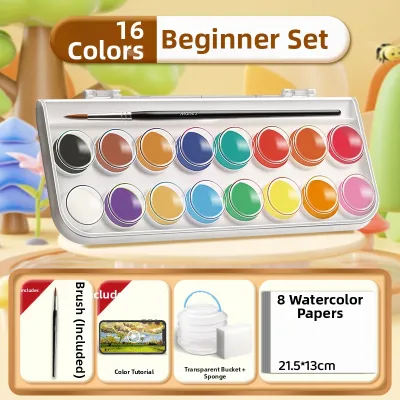
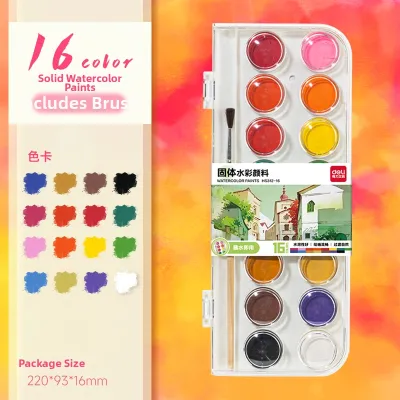
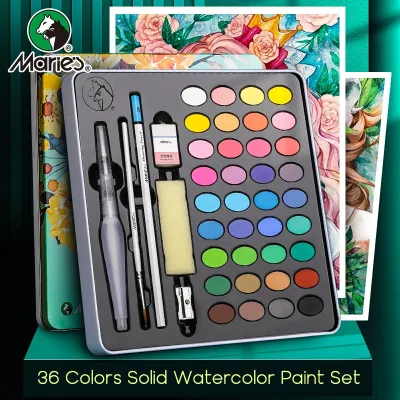
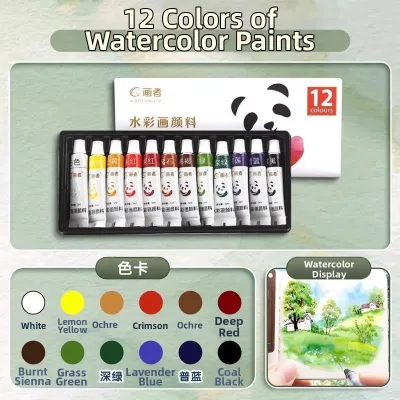
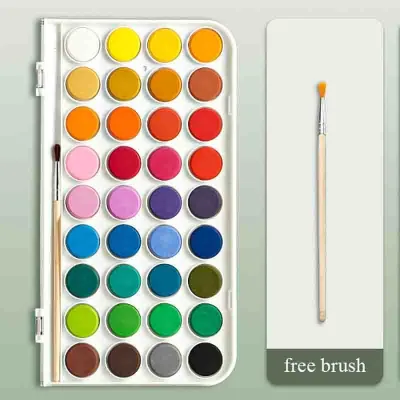
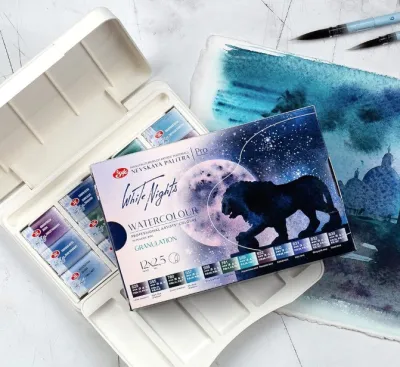
Prices are valid at publication and may change. Please refer to the product page for the latest price.
Budget is another critical factor for beginners. A reliable, high-quality student-grade watercolor set in Singapore typically ranges from S$15 to S$50. Within this price bracket, you can expect durable packaging, a functional mixing palette, and paints that dissolve smoothly without leaving a chalky residue. It is generally wise to avoid ultra-cheap sets priced under S$10 found in general discount aisles. These low-cost options often contain excessive fillers and low-grade dyes that resist water blending, dry to a dull finish, and fade rapidly when exposed to light. Investing a modest amount in a reputable brand ensures that the paint behaves predictably, allowing you to develop proper water control and color-mixing habits.
Pan vs. Tube: Which Format Suits Your Workflow?
Watercolor paints are primarily sold in two formats: solid pans and liquid tubes. Solid pans are small, dry blocks of watercolor paint nestled in plastic cups, commonly referred to as half-pans or full-pans. Half-pans are the most popular size for starter kits due to their compact footprint. Pans are incredibly convenient because they require virtually no preparation; you simply touch a wet brush to the dry paint to reactivate it. Cleanup is equally straightforward, as you only need to let the pans air-dry before closing the lid. This low-maintenance nature makes pan sets the traditional choice for beginners and urban sketchers who value speed and simplicity.

Tube watercolors contain moist, paste-like paint that you squeeze out onto a separate palette. Tubes are highly advantageous when you need to mix large volumes of paint quickly, such as when laying down broad background washes on a large sheet of paper. Because the paint is already wet, it is easier on your brush bristles, as you do not need to scrub a dry block to lift pigment. However, tube sets require more discipline. If you leave a tube uncapped, the paint inside can dry out and clog the nozzle. Furthermore, in Singapore’s humid climate, squeezed-out tube paint left on an open palette can sometimes remain sticky or attract airborne dust if not stored in a sealed, airtight container.
To decide which format fits your workflow, consider your typical painting scenarios. If your goal is to create small-scale illustrations, keep an art journal, or paint while traveling, a half-pan set is the most logical choice. It minimizes mess, saves space, and is ready to use at a moment’s notice. If you prefer working on large-scale landscapes at home, mixing deep pools of vibrant color, or experimenting with thick, textured paint applications, a basic tube set of 6 to 12 colors will serve you better. Many artists eventually use a hybrid approach, but starting with a pan set generally reduces the initial learning curve by eliminating the need to manage paint portioning.
Evaluating Pigment Quality and Color Selection
Learning to read the labels on watercolor packaging is a valuable skill that prevents you from buying low-quality sets. Reputable manufacturers print essential technical details on the outer box or individual color wrappers. Look for indicators of lightfastness, which measure how well a color resists fading over time when exposed to light. This is often rated on a scale of I to V (with I being the most permanent) or represented by stars. You should also check for transparency ratings, usually indicated by a small square: an empty square denotes transparent paint, a diagonal line represents semi-transparent, and a solid black square indicates opaque paint. Transparent paints are crucial for watercolor techniques, as they allow light to pass through the pigment layers and reflect off the white paper beneath.
When selecting a starter set, resist the temptation to buy kits with 48 or more colors. A massive array of pre-mixed shades can actually hinder your artistic growth. A starter set containing 12 to 18 carefully curated colors is the ideal sweet spot. This limited palette forces you to learn how colors interact and how to mix your own secondary and tertiary shades. Relying too heavily on pre-mixed convenience colors often leads to flat, muddy paintings because you miss out on learning how to balance warm and cool tones. A smaller, high-quality set teaches you the discipline of color mixing, which is a fundamental skill for any watercolorist.
Ensure your chosen starter set features a balanced selection of primary colors and essential earth tones. A versatile palette should include both a warm and a cool version of each primary color. For example, look for a warm red (such as a cadmium red hue) and a cool red (like alizarin crimson), a warm yellow (such as deep yellow) and a cool yellow (like lemon yellow), and a warm blue (ultramarine) alongside a cool blue (phthalo blue). Essential earth tones like Yellow Ochre, Burnt Sienna, and Burnt Umber are also indispensable for mixing realistic shadows, skin tones, and natural landscapes. Avoid sets dominated by neon, metallic, or highly synthetic shades, as these are difficult to integrate into standard color-mixing workflows.
Essential Accessories and Paper Compatibility
While the paint itself is important, your watercolor experience is heavily influenced by the accessories you use. Many starter sets include a basic brush, often a small synthetic round brush or a plastic water brush with a refillable reservoir in the handle. While water brushes are highly convenient for quick outdoor sketching, they can make precise water control difficult for beginners learning traditional washes. It is highly beneficial to supplement your starter kit with one or two dedicated round watercolor brushes, such as a size 6 and a size 10. Look for brushes made of soft synthetic fibers designed specifically for watercolor; they should hold a sharp point when wet and retain a generous amount of water.
In addition to brushes, you will need a functional mixing palette, water containers, and masking tape. If your watercolor set’s lid doubles as a mixing palette, ensure the plastic surface is clean. New plastic palettes can sometimes cause wet paint to “bead” or pool into tight droplets rather than spreading smoothly; gently scrubbing the plastic with a mild abrasive cleaner or a pencil eraser before first use can resolve this issue. You should also prepare two jars for water—one for rinsing dirty paint off your brush and one containing clean water for mixing and laying down washes. Low-tack masking tape is also useful for securing your paper to a flat board, which helps keep the paper flat as it dries.
The ultimate performance of your watercolors—including their smoothness, bleed resistance, drying speed, and erasability—is not determined by the paint alone. Instead, it depends entirely on the specific combination of your paint’s binder and the paper’s fiber content. To verify how your chosen set behaves, always conduct a simple trial on a scrap piece of the exact paper you plan to use. Apply a wet wash to observe how smoothly the pigment disperses, note the drying speed in your local environment, and test erasability by gently lifting wet paint with a clean, damp brush. For the best results, always use paper with a minimum weight of 300 gsm (grams per square meter) to prevent buckling, and opt for cold-pressed paper, which has a versatile texture that holds water beautifully.
Building Your Shortlist: Where to Buy and What to Verify
Singapore offers excellent physical and digital options for sourcing reliable art supplies. For a hands-on shopping experience, visit established art supply stores located in cultural hubs like Bras Basah Complex, or explore the dedicated craft sections in major retail malls. Shopping in person allows you to seek advice from knowledgeable staff and physically examine the products before purchasing. Alternatively, official brand stores on major ecommerce platforms and reputable online marketplaces offer a wide selection, often with convenient home delivery and bundle deals that include paper and brushes.
When purchasing a watercolor set in a physical store, perform a quick inspection of the packaging. Check for any signs of damage, deep dents, or broken seals on the outer box or tin. For pan sets, shake the container gently; a slight rattle is perfectly normal, as dry watercolor blocks can shrink slightly in dry storage, but a loud, loose clattering might indicate that individual pans have dislodged or cracked. Ensure that the hinges and clasps on metal tins align correctly and close securely. This prevents the lid from popping open in your bag and protects the paints from dust and excessive moisture when stored at home.
If you prefer the convenience of online shopping, take steps to verify the seller’s credentials to ensure you receive authentic products. Look for authorized distributors or shops with high positive ratings and a history of selling genuine art supplies. Read customer reviews to check if previous buyers received their items in good condition. Because watercolor pans can occasionally crack or dislodge during transit, choose online sellers who package their items securely with bubble wrap and offer a clear, hassle-free return policy for defective or damaged goods. Verifying these details beforehand ensures a smooth purchasing experience and lets you start your painting journey with confidence.
Frequently Asked Questions (FAQ)
How do I keep my pan watercolors from drying out completely?
Pan watercolors are designed to be dry, so they do not dry out in a damaging way like acrylic or oil paints. To reactivate them, simply mist the pans with clean water from a small spray bottle or place a drop of water on each pan a few minutes before you begin painting. However, before closing the lid of your set after a painting session, allow the pans to air-dry completely in a well-ventilated room. Closing a wet palette in Singapore’s humid climate can trap moisture inside the container, which can lead to mold growth on the organic binders over time.
Can I mix student-grade and professional-grade watercolors later?
Yes, you can absolutely mix student-grade and professional-grade watercolors on the same palette or within the same painting. Both grades typically use gum arabic or a similar water-soluble binder, making them chemically compatible. However, keep in mind that professional-grade paints have a much higher pigment concentration and fewer fillers than student-grade options. When mixing them together, the professional paint may easily overpower the student-grade paint, so adjust your mixing ratios carefully and always test the mixture on a scrap piece of watercolor paper first to observe how the colors blend and dry.

Community discussion
Share your experience or ask a question. Comments are reviewed before publication.