
Selecting the correct stretch film wrap thickness is one of the most critical decisions in warehouse logistics, directly influencing both cargo safety and operational expenditures. Using a film that is too thin risks catastrophic load failure during transit, leading to damaged goods, rejected deliveries, and costly returns. Conversely, defaulting to excessively thick films unnecessarily inflates packaging material budgets and increases plastic waste. To determine the ideal thickness, logistics managers must evaluate three primary variables: the weight and shape of the cargo, the wrapping method employed, and the physical properties of the film itself.
For standard, lightweight pallets holding uniform carton boxes, a thickness of 12 to 15 microns is generally sufficient. Standard warehouse shipments containing mixed, medium-weight items typically require a versatile 17 to 23 micron film. For heavy, dense, or sharp-edged industrial loads, a heavy-duty film of 25 to 30+ microns is necessary to prevent punctures and tears. By matching the film’s specifications to the physical demands of the load, businesses can optimize containment force while minimizing the overall cost per pallet wrapped.
Decoding Stretch Film Specifications: Microns vs. Gauge
Understanding the terminology used by packaging manufacturers is the first step toward making an informed purchasing decision. Stretch film thickness is globally measured using two primary units of measurement: microns (a metric unit) and gauge (an imperial unit).
Products mentioned in this guide
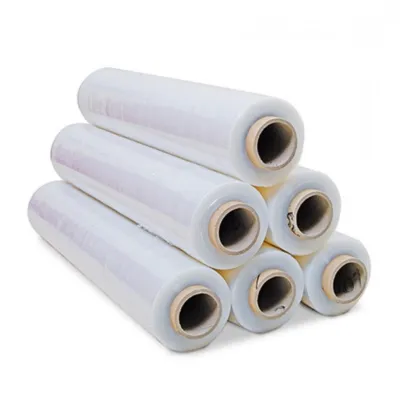
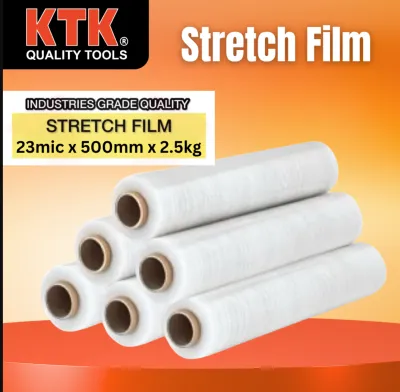
![[Min Purchase 2] Stretch Film Roll (1.7kg/2.25kg/2.9kg)](https://img.lazcdn.com/g/p/e15d654393b1fff820cb5c811ccccfd6.png_400x400q80.png_.webp)
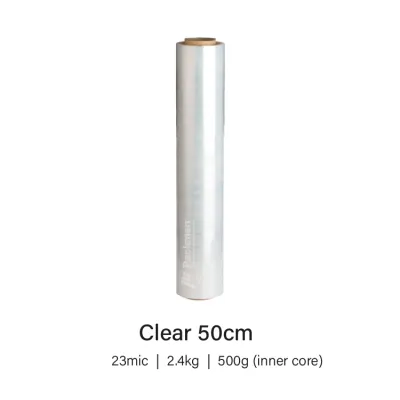
![🏅[CHEAPEST] Stretch Film/ Shrink Wrap / Cling Wrap /Pallet wrapping /Moving Supplies/pallet Wrap/Pallet wrapping](https://img.lazcdn.com/g/p/c69357eb04f4e35ac9ee2d124f108fda.jpg_400x400q80.jpg_.webp)
Prices are valid at publication and may change. Please refer to the product page for the latest price.
A micron (micrometer, abbreviated as µm) represents one-millionth of a meter. In contrast, gauge is an imperial measurement widely used in North American markets. To convert between the two, a general rule of thumb is that 1 mil (one-thousandth of an inch) equals 100 gauge, which is equivalent to exactly 25.4 microns. Therefore, to convert gauge to microns, you multiply the gauge value by 0.254. For example, a standard 80-gauge film is approximately 20.3 microns thick, while a 60-gauge film is roughly 15.2 microns. In both systems, a higher numerical value indicates a thicker, heavier, and generally stronger film.
In Singapore, industrial buyers and suppliers predominantly utilize the metric system. Product packaging, technical data sheets, and purchase orders in the local logistics sector almost exclusively specify film thickness in microns (e.g., 15µm, 17µm, or 23µm). This standardization simplifies comparisons across different local distributors, ensuring that procurement teams can evaluate products on an identical scale.
However, buyers must exercise caution when reviewing marketing materials. Many suppliers use the term “gauge” or “equivalent thickness” loosely to promote high-performance, multi-layered films. A product marketed as a “20-micron equivalent” may actually have a physical thickness of only 12 microns. While these engineered films can indeed perform exceptionally well under specific conditions, they often have different puncture and tear characteristics than a true, standard 20-micron film. To avoid purchasing errors, always request the official technical specification sheet from the manufacturer to verify the actual physical micron thickness before placing a bulk order.
How to Match Film Thickness to Your Cargo Profile
Selecting the right stretch film wrap thickness requires a detailed analysis of the cargo being transported. A film that successfully secures a pallet of lightweight paper towels will quickly fail when applied to a pallet of heavy industrial components. To establish a baseline thickness requirement, evaluate your cargo profile across several key dimensions.

Load Weight and Density The total weight of the pallet is the most direct indicator of the holding force required. As a palletized load travels, it is subjected to centrifugal forces, sudden braking, and vibrations. Heavy, high-density loads (such as canned beverages, liquid drums, or concrete bags) exert massive kinetic energy against the wrapping material during transit. If the stretch film lacks sufficient tensile strength, it will stretch beyond its elastic limit, causing the load to shift or collapse. Heavier loads naturally require thicker films with higher tensile strength to maintain structural integrity and keep the pallet securely bound to its wooden or plastic base.
Load Profile and Shape In the packaging industry, pallet configurations are generally classified into three profiles:
- Class A Loads: These are highly uniform, symmetrical, and flat-sided, typically consisting of standard carton boxes stacked evenly with no protrusions. Because there are no sharp corners or irregular shapes, the film experiences uniform tension, allowing for the use of thinner films.
- Class B Loads: These loads are less uniform, featuring minor irregularities, varying box sizes, or slightly recessed edges. They create moderate stress points on the film, requiring a step up in thickness to prevent localized failures.
- Class C Loads: These are highly irregular, unstable, or contain sharp protrusions, such as raw timber, metal parts, machinery, or bricks. These loads create extreme, concentrated stress points that can easily pierce standard films.
Puncture vs. Tear Resistance Sharp edges and protruding corners demand high puncture resistance. If a film is punctured, the tension under which it is wrapped can cause the puncture to rapidly propagate into a large tear—a catastrophic failure known as “zippering.” Blown stretch films, which are manufactured using a vertical bubble extrusion process, offer superior multi-directional tear resistance and are highly recommended for Class C loads with sharp edges. Cast stretch films, while highly elastic and clear, are more prone to zippering once a puncture occurs.
Rather than attempting to source a single, “one-size-fits-all” stretch film for the entire warehouse, operations should categorize their outbound shipments. By establishing distinct baselines for different cargo profiles, you can utilize cost-effective, thin films for uniform carton shipments while reserving heavy-duty, thicker films for demanding, irregular loads.
Application Method: Hand Wrap vs. Machine Wrap
The method used to apply the stretch film wrap plays a major role in determining the optimal thickness. Hand wrapping and machine wrapping interact with the film’s physical properties in fundamentally different ways, and using the wrong film type can lead to material failure or equipment damage.
Hand Stretch Film Manual application relies entirely on the physical strength and endurance of the warehouse operator. Because walking backward around a pallet while pulling a tension bar is physically demanding, human operators rarely stretch standard film beyond 30% to 50% of its potential. To compensate for this lower stretch rate and ensure adequate load containment, traditional hand stretch films are manufactured to be slightly thicker, typically ranging from 17 to 20 microns. Alternatively, modern warehouses frequently opt for “pre-stretched” hand films. These films are mechanically stretched near their breaking point at the manufacturing facility before being wound onto the roll. Pre-stretched films can be as thin as 8 to 10 microns, requiring minimal physical effort from the operator to achieve excellent load stability, while significantly reducing roll weight and worker fatigue.
Machine Stretch Film Automated stretch wrapping machines utilize motorized pre-stretch rollers to stretch the film consistently before applying it to the load. High-performance machine wrappers can stretch film by 150% to over 300%. This mechanical stretching activates the film’s “elastic memory,” causing it to continuously attempt to shrink back to its original size, which creates an incredibly tight, secure wrap. Because machines apply tension with perfect consistency, they can utilize highly engineered, thinner films (often 15 to 20 microns) to secure exceptionally heavy or unstable loads that would require a much thicker film if wrapped by hand.
Core Size and Roll Weight When procuring stretch film, always verify the physical dimensions of the roll core and the total roll weight to ensure compatibility.
- Hand Rolls: Typically feature a 50mm (2-inch) inner core diameter and a total weight of 2.5kg to 4kg. This lightweight profile is essential for safe manual handling and fits standard hand dispensers.
- Machine Rolls: Feature a larger 76mm (3-inch) inner core diameter and weigh between 12kg and 16kg. These rolls are built to withstand the high rotational speeds and mechanical stresses of wrapping machines. Attempting to manually apply a heavy machine roll is highly inefficient and presents a significant risk of workplace injury, while hand rolls cannot be securely mounted onto industrial wrapping machinery.
Recommended Stretch Film Thicknesses for Common Loads
To simplify the selection process, stretch film thicknesses can be categorized into three primary performance tiers. The following quick-reference table outlines these general classifications, mapping thickness ranges to ideal load profiles and application methods. Always verify the exact load limits and specifications on the product labels provided by your supplier, as advanced resin formulations can alter performance characteristics.
| Thickness Range (Microns) | Ideal Load Profile | Key Characteristics | Recommended Application |
|---|---|---|---|
| 12–15 Microns | Uniform carton boxes, lightweight consumer goods, dust protection | Highly cost-effective, high yield per roll, lightweight handling | Hand wrap (pre-stretched) or light-duty machine wrap |
| 17–23 Microns | Mixed warehouse pallets, standard shipping cargo, FMCG shipments | Balanced cost and strength, versatile puncture resistance | Standard hand wrap or medium-duty machine wrap |
| 25–30+ Microns | Heavy industrial loads, timber, metal parts, bricks, irregular shapes | Maximum puncture and tear resistance, high holding force | Heavy-duty machine wrap or heavy-duty manual wrapping |
Light-Duty and Uniform Loads (Approx. 12–15 Microns)
Ideal Use Cases This thickness range is perfectly suited for highly stable, uniform, and lightweight packaging scenarios. Common applications include wrapping stacked paper products, empty plastic containers, lightweight consumer goods, or securing pre-packaged items that are already structurally stable. It is also widely used purely for dust, dirt, and moisture protection during short-term warehouse storage.
Reasons to Choose Operating within this lower thickness range is highly cost-effective. These rolls offer a significantly higher yield (meters of film per roll) compared to thicker alternatives, which directly translates to lower material costs per pallet. Furthermore, the lightweight nature of these rolls improves handling speed and reduces physical strain on warehouse staff during manual wrapping operations.
Limitations Films in this range possess low puncture and tear resistance. They should be strictly avoided when wrapping loads with sharp corners, protruding wooden pallet splinters, or heavy, shifting items. If applied to an irregular or heavy load, the film is highly likely to puncture and tear during transit, compromising the safety of the entire shipment.
Medium-Duty and Standard Pallets (Approx. 17–23 Microns)
Ideal Use Cases This range represents the industry standard for general warehouse, logistics, and distribution operations. It is the ideal choice for standard Fast-Moving Consumer Goods (FMCG) shipments, mixed-product pallets, boxed electronics, and moderate-weight cargo. It easily handles typical shipping hazards encountered in local distribution networks.
Reasons to Choose Films in the 17 to 23 micron range offer the ultimate balance between cost-efficiency and load containment. They provide sufficient tensile strength to hold medium-weight loads secure during transport, while offering dependable resistance against minor punctures and tears caused by slightly irregular box corners or pallet edges. This versatility makes it the preferred “go-to” film for operations with diverse inventory types.
Limitations While highly versatile, these films may struggle with highly irregular, heavy, or sharp-edged cargo. If a pallet has significant metal protrusions or sharp wooden edges, using a medium-duty film may require multiple additional layers to prevent tearing. This increases both labor time and material waste, making a thicker film a more economical choice for those specific loads.
Heavy-Duty and Sharp-Edged Loads (Approx. 25–30+ Microns)
Ideal Use Cases This heavy-duty tier is engineered specifically for demanding industrial, construction, and manufacturing environments. It is the required standard for wrapping heavy building materials (such as bricks, concrete blocks, and tiles), raw timber, steel pipes, heavy machinery parts, and highly irregular, dense pallets that are prone to shifting.
Reasons to Choose Films in this category provide maximum puncture and tear resistance. They are manufactured to withstand extreme mechanical stress, ensuring that sharp metal corners or rough wooden surfaces do not puncture the film. The high holding force ensures that incredibly heavy, dense loads remain tightly bound to the pallet, even when subjected to intense vibrations and movement during long-distance transit or sea freight.
Limitations The primary drawback of heavy-duty film is its higher material cost per roll, as well as a lower yield (fewer total meters per roll). Additionally, standard manual rolls of this thickness are significantly heavier, which can rapidly cause operator fatigue if used extensively for hand wrapping. Using a 25 to 30+ micron film on light, uniform box pallets is an unnecessary expense that adds no functional security while inflating packaging costs.
Optimizing Packaging Costs Without Compromising Protection
Achieving cost efficiency in your packaging operations does not simply mean purchasing the thinnest or cheapest stretch film wrap available. True cost optimization requires a holistic view of packaging performance, material yield, and the total cost of transit damage.
The Hidden Costs of Under-Packaging Opting for a cheap, thin film to save a few dollars per roll is a common procurement pitfall. If a film is too thin for the load, it will stretch excessively or tear during transit. This can result in pallet collapse, causing damaged merchandise, rejected deliveries at retail distribution centers, and expensive return logistics. In Singapore’s highly competitive logistics landscape, the financial penalties and damage to customer relationships resulting from a single collapsed pallet far outweigh the marginal savings achieved by purchasing substandard film.
The Waste of Over-Packaging Conversely, using an excessively thick film (such as a 30-micron film) to wrap highly stable, uniform boxes of lightweight goods is a direct waste of your material budget. It unnecessarily increases plastic consumption, inflating both your procurement costs and your company’s environmental footprint. With growing regulatory focus on packaging waste and sustainability, minimizing plastic consumption through precise film selection is both an economic and environmental necessity.
Pre-Stretched Films and Technique One of the most effective ways to optimize costs is by utilizing pre-stretched films or upgrading wrapping techniques. Pre-stretched films allow warehouses to achieve the same load containment force as standard thick films while using up to 50% less plastic by weight. Additionally, training warehouse staff on proper wrapping techniques can yield massive savings. Ensure operators overlap each layer by at least 50%, apply 3 to 4 tight wraps around the pallet base to secure the load to the wooden structure, and finish with a secure top wrap.
Calculating Cost per Pallet To make accurate financial decisions, procurement teams must look beyond the upfront price per roll in SGD. Instead, calculate the actual “cost per pallet wrapped.” For example, consider two options:
- Roll A (Standard Film): Costs S$15.00 per roll and wraps approximately 15 pallets before running out. The cost per pallet is S$1.00.
- Roll B (High-Performance Pre-Stretched Film): Costs S$19.00 per roll but, due to its high yield and pre-stretched design, wraps approximately 28 pallets. The cost per pallet is S$0.68.
Despite having a higher upfront cost per roll, Roll B reduces your actual packaging expenditure by 32% per pallet. Always conduct real-world wrapping trials in your warehouse to measure actual material usage and determine the true cost-efficiency of any film before committing to bulk purchases.
Frequently Asked Questions (FAQ)
What is the difference between cast and blown stretch film?
Cast and blown stretch films differ primarily in their manufacturing processes, which endows them with distinct physical properties. Cast film is produced by extruding molten resin through a flat die onto cooled rollers. This rapid cooling makes cast film exceptionally clear—which is ideal for scanning barcodes through the wrap—and highly elastic. It also unwinds very quietly, making it a popular choice in busy warehouses.
Blown film is manufactured by extruding resin through a circular die and blowing it upward into a massive vertical bubble, which is cooled slowly by air. This slow cooling process creates a film with superior puncture resistance, outstanding multi-directional tear resistance, and excellent elastic memory (holding force). However, blown film is slightly hazy, more expensive, and makes a loud, squealing noise when unwound from the roll. Blown film is highly recommended for heavy, sharp, or irregular loads, while cast film is ideal for standard, uniform cargo.
Does a thicker stretch film always mean better load containment?
No, thickness is not the sole factor governing load containment. While a thicker film inherently offers greater puncture resistance, actual containment force—the pressure the film exerts to hold the load together—depends heavily on the film’s elastic memory and the tension applied during wrapping.
A thick, standard film applied loosely will allow a pallet to shift and collapse during transit. Conversely, a thinner, high-performance pre-stretched film applied with optimal tension will continuously pull back against the load, providing superior containment and stability. When selecting a film, do not focus exclusively on micron thickness; always consult the manufacturer’s technical specifications to evaluate holding force, elastic recovery, and recommended stretch percentages.
Community discussion
Share your experience or ask a question. Comments are reviewed before publication.